To save content items to your account,
please confirm that you agree to abide by our usage policies.
If this is the first time you use this feature, you will be asked to authorise Cambridge Core to connect with your account.
Find out more about saving content to .
To save content items to your Kindle, first ensure no-reply@cambridge.org
is added to your Approved Personal Document E-mail List under your Personal Document Settings
on the Manage Your Content and Devices page of your Amazon account. Then enter the ‘name’ part
of your Kindle email address below.
Find out more about saving to your Kindle.
Note you can select to save to either the @free.kindle.com or @kindle.com variations.
‘@free.kindle.com’ emails are free but can only be saved to your device when it is connected to wi-fi.
‘@kindle.com’ emails can be delivered even when you are not connected to wi-fi, but note that service fees apply.
Vertical thermal convection exhibits weak turbulence and spatio-temporally chaotic behaviour. For this configuration, we report seven new equilibria and 26 new periodic orbits. These orbits, together with four previously studied in Zheng et al. (J. Fluid Mech., 2024b, vol. 1000, p. A29) bring the number of periodic-orbit branches computed so far to 30, all solutions to the fully nonlinear three-dimensional Navier–Stokes equations. These new and unstable invariant solutions capture intricate spatio-temporal flow patterns including straight, oblique, wavy, skewed and distorted convection rolls, as well as bursts and defects. These interesting and important fluid mechanical processes in a small flow unit are shown to also appear locally and instantaneously in a chaotic simulation in a large domain. Most of the solution branches show rich spatial and/or spatio-temporal symmetries. The bifurcation-theoretic organisation of these solutions is discussed; the bifurcation scenarios include Hopf, pitchfork, saddle-node, period-doubling, period-halving, global homoclinic and heteroclinic bifurcations, as well as isolas. Furthermore, these orbits are shown to be able to reconstruct statistically the core part of the attractor, so that these results may contribute to a quantitative description of transitional fluid turbulence using periodic orbit theory.
BaLa2Cu1−xBaxTi2O9 (x = 0.00, 0.15, and 0.30) ceramics were synthesized in polycrystalline form via the conventional solid-state reaction techniques in air. The crystal structure of the title compositions was characterized by room-temperature X-ray powder diffraction and analyzed using the Rietveld refinement method. All the compositions crystallize in the tetragonal symmetry of space group I4/mcm (No. 140) with cell volumes: 249.43(1) Å3 for x = 0.00, 249.42(1) Å3 for x = 0.15, and 250.05(1) Å3 for x = 0.30. The tilt system of the MO6 octahedra (M = Cu(Ba2)/Ti) corresponds to the notation a0a0c−. The MO6 octahedra share the corners via oxygen atoms in 3D. Along the c-axis, the octahedra are connected by O(1) atoms of (0, 0, 1/4) positions; while in the ab-plane, they are linked by O(2) atoms of (x, x + 1/2, 0) positions. The bond angle of M–O2–M is 168.6(7)° for x = 0.00, 168.6(6)° for x = 0.15, and 166.8(6)° for x = 0.30, whereas the bond angle of M–O1–M is constrained to be 180° by space group I4/mcm.
Fluid mechanics, solid state diffusion and heat conduction are deeply interconnected through the mathematics and physical principles that define them. This concise and authoritative book reveals these connections, providing a detailed picture of their important applications in astrophysics, plasmas, energy systems, aeronautics, chemical engineering and materials science. This sophisticated and focused text offers an alternative to more expansive volumes on heat, mass and momentum transfer and is ideal for students and researchers working on fluid dynamics, mass transfer or phase transformations and industrial scientists seeking a rigorous understanding of chemical or materials processes. Accessible yet in depth, this modern treatment distills the essential theory and application of these closely related topics, includes numerous real world applications and can be used for teaching a range of related courses in physics, engineering and materials science departments.
In this paper, we study experimentally the dispersion of colloids in a two-dimensional, time-independent, Rayleigh–Bénard flow in the presence of salt gradients. Due to the additional scalar, the colloids do not follow exactly the Eulerian flow field, but have a (small) extra velocity $\boldsymbol{v}_{{dp}} = D_{{dp}}\, \boldsymbol{\nabla }\log C_s$, where $D_{{dp}}$ is the phoretic constant, and $C_s$ is the salt concentration. Such a configuration is motivated by the theoretical work by Volk et al. (2022, J.FluidMech., vol. 948, A42), which predicted enhanced transport or blockage in a stationary cellular flow depending on the value of a blockage coefficient. By means of high dynamical range light-induced fluorescence, we study the evolution of the colloids concentration field at large Péclet number. We find good agreement with the theoretical work, although a number of hypotheses are not satisfied, as the experiment is non-homogeneous in space, and intrinsically transient. In particular, we observe enhanced transport when salt and colloids are injected at both ends of the Rayleigh–Bénard chamber, and blockage when colloids and salt are injected together and phoretic effects are strong enough.
We present experiments of settling and dissolving sugar grains continuously sieved above a water tank with varying grain size and mass flux. Through drag and dissolution, grains force a downward flow whose dynamics are analysed in a laser sheet through particle image velocimetry and the use of home-made fluorescent sugar to track the negatively buoyant sugary water. We reveal different regimes, mostly controlled by the grain size, from a particle-constrained laminar flow at large grain size, to a turbulent plume with an effectively fluid-like behaviour when grains are small. The transitions between regimes are predicted from dimensionless numbers quantifying fluid–particle coupling, collective effects between grains and the possible onset of a Rayleigh–Taylor instability at the source. When a quasi-steady regime is reached, all grains dissolve above a finite depth, below which the flow is exclusively driven by dissolved sugar. We derive simple idealised models based on the source properties that predict the depth of this dissolution layer as well as the characteristic flow velocity.
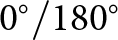
In this paper, a dual-band dual-circularly polarized (CP) patch antenna with integrated coupling structure and stepped impedance resonators (SIRs) is proposed. The tapped-line coupling generates $0^{\circ}/180^{\circ}$ phase in two frequency bands, while the parallel coupled-line coupling exhibits an inherent $90^{\circ}$ phase delay in two frequency bands. The two-way coupling structure generates the $\pm90^\circ$ phase shift enabling dual-CP, eliminate the need for additional phase shifters. Then, the SIRs excite the two orthogonal modes of the radiation patch while concurrently matching the impedance between the antenna and the input port, eliminating the need for an additional matching network. Finally, the radiation patch and SIRs are integrated into a complete structure, and a T- junction is used to connect the two branches. Compared to traditional design, the proposed antenna greatly reduces the complexity and difficulty. The development stages are discussed in detail. The proposed design is demonstrated through prototype fabrication and characterization.
This paper presents a broadband rectifier based on GaN high electron mobility transistor (HEMT). The continuous class-B/J rectifier operation mode is analyzed in detail. The relationship between the continuous mode class-B/J rectification efficiency and the output capacitance Cout and the on-state resistance Ron is built and the rectification model is firstly presented. Then, the available impedance design space can be determined based on the rectification efficiency model. Considering the package parameters of the CGH40010F, design space at the package plane has been presented. Moreover, a broadband phase tuning network (PTN) is adjusted to satisfy this impedance space. Thus, a broadband transistor-based rectifier can be designed using the continuous class-B/J mode and the PTN. For validation, a rectifier working in 2.4–3.3 GHz was fabricated using CGH40010F. The rectification efficiency varies from 66% to 78% when RF input power is 10 W. Compared with other transistor-based rectifiers, the presented rectifier has a competitive working bandwidth.
Linear temporal logic (LTL) offers a formal way of specifying complex objectives for Cyber-Physical Systems (CPS). In the presence of uncertain dynamics, the planning for an LTL objective can be solved by model-free reinforcement learning (RL). Surrogate rewards for LTL objectives are commonly utilized in model-free RL for LTL objectives. In a widely adopted surrogate reward approach, two discount factors are used to ensure that the expected return approximates the satisfaction probability of the LTL objective. The expected return then can be estimated by methods using the Bellman updates such as RL. However, the uniqueness of the solution to the Bellman equation with two discount factors has not been explicitly discussed. We demonstrate that when one of the discount factors is set to one, as allowed in many previous works, the Bellman equation may have multiple solutions, leading to an inaccurate evaluation of the expected return. To address this issue, we propose a condition that ensures the Bellman equation has the expected return as its unique solution. Specifically, we require that the solutions for states within rejecting bottom strongly connected components (BSCCs) be zero. We prove that this condition guarantees the uniqueness of the solution, first for states within BSCCs and then for remaining transient states.
In the standard picture of fully developed turbulence, highly intermittent hydrodynamic fields are nonlinearly coupled across scales, where local energy cascades from large scales into dissipative vortices and large density gradients. Microscopically, however, constituent fluid molecules are in constant thermal (Brownian) motion, but the role of molecular fluctuations in large-scale turbulence is largely unknown, and with rare exceptions, it has historically been considered irrelevant at scales larger than the molecular mean free path. Recent theoretical and computational investigations have shown that molecular fluctuations can impact energy cascade at Kolmogorov length scales. Here, we show that molecular fluctuations not only modify energy spectrum at wavelengths larger than the Kolmogorov length in compressible turbulence, but also significantly inhibit spatio-temporal intermittency across the entire dissipation range. Using large-scale direct numerical simulations of computational fluctuating hydrodynamics, we demonstrate that the extreme intermittency characteristic of turbulence models is replaced by nearly Gaussian statistics in the dissipation range. These results demonstrate that the compressible Navier–Stokes equations should be augmented with molecular fluctuations to accurately predict turbulence statistics across the dissipation range. Our findings have significant consequences for turbulence modelling in applications such as astrophysics, reactive flows and hypersonic aerodynamics, where dissipation-range turbulence is approximated by closure models.
Deformable microchannels emulate a key characteristic of soft biological systems and flexible engineering devices: the flow-induced deformation of the conduit due to slow viscous flow within. Elucidating the two-way coupling between oscillatory flow and deformation of a three-dimensional (3-D) rectangular channel is crucial for designing lab-on-a-chip and organ-on-a-chip microsystems and eventually understanding flow–structure instabilities that can enhance mixing and transport. To this end, we determine the axial variations of the primary flow, pressure and deformation for Newtonian fluids in the canonical geometry of a slender (long) and shallow (wide) 3-D rectangular channel with a deformable top wall under the assumption of weak compliance and without restriction on the oscillation frequency (i.e. on the Womersley number). Unlike rigid conduits, the pressure distribution is not linear with the axial coordinate. To validate this prediction, we design a polydimethylsiloxane-based experimental platform with a speaker-based flow-generation apparatus and a pressure acquisition system with multiple ports along the axial length of the channel. The experimental measurements show good agreement with the predicted pressure profiles across a wide range of the key dimensionless quantities: the Womersley number, the compliance number and the elastoviscous number. Finally, we explore how the nonlinear flow–deformation coupling leads to self-induced streaming (rectification of the oscillatory flow). Following Zhang and Rallabandi (J. Fluid Mech., vol. 996, 2024, p. A16), we develop a theory for the cycle-averaged pressure based on the primary problem’s solution, and we validate the predictions for the axial distribution of the streaming pressure against the experimental measurements.
Hand gesture recognition (HGR) has gained significant attention in human-computer interaction, enabling touchless control in various domains, such as virtual reality, automotive systems, and healthcare. While deep learning approaches achieve high accuracy in gesture classification, their lack of interpretability hinders transparency and user trust in critical applications. To address this, we extend MIRA, an interpretable rule-based HGR system, with a novel gesture onset detection method that autonomously identifies the start of a gesture before classification. Our onset detection approach achieves 90.13% accuracy on average, demonstrating its robustness across users. By integrating signal processing techniques, MIRA enhances interpretability while maintaining real-time adaptability to dynamic environments. Additionally, we introduce a background class, enabling the system to differentiate between gesture and non-gesture frames and expand the dataset with new users and recordings to improve generalization. We further analyze how feature diversity affects performance, showing that low diversity can suppress personalization due to early misclassifications. Using a foundational and personalized rule framework, our approach correctly classifies up to 94.9% of gestures, reinforcing the impact of personalization in rule-based systems. These findings demonstrate that MIRA is a robust and interpretable alternative to deep learning models, ensuring transparent decision-making for real-world radar-based gesture recognition.
We performed three-dimensional simulations to study the motion and interaction of microswimmers (pulling- and pushing-type squirmers) and spheres for Reynolds numbers ranging from 0.01 to 1 under conditions in which all particles were axially aligned with each other. We show that pullers are attractive and pushers are repulsive, in terms of the pressure at the front and rear of the squirmers. Correspondingly, the pullers always come close to each other and form a string that swims slightly faster than does a single puller. A possible reason for this finding is discussed. In contrast, whether a leading puller touches a trailing pusher depends primarily on its strength. When the two have similar strengths, they come into contact and form a stable doublet with finite inertia. The speed of the doublet is substantially higher than that of a single pusher owing to the additional force stemming from the fore and aft pressure differences of the doublet. We also demonstrate how a leading pusher interacts with a trailing puller, which is quite different. In contrast, a sphere can be directly or hydrodynamically ‘pushed’ to run by a puller or a pusher. In particular, we reveal that the sphere exhibits the highest speed when ‘pulled’ by a leading puller and ‘pushed’ by a trailing pusher simultaneously. Grouping behaviours reflect the interacting nature of the microswimmers and spheres from different aspects. A bunch of pushers/pullers eventually appears in pairs or forms a string depending on the Reynolds number, similar to groups of pushers/spheres and pullers/spheres.
This study investigates droplet impact on elastic plates using a two-phase lattice Boltzmann method in both two-dimensional (2-D) and three-dimensional (3-D) configurations, with a focus on rebound dynamics and contact time. The 2-D simulations reveal three distinct rebound modes – conventional bounce, early bounce and rim rising – driven by fluid–structure interaction. Among them, the early bounce mode uniquely achieves a significant reduction in contact time, occurring only at moderate plate oscillation frequency. Momentum analysis shows a non-monotonic relationship between vertical momentum transfer and rebound efficiency: increased momentum does not necessarily promote rebound if it concentrates in a central jet, which contributes minimally to lift-off. This introduces a novel rebound mechanism governed by momentum distribution morphology rather than total magnitude. A theoretical model treating the droplet–plate system as coupled oscillators is developed to predict contact time in the early bounce regime, showing good agreement with numerical results. The mechanism and model are further validated through fully 3-D simulations, confirming the robustness of the findings.
Plane unsteady potential flows of an ideal incompressible fluid with a free boundary are considered in the absence of external forces and surface tension. At the initial time, the flow occupy a wedge with an angle at the apex. For different initial flow velocities and values of the angle at the vertex, a family of exact solutions is found. A method for finding solutions based on reducing the boundary-value problems to systems of ordinary differential equations.
In this study, a metasurface (MS) polarization converter combined with a two-port dielectric antenna is constructed and studied. The feeding configuration, which consists of a printed line connected to an aperture, offers built-in filtering capabilities. In addition to converting linear to circular polarization between 2.49 and 3.25 GHz, the suspended MS layer enhances port isolation to less than −20 dB. In addition, the suggested radiator’s |S11| is projected using the Random Forest and XGBoost machine learning (ML) models, which demonstrate satisfactory agreement with simulation data. The antenna effectively functions over 2.33–3.35 GHz, demonstrating that it is a leading contender for sub-6 GHz 5G communication systems. Fabricated measurements support both simulation and ML predictions.
Hysteresis in the transition between regular reflection (RR) and Mach reflection (MR) has been predicted theoretically and numerically for decades, yet successful experimental demonstrations have remained limited to wedge-angle-variation-induced hysteresis. This work presents the first successful experimental demonstration of Mach-number-variation-induced hysteresis. Utilising a newly developed continuously variable Mach 5–8 wind-tunnel nozzle, Mach-sweep experiments were conducted on a pair of wedges at three different angles ($25^{\circ }$, $27^{\circ }$ and $28^{\circ }$). A stable RR was first established at Mach 7 within the dual-solution domain for each angle, and then the Mach number was decreased to 5. For the $27^{\circ }$ and $28^{\circ }$ cases, transition from RR to MR was observed at Mach 5.3 and 5.9, respectively, during the downward Mach sweep, and the MR state persisted throughout the upward sweep back to Mach 7. During the $25^{\circ }$ case, a stable RR was maintained throughout the entire Mach sweep, prompting further experiments into the effect of free-stream disturbances on the stability of the RR state. Preliminary results revealed a free-stream-disturbance-induced hysteresis and that the RR state is metastable with potential stochastic behaviour.
A heaving and pitching wing encountering effective angle-of-attack perturbations at the Reynolds numbers of 2000 and 20 000 is numerically studied by using an immersed boundary–lattice Boltzmann method. The perturbations are introduced as an abrupt heaving or pitching motion superposed on the baseline motion. It is found that the lift increment scales with the increase in the perturbation effective angle of attack, especially during the heaving perturbation. The pitching perturbation is more likely to disrupt this scaling due to the transition of the leading-edge vortex (LEV) detachment mechanism, where the detachment mechanism of the LEV transitions from bluff-body shedding dominant to vorticity layer eruption dominant. Despite the same variation in the effective angle of attack for the heaving and pitching perturbations, vorticity layer eruption is more likely to occur under the fast pitching perturbation. When the Reynolds number is increased to 20 000, the time histories of aerodynamic force are similar to those at the Reynolds number of 2000. Moreover, the boundary layer under the LEV is more resistant to the adverse pressure gradient, leading to greater variability in vorticity layer eruption.
Transonic buffet is a complex and strongly nonlinear unstable flow sensitive to variations in the incoming flow state. This poses great challenges for establishing accurate-enough reduced-order models, limiting the application of model-based control strategies in transonic buffet control problems. To address these challenges, this paper presents a time-variant modelling approach that incorporates rolling sampling, recursive parameter updating and inner iteration strategies under dynamic incoming flow conditions. The results demonstrate that this method successfully overcomes the difficulty in designing appropriate training signals and obtaining unstable steady base flow. Additionally, it improves the global predictive capability and identification efficiency of linear models for nonlinear flow-system responses by more than one order of magnitude. Furthermore, two adaptive control strategies – minimum variance control and generalised predictive control – are validated as effective based on the time-variant reduced-order model through numerical simulations of the transonic buffet flow over the NACA 0012 aerofoil. The adaptive controllers effectively regulate the unstable eigenvalues of the flow system, achieving the desired control outcomes. They ensure that the shock wave buffet phenomenon does not recur after control is applied, and that the actuator deflection, specifically the trailing-edge flap, returns to zero. Moreover, the control results further confirm the global instability essence of transonic buffet flow from a control perspective, thereby deepening the cognition of this nonlinear unstable flow.
The low Reynolds number solution of the wind–wave interaction problem is found in Cimarelli et al. (2023 J. Fluid Mech. vol. 956, A13), to be characterised by a skewed pattern of small-elevation waves on the bottom of a turbulent wind where drag reduction is caused by a wave-induced Stokes sublayer. The inhomogeneous, anisotropic and multiscale phenomena at the basis of this interesting solution are analysed here by means of the generalised Kolmogorov equation. It is found that the large and coherent structures populating the wind are the result of an upward shift of the self-sustaining production mechanisms of turbulence and of intense reverse energy cascade phenomena. The upward shift of production and the intensification of the reverse cascade are recognised to be the result of a periodically distributed pumping of scale energy induced by the pressure field associated with the wave-induced Stokes sublayer. The low dissipative nature of the wind–wave interface region is also investigated and is found to be related to a layering effect generated by the simultaneous presence of wave-induced pressure fluctuations and of wind-induced velocity fluctuations that interact with each other in an incoherent manner. Finally, the theoretical framework provided by the generalised Kolmogorov equation is also used to rigorously define two relevant cross-over scales for the filtering formalism, the shear scale identifying the energy-containing motion and the split energy cascade scale identifying the cross-over between forward and backward cascades. Well-defined quantitative criteria for the definition of spatial resolution and for the selection of turbulence closures in coarse-grained approaches to the wind–wave problem are provided.