To save content items to your account,
please confirm that you agree to abide by our usage policies.
If this is the first time you use this feature, you will be asked to authorise Cambridge Core to connect with your account.
Find out more about saving content to .
To save content items to your Kindle, first ensure no-reply@cambridge.org
is added to your Approved Personal Document E-mail List under your Personal Document Settings
on the Manage Your Content and Devices page of your Amazon account. Then enter the ‘name’ part
of your Kindle email address below.
Find out more about saving to your Kindle.
Note you can select to save to either the @free.kindle.com or @kindle.com variations.
‘@free.kindle.com’ emails are free but can only be saved to your device when it is connected to wi-fi.
‘@kindle.com’ emails can be delivered even when you are not connected to wi-fi, but note that service fees apply.
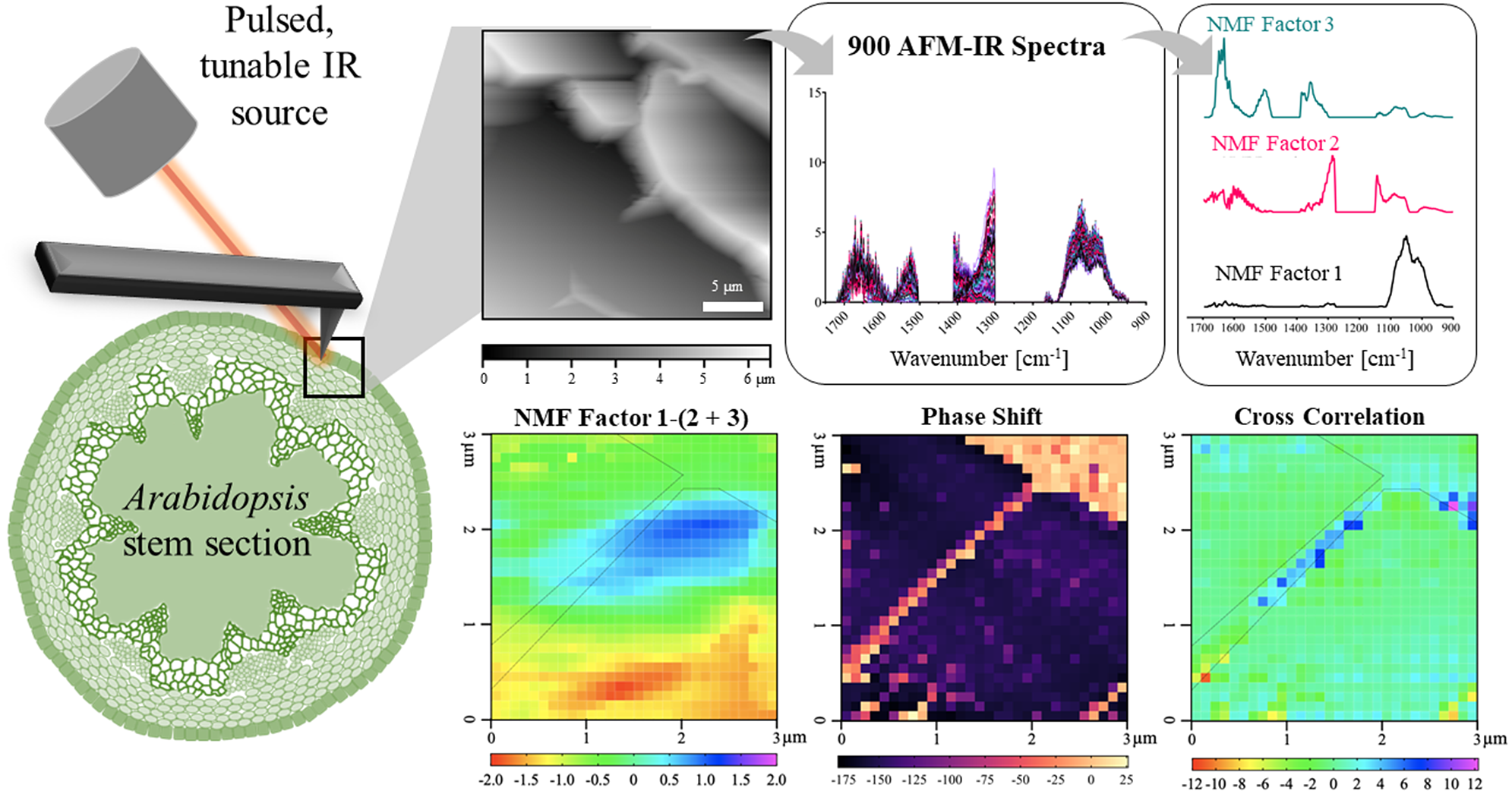
Spatial heterogeneity in composition and organisation of the primary cell wall affects the mechanics of cellular morphogenesis. However, directly correlating cell wall composition, organisation and mechanics has been challenging. To overcome this barrier, we applied atomic force microscopy coupled with infrared (AFM-IR) spectroscopy to generate spatially correlated maps of chemical and mechanical properties for paraformaldehyde-fixed, intact Arabidopsis thaliana epidermal cell walls. AFM-IR spectra were deconvoluted by non-negative matrix factorisation (NMF) into a linear combination of IR spectral factors representing sets of chemical groups comprising different cell wall components. This approach enables quantification of chemical composition from IR spectral signatures and visualisation of chemical heterogeneity at nanometer resolution. Cross-correlation analysis of the spatial distribution of NMFs and mechanical properties suggests that the carbohydrate composition of cell wall junctions correlates with increased local stiffness. Together, our work establishes new methodology to use AFM-IR for the mechanochemical analysis of intact plant primary cell walls.
Single-cell analysis is important to understand how individual cells work and respond at the cell population level. Experimental single-cell isolation techniques, including dilution, fluorescence-activated cell sorting, microfluidics, and micromanipulation, have been developed in recent decades. However, such applications typically require large cell populations and skilled professionals. Additionally, these methods are unsuitable for sequential analysis before and after cell isolation. In this study, we propose a method for target cell isolation using automated infrared laser-mediated disruption of pollen grains in pollen populations. Germination of the target pollen was observed at the same location as that before laser irradiation, and germinated pollen grains were enriched in the cell population. Pollination of laser-irradiated bulk pollen populations also showed that the target pollen preferentially germinated on the stigma. This method is expected to facilitate physiological analyses of target cells at the single-cell level and effectively produce seeds derived from target pollen.
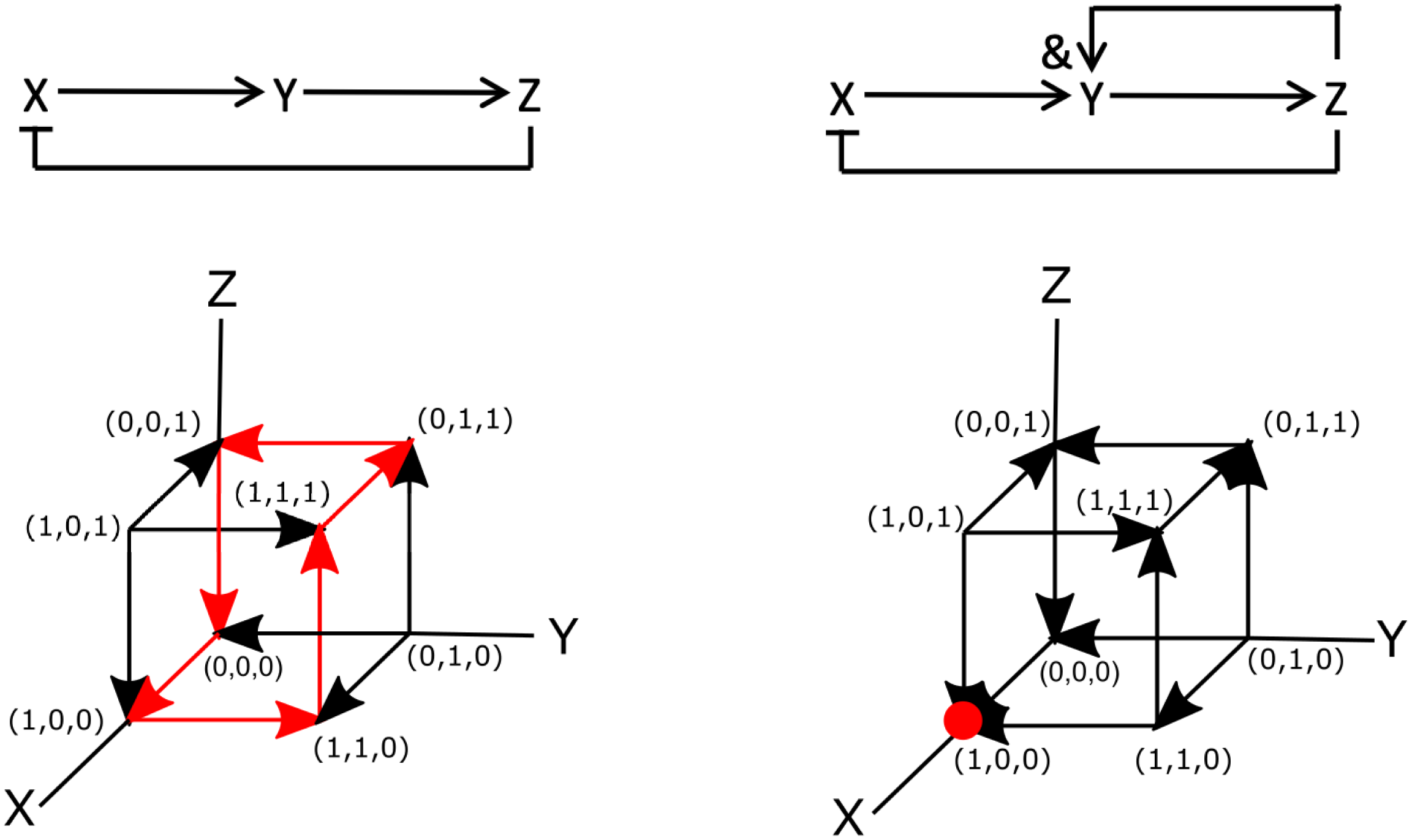
Signalling and genetic networks underlie most biological processes and are often complex, containing many highly connected components. Modelling these networks can provide insight into mechanisms but is challenging given that rate parameters are often not well defined. Boolean modelling, in which components can only take on a binary value with connections encoded by logic equations, is able to circumvent some of these challenges, and has emerged as a viable tool to probe these complex networks. In this review, we will give an overview of Boolean modelling, with a specific emphasis on its use in plant biology. We review how Boolean modelling can be used to describe biological networks and then discuss examples of its applications in plant genetics and plant signalling.
As the interface between plants and the environment, the leaf epidermis provides the first layer of protection against drought, ultraviolet light, and pathogen attack. This cell layer comprises highly coordinated and specialised cells such as stomata, pavement cells and trichomes. While much has been learned from the genetic dissection of stomatal, trichome and pavement cell formation, emerging methods in quantitative measurements that monitor cellular or tissue dynamics will allow us to further investigate cell state transitions and fate determination in leaf epidermal development. In this review, we introduce the formation of epidermal cell types in Arabidopsis and provide examples of quantitative tools to describe phenotypes in leaf research. We further focus on cellular factors involved in triggering cell fates and their quantitative measurements in mechanistic studies and biological patterning. A comprehensive understanding of how a functional leaf epidermis develops will advance the breeding of crops with improved stress tolerance.
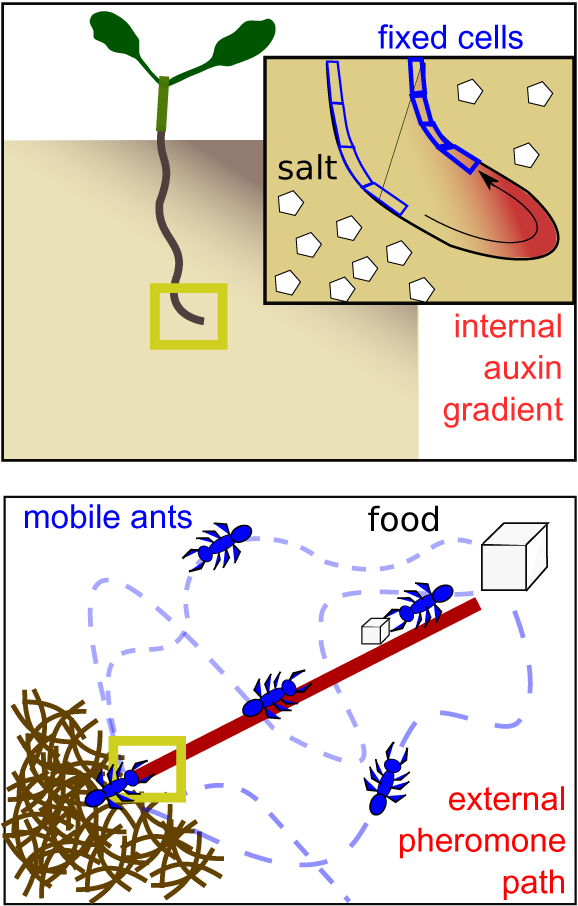
Information processing is an essential part of biology, enabling coordination of intra-organismal processes such as development, environmental adaptation and inter-organismal communication. Whilst in animals with specialised brain tissue a substantial amount of information processing occurs in a centralised manner, most biological computing is distributed across multiple entities, such as cells in a tissue, roots in a root system or ants in a colony. Physical context, called embodiment, also affects the nature of biological computing. While plants and ant colonies both perform distributed computing, in plants the units occupy fixed positions while individual ants move around. This distinction, solid versus liquid brain computing, shapes the nature of computations. Here we compare information processing in plants and ant colonies, highlighting how similarities and differences originate in, as well as make use of, the differences in embodiment. We end with a discussion on how this embodiment perspective may inform the debate on plant cognition.
Mobilisation of seed storage reserves is important for seedling establishment in Arabidopsis. In this process, sucrose is synthesised from triacylglycerol via core metabolic processes. Mutants with defects in triacylglycerol-to-sucrose conversion display short etiolated seedlings. We found that whereas sucrose content in the indole-3-butyric acid response 10 (ibr10) mutant was significantly reduced, hypocotyl elongation in the dark was unaffected, questioning the role of IBR10 in this process. To dissect the metabolic complexity behind cell elongation, a quantitative-based phenotypic analysis combined with a multi-platform metabolomics approach was applied. We revealed that triacylglycerol and diacylglycerol breakdown were disrupted in ibr10, resulting in low sugar content and poor photosynthetic ability. Importantly, batch-learning self-organised map clustering revealed that threonine level was correlated with hypocotyl length. Consistently, exogenous threonine supply stimulated hypocotyl elongation, indicating that sucrose levels are not always correlated with etiolated seedling length, suggesting the contribution of amino acids in this process.
Meristems in land plants share conserved functions but develop highly variable structures. Meristems in seed-free plants, including ferns, usually contain one or a few pyramid-/wedge-shaped apical cells (ACs) as initials, which are lacking in seed plants. It remained unclear how ACs promote cell proliferation in fern gametophytes and whether any persistent AC exists to sustain fern gametophyte development continuously. Here, we uncovered previously undefined ACs maintained even at late developmental stages in fern gametophytes. Through quantitative live-imaging, we determined division patterns and growth dynamics that maintain the persistent AC in Sphenomeris chinensis, a representative fern. The AC and its immediate progenies form a conserved cell packet, driving cell proliferation and prothallus expansion. At the apical centre of gametophytes, the AC and its adjacent progenies display small dimensions resulting from active cell division instead of reduced cell expansion. These findings provide insight into diversified meristem development in land plants.
Most approaches to estimate ecological value use monetary valuation. Here, we propose a different framework accounting ecological value in biophysical terms. More specifically, we are implementing the ecosystem natural capital accounting framework as an operational adaptation and extension of the UN System of Economic and Environmental Accounting/Ecosystem Accounting. The proof-of-concept study was carried out at the Rhône river watershed scale (France). Four core accounts evaluate land use, water and river condition, bio-carbon content of various stocks of biomass and its uses, and the state of ecosystem infrastructure. Integration of the various indicators allows measuring ecosystems overall capability and their degradation. The 12-year results are based on spatial–temporal geographic information and local statistics. Increasing levels of intensity of use are registered over time, that is, the extraction of resources surpasses renewal. We find that agriculture and land artificialisation are the main drivers of natural capital degradation.
Using conventional statistical approaches there exist powerful methods to classify shapes. Embedded in morphospaces is information that allows us to visualise theoretical leaves. These unmeasured leaves are never considered nor how the negative morphospace can inform us about the forces responsible for shaping leaf morphology. Here, we model leaf shape using an allometric indicator of leaf size, the ratio of vein to blade areas. The borders of the observable morphospace are restricted by constraints and define an orthogonal grid of developmental and evolutionary effects which can predict the shapes of possible grapevine leaves. Leaves in the genus Vitis are found to fully occupy morphospace available to them. From this morphospace, we predict the developmental and evolutionary shapes of grapevine leaves that are not only possible, but exist, and argue that rather than explaining leaf shape in terms of discrete nodes or species, that a continuous model is more appropriate.
Non-coding RNAs (ncRNAs) are major players in the regulation of gene expression. This study analyses seven classes of ncRNAs in plants using sequence and secondary structure-based RNA folding measures. We observe distinct regions in the distribution of AU content along with overlapping regions for different ncRNA classes. Additionally, we find similar averages for minimum folding energy index across various ncRNAs classes except for pre-miRNAs and lncRNAs. Various RNA folding measures show similar trends among the different ncRNA classes except for pre-miRNAs and lncRNAs. We observe different k-mer repeat signatures of length three among various ncRNA classes. However, in pre-miRs and lncRNAs, a diffuse pattern of k-mers is observed. Using these attributes, we train eight different classifiers to discriminate various ncRNA classes in plants. Support vector machines employing radial basis function show the highest accuracy (average F1 of ~96%) in discriminating ncRNAs, and the classifier is implemented as a web server, NCodR.
Quantitative plant biology is a growing field, thanks to the substantial progress of models and artificial intelligence dealing with big data. However, collecting large enough datasets is not always straightforward. The citizen science approach can multiply the workforce, hence helping the researchers with data collection and analysis, while also facilitating the spread of scientific knowledge and methods to volunteers. The reciprocal benefits go far beyond the project community: By empowering volunteers and increasing the robustness of scientific results, the scientific method spreads to the socio-ecological scale. This review aims to demonstrate that citizen science has a huge potential (i) for science with the development of different tools to collect and analyse much larger datasets, (ii) for volunteers by increasing their involvement in the project governance and (iii) for the socio-ecological system by increasing the share of the knowledge, thanks to a cascade effect and the help of ‘facilitators’.
Auxin is a key regulator of root morphogenesis across angiosperms. To better understand auxin-regulated networks underlying maize root development, we have characterized auxin-responsive transcription across two time points (30 and 120 min) and four regions of the primary root: the meristematic zone, elongation zone, cortex and stele. Hundreds of auxin-regulated genes involved in diverse biological processes were quantified in these different root regions. In general, most auxin-regulated genes are region unique and are predominantly observed in differentiated tissues compared with the root meristem. Auxin gene regulatory networks were reconstructed with these data to identify key transcription factors that may underlie auxin responses in maize roots. Additionally, Auxin-Response Factor subnetworks were generated to identify target genes that exhibit tissue or temporal specificity in response to auxin. These networks describe novel molecular connections underlying maize root development and provide a foundation for functional genomic studies in a key crop.
Whole-genome bisulfite sequencing (WGBS) is the standard method for profiling DNA methylation at single-nucleotide resolution. Different tools have been developed to extract differentially methylated regions (DMRs), often built upon assumptions from mammalian data. Here, we present MethylScore, a pipeline to analyse WGBS data and to account for the substantially more complex and variable nature of plant DNA methylation. MethylScore uses an unsupervised machine learning approach to segment the genome by classification into states of high and low methylation. It processes data from genomic alignments to DMR output and is designed to be usable by novice and expert users alike. We show how MethylScore can identify DMRs from hundreds of samples and how its data-driven approach can stratify associated samples without prior information. We identify DMRs in the A. thaliana 1,001 Genomes dataset to unveil known and unknown genotype–epigenotype associations .
Mitochondria in plant cells usually contain less than a full copy of the mitochondrial DNA (mtDNA) genome. Here, we asked whether mitochondrial dynamics may allow individual mitochondria to ‘collect’ a full set of mtDNA-encoded gene products over time, by facilitating exchange between individuals akin to trade on a social network. We characterise the collective dynamics of mitochondria in Arabidopsis hypocotyl cells using a recent approach combining single-cell time-lapse microscopy, video analysis and network science. We use a quantitative model to predict the capacity for sharing genetic information and gene products through the networks of encounters between mitochondria. We find that biological encounter networks support the emergence of gene product sets over time more readily than a range of other possible network structures. Using results from combinatorics, we identify the network statistics that determine this propensity, and discuss how features of mitochondrial dynamics observed in biology facilitate the collection of mtDNA-encoded gene products.
My visual artworks propose ways of being in the world—the world that humans share with non-humans. By developing projects such as breathe with a tree or listen to soil, I wish my installations to be experienced as translators. Those art projects are the result of collaborations with different teams of scientists. Together we found technological tools that could be used in art installations. These hybridizations between art and science sometimes mischievously divert technology, and instead, offer us aesthetic work with its roots deep in traditional arts and crafts knowledge. With them we can—for a moment—share time with plants, and be in dialogue with air, soil and gravity. The first project, Dendromacy, an experimental movie, was designed with a specific cooled lens thermal camera. The second one, Listening to the soil, a sounded ceramic installation started from bioacoustics recordings of the soil mega and meso-fauna.
Photosynthesis, the ability to fix atmospheric carbon dioxide, was acquired by eukaryotes through symbiosis: the plastids of plants and algae resulted from a cyanobacterial symbiosis that commenced more than 1.5 billion years ago and has chartered a unique evolutionary path. This resulted in the evolutionary origin of plants and algae. Some extant land plants have recruited additional biochemical aid from symbiotic cyanobacteria; these plants associate with filamentous cyanobacteria that fix atmospheric nitrogen. Examples of such interactions can be found in select species from across all major lineages of land plants. The recent rise in genomic and transcriptomic data has provided new insights into the molecular foundation of these interactions. Furthermore, the hornwort Anthoceros has emerged as a model system for the molecular biology of cyanobacteria–plant interactions. Here, we review these developments driven by high-throughput data and pinpoint their power to yield general patterns across these diverse symbioses.