To save content items to your account,
please confirm that you agree to abide by our usage policies.
If this is the first time you use this feature, you will be asked to authorise Cambridge Core to connect with your account.
Find out more about saving content to .
To save content items to your Kindle, first ensure no-reply@cambridge.org
is added to your Approved Personal Document E-mail List under your Personal Document Settings
on the Manage Your Content and Devices page of your Amazon account. Then enter the ‘name’ part
of your Kindle email address below.
Find out more about saving to your Kindle.
Note you can select to save to either the @free.kindle.com or @kindle.com variations.
‘@free.kindle.com’ emails are free but can only be saved to your device when it is connected to wi-fi.
‘@kindle.com’ emails can be delivered even when you are not connected to wi-fi, but note that service fees apply.
The present study examined military families’ use of food distribution resources and military (e.g. rank) and non-military (e.g. race/ethnicity) characteristics associated with using food distribution resources.
Design:
Secondary data analyses from a cross-sectional survey in the first 6 months of 2021.
Setting:
A national sample of eligible families completed an online survey.
Participants:
8326 enlisted military families with an active duty service member in the United States Army or Air Force who applied for supplemental childcare funding distributed by National Military Family Association.
Results:
13·2 % of the families reported utilising a food distribution resource in the past 12 months. Those with lower financial well-being were more likely to utilise such resources. Older (OR = 1·04, 95 % CI = 1·02, 1·05, P < 0·001), single-earner (OR = 0·73, 95 % CI = 0·61, 0·89, P = 0·001) families with a lower rank (OR = 0·69, 95 % CI = 0·64, 0·75, P < 0·001) and Army affiliation (compared with Air Force) (OR = 2·31, 95 % CI = 2·01, 2·67, P < 0·001) were more likely to utilise food distribution resources. Members of certain racial/ethnic minority groups were more likely to utilise food distribution resources than White respondents (OR from 1·47 for multi-racial to 1·69 for Asians), as were families with more dependent children (OR = 1·35, 95 % CI = 1·25, 1·47, P < 0·001).
Conclusions:
These results identify the extent of food distribution resource utilisation in military families with young children approximately 1 year into the COVID-19 pandemic. The results also identify characteristics associated with their use of food distribution resources. Findings are discussed with an emphasis on prevention and intervention implications for military families.
Food-based dietary guidelines (FBDG) are an important resource to improve population health; however, little is known about the types of strategies to disseminate them. This study sought to describe dissemination strategies and content of dissemination plans that were available for FBDG.
Design:
A cross-sectional audit of FBDG with a published English-language version sourced from the United Nations FAO repository. We searched for publicly available dissemination strategies and any corresponding plans available in English language. Two authors extracted data on strategies, which were grouped according to the Model for Dissemination Research Framework (including source, audience, channel and message). For guidelines with a dissemination plan, we described goals, audience, strategies and expertise and resources according to the Canadian Institute for Health Research guidance.
Setting:
FBDG from fifty-three countries mostly from high-income (n 28, 52·8 %), and upper-middle income (n 18, 34 %) areas were included.
Participants:
n/a.
Results:
The source of guidelines was most frequently health departments (79·2 %). The message included quantities and types of foods, physical activity recommendations and 88·7 % included summarised versions of main messages. The most common channels were infographics and information booklets, and the main end-users were the public. For twelve countries (22·6 %), we were able to source an English-language dissemination plan, where none met all recommendations outlined by the Canadian Institute for Health Research.
Conclusions:
The public was the most frequently identified end-user and thus most dissemination strategies and plans focused on this group. Few FBDG had formal dissemination plans and of those there was limited detailed provided.
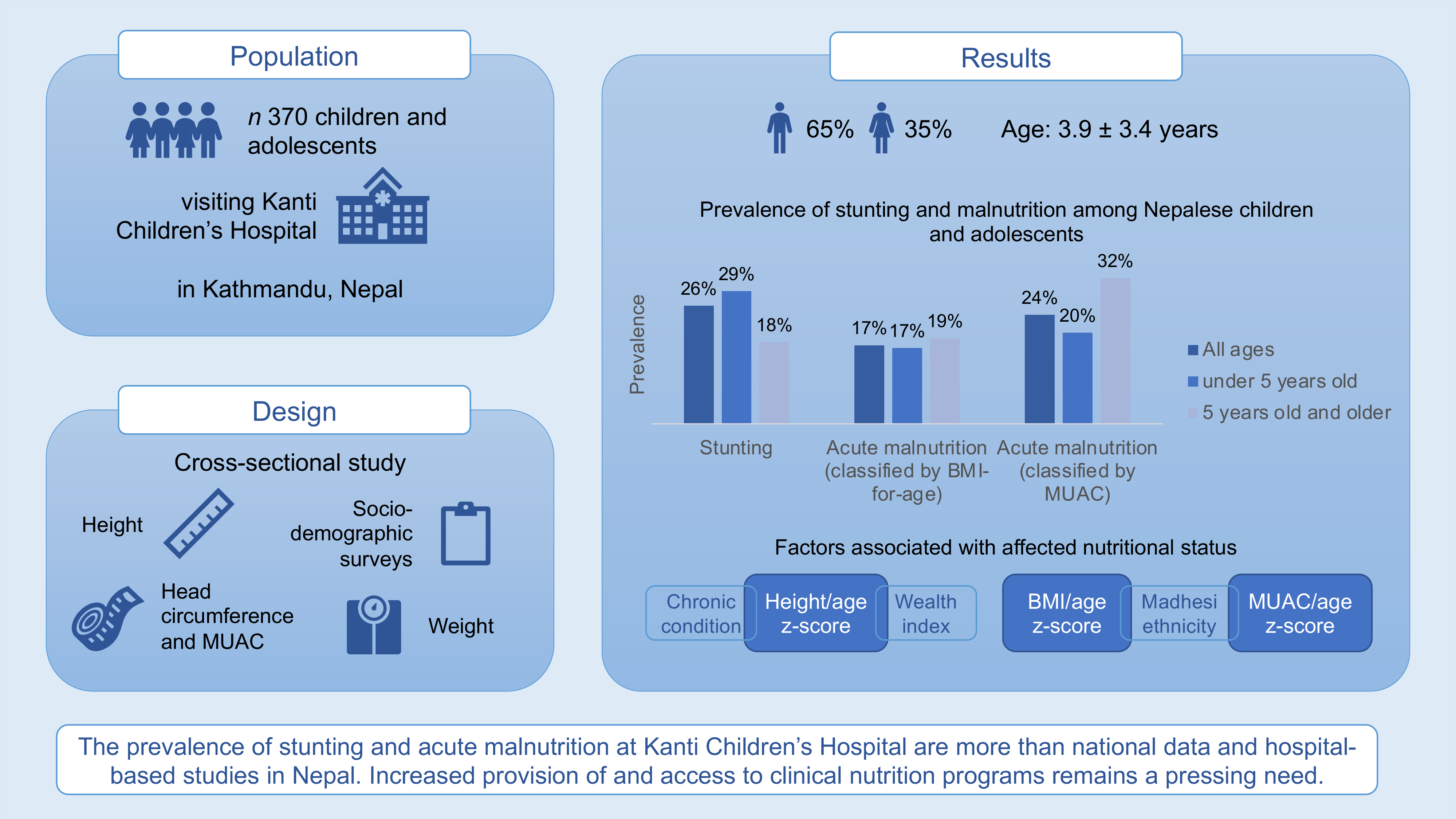
The present study assessed dietary diversity and anthropometric status of children attending early development centres in South Africa. In the Vhembe District of Limpopo province, South Africa, 273 children were conveniently chosen from 8 randomly selected early childhood development centres for a cross-sectional study. Data were gathered via a questionnaire administered by the interviewer in June 2021. Height, body weight and mid-upper arm circumference were measured to assess anthropometric status. A 24-h dietary recall was obtained to provide information on dietary diversity. The prevalence of underweight, wasting and stunting was 9, 4 and 26 %, respectively. More than half of the children had a low dietary diversity score, according to the Food and Agriculture Organization scoring system for children. Grains, roots, tubers, dairy products, other fruits and vegetables, and flesh-based foods were the highest consumed food groups. The lowest consumption was for eggs, vitamin A-rich fruits and vegetables, legumes and nuts. Height for age and weight for age were significantly associated with dietary diversity score, but not weight for height. Children who did not meet the reference value of greater than 4 for dietary diversity had a significant risk of being underweight (AOR 0⋅25, 95 % CI 0⋅08, 0⋅75) and stunted (AOR 0⋅32, 95 % CI 0⋅14, 0⋅74). The nutritional status of the children was impacted by a lack of adequate dietary diversity. Young children in rural areas need to receive a wide range of food to promote greater diversification of diets in order to diminish the risk of undernutrition.
Diets with a low proportion of energy from protein have shown to cause overconsumption of non-protein energy, known as Protein Leverage. Older adults are susceptible to nutritional inadequacy. The aim was to investigate associations between protein to non-protein ratio (P:NP) and intakes of dietary components and assess the nutritional adequacy of individuals aged 65–75 years from the Nutrition for Healthy Living (NHL) Study.
Design:
Cross-sectional. Nutritional intakes from seven-day weighed food records were compared with the Nutrient Reference Values for Australia and New Zealand, Australian Guide to Healthy Eating, Australian Dietary Guidelines and World Health Organisation Free Sugar Guidelines. Associations between P:NP and intakes of dietary components were assessed through linear regression analyses.
Setting:
NHL Study.
Participants:
113 participants.
Results:
Eighty-eight (59 female and 29 male) with plausible dietary data had a median (interquartile range) age of 69 years (67–71), high education level (86 %) and sources of income apart from the age pension (81 %). Substantial proportions had intakes below recommendations for dairy and alternatives (89 %), wholegrain (89 %) and simultaneously exceeded recommendations for discretionary foods (100 %) and saturated fat (92 %). In adjusted analyses, P:NP (per 1 % increment) was associated with lower intakes of energy, saturated fat, free sugar and discretionary foods and higher intakes of vitamin B12, Zn, meat and alternatives, red meat, poultry and wholegrain % (all P < 0·05).
Conclusions:
Higher P:NP was associated with lower intakes of energy, saturated fat, free sugar and discretionary. Our study revealed substantial nutritional inadequacy in this group of higher socio-economic individuals aged 65–75 years.
We aimed to study supplement use in relation to dietary intake among pregnant women in Sweden, and adherence to the Nordic Nutrition Recommendations among supplement and non-supplement users. Pregnant women were recruited at registration to antenatal care in 2013–2014. In third trimester, supplement use was collected using a questionnaire, and dietary intake was collected using a FFQ. The majority (64 %) of the 1044 women reported use of one or more supplements. Among all, 0–23 % reported dietary intakes above recommended intake (RI) of vitamin D, folate, Fe and Se. Median dietary intakes of thiamine (1·4 v. 1·3 mg P = 0·013), phosphorus (1482 v. 1440 mg P = 0·007), folate (327 v. 316 µg P = 0·02), Fe (12 v. 11·5 mg P = 0·009), Mg (361 v. 346 mg P < 0·001) and Zn (10·7 v. 10·4 mg P = 0·01) were higher among supplement users compared with non-users. Larger proportions of supplement users than non-users adhered to RI of dietary intakes of thiamine (42 % v. 35 % P = 0·04) and Mg (75 % v. 69 % P = 0·05). Among non-users, a minority had dietary intakes above RI for vitamin D (6 %), folate (10 %) and Fe (21 %). The majority (75–100 %) of supplement users had total intakes above RI for most nutrients. In conclusion, supplement use contributed substantially to reaching RI for vitamin D, folate and Fe. Supplement users had a higher dietary intake of several nutrients than non-users. This highlights that non-supplement users are at risk of inadequate nutrient intakes during pregnancy, suggesting a need for heightened awareness of nutritional adequacy for pregnant women.
To establish the relationship between the marketing strategies and nutritional quality of foods and beverages promoted in television food advertisements (TV ads) seen by Colombian child audiences overall and based on child gender and socio-economic strata (SES).
Design:
A quantitative content analysis of marketing appeals was combined with nutritional data of the food products advertised and matched with TV audience ratings data for each food and beverage ads for Colombian children between 4 and 11 years.
Setting:
All beverages and foods TV ads cable or over-the-air channels in Colombia in 2017.
Participants:
N/A.
Results:
Compared with rational appeals (e.g. freshness, health or nutrition messages), emotional appeals (referencing or depicting human senses or emotions, e.g. using cartoons to suggest fun) were more frequently used in the TV ads most viewed by Colombian children. Female children and children in lower SES tended to be more exposed to emotional appeals in TV ads than their male or higher SES counterparts. Furthermore, TV ads using more emotional appeals tended to be for products high in problematic nutrients.
Conclusion:
The findings of this study highlight the need to implement statutory measures to reduce the deleterious effect of food marketing on children.
The combined sandwich-ELISA (s-ELISA; VitMin Lab, Germany) and the Quansys Q-Plex™ Human Micronutrient Array (7-Plex) are multiplex serum assays that are used to assess population micronutrient status in low-income countries. We aimed to compare the agreement of five analytes, α-1-acid glycoprotein (AGP), C-reactive protein (CRP), ferritin, retinol-binding protein 4 (RBP4) and soluble transferrin receptor (sTfR) as measured by the 7-Plex and the s-ELISA. Serum samples were collected between March 2016 and December 2017. Pregnant women (n 249) were recruited at primary healthcare clinics in Johannesburg, and serum samples were collected between March 2016 and December 2017. Agreement between continuous measurements was assessed by Bland–Altman plots and concordance measures. Agreement in classifications of deficiency or inflammation was assessed by Cohen’s kappa. Strong correlations (r > 0·80) were observed between the 7-Plex and s-ELISA for CRP and ferritin. Except for CRP, the 7-Plex assay gave consistently higher measurements than the s-ELISA. With the exception of CRP (Lin’s ρ = 0·92), there was poor agreement between the two assays, with Lin’s ρ < 0·90. Discrepancies of test results difference between methods increased as the serum concentrations rose. Cohen’s kappa for all the five analytes was < 0·81 and ranged from slight agreement (vitamin A deficiency) to substantial (inflammation and Fe deficiency) agreement. The 7-Plex 1.0 is a research and or surveillance tool with potential for use in low-resource laboratories but cannot be used interchangeably with the s-ELISA. Further optimising and validation is required to establish its interchangeability with other validated methods.
For most people, the most obvious thought or image that sexual reproduction brings to mind is that of sexual intercourse, a mating between two individuals of opposite sexes, which will result in the birth of their common offspring. While biparental reproduction is certainly the most common mode of sexual reproduction among all eukaryotes, it is not the only one, and the way it is carried out can depart substantially, in many different ways, from the ‘canonical’ description above. What is common to all these modes is that two distinct sexually compatible individuals (parents) undertake a sexual exchange that leads to the generation of new individuals with a genetic constitution obtained from the association and/or the reassortment of those parents’ genomes. The key event in this mode of reproduction, technically called amphigony, is the fusion of two gametes or two nuclei functioning as gametes (syngamy), each produced by one parent, to form a zygote. While in species with anisogamy (i.e. with distinct male and female gametes; Chapter 4), only gametes of opposite sex are compatible, the two individuals that produce them are not necessarily a male and a female.
Delimiting the biological process we call reproduction with respect to other biological processes is not as easy as it may first appear. Exploring these ‘difficult boundaries’ – or, if you prefer, these ‘grey areas’ – is not a mere academic exercise. Our descriptions and classifications can significantly affect investigations and understanding, allowing similarities and differences among the reproductive phenomena to appear, or hiding them from our sight. Our schemes may prove adequate to address some questions, while at the same time being totally inadequate to look into others. As we approach the end of the book, we are now equipped to look at some of these difficult boundaries.
Folic acid supplementation is recommended during pregnancy to support healthy fetal development; (6S)-5-methyltetrahydrofolic acid ((6S)-5-MTHF) is available in some commercial prenatal vitamins as an alternative to folic acid, but its effect on blood folate status during pregnancy is unknown. To address this, we randomised sixty pregnant individuals at 8–21 weeks’ gestation to 0·6 mg/d folic acid or (6S)-5-MTHF × 16 weeks. Fasting blood specimens were collected at baseline and after 16 weeks (endline). Erythrocyte and serum folate were quantified via microbiological assay (as globally recommended) and plasma unmetabolised folic acid (UMFA) via LC-MS/MS. Differences in biochemical folate markers between groups were explored using multivariable linear/quantile regression, adjusting for baseline concentrations, dietary folate intake and gestational weeks. At endline (n 54), the mean values and standard deviations (or median, inter-quartile range) of erythrocyte folate, serum folate and plasma UMFA (nmol/l) in those supplemented with (6S)-5-MTHF v. folic acid, respectively, were 1826 (sd 471) and 1998 (sd 421); 70 (sd 13) and 78 (sd 17); 0·5 (0·4, 0·8) and 1·3 (0·9, 2·1). In regression analyses, erythrocyte and serum folate did not differ by treatment group; however, concentrations of plasma UMFA in pregnancy were 0·6 nmol/l higher (95 % CI 0·2, 1·1) in those supplementing with folic acid as compared with (6S)-5-MTHF. In conclusion, supplementation with (6S)-5-MTHF may reduce plasma UMFA by ∼50 % as compared with supplementation with folic acid, the biological relevance of which is unclear. As folate is currently available for purchase in both forms, the impact of circulating maternal UMFA on perinatal outcomes needs to be determined.
Appropriate dietary intake has been found to positively impact athletes’ performance, body composition and recovery from exercise. Strategies to optimise dietary intake often involve targeting one or more of the many factors that are known to influence dietary intake. This review aims to investigate the types and effectiveness of interventions used to impact modifiable factors of dietary intake in athletes. MEDLINE, CINAHL, SPORTDiscus and Web of Science were searched from inception to May 2022 for intervention studies that measured dietary intake with a quantitative tool and explored at least one factor thought to influence the dietary intake of adult athletes. Study quality was assessed using the ADA Quality Criteria Checklist: Primary Research. Twenty-four studies were included. The most common interventions focused on nutrition education (n 10), macronutrient adjustment (n 7) and physical activity (n 5). The three most common factors thought to influence dietary intake addressed were nutrition knowledge (n 12), hunger and appetite (n 8), and body composition (n 4). Significant changes in dietary intake were found in sixteen studies, with nutrition education interventions returning significant results in the largest proportion of studies (n 8). Study quality within this review was mostly average (n 4 < 50 %, n 19 50–80 %, n 1 > 80 %). As studies included were published between 1992 and 2021, interventions and factors explored in older studies may require up-to-date research to investigate possible differences in results due to time-related confounders.
We are all familiar with the changes in an organism during development, followed by its reproduction, which are repeated generation after generation. Biologists describe this development–reproduction sequence as the life cycle: the series of transformations and reproductive events that, from a given stage of life of an organism, leads to the corresponding stage in a subsequent generation. We can describe a biological cycle as going from zygote to zygote, but also from adult to adult, or from embryo to embryo: in a cyclical process, the choice of the ‘initial phase’ is arbitrary or conventional, as the notorious ‘the chicken or the egg’ dilemma beautifully illustrates.
In the course of their lives, organisms spend time and energy on a number of activities and functions, of which reproduction is only one – think of growth, defence against predators and pests, and others. How many resources are used for reproduction, how much time is devoted to it and how this time is distributed over the course of life are all elements that characterize the different reproductive strategies. From an even wider perspective, in those organisms that at certain times in their lives can opt for one or another reproductive mode (e.g. sexual or asexual reproduction, as in many plants and many marine invertebrates), a reproductive strategy includes also this reproductive policy.