To save content items to your account,
please confirm that you agree to abide by our usage policies.
If this is the first time you use this feature, you will be asked to authorise Cambridge Core to connect with your account.
Find out more about saving content to .
To save content items to your Kindle, first ensure no-reply@cambridge.org
is added to your Approved Personal Document E-mail List under your Personal Document Settings
on the Manage Your Content and Devices page of your Amazon account. Then enter the ‘name’ part
of your Kindle email address below.
Find out more about saving to your Kindle.
Note you can select to save to either the @free.kindle.com or @kindle.com variations.
‘@free.kindle.com’ emails are free but can only be saved to your device when it is connected to wi-fi.
‘@kindle.com’ emails can be delivered even when you are not connected to wi-fi, but note that service fees apply.
A new phase of carbon named Q-carbon is found to be over 40% harder than diamond. This phase is formed by nanosecond laser melting of amorphous carbon and rapid quenching from the super-undercooled state. Closely packed atoms in molten metallic carbon are quenched into Q-carbon with 80–85% sp3 and the rest sp2. The number density of atoms in Q-carbon can vary from 40% to 60% higher than diamond cubic lattice, as the tetrahedra packing efficiency increases from 70% to 80%. Using this semiempirical approach, the corresponding increase in Q-carbon hardness is estimated to vary from 48% to 70% compared to diamond.
Diamond stands out in its ability to host hundreds of color centers, the most studied of which may be the nitrogen-vacancy and NE8 centers. The NE8 center, in particular, can generate single photons at an energy of 1.56 eV, but synthesis efforts are low yield and lack precise control of the defect structure and resulting optical properties. Complementing a bottom-up synthesis effort, we develop a rapid-screening computational approach for screening potential color centers in nanodiamond, focusing here on the nickel–nitrogen complexes. Formation and optical absorption energies are characterized with respect to defect stoichiometry and structure.
Germanium is a small-gap semiconductor that efficiently absorbs visible light, resulting in photoexcited electrons predicted to be sufficiently energetic to reduce H2O for H2 gas evolution. In order to protect the surface from corrosion and prevent surface charge recombination in contact with aqueous pH 7 electrolyte, we grew epitaxial SrTiO3 layers of different thicknesses on p-Ge (001) surfaces. Four-nanometer SrTiO3 allows photogenerated electrons to reach the surface and evolve H2 gas, while 13 nm SrTiO3 blocks these electrons. Ambient pressure x-ray photoelectron spectroscopy indicates that the surface readily dissociates H2O to form OH species, which may impact surface band bending.
Superparamagnetic iron oxide nanoparticles (SPIONPs) are successfully synthesized in this study by co-precipitation method using actinobacterial metabolites as reducing agent. Physicochemical and morphological features of the nanoparticles (NPs) are analyzed by Fourier-transform infrared spectroscopy, x-ray-based techniques, vibrating sample magnetometer, thermal gravimetric analysis, and electron microscopic analysis, with an average size of 15–30 nm. Anticancer activity of the magnetite-NPs is systematically evaluated on HeLa cells using MTT assay, Hoechst nuclear staining, acridine orange/ethidium bromide dual staining and flow cytometric analysis. The obtained results open a new route for biosynthesis of SPIONPs, which to be used for various biomedical applications, particularly in cancer therapy.
Ceramics of Sr2CaFe2WO9 and Sr2PbFe2TeO9 double perovskites have been prepared in polycrystalline form by solid-state technique, in the air. The crystalline structure was analyzed using X-ray powder diffraction (XRPD) at room temperature. Rietveld analysis of XRPD patterns show that both compounds adopt a tetragonal structure with space group I4/m, with unit cell parameters a = 5.5453(1) Å, c = 7.8389(1) Å for Sr2CaFe2WO9, and a = 5.5994(15) Å, c = 7.8979(30) Å for Sr2PbFe2TeO9. A certain degree of anti-site disordering of W and/or Te and Fe on the B –sites have been detected, indicating the presence of a partial amount of W and/or Te at Fe positions and vice versa.
The time-dependent pyramidal or conical indentation of viscoelastic–plastic materials, such as glassy polymers, is examined by a flexible, Kelvin-like model. The model equation is simply solved numerically for a wide range of material properties and indentation loading sequences. The flexibility of the model is demonstrated by generating typical indentation responses for a metal, a ceramic, an elastomer, and a glassy polymer. Polymer indentation is further examined under ramp, hold, and cyclic loading conditions, including adhesive effects. The model and approach should be particularly useful in identifying the various deformation components contributing to observed instrumented indentation phenomena.
NiO nanoparticles (NPs) were synthesized at different annealing temperatures via a thermal decomposition process and characterized using X-ray diffraction, scanning electron microscopy, and UV-vis spectroscopy. The NiO NPs prepared at higher annealing temperature (400 °C) were shown excellent adsorption and photocatalytic activity toward textile dyes reactive black 5 (RB-5) and methylene blue (MB). About 87.2% of RB-5 in 60 min and 70.2% of MB in 5 h was removed using NiO NPs synthesized at 400 °C. The photocatalytic degradation of MB was found to increase with an increase in the annealing temperature of the catalyst. Moreover, the kinetic study revealed that the adsorption and photocatalytic activity of NiO NPs followed the second and first-order kinetics, respectively. The enhanced performance of NiO NPs toward dye removal might be related to its optical and structural properties.
Akin to the natural tissues, soft artificial muscles possess a life cycle limited by aging and degradation phenomena. Here, we propose a rejuvenation method aimed at silicone-ethanol soft composite actuators, in which ethanol escape occurs during prolonged actuation, thus compromising their performance. The rejuvenation is achieved by immersion of the material–actuator in ethanol, allowing its diffusion into the silicone-based material until saturation. Repeatable rejuvenation of a soft robot, based on the soft material–actuator, resulted in retention of up to 100% of its functionality. Thus, we suggest that this method may be used for the rejuvenation of soft artificial muscles and material–actuators.
Multiscale modeling and simulation techniques are transforming the way we can address questions concerning design, characterization, and optimization of novel materials. This transformation is enabled by advanced computational models that incorporate realistic geometries of porous media and serve as tools to predict flow and transport phenomena. Recent developments in mesoscopic and pore-scale modeling include workflows that combine experimental information and direct modeling into an integrated multiscale approach. This review surveys the progress, challenges, and future directions in predictive modeling and simulation of multiphysics phenomena in porous media.
We synthesized two types of ZnO nanoparticles (NPs) for comparison, the first NPs were produced using a Zn(Ac)2.2H2O solution in distilled water and the second were produced using a Zn(Ac)2.2H2O solution in an aqueous extract of Mentha (mint). The x-ray diffraction patterns were indexed on the basis of a hexagonal (wurtzite) structure. The samples illustrate the high crystalline quality, and the average crystal sizes of the NPs were calculated to be 50 and 60 nm for GS and NS, respectively. ZnO nanorods were produced for the first time by using green synthesis method.
In this work, using density functional theory we study electronic and atomic structure as well as redistribution of ions at the interface between cubic-Li7La3Zr2O12 (LLZO) (001) and LiCoO2 (LCO) (10–14). It is found that a large lattice-mismatch-induced compressive strain of ~12% at the interface leads to disordering of LLZO (001). However, even a large tensile strain of ~13.5% does not influence ordering of LCO (10–14). Li ions tend to move from the surface of LCO and bulk LLZO to occupy the interstitial sites at the topmost layers of the LLZO slab. Li ion transfer from LCO to LLZO accompanies with electron transfer from the former to the latter and the formation of gap states.
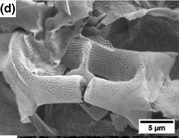
Diatoms are unicellular, eukaryotic microalgae inhabiting nearly all aquatic habitats. They are famous for their micro- and nanopatterned silica-based cell walls, which are envisioned for various technologic purposes. Within this review article, we summarize recent in vivo modifications of diatom biosilica with respect to the following questions: (i) Which metals are taken up by diatoms and eventually processed into nanoparticles (NPs)? (ii) Are these NPs toxic for the diatoms and––if so––what factors influence toxicity? (iii) What is the mechanism underlying NP synthesis and subsequent metabolism? (iv) How can the obtained materials be useful for materials science?
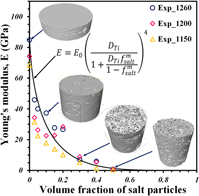
Ti6Al4V alloy samples with large pores suitable for bone implants are fabricated by pressing and sintering. Ti6Al4V powder is mixed with different volume fractions of salt particles. The sintering behavior up to 1260 °C is studied by dilatometry and pore features are observed by scanning electron microscopy and X-ray microtomography. Sintered materials with a relative density between 0.26 and 0.97 are obtained. 3D image analysis proves that large pores form a connected network when the amount of salt is 20% and above. The Young’s modulus and the yield stress of sintered materials deduced from compression tests span over wide ranges of values, which are consistent with real bone data. A simple analytical model is proposed to estimate the relative density as a function of the fraction of salt. This model combined with classical Gibson and Ashby’s power equations for mechanical properties can predict the fraction of salt required to obtain prescribed properties.
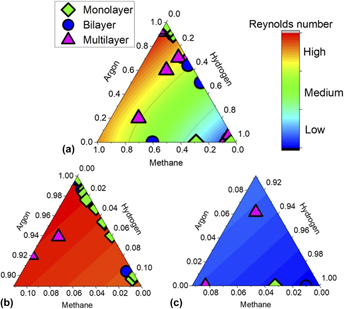
Chemical vapor deposition (CVD) of graphene has attracted high interest in the electronics industry due to its potential scalability for large-scale production. However, producing a homogeneous thin-film graphene with minimal defects remains a challenge. Studies of processing parameters, such as gas precursors, flow rates, pressures, temperatures, and substrate types, focus on improving the chemical aspect of the deposition. Despite the many reports on such parameters, studies on fluid dynamic aspects also need to be considered since they are crucial factors in scaling up the system for homogenous deposition. Once the deposition kinetics is thoroughly understood, the next vital step is fluid dynamics optimization to design a large-scale system that could deliver the gas uniformly and ensure maximum deposition rate with the desired property. In this review, the influence of fluid dynamics in graphene CVD process was highlighted. The basics and importance of CVD fluid dynamics was introduced. It is understood that the fluid dynamics of gases can be controlled in two ways: via reactor modification and gas composition. This paper begins first with discussions on horizontal tubular reactor modifications. This is followed by mechanical properties of the reactant gasses especially in terms of dimensionless Reynolds number which provides information on gas flow regime for graphene CVD process at atmospheric pressure. Data from the previous literature provide the Reynolds number for various gas compositions and its relation to graphene quality. It has been revealed that hydrogen has a major influence on the fluid dynamic conditions within the CVD, hence affecting the quality of the graphene produced. Focusing on atmospheric pressure CVD, suggestions for up-scaling into larger CVD reactors while maintaining similar fluid properties were also provided.
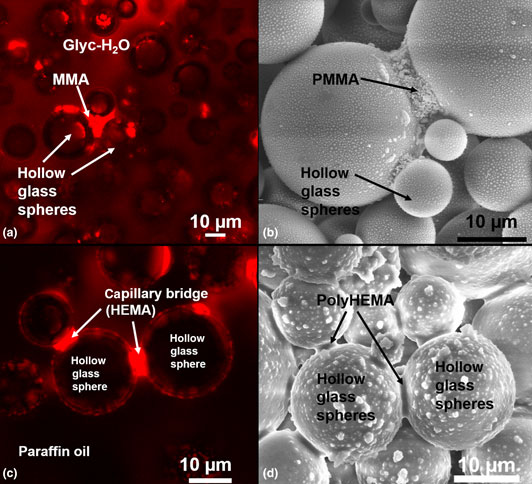
In this paper, we reviewed recent research in the field of capillary suspensions and highlight a variety of applications in the field of smart materials. Capillary suspensions are liquid–liquid–solid ternary systems where only one liquid is present in a few percent and induces a strong, capillary-induced particle network. These suspensions have a large potential for exploitation, particularly in the production of porous materials since the paste itself and the properties of the final material can be adapted. We also discussed the rheological properties of the suspension and network structure to highlight the various ways these systems can be tuned.
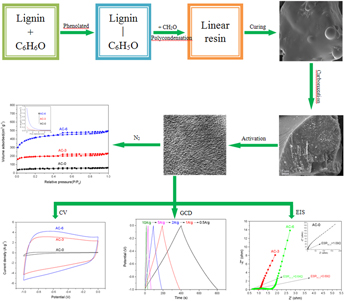
Lignin-based phenol formaldehyde resin was synthesized using phenolated calcium lignosulfonate, and porous carbon with good wettability was prepared after carbonization and potassium hydroxide (KOH) activation. The results indicated that when the KOH to the carbonized sample mass ratio was 6:1, the prepared carbon had a rich porous structure and higher surface area, with a specific surface area of 1320.13 m2/g. Furthermore, the porous carbon exhibited a maximum specific capacitance of 204.88 F/g at a current density of 0.5 A/g in the potential range −1.0 to 0 V in a 6 M KOH solution and a low equivalent series resistance of 0.64 Ω. The phenolated calcium lignosulfonate-based phenol formaldehyde resin porous carbon demonstrated a favorable electric double-layer performance.
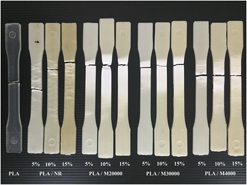
Admicellar polymerization, a novel technique for surface modification, was used in this work to enhance the compatibility between polymers with obviously different polarities, e.g., natural rubber (NR) and polylactic acid (PLA). The admicellar polymerization of methyl methacrylate over NR substrates (using potassium peroxodisulfate as an initiator) so-called poly(methyl methacrylate)–natural rubber (PMMA-ad-NR) was prepared and mixed with PLA at different contents (5, 10, and 15 wt%) in comparison to the simple PLA/NR blends. The monomer to initiator ratio was varied: 25:1, 50:1, and 100:1 corresponding to the admicelled PMMA molecular weight of 20,000, 30,000, and 40,000 g/mol, respectively. All PLA/PMMA-ad-NR blends showed good compatibility as evident by FE-SEM results revealing smooth boundary of PMMA-ad-NR domains in the PLA matrix. Moreover, the mechanical properties and thermal stability of PLA/PMMA-ad-NR blends were higher than those of PLA/NR blends, especially with increasing PMMA-ad-NR content up to 10 wt%. It was clear that the lowest molecular weight of the admicelled PMMA gave the highest toughness of PLA/PMMA-ad-NR blends.