To save content items to your account,
please confirm that you agree to abide by our usage policies.
If this is the first time you use this feature, you will be asked to authorise Cambridge Core to connect with your account.
Find out more about saving content to .
To save content items to your Kindle, first ensure no-reply@cambridge.org
is added to your Approved Personal Document E-mail List under your Personal Document Settings
on the Manage Your Content and Devices page of your Amazon account. Then enter the ‘name’ part
of your Kindle email address below.
Find out more about saving to your Kindle.
Note you can select to save to either the @free.kindle.com or @kindle.com variations.
‘@free.kindle.com’ emails are free but can only be saved to your device when it is connected to wi-fi.
‘@kindle.com’ emails can be delivered even when you are not connected to wi-fi, but note that service fees apply.
This article reviews materials developed to enable energy harvesting from textiles. It includes energy harvesting from mechanical, thermal, and light sources, and covers materials employed into yarns that can be woven into the textile and films that are deposited onto the surface of the textile. The textile places challenging constraints on the materials, for example, by limiting processing temperatures to typically less than 150°C and presenting a rough, inconsistent surface profile. Example materials include a screen-printable low-temperature composite lead zirconate titanate polymer film and poly(vinylidene fluoride) polymer fibers, both of which have been shown to harvest mechanical energy from textiles. Thermoelectric solutions demonstrated thus far are limited and challenging to implement within a textile. Photovoltaic solutions include organic and dye-sensitized solar cells fabricated into functionalized yarns and as films spray-coated onto textiles. While numerous suitable example materials and textile devices have been demonstrated, work is still needed to develop these into practical energy-harvesting solutions.
In this paper, a single-band local surface plasmon mode resonance metamaterial filter is calculated and simulated. The damping constant of the gold film is optimized in simulations to eliminate the effects of the grain boundary and the surface scattering on the transmission property. The transmission property of the designed metamaterial filter can be enhanced through optimizing structural parameters (the vertical distance or radius of the gold particle). Two narrow transmission bands are achieved due to the electric field enhancement effect. The electric field enhancement factor η = |E|/|E0| is used to reveal the electric field resonance strength change. Higher transmission peak and larger field enhancement factor can be achieved than the pure gold hole array structure.
Integration of the III–V material systems on Si is an enabling technology for achieving high efficiency heterojunction Si-based photovoltaic devices. Gallium phosphide (GaP) offers numerous potential electrical, optical, and material advantages over amorphous silicon (a-Si) for the realization of several heterojunction solar cell designs. In this paper, details are given for the growth, fabrication, and characterization of different n-GaP/n-Si heterojunction solar cells to explore the effect of GaP as a carrier-selective contact. The cell performance is promising with high Si bulk lifetime (∼2.2 ms at the injection level of 1015 cm−3) and an open-circuit voltage of 618 mV and an efficiency of 13.1% in this new solar cell design. In addition to GaP as an electron-selective contact, MoOx was successfully implemented as a hole-selective contact in the n-GaP/n-Si heterojunction solar cell, increasing efficiency to 14.1% by improving the short wavelength response. The Si bulk lifetime is maintained during growth of GaP on Si by two different approaches and their effects on GaP/Si solar cell performance are also presented.
The crystal structure of phenytoin sodium monohydrate at 295 K has been refined using synchrotron powder diffraction data, and optimized using density functional techniques.
As an important member of semiconducting transition metal oxides, MoO2 nanomaterials have many advantages in optical and electrical applications. However, MoO2 itself has no significant photocatalytic performance possibly because of its inferior conductivity and strong recombination of photogenerated electron–hole pairs. Here, we propose a facile, one-step pyrolysis method to prepare a novel C fibers@MoO2 nanoparticles core–shell composite, where the oxidative MoO2 nanoparticles in situ grew on the surface of conducting C fibers. Due to the compositing of MoO2 and C fibers, during photocatalysis tests, the recombination of photogenerated electron–hole pairs was effectively inhibited, and the lifetime of the photogenerated carries was efficiently prolonged, finally significantly improving the solar-driven photocatalytic activity on degrading various organic and inorganic pollutants in water, such as methylene blue, rhodamine B, phenol, and potassium dichromate, showing the great potential for environmental remediation by degrading toxic industrial chemicals in waste water under sunlight. Moreover, the composite presented good stability in composition and structure during the repeated use and long-term storage. In addition, this one-step growth method is an easy-to-handle, environmentally friendly, and low-cost synthesis method for large-scale production.
In this paper, corrosion behavior of 2198 Al–Cu–Li alloy in different aging stages is investigated using immersion and electrochemical measurements in 3.5 wt% NaCl aqueous solution. The corrosion resistance is found to decrease from the solution-anneal to the peak-aged condition but increase after the peak-aged, which is due to microstructure evolution of three main kinds of precipitating phases with the aging process: T1 (Al2CuLi), θ′ (Al2Cu), and a few δ′ (Al3Li) phases. The anode T1 phase grows and increases with the aging treatment and becomes nearly unchanged after the peak-aged. Moreover, the cathode θ′ phase slightly decreases in the over-aged. The potentiodynamic polarization curves also indicate the most positive corrosion potential and the lowest corrosion current density in the peak-aged. The results of electrochemical impedance spectroscopy are in agreement with the corrosion morphologies. Furthermore, the related equivalent circuit is established to investigate the corrosion mechanism of this alloy.
The ZnO/g-C3N4 binary heterostructures were formed by two steps, then the firm connection between ZnO NRs and lamellar g-C3N4 was characterized through powder XRD, FESEM with EDS, TEM, XPS, and Thermogravimetric analysis. Then the gas sensing performances of ZnO/g-C3N4 nanoheterostructures were analyzed systematically by using ethanol as a molecular probe. The results revealed that the fabricated compositive sensor not only exhibited quick response/recovery characteristics in the whole operating temperature (OT) range of 200–300 °C but also got a maximum response of 14.29 toward 100 ppm of ethanol at the optimal OT of only 260 °C. Moreover, such heterostructures also demonstrated good selectivity and superb reproducibility to acetone among all the tested toxic gases, especially higher response and faster response–recovery speeds than the pristine ZnO sensor. The above ZnO/g-C3N4 heterostructures may also supply other novel applications in the aspects of lithium-ion batteries, photocatalysis, optical devices, and so on.
The increasing demand for portable and low-power electronics for applications in self-powered devices and sensors has spurred interest in the development of efficient piezoelectric materials, via which mechanical energy from ambient vibrations can be transformed into electrical energy for autonomous devices, or which can be used in strain-sensitive applications. Semiconducting piezoelectric materials are ideal candidates in the emerging field of piezotronics and piezophototronics, where the development of a piezopotential in response to stress/strain can be used to tune the band structure of the semiconductor and hence its electronic and/or optical properties. Furthermore, research into nanowires of these materials has intensified due to the enhancement of piezoelectric properties at the nanoscale. In this regard, nanowires of ZnO and the III-nitrides have been extensively studied, but the piezoelectric properties of non-nitride III–V semiconductor nanowires remain less-explored. Indeed, direct measurements of the piezoelectric properties of single III–V nanowires are tellingly rare due to the difficulties associated with measurements of piezoelectric properties of nanoscale objects using conventional scanning probe microscopy techniques. This review addresses the challenges related to the study of piezoelectricity in III–V nanowires and the opportunities that lie therein in terms of device applications.
Epitaxial Sm0.6Nd0.4NiO3 thin films were grown on different substrates by pulsed laser deposition. X-ray diffraction indicates that for SLAO substrate, strain relaxation is accompanied by the creation of oxygen vacancies. The film resistivity on LaAlO3 and SrTiO3 substrates shows a clear insulator–metal transition (IMT) at 185 and 325 K, respectively, while the film is exclusively semiconducting on SrLaAlO4. At low temperatures, the conductivity of films deposited on SrLaAlO4 and SrTiO3 is described by the Mott variable-range hopping mechanism. With increasing film thickness, progressive tensile strain relaxation takes place, which in turn results in a gradual decrease in the IMT temperature.
The crystal structure of pemetrexed disodium heptahydrate has been solved and refined using synchrotron X-ray powder diffraction data, and optimized using density functional techniques. Pemetrexed disodium heptahydrate crystallizes in space group P21 (#4) with a = 11.732 697(27), b = 5.244 195(14), c = 21.689 00(6) Å, β = 92.663 90(20)°, V = 1333.051(6) Å3, and Z = 2. Each of the two ionized carboxylate groups acts as a unidentate ligand to a Na cation. The remaining five positions of the octahedral coordination spheres are occupied by water molecules. The Na octahedra share an edge to form pairs. These pairs share corners to form chains along the b-axis. All of the water molecule hydrogen atoms act as hydrogen bond donors. In addition the hydrogen atoms associated with the nitrogen atoms and amino groups of the pemetrexed anion were also observed to act as hydrogen bond donors. The powder pattern has been submitted to the International Centre for Diffraction Data (ICDD) for inclusion in the Powder Diffraction File™.
The formation of silver nanostructures (AgNSs) with different crystals morphology in porous SiO2/p-Si templates by the electroless wet-chemical method at temperatures between 20 and 50 °C and surface-enhanced Raman scattering (SERS) was investigated. It was found that optimized dendritic silver architectures contain a significant number of localized “hot spots.” We show that well-reproducible AgNSs provide a significantly enhanced Raman signal of Nile blue dye molecules up to 10−6 M by using different excitation wavelengths (473, 532, and 633 nm). Based on our observations, the well-organized AgNSs can act as efficient surfaces for SERS as well as (bio)-sensor applications.
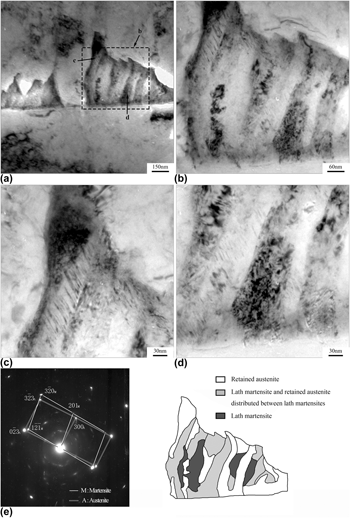
Welding was successfully used in the fabrication of low pressure steam turbine rotors for nuclear power plants. In this paper, the local brittle zone of the welded joint in NiCrMoV steel with heavy section was investigated by cross-zone fracture toughness test and the effect of martensite–austenite constituent in the simulated reheated zone of welds with different second peak temperature on toughness was analyzed. The results showed that the crack propagated in unstable manner in the reheated zone of welds where the martensite–austenite constituent promoted the initiation and propagation of the crack. The fine structure of martensite–austenite constituent contained retained austenite, martensite, and martensite–austenite mixture microstructure. The impact toughness deteriorated drastically in the incomplete phase transition zone for the simulated reheated zone of welds related to the formation of mixture microstructure in which large blocky martensite–austenite constituent at prior austenite grain boundaries and inside the grains were distributed in the shape of network.
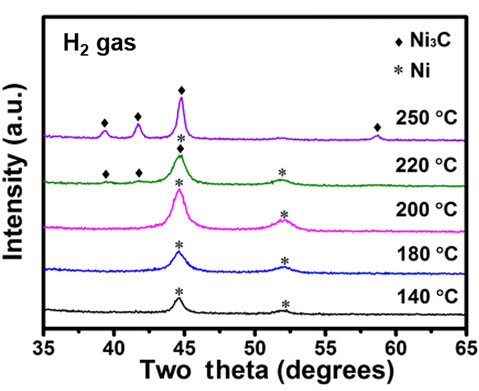
We report a new pulsed chemical vapor deposition (PCVD) process to deposit nickel (Ni) and nickel carbide (Ni3Cx) thin films, using bis(1,4-di-tert-butyl-1,3-diazabutadienyl)nickel(II) precursor and either H2 gas or H2 plasma as the coreactant, at a temperature from 140 to 250 °C. All the PCVD films are fairly pure with low levels of N and O impurities. The films deposited with H2 gas at ≤200 °C are faced centered cubic-phase Ni metal films with low C content; but at ≥220 °C, another phase of rhombohedral Ni3C is formed and the C content increases. However, when H2 plasma is used, the films are always in rhombohedral Ni3C phase for the entire temperature range.
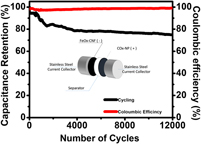
We develop an asymmetric aqueous supercapacitor using iron oxide anode and cobalt oxide cathode. The anode was fabricated using electrospinning of carbon precursor/iron oxide precursor blend followed by pyrolysis and in situ electrochemical conversion (to oxide) to form the binder-free and freestanding composite anode which delivered a capacitance of 460 F/g at 1 A/g and retained 82% capacitance after 5000 cycles. The superior performance is attributed to easy electrolyte accessibility as well as the porous fibrous carbon morphology, facilitating volume expansion of iron oxide. The cobalt oxide cathode was prepared using a simple chemical synthesis technique. The electrodes were chosen based on high over potential to water splitting reactions in 6 M KOH electrolyte resulting in a potential window of 1.6 V. The asymmetric device operated in 1.6 V achieved a capacitance of 94.5 F/g at 0.5 A/g while retaining 75% of its capacitance after 12,000 cycles, delivering energy and power densities of 40.53 W h/kg and 2432 W/kg, respectively.
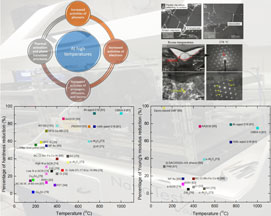
It is of the uttermost interest to understand the mechanical performance and deformation mechanisms contributing to small-scale plasticity of materials in micro/nanoelectromechanical systems at their service temperatures, which are usually above room temperature. In recent years, high-temperature nanoindentation experiments have emerged as a reliable approach to characterize the deformation behavior of materials at the nano and submicron scale. In this review, we highlight the role of the temperature in nanoindentation response of a wide variety of materials, with a particular focus on the thermally-activated deformation mechanisms in crystalline and non-crystalline materials under the indenter, e.g., dislocation processes, shear transformation zone, and phase transformations. A brief survey of the temperature-dependent nanoindentation elastic modulus, hardness, and creep behavior of materials is also provided. We also discuss experimental methods for correctly measuring the mechanical properties of materials at high temperatures.
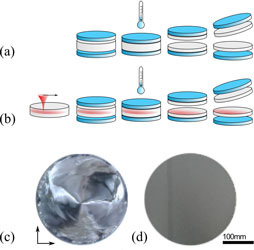
Using kerf-free wafering technologies material losses in semiconductor manufacturing processes can be reduced drastically. By the use of externally applied stress, crystalline materials can be separated along crystal planes with clearly defined thickness. Nevertheless, during this process striations caused by the crack propagation occur. These crack growth features are river and Wallner lines. In this work, we demonstrate a process for spalling that scales favorably for large-area semiconductor substrates with a diameter up to 300 mm. To get rid of the crack growth features, a laser-conditioning process with a high numerical aperture at photon energies below the material bandgap energy, using multi-photon effects is utilized. The process affords a surface roughness Ra after spalling of <1 µm.
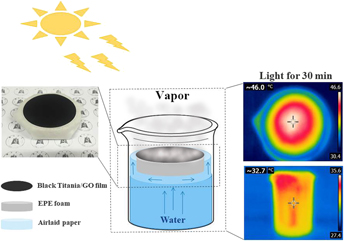
Solar steam generation is an efficient and green technology for desalination and drinking water purification, however, impeded by high cost, low efficiency, and complicated process. Black titania is expected to exhibit excellent solar steam performance due to its outstanding light absorption properties, chemical stability, low cost, and innocuity. Herein, we design a high absorbing and efficient solar steam generation system based on a black titania/graphene oxide nanocomposite film affixed to airlaid paper wrapped over the surface of expandable polyethylene foam; the system possesses several important criteria required for the ideal solar steam generator: wide-spectrum absorption, adequate water supply, reduced heat loss for localized water heating, and porous structure for steam flow. Remarkably, we realized a solar thermal conversion efficiency of 69.1% under illumination of 1 kW/m2 without solar concentration, and the device delivered remarkable cycle stability.