To save content items to your account,
please confirm that you agree to abide by our usage policies.
If this is the first time you use this feature, you will be asked to authorise Cambridge Core to connect with your account.
Find out more about saving content to .
To save content items to your Kindle, first ensure no-reply@cambridge.org
is added to your Approved Personal Document E-mail List under your Personal Document Settings
on the Manage Your Content and Devices page of your Amazon account. Then enter the ‘name’ part
of your Kindle email address below.
Find out more about saving to your Kindle.
Note you can select to save to either the @free.kindle.com or @kindle.com variations.
‘@free.kindle.com’ emails are free but can only be saved to your device when it is connected to wi-fi.
‘@kindle.com’ emails can be delivered even when you are not connected to wi-fi, but note that service fees apply.
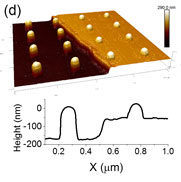
Cellular adhesion depends on the integration of numerous signaling inputs generated by the chemical and physical properties of the substrate. The complex coupling among inputs makes it challenging experimentally to deconvolve their individual contributions to the adhesion process. To address this roadblock, we have employed a combination of electron beam and optical lithographic techniques to fabricate substrates with independently tunable topographical and chemical signaling cues. Arrays of gold nanostructures were patterned atop quartz substrates, half of which were etched into gold-capped nanopillars. Individual A549 cells exposed simultaneously to Arg-Gly-Asp-functionalized etched and non-etched arrays exhibited strongly preferential adherence to the nanopillars.
Slags sourced from a derelict zinc–lead–copper–silver–tungsten mine were examined for their bulk elemental composition and mineralogy. pH, oxidation–reduction potential, and the leachability of selected elements (sulphur, calcium, iron, copper, zinc, and lead) were assessed during a 130-day deionised water extraction conducted under oxic conditions. Slags were rich in silicon, iron, copper, zinc, and lead, hosted within minerals including quartz (SiO2), goethite [FeO(OH)], augite [Ca(Mg,AI,Fe)Si2O6], and lead (Pb0). Leachates from the slags increased in analyte concentration throughout the 130-day experiment, with iron, copper, zinc, and lead attaining >5 mg l−1 in some samples. These findings indicate that this pyrometallurgical waste should not be considered environmentally inert, as leachates emanating from them in the field might pose a significant risk to the environment.
CSIRO Minerals is developing new technologies and approaches for the in situ recovery (ISR) of valuable metals. ISR provides opportunities to process small and/or deep deposits and could create additional revenue for conventional uneconomic mines. Unlike for conventional processing, no standard methodology exists for characterizing sample suitability for ISR. The authors are developing a workflow to understand sample and deposit amenability to ISR processing. A South Australian low-grade iron-oxide-copper-gold sulphide ore was studied. A total of 37 drill cores samples were obtained from the ore sample for detailed mineralogical and leaching characterization. A range of characterization techniques including chemical analysis, X-ray fluorescence mapping, quantitative evaluation of minerals by scanning electron microscopy, computed tomography scanning, and bulk- and micro-X-ray diffraction analyses were applied to understand the ore mineralogy. Leaching tests at 50 °C were performed on selected samples to understanding their leaching behaviour. Mineralogical characterization found that copper was present mostly as discrete secondary copper sulphides distributed in various areas and at various specimen depths, which, in theory should be readily available for leaching, provided sufficient solution access exists. Leaching results showed steady copper recovery under the conditions tested. This study provides insight into understanding the suitability of an ore for ISR processing.
Archaeometrists use a variety of analytical methods to determine trace elements in ancient Greek silver coins, for provenance studies, understanding social and technological change, and authentication. One analytical problem which is little documented is understanding the horizontal spatial heterogeneity of coin elemental composition in micro-sampled areas, which are usually assumed to be uniform. This study analysed ten ancient Greek coins representative of silver circulating in the Aegean region in the sixth to third centuries BC. Scanning electron microscopy with energy dispersive spectrometry was used to map the spatial distribution of elements on coins that were abraded to remove the patina. Time of flight-secondary ion mass spectrometry was then conducted on selected coins, mapping an area ~100 × 100 µm and depth profiling from 0 to 10 µm. These data revealed the three-dimensional elemental complexity of the coins, in particular, the heterogeneity both in the patina and beneath it. These data will guide future authentication and provenance studies of larger sample sets of ancient Greek coins including the use of line scanning for laser ablation inductively coupled plasma mass spectrometry data collection rather than spot analyses, and non-destructive analytical techniques such as X-ray fluorescence spectrometry.
The goal of this work was to provide antimicrobial activity to polypropylene by covalent immobilization of lysozyme. The first step was the grafting of ethylene glycol dimethacrylate and glycidyl methacrylate through “grafting-from” method by means of γ-rays. Then those chemical groups were activated to allow the immobilization of lysozyme by Schiff bases. The activity of lysozyme showed an improvement by the remaining double bonds from the grafting. Finally, the presence of lysozyme was confirmed by the hydrolysis of Micrococcus lysodeikticus at different temperatures, pH values, and cycles. The new materials were characterized by infrared spectroscopy, thermal analysis, contact angle, and by the surface morphology.
The main challenges of developing advanced surface-enhanced Raman spectroscopy (SERS) sensors lie in the poor reproducibility, low uniformity, and the lack of molecular selectivity. In this paper, we report a facile and cost-effective approach for the large-scale patterning of graphene-encapsulated Au nanoparticles on Si substrate as efficient SERS sensors with highly-improved uniformity, reproducibility, and unique selectivity. The materials production was accomplished via an industry-applicable galvanic deposition—annealing—chemical vapor deposition approach, followed by a final plasma treatment. Our study provides a facile approach to the fabrication of uniform SERS substrate and further prompts the practical progress of SERS-based chemical sensors.
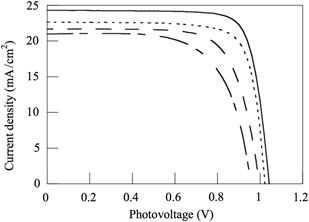
Oxoammonium cation of 2,2,6,6-tetramethylpiperidin-1-oxyl (TEMPO) was used as an oxidizing dopant of triaryl amines to efficiently and almost quantitatively generate radical cations of the amines or a hole carrier. The doped-triaryl amines yielded an amorphous and homogeneous layer without any residual oxidant or neutral TEMPO molecule through its sublimination or warming the layer. The TEMPO cation-doped spiro-OMeTAD [tetrakis(dimethoxyphenylamine)spirobifluorene] produced a high hole mobility of 2 × 10⁻⁴ cm2/Vs. The perovskite solar cell fabricated with the TEMPO cation-doped or residual dopant-free spiro-OMeTAD as the hole-transporting layer displayed a photo-conversion efficiency of 20.1% with durability.
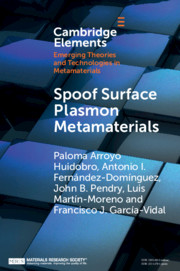
Metamaterials offer the possibility to control and manipulate electromagnetic radiation. Spoof surface plasmon metamaterials are the focus of this Element of the Metamaterials Series. The fundamentals of spoof surface plasmons are reviewed, and advances on plasmonic metamaterials based on spoof plasmons are presented. Spoof surface plasmon metamaterials on a wide range of geometries are discussed: from planar platforms to waveguides and localized modes, including cylindrical structures, grooves, wedges, dominos or conformal surface plasmons in ultrathin platforms. The Element closes with a review of recent advances and applications such as Terahertz sensing or integrated devices and circuits.
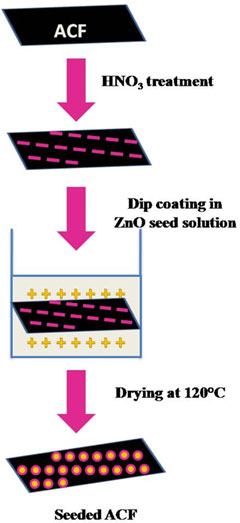
Nitric acid oxidation at various concentrations was used to change the surface chemistry of activated carbon fiber (ACF). Boehm titration, zeta potential results confirmed the presence of acidic functional groups on the surface of ACF. Physicochemical characterizations verified the growth of zinc oxide (ZnO) on surface-oxidized fiber. ZnO/ACF rods and flowers formed at pH 7 and 9 were used for decontamination of malathion at solution pH in the presence of ultrasonic waves and ultraviolet radiations. The disappearance of malathion in the solution followed pseudo-first-order kinetics. Total organic carbon analysis confirmed the decontamination of malathion in aqueous media.
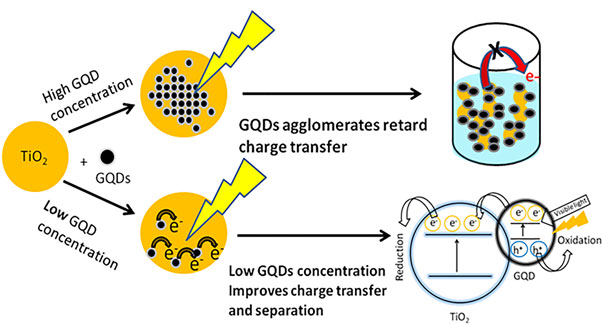
Different sized graphene quantum dots (GQDs) have been synthesized by an inexpensive wet chemical method using bird charcoal as a precursor. Obtained GQDs found to have luminescence and visible light absorption. These GQDs are further coupled with titanium dioxide (TiO2) to form TiO2–GQDs nanocomposites. GQD nanostructures exhibit band gap tunability and have the potential to enhance the photoabsorption in TiO2. The hybrid combination of the nanomaterials decrease the recombination of charge carriers, increase charge carrier mobility, and improve the overall photoconversion efficiency. The composites exhibit higher photocatalytic activity and rate constants value than pure TiO2.
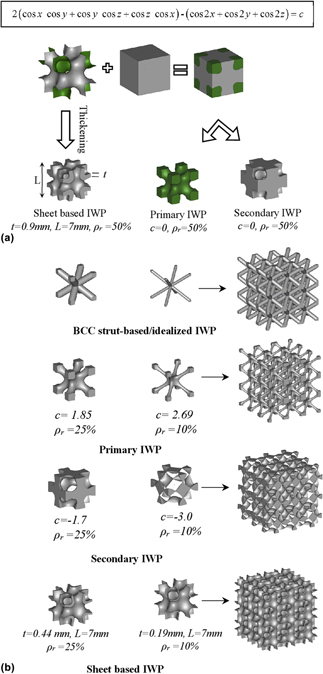
Architected materials are materials engineered to utilize their topological aspects to enhance the related physical and mechanical properties. With the witnessed progressive advancements in fabrication techniques, obstacles and challenges experienced in manufacturing geometrically complex architected materials are mitigated. Different strut-based architected lattice structures have been investigated for their topology-property relationship. However, the focus on lattice design has recently shifted toward structures with mathematically defined architectures. In this work, we investigate the architecture-property relationship associated with the possible configurations of employing the mathematically attained Schoen's I-WP (IWP) minimal surface to create lattice structures. Results of mechanical testing showed that sheet-based IWP lattice structures exhibit a stretching-dominated behavior with the highest structural efficiency as compared to other forms of strut-based and skeletal-based lattice structures. This study presents experimental and computational evidence of the robustness and suitability of sheet-based IWP structures for different engineering applications, where strong and lightweight materials with exceptional energy absorption capabilities are required.
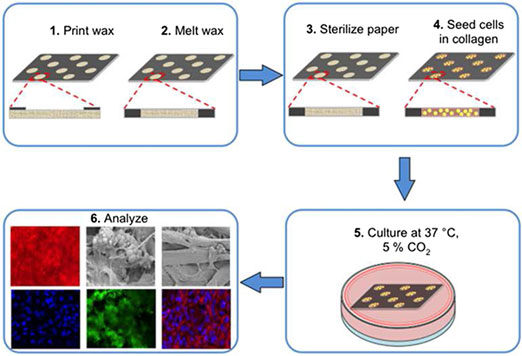
Paper-based cell culture platforms have emerged as a promising approach for a myriad of biomedical applications, such as tissue engineering, disease models, cancer research, biotechnology, high-throughput testing, biosensing, and diagnostics. Paper enables the generation of highly flexible, biocompatible, inexpensive, porous, and three-dimensional (3D) constructs and devices. These systems have been used to culture mammalian cells, bacteria, algae, and fungi. Studies have shown that paper is an exceptional material for applications in life sciences, materials sciences, engineering, and medicine. Paper has been employed for creating biomimetic cell culture environments by folding or stacking it into the desired 3D shapes and structures. This review discusses the use of paper-based platforms for cellular applications and provides a diverse range of examples.
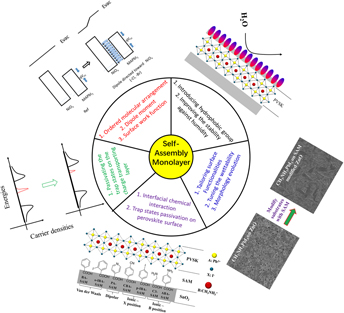
Organic–inorganic halide perovskite solar cells (OIHPSCs) offer a fantastic opportunity to harness solar energy in a low cost and efficient way. This ambition for commercialization has been greatly encouraged by the surge in device performance from 3.8% in 2009 to the state-of-the-art 22.7%. For high device performance, tailoring the interfacial properties is demonstrated essentially important. Being in a molecular scale, the self-assembly monolayers (SAMs) are proved a facile but effective tool for interface modification. And lots of studies have demonstrated that SAMs have a variety of positive effects for perovskite solar cells, including mediating the morphology, improving energy level alignment, passivating trap states, etc. In this mini review, we give an insightful summary on the recent application of SAMs in OIHPSCs, analyze the mechanisms to improve device performance, and provide guidance to SAM-boosted perovskite solar cells for high performance and practical application. Finally, a landscape is depicted for future application of SAMs in perovskite solar cells.
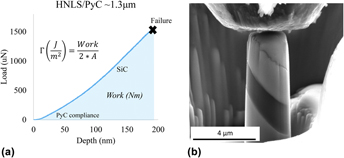
Ceramic fiber–matrix composites (CFMCs) are exciting materials for engineering applications in extreme environments. By integrating ceramic fibers within a ceramic matrix, CFMCs allow an intrinsically brittle material to exhibit sufficient structural toughness for use in gas turbines and nuclear reactors. Chemical stability under high temperature and irradiation coupled with high specific strength make these materials unique and increasingly popular in extreme settings. This paper first offers a review of the importance and growing body of research on fiber–matrix interfaces as they relate to composite toughening mechanisms. Second, micropillar compression is explored experimentally as a high-fidelity method for extracting interface properties compared with traditional fiber push-out testing. Three significant interface properties that govern composite toughening were extracted. For a 50-nm-pyrolytic carbon interface, the following were observed: a fracture energy release rate of ∼2.5 J/m2, an internal friction coefficient of 0.25 ± 0.04, and a debond shear strength of 266 ± 24 MPa. This research supports micromechanical evaluations as a unique bridge between theoretical physics models for microcrack propagation and empirically driven finite element models for bulk CFMCs.
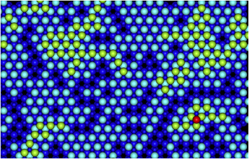
The growth of Ag on ZnO was modeled using a reactive force field potential and a combination of molecular dynamics and adaptive kinetic Monte Carlo (AKMC) simulations. An adaptive lattice-based AKMC model is described as a method of extending timescales and length scales that can be simulated. Reusing previously found transitions to reduce computational time is discussed for both the lattice and off-lattice AKMC approaches. With these methods, growth of over 1 monolayer’s worth of Ag is simulated corresponding to a real deposition time of up to 0.1 s. The results show that the deposited silver aggregates on the surface through mainly single atom moves with few concerted motions. Initially silver adatoms do not agglomerate and the energy barriers for silver dimers to form are larger than for them to break apart. The first layer of silver grows as a series of connected regions rather than forming well-defined centro-symmetric islands.
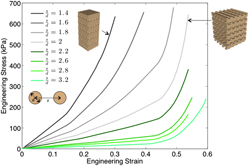
Direct ink writing of silicone elastomers enables printing with precise control of porosity and mechanical properties of ordered cellular solids, suitable for shock absorption and stress mitigation applications. With the ability to manipulate structure and feedstock stiffness, the design space becomes challenging to parse to obtain a solution producing a desired mechanical response. Here, we derive an analytical design approach for a specific architecture. Results from finite element simulations and quasi-static mechanical tests of two different parallel strand architectures were analyzed to understand the structure-property relationships under uniaxial compression. Combining effective stiffness-density scaling with least squares optimization of the stress responses yielded general response curves parameterized by resin modulus and strand spacing. An analytical expression of these curves serves as a reduced order model, which, when optimized, provides a rapid design capability for filament-based 3D printed structures. As a demonstration, the optimal design of a face-centered tetragonal architecture is computed that satisfies prescribed minimum and maximum load constraints.