To save content items to your account,
please confirm that you agree to abide by our usage policies.
If this is the first time you use this feature, you will be asked to authorise Cambridge Core to connect with your account.
Find out more about saving content to .
To save content items to your Kindle, first ensure no-reply@cambridge.org
is added to your Approved Personal Document E-mail List under your Personal Document Settings
on the Manage Your Content and Devices page of your Amazon account. Then enter the ‘name’ part
of your Kindle email address below.
Find out more about saving to your Kindle.
Note you can select to save to either the @free.kindle.com or @kindle.com variations.
‘@free.kindle.com’ emails are free but can only be saved to your device when it is connected to wi-fi.
‘@kindle.com’ emails can be delivered even when you are not connected to wi-fi, but note that service fees apply.
The paper presents a comprehensive overview of electrical and thermal energy storage technologies but will focus on mid-size energy storage technologies for demand charge avoidance in commercial and industrial applications.
Utilities bill customers not only on energy use but peak power use since transmission costs are a function of power and not energy. Energy storage (ES) can deliver value to utility customers by leveling building demand and reducing demand charges. With increasing distributed energy generation and greater building demand variability, utilities have raised demand charges and are even including them in residential electricity bills. This article will present a comprehensive overview of electrical and thermal energy storage technologies but will focus on mid-size energy storage technologies for demand charge avoidance in commercial and industrial applications. Of the ES technologies surveyed, lithium ion batteries deliver the highest value for demand charge reduction especially with systems that have larger power to energy ratios. Current lithium ion ES systems have payback periods below 5 years when deployed in markets with high demand charges.
Fusion energy is one of the options to contribute to the energy demand of future generations without adding to global warming. In this paper, we present the status of fusion energy research on the basis of magnetic confinement.
Fusion energy is one of the options to contribute to the energy demand of future generations without contributing to global warming. In this paper, we present the status of fusion energy research on the basis of magnetic confinement. In France, the first fusion reactor ITER is under construction. Its success will be measured on the expectation to deliver 500 MW thermal power—a factor of 10 above the power to maintain the energy producing process. ITER is based on the tokamak concept. In addition, Wendelstein 7-X, an ambitious stellarator, has recently started operation. Both confinement concepts—the tokamak and the stellarator—will be discussed along with general topics regarding fusion technology, operational safety, fusion waste, possible electricity costs, and roadmaps toward a fusion reactor as a power source.
This article offers a conceptual understanding and easily applicable guidelines for sustainable urban infrastructure design by focusing on the demand for and supply of the services provided by seven urban infrastructure systems.
For more than 10,000 years, cities have evolved continuously, often shaped by the challenges they had to face. Similarly, we can imagine that cities will have to evolve again in the future to address their current challenges. Specifically, urban infrastructure will need to adapt and use less energy and fewer resources while becoming more resilient. In this article, starting with a definition of sustainability, two urban infrastructure sustainability principles (SP) are introduced: (i) controlling the demand and (ii) increasing the supply within reason, which are then applied to seven urban infrastructure systems: water, electricity, district heating and cooling and natural gas, telecommunications, transport, solid waste, and buildings. From these principles, a four-step urban infrastructure design (UID) process is compiled that can be applied to any infrastructure project: (i) controlling the demand to reduce the need for new infrastructure, (ii) integrating a needed service within the current infrastructure, (iii) making new infrastructure multifunctional to provide for other infrastructure systems, and (iv) designing for specific interdependencies and decentralizing infrastructure if possible. Overall, by first recognizing that urban infrastructure systems are inherently integrated and interdependent, this article offers several strategies and guidelines to help design sustainable urban infrastructure systems.
New demand for electric vehicles—are rare earths the bottleneck in the supply chain? Can recycling and substitution make a dent in the demand for REE in the near future? Is it economically feasible for advanced nations to mine for REE but process them elsewhere to allay environmental concerns at home?
Rare earths are critical components to many technologies that drive the modern world. Though rare earths are present in most parts of the world, they are produced mostly in China because of a confluence of several factors. This paper reviews various aspects of rare earths including extraction, geopolitics, and challenges. Rare-earth elements (REEs) not only replace each other in the mineral structure but also occur within different mineral structures in the same deposit. Separation of one REE from another is therefore difficult, environmentally challenging, and expensive. Less than 1% of REEs is recycled due to many challenges of collecting various end products and separating the REE from other metals/contaminants. Recycling investments have primarily focused on applications such as magnets, where economies of scale have allowed it. Substitution for the REE is difficult for most applications, though the automotive and wind energy industries are making good advances with motors and generators. The rare earth market is small and, thus, easily disrupted. Factors that can impact the market are increased production from existing mines, development of mine prospects advanced during price spikes, research and development efforts focused on improving REE recoveries, recycling, substitution, alternate sources of REEs, and governmental policies.
Dealloying, the selective dissolution of less noble elements from an alloy, enables the preparation of monolithic macroscale bodies, which at the nanostructure level exhibit a network of “ligaments” with a well-defined characteristic size that can be tuned to between a few nanometers and several microns. These porous solids can be made with macroscale dimensions, and, prior to dealloying, can be shaped to form engineered components. Their surface-to-volume ratio is extremely large and their bicontinuous structure provides transport pathways to tune the surface state under control of an electric or chemical potential. These materials present new opportunities for exploring the impact of surfaces on material behaviors and for exploiting surface effects in novel materials design strategies. New experimental approaches unraveling surface effects involving small-scale plasticity and elasticity have been demonstrated. Approaches to new functional materials include electrochemical potential switching of strength, stiffness, fracture resistance, fluid sorption, actuation, and quasi-piezoelectric strain sensing.
The structural characterization of dealloyed nanoporous metals is a fundamental and active area of research, needed for the optimization of these structures for catalytic, electrosensing, biomedical, and mechanical functions. The prediction of properties requires identifying and quantifying salient structural characteristics, while insights into the relevant mechanisms of dealloying and coarsening can be achieved through in situ observations of structural evolution. Three-dimensional structural characterization techniques have advanced such that nanoscale quantification of topology, morphology, and crystallographic parameters are achievable, yet the field is new enough that the assessment and comparison of such parameters of different nanoporous metals are just beginning. Here, we explore the state of the art in structural characterization, focusing on nanoporous gold to exemplify the challenges, the achievements, and the potential associated with establishing an appropriate set of structural parameters for this unique class of materials.
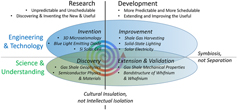
We raise for debate and discussion what in our opinion is a growing mis-control and mis-protection of U.S. energy research. We outline the origin of this mis-control and mis-protection, and propose two guiding principles to mitigate them and instead nurture research: (1) focus on people, not projects; and (2) culturally insulate research from development, but not science from technology.
Energy research is critical to continuing advances in human productivity and welfare. In this Commentary, we raise for debate and discussion what in our view is a growing mis-control and mis-protection of U.S. energy research. This flawed approach originates in natural human tendencies exacerbated by an historical misunderstanding of research and development, science and technology, and the relationships between them. We outline the origin of the mis-control and mis-protection, and propose two guiding principles to mitigate them and instead nurture research: (i) focus on people, not projects; and (ii) culturally insulate research from development, but not science from technology. Our hope is to introduce these principles into the discourse now, so they can help guide policy changes in U.S. energy research and development that are currently being driven by powerful geopolitical winds.
Summary: Two foundational guiding principles are proposed to mitigate a growing mis-control and mis-protection of U.S. energy research, and instead to nurture it.
Analyzing the repetitive pattern of historical lead poisoning that to present-day has shaped our legislatorial systems regarding lead consumption, this work focuses on creating awareness and caution toward lead halide perovskite commercialization while concurrently pointing out considerations and ambiguity in policies and regulations.
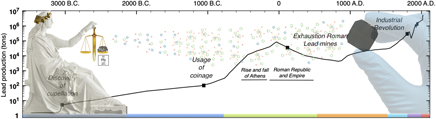
Lead halide perovskites have caused a paradigm shift in state-of-the-art photovoltaic technology half a decade ago and have gained tremendous momentum ever since. Given their seemingly imminent commercialization, rigorous scrutiny regarding their potential environmental impact is becoming increasingly relevant. In light of the current need for sustainable energy resources, several start-up and spin-off companies have been established, initially promising modules on the market by the end of 2017. On the downside, lead representing approximately one third by weight of the absorber layer in such photovoltaic devices is enough reason to become wary about the potential environmental impact of their large-scale implementation. Whilst many have wondered where the acceptable boundaries lie regarding lead consumption, it remains a focal point in many discussions, as it seems almost unattainable to ban lead usage from our society. Currently listed as one of the ten chemicals of major health concern by the World Health Organization, the magnitude of misgivings expands even more as recent studies also demonstrate promising applications of lead halide perovskites in light emitting diodes, lasers, batteries, and photodetectors. Hence, there is no doubt that a discussion should be commenced on how to assess and handle the impact of lead in a new technology of such high potential.
By reflecting on the historical experience gained from anthropogenic lead poisoning that is still shaping our legislatorial systems at present-day, this work investigates and carefully scrutinizes current legislation that governs the exploitation of lead halide perovskites in optoelectronic applications. Analyzing the repetitive pattern of historical lead consumption, focus is extended on creating awareness and caution toward lead halide perovskite commercialization while concurrently pointing out considerations and ambiguity in policies and regulations. Ultimately, this work aims to initialize a discussion on “if” and “how” this burgeoning class of materials can enter the consumer market.
We offer a cross section of the numerous challenges andopportunities associated with the integration of large-scale batterystorage of renewable energy for the electric grid. Thesechallenges range beyond scientific and technical issues, topolicy issues, and even social challenges associated withthe transition to a more sustainable energylandscape.
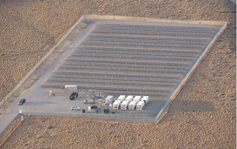
The commissioning on 1 December 2017 of the Tesla-Neoen 100 MWlithium-ion grid support battery at Neoen’s Hornsdale wind farm inSouth Australia, at the time the world’s largest, has focused theattention of policy makers and energy professionals on the broaderprospects for renewable energy storage. An adequate and resilientinfrastructure for large-scale grid scale and grid-edge renewableenergy storage for electricity production and delivery, eitherlocalized or distributed, is a crucial requirement for transitioningto complete reliance on environmentally protective human energysystems. Its realization will require a strong synergy betweentechnological advances in variable renewable energy storage and thegovernance policies that promote and support them. We examine howexisting regulations and governance policies focusing on large-scalebatteries have responded to this challenge around the world. Weoffer suggestions for potential regulatory and governance reform toencourage investment in large-scale battery storage infrastructurefor renewable energy, enhance the strengths, and mitigate risks andweaknesses of battery systems, including facilitating thedevelopment of alternatives such as hybrid systems and eventuallythe uptake of hydrogen fuel and storage.
Nanoporous metals obtained by dealloying have attracted significant attention for their unusual catalytic properties, and as model materials for fundamental studies of structure–property relationships in a variety of research areas. There has been a recent surge in the use of these metals for biomedical and bioanalytical applications, where many exciting opportunities exist. The goal of this article is to provide a review of recent progress in using nanoporous metals for biological applications, including as biosensors for detecting biomarkers of disease and multifunctional neural interfaces for monitoring and modulating the activity of neural tissue. The article emphasizes the unique properties of nanoporous gold and concludes by discussing its utility in addressing important challenges in biomedical devices.
The review article describes the composition, working, and benefits of the electrodynamic screen (EDS) film, a self-cleaning surface technology that can be retrofitted onto solar and thermal energy collectors. The EDS film avoids the use of water and robotic parts that are the common cleaning techniques used in solar/thermal power plants and thus emerges as a viable and scalable solution to the soiling problem faced recurrently by these plants. The article summarizes different experiments conducted to improve the efficiency of the EDS film in terms of reflectivity and performance. Field test results are also included to underscore the success of the EDS film operation.
Dust build-up or soiling on thermal and solar energy collector surfaces is a major problem and its cleaning is a major issue for solar energy conversion. Here, a self-cleaning technology is described as a scalable and viable solution to clear the surfaces. EDS film technology does not require water, manual labor, or moving parts to function, and the power needed to operate EDS is almost negligible and can be derived from the harvesting device itself. The EDS films thereby help mitigate the energy loss caused by soiling in solar and thermal harvesting systems. An EDS film with reflective or transparent electrodes can be retrofitted on concentrated solar power mirrors and on photovoltaic (PV) panels to sustain and aid their unhindered reflection and absorption of incident sunlight, respectively. We report experiments and describe methods used to increase the reflectivity of the electrodes of an EDS film. Results obtained from lab test setups and field test units that define the functionality, reflectivity, and stability of the electrodes on the EDS films are also presented. Field test results that compare and report the performance of PV panel output current over long periods of testing, with and without EDS films are also discussed. Test results from 3-month outdoor testing, which demonstrate recovery back to >95% of the pristine system, after decrease to 80–90% before EDS film activation, are also shown.
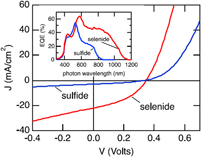
The ternary Cu–Sb- and Cu–Bi-chalcogenides presenta rich range of compounds of potential use for large-scale photovoltaics from Earth abundant elements. This paper reviews the state of fundamental knowledge about them, and their technological status with regard to solar cells. Research targets and missing data are highlighted, which may provide opportunities to help realize the goal of sustainable photovoltaics.
The family of ternary Cu–Sb- and Cu–Bi-chalcogenides and their solid solutions present a rich selection of potential candidates for Earth-abundant low toxicity photovoltaic (PV) absorber materials. Moreover, they have some novel features imparted by the ns2 lone pair of electrons on the Sb and Bi ions. This review evaluates them as electronic materials, including experimental and theoretical evaluations of their phases, thermodynamic stability, point defects, conductivity, optical data, and PV performances. Formation of the materials in bulk, thin film, and nanoforms and the properties of the materials are critically assessed with relevance to their suitability for PV devices. There is special emphasis on CuSbS2 and CuSbSe2 which form the mainstay of the device literature and provide the most insights into the present-day limitation of the device efficiencies to 3 or 4%. Missing features of the literature are highlighted and clear statements recommending potential research pathways are made, which may help advance the technological performance from its present stuck position.
We present and analyze three powerful long-term historical trends in the electrification of energy by free-fuel sources. These trends point toward a future in which energy is affordable, abundant, and efficiently deployed; with major economic, geo-political, and environmental benefits to humanity.
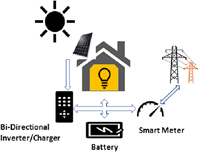
We present and analyze three powerful long-term historical trends in energy, particularly electrical energy, as well as the opportunities and challenges associated with these trends. The first trend is from a world containing a diversity of energy currencies to one whose predominant currency is electricity, driven by electricity’s transportability, exchangeability, and steadily decreasing cost. The second trend is from electricity generated from a diversity of sources to electricity generated predominantly by free-fuel sources, driven by their steadily decreasing cost and long-term abundance. These trends necessitate a just-emerging third trend: from a grid in which electricity is transported unidirectionally, traded at near-static prices, and consumed under direct human control; to a grid in which electricity is transported bidirectionally, traded at dynamic prices, and consumed under human-tailored artificial agential control. These trends point toward a future in which energy is not costly, scarce, or inefficiently deployed but instead is affordable, abundant, and efficiently deployed; with major economic, geo-political, and environmental benefits to humanity.