To save content items to your account,
please confirm that you agree to abide by our usage policies.
If this is the first time you use this feature, you will be asked to authorise Cambridge Core to connect with your account.
Find out more about saving content to .
To save content items to your Kindle, first ensure no-reply@cambridge.org
is added to your Approved Personal Document E-mail List under your Personal Document Settings
on the Manage Your Content and Devices page of your Amazon account. Then enter the ‘name’ part
of your Kindle email address below.
Find out more about saving to your Kindle.
Note you can select to save to either the @free.kindle.com or @kindle.com variations.
‘@free.kindle.com’ emails are free but can only be saved to your device when it is connected to wi-fi.
‘@kindle.com’ emails can be delivered even when you are not connected to wi-fi, but note that service fees apply.
Orbital-free density functional theory (OFDFT) is both grounded in quantum physics and suitable for direct simulation of thousands of atoms. This article describes the application of OFDFT for materials research over roughly the past two decades, highlighting computational studies that would have been impractical (or impossible) to perform with other techniques. In particular, we review the growing body of simulations of solids and liquids that have been conducted with planewave-pseudopotential (or related) techniques. We also provide an updated account of the fundamentals of OFDFT, emphasizing aspects—such as nonlocal density functionals for computing the kinetic energy of noninteracting electrons—that enabled much of the application work. The article concludes with a discussion of the OFDFT frontier, which contains brief descriptions of other topics at the forefront of OFDFT research.
Different experimental conditions at a versatile high-energy beamline equipped with a two-dimensional detector have been compared for powder diffraction and pair distribution function (PDF) experiments. In particular, sample size and sample to detector distances have been evaluated on a standard sample, to evaluate their effects in both Q and real space. Two illustrative cases are also discussed. The average structure and local distortions in a BaTiO3 powder with 100 nm particle size show that spurious ripples in the PDF are suppressed by increased counting statistics. Effects of small amounts of a crystalline impurity phase on a SiO2.Al2O3.Na2O.CaO glass have been quantified.
Concerted efforts by stakeholders could overcome the hurdles and enable a viable recycling system for automotive LIBs by the time many of them go out of service.
Lithium-ion batteries (LIBs) were commercialized in the early 1990s and gained popularity first in consumer electronics, then more recently for electric vehicle (EV) propulsion, because of their high energy and power density and long cycle life. Their rapid adoption brings with it the challenge of end-of-life waste management. There are strong arguments for LIB recycling from environmental sustainability, economic, and political perspectives. Recycling reduces material going into landfills and avoids the impacts of virgin material production. LIBs contain high-value materials like cobalt and nickel, so recycling can reduce material and disposal costs, leading to reduced EV costs. Battery recycling can also reduce material demand and dependence on foreign resources, such as cobalt from Democratic Republic of the Congo, where much production relies on armed aggression and child labor.
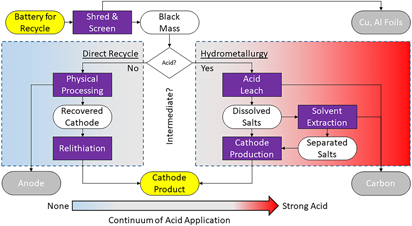
Several companies are finding ways to commercialize recycling of the increasingly diverse LIB waste stream. Although Pb-acid battery recycling has been successfully implemented, there are many reasons why recycling of LIBs is not yet a universally well-established practice. Some of these are technical constraints, and others involve economic barriers, logistic issues, and regulatory gaps. This paper first builds a case as to why LIBs should be recycled, next compares recycling processes, and then addresses the different factors affecting LIB recycling to direct future work towards overcoming the barriers so that recycling can become standard practice.
Metallic materials are key for electrochemical energy conversion and storage when they are tailored into electrodes designed for rapid reaction kinetics, high electrical conductivities, and high stability. Nanoporous metals formed by dealloying could meet all of these requirements, as the dealloyed products beckon energy researchers with their fascinating structures and outstanding performance. In this article, we discuss the characteristics of dealloyed materials related to their functions in energy devices. We then review nanoporous metal electrodes for applications in fuel cells, supercapacitors, and batteries to provide insights into selection and design criteria for meeting the diverse needs of energy conversion and storage.
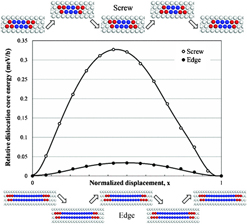
Nanoporous metals made by dealloying are macroscopic network architectures that can contain ∼1015 nanoscale struts or ligaments per sample. Their mechanical performance is critical to their applications as functional or lightweight high-strength materials. Testing nanoporous metals at the macroscopic scale offers opportunities for unraveling the properties of nanoscale solids in general. The central questions in this area include whether the macroscopic strength and elastic modulus of nanoporous metals can be correlated with the properties of nanoscale ligaments by the classical Gibson–Ashby equations, whether the dealloying-made network structure differs from the conventional foam metals, how network connectivity influences mechanical response, and how ligament size and surface properties affect the elastic and plastic response of nanoscale solids and that of nanoporous metals, particularly the tension–compression asymmetry in strength. This article reviews the fundamental observations of the mechanical response of nanoporous metals with a focus on gold and the emerging understanding of the aforementioned issues.
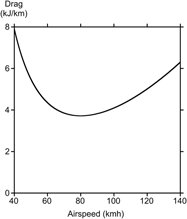
Aircraft that take off and land verticallywith rotors or horizontal propellers like drones use more energy than conventional aircraft whose lift is provided by wings. Drones with propellers are less efficient than helicopters with large rotors. The poor energy density of batteries compared to hydrocarbon fuels limits the range and endurance of the electrically powered aircraft. Although the ratio of the mass of payload and fuel (or battery) to the total aircraft mass for the proposed Amazon drone is not that different from the same ratio for a Boeing 747, the range and time in the air is very much less. In principle, a conventional aircraft powered by photovoltaic panels covering a wing with a span of 6 m could match the performance of the proposed Amazon drone.
Amazon has proposed delivering packages by an electrically powered drone capable of vertical take off and landing. By comparison with helicopters, the energy needed to move a 2.5 kg package is estimated to be more than 130 times the energy used in delivering the same package in a small delivery truck. By comparison, a conventional airplane with the same mass could, in principle, be powered by photovoltaic panels, covering the wings, and it would use an energy equivalent to about 3 times the energy used by a small delivery truck. Based on the performance of existing small helicopters, the analysis shows that an electrically powered air taxi would only be able to make journeys of 10 min or less. Vertical take-off and landing add to energy requirements, and drones using a large number of propellers are less efficient than helicopters. The major limitation, not surprisingly, is the poor energy density of batteries compared to liquid hydrocarbon fuels.
Dealloying has evolved from a problematic corrosion process to a versatile tool for scalable fabrication of nanostructured metals. While the original, and majority of, work in the area has focused on electrochemical dealloying, a powerful variation of dealloying—liquid metal dealloying—has recently gained popularity. This process relies on a melt to carry out selective dissolution, replacing the traditional electrolyte solution. While electrolytes and molten metals are both suitable dealloying media, they can lead to very different morphologies. In this article, we compare and contrast what is known about the microscale physics and chemistry controlling microstructural evolution in electrochemical and liquid metal dealloying. We conclude that the core phenomenology of porosity evolution—a competition between dissolution and interface diffusion—is similar in both dealloying processes, but that the relative magnitudes of these two processes control interfacial pattern formation.
Material choices can affect both the environmental conditions and the human health impacts of buildings. Decision making can be improved through greater transparency and a broader view of materials impact.
With more architects and engineers recognising the impacts of global climate change, a renewed focus on carbon emissions from buildings is underway. Material choices in the built environment have significant impacts on both the building’s carbon emissions and the health of building occupants. As the operational carbon in buildings falls through improved efficiencies and design, the amount of embodied carbon released from the extraction, manufacturing, and transportation of materials and products is becoming relatively more significant. Through the selection of materials, designers can reduce the overall carbon emissions of buildings while maintaining high standards for occupant health.
We explore the status of state-of-the-art upconverter materials in the context of improving solar cell performance. We focus on semiconductor upconversion nanostructures that can harvest two separate bands of the solar spectrum and offer a promising path to rational engineering of improved performance and thus improved overall solar energy harvesting.
Photon upconversion is a process in which two low-energy photons are sequentially absorbed and one high-energy photon is emitted. Photon upconversion in both inorganic and organic material platforms has been used to improve solar cell efficiency. Lanthanide-doped salts (inorganic) and triplet–triplet annihilation molecules (organic) have achieved 33% and 60% internal upconversion quantum efficiency, respectively, leading to current density increases of 17 mA/cm2 and 0.86 mA/cm2. However, their performance is limited by their narrow absorption bandwidth (AB) and limited tunability, especially at low photon fluxes. Recently, colloidal semiconductor nanostructures have emerged as a promising material platform for upconversion. The optical absorption in these low-dimensional heterostructures involves both quantum-confined and continuum band states, enabling a much larger AB. Moreover, the techniques of semiconductor heterostructure engineering can be used to optimize performance and to tailor absorption and emission wavelengths. We review the performance and potential impact on solar energy harvesting of upconversion materials, focusing on semiconductor upconverters. We discuss computational models that suggest that semiconductor upconverter nanostructures could have outstanding performance for photovoltaic. We then discuss the current state of the art in semiconductor upconversion morphologies and compositions and provide an outlook on the ways in which nanostructures can be tailored to improve performance for applications.
During the past decade, solar power has experienced transformative price declines, enabling it to grow to supply 1% of U.S. and world electricity. Addressing grid integration challenges, increasing grid flexibility, and further reducing cost will enable even greater potential for solar as an electricity source.
During the past decade, solar power has experienced transformative price declines, enabling it to become a viable electricity source that is supplying 1% of U.S. and world electricity. Further cost reductions are expected to enable substantially greater solar deployment, and new Department of Energy cost targets for utility-scale photovoltaics (PV) and concentrating solar thermal power are $0.03/kW h and $0.05/kW h by 2030, respectively. However, cost reductions are no longer the only significant challenge for PV—addressing grid integration challenges and increasing grid flexibility are critical as the penetration of PV electricity on the grid increases. The development of low cost energy storage is particularly synergistic with low cost PV, as cost declines in each technology are expected to support greater market opportunities for the other.
Large regions of the United States (and the world) face “situational scarcities” of water that arises from energy extraction and use, agricultural practices, expanding urban populations, and poorly integrated water policies.
Creating “fit-for-purpose” water from suboptimal sources will require new materials and a new understanding of the separation of contaminants from complex aqueous media.
We review here scientific, technological, and societal challenges at the nexus of energy, water, and food. We focus on specific examples of energy and water stress in the southwestern United States and technological routes to new sources of water. Situational scarcities of water are increasing worldwide because of the reliance on uncertain water sources, coupled with expanding populations, expanded agricultural uses of water, and water and energy use policies that have not always been effectively integrated. This review is framed using the outcomes of recent National Science Foundation workshops focusing on the Energy/Water/Food Nexus and from other recent U.S. Department of Energy workshops focused on the Energy/Water nexus. Water-stressed regions, even after extensive conservation measures, may need new supplies of water that come from less than optimal sources. A basic understanding of the separation of water from complex aqueous solutions along with new materials, distributed and publically accepted technologies and unit operations, underpin the future production of “fit-for-purpose” water. Regional test beds are required that are small and provide for simultaneous control of a number of variables, yet large enough to approximate real communities. Solutions to these problems represent opportunities for innovation and creation of economically viable, resilient communities.