To save content items to your account,
please confirm that you agree to abide by our usage policies.
If this is the first time you use this feature, you will be asked to authorise Cambridge Core to connect with your account.
Find out more about saving content to .
To save content items to your Kindle, first ensure no-reply@cambridge.org
is added to your Approved Personal Document E-mail List under your Personal Document Settings
on the Manage Your Content and Devices page of your Amazon account. Then enter the ‘name’ part
of your Kindle email address below.
Find out more about saving to your Kindle.
Note you can select to save to either the @free.kindle.com or @kindle.com variations.
‘@free.kindle.com’ emails are free but can only be saved to your device when it is connected to wi-fi.
‘@kindle.com’ emails can be delivered even when you are not connected to wi-fi, but note that service fees apply.
The effect of the intercritical temperature on the microstructure and mechanical properties of a newly developed quenching and partitioning steel using martensitic microstructure prior to the heat treatment process was studied. Such a quenching and partitioning process possessed a unique microstructure evolution, especially during intercritical annealing after prequenching. Excellent mechanical properties were obtained due to this unique multiphase microstructure. Significant amount of interlath-retained austenite was acquired and the relationship between the microstructure and work-hardening behaviors was proposed. The martensite/austenite islands increased at elevated annealing temperature, which deteriorated the total elongation and increased the tensile strength as hard constituents when it was excessive. The result indicated that the present full martensitic microstructure before the intercritical annealing is probably more suitable to an industrial application and is a better way to produce high strength steels with suitable ductility.
Considerable interest in understanding interfacial phenomena occurring across nanostructured solid oxide fuel cell (SOFC) membrane electrode assemblies has increased demand for in situ characterization techniques with higher resolution. We briefly outline recent advancements in atomic force microscopy (AFM) instrumentation and subsystems in realizing real time imaging at high temperatures and ambient pressures, and the use of these in situ, multi-stimuli probes in collecting local information related to physical and fundamental processes. Here we demonstrate direct probing of local surface potential gradients related to the ionic conductivity of yttria-stabilized zirconia (YSZ) within symmetric SOFCs under intermediate operating temperatures (500–600 °C) via variable temperature scanning surface potential microscopy (VT-SSPM). The conductivity values obtained at different temperatures are then used to estimate the activation energy. These locally collected conductivity and activation energy values are subsequently compared to macroscopic electrochemical impedance results and bulk literature values, thus supporting the validity of the approach.
New-type Ni-based superalloys with and without Nb were designed in this study. Their hot corrosion behaviors were investigated at 800 °C with the deposition of a mixture of Na2SO4 and NaCl. The corrosion kinetics was studied by thermogravimetry. Microstructure of the corrosion scales was studied by SEM and the phase constituent was analyzed by XRD. Results showed that the corrosion kinetics followed approximately parabolic law. The corrosion scales on the two Ni-based alloys were comprised of Cr2O3, Al2O3, TiO2, and NiCr2O4. NiO was only detected in the scale on alloy without Nb. Nb2O5 appeared with the addition of 2.0 wt% Nb. No sulfide emerged in the scales. The corrosion scales both exhibited a layered structure. With Nb addition, the hot corrosion resistance of the alloy was notably improved. The action mechanism of Nb was investigated extensively in this study.
X-ray powder diffraction data, unit-cell parameters and space group for a new bis(β-diiminato) Cu(II) complex, C48H62CuN4O4 are reported [a = 13.330 (3) Å, b = 11.137(2) Å, c = 8.832(2) Å, α = 78.88(2), β = 94.73(2), γ = 114.55(2), unit-cell volume V = 1170.26 Å3, Z = 1, and space group P − 1]. All measured lines were indexed and are consistent with the P−1 space group. No detectable impurity was observed.
The possibilities of modelling the diffraction profiles from bimodal microstructure in computer program MSTRUCT are demonstrated on two examples. A special “Double Component” profile effect can be utilized for such problems. At first it was applied to an analysis of a mixture of two nanocrystalline anatase powders with different crystallite sizes and the relative ratio of both components was determined from X-ray diffraction data. In the second case study, diffraction peaks from a pure polycrystalline copper sample treated by equal channel angular pressing were fitted using a two-phase model of large recrystallized defect-free grains and ultrafine crystallites with high dislocation density. The method is shown to be suitable for determination of the relative fraction of the microstructural components as well as other parameters (e.g. dislocation density).
Since Boeke's finding of a reversible phase transition of calcite (calcium carbonate, CaCO3) at elevated temperatures [Boeke, H. E. (1912). Neues Jahrb. Mineral. 1, 91–121], and following W. L. Bragg's determination of the structure of the room-temperature Phase I [Bragg, W. L. (1914). Proc. R. Soc. Lond. A 89, 468–489.], the high-temperature Phase V of calcite has been an enduring mystery. Here, we summarize a paper on the structure of Phase V [Ishizawa, N., Setoguchi, H. and Yanagisawa, K. (2013). Sci. Rep. 3, 2832], as well as the intermediate Phase IV which exists between Phases I and V, and add new aspects. An in situ single-crystal X-ray diffraction study revealed that the I–IV and IV–V transitions occurred reversibly at approximately 985 and 1240 K, respectively, in a carbon dioxide atmosphere. Phase V was stable only over a narrow temperature range between 1240 and 1275 K. The crystal decomposed immediately at temperatures above 1275 K, leaving a nanoporous calcium oxide reaction product which retained the shape of the parent calcite crystal. The I–IV transition can be described as an orientational order/disorder transition of the carbonate group, occurring within the same space group $R\bar 3c$. In Phase V, the oxygen sublattice is melted. The joint-probability density function obtained from the anharmonic atomic displacement parameters of the oxygen atoms revealed that the oxygen triangles of the carbonate group in Phase V do not sit still at specified Wyckoff positions in the space group $R\bar 3m$, but are instead distributed with equal probability along the undulated circular orbital about the central carbon. The carbonate group in Phase V is no longer flat on the basal plane when the oxygen triangle comes to troughs or peaks in the undulated orbital, but is instead deformed like an umbrella. Assuming that the oxygen triangle migrates about carbon, the carbonate group should repeat the umbrella inversion in Phase V as a function of time. Finally, possible thermal decomposition mechanisms of calcite are briefly discussed.
Building materials are very complex samples of worldwide importance; hence quantitative knowledge of their mineralogical composition is necessary to predict performances. Rietveld quantitative phase analysis (RQPA) allows a direct measurement of the crystalline phase contents of cements. We highlight in this paper the use of laboratory X-ray powder diffraction (LXRPD) employing high-energy radiation, molybdenum (Mo), for attaining the RQPA of cements. Firstly, we evaluate the accuracy of RQPA employing a commercial calcium sulfoaluminate clinker with gypsum. In addition to MoKα1 and MoKα1,2 radiations, Cu and synchrotron patterns are also analyzed for the sake of comparison. Secondly, the assessment of the accuracy of RQPA results obtained using different radiations (synchrotron, Mo, and Cu) and geometries (reflection and transmission) is performed by analyzing two well-known commercial samples. As expected, for LXRPD data, accuracy in the RQPA results improves as the irradiated volume increases. Finally, three very complex aged hydrated cements have been analyzed using MoKα1-LXRPD and Synchrotron-XRPD. The main overall outcome of this work is the benefit for RQPA of using strictly monochromatic MoKα1 radiation. Best laboratory results arise from MoKα1 data as the effective tested volume is much increased but peak overlapping is not swelled.
The Ba2.64Ta11.25O30.81was prepared by conventional solid-state reaction technique as a single phase. It was found that the compound crystallizes in the tetragonal system, space group P4/mbm (No. 127) and unit-cell parameters are a = 12.508 59(8) Å, c = 3.912 81(2) Å, V = 612.218(7) Å3, and Z = 1. The crystal structure of the Ba2.64Ta11.25O30.81 phase is found to be closely related to the tetragonal tungsten bronze structure type, comprising interstitial (TaO)+ inclusions. Reference data were derived from the Rietveld analysis and reported here.
Crystal structure of BaxSr3–xMgSi2O8 has been determined by Raman spectroscopy and X-ray diffraction. The solid solution series have glaserite-type layered structures made of corner-sharing SiO4 tetrahedra and MgO6 octahedra. Ba2+ and Sr2+ ions are sandwiched in between the layers. Raman spectroscopy has found that structural symmetry changes at x = 0.5 and 2.5. Structural refinement by the Rietveld method has clarified that the symmetry changes occur among C2 (Z = 4), P${\bar 3}$m1 (Z = 1), and P${\bar 3}$ (Z = 3). They originate in SiO4 tilting caused by size mismatch between alkali–earth cations and their site spaces. For x ≤ 0.5, SiO4 tilting occur every other interlayer space, whereas for x ≥ 2.5, all the SiO4 tilt.
Three-dimensional (3D) morphological evolution and growth mechanisms of primary I-phase particles have been investigated in directionally solidified Al–6Mn–2.5Be (wt%) alloy at a wide range of growth rates (100–1500 μm/s). At relatively low growth rates (100–600 μm/s), the I-phase particles exhibit faceted growth with strong anisotropy, forming a hierarchical flower-like aggregate with icosahedral morphological symmetry composed of several attached irregular polyhedrons or pentagonal dodecahedrons. At higher growth rates (e.g., 1000 μm/s), the interface of the I-phases becomes unstable along the edges and corners of the pentagonal dodecahedron, thereby arousing growth perturbations. Correspondingly, a transition from faceted to nonfaceted growth occurs with increasing growth rate. Further increase of the growth rate leads to the formation of I-phase columnar dendrites' preferential growth along the 3-fold axis. The configurations of the flower-like aggregates can be adequately illustrated by a geometrical model in terms of the perfect and elongated pentagonal dodecahedrons. A growth mechanism for the flower-like aggregates has been proposed based on the clear understanding of the 3D morphological evolution of the I-phase particles.
An X-ray diffractometer (XRD) was modified to a low-power total reflection X-ray fluorescence (TXRF) spectrometer. This was realized by reducing the XRD tube power (3 kW) down to 10 W by a Spellman power supply. The present spectrometer consisted of a waveguide slit, Si-PIN detector, a goniometer and two Z-axis stages that were set on a diffractometer guide rail. This unit was easy in assembly. The first measurements with this spectrometer were presented. The minimum detection limit for Cr was estimated to be a few nanograms or at the level of 1013 atoms cm−2.
The effects of surface modifications of multiwalled carbon nanotubes (MWCNTs) on their dispersibility in different solvents and poly(ether ether ketone) (PEEK) have been studied. MWCNTs were treated by mixed acids to obtain acid-functionalized MWCNTs. The acid-functionalized MWCNTs were modified with five different chemical agents separately, 1,6-diaminohexane, hexadecyltrimethyl ammonium bromide, silane coupling agent 3-aminopropyltriethoxysilane, anhydrous sulfanilic acid, and ethanolamine. Multiwalled carbon nanotube and PEEK (MWCNT/PEEK) composite films were fabricated to explore systematically the dispersibility of differently modified MWCNTs in PEEK as well as in different solvents. The morphology and structures of MWCNTs and the compatibility between MWCNTs and PEEK have been investigated. It was observed that the MWCNTs modified with anhydrous sulfanilic acid have an excellent dispersion in the PEEK grafted by sulfonic acid groups and that the MWCNTs modified with ethanolamine are also dispersed well in pure PEEK. The results herein provide useful insights into the development of MWCNT/PEEK composites for a wide variety of applications.
Since the advent of the transmission electron microscope (TEM), continuing efforts have been made to image material under native and reaction environments that typically involve liquids, gases, and external stimuli. With the advances of aberration-corrected TEM for improving the imaging resolution, steady progress has been made on developing methodologies that allow imaging under dynamic operating conditions, or in situ TEM imaging. The success of in situ TEM imaging is closely associated with advances in microfabrication techniques that enable manipulation of nanoscale objects around the objective lens of the TEM. This study summarizes and highlights recent progress involving in situ TEM studies of energy storage materials, especially rechargeable batteries. The study is organized to cover both the in situ TEM techniques and the scientific discoveries made possible by in situ TEM imaging.
This study was to analyze the microstructure, microhardness, tensile and fatigue performance of the welded joints performed by a fiber laser on 22MnB5 and dual-phase steels (DP590, DP980) in similar and dissimilar combinations. The result shows that the weld zone (WZ) basically consisted of lath martensite. The HAZ in these steels can be divided into 3 parts: quenched, incomplete quenched, and tempered region. The WZ had the highest hardness, and a soft zone existed in the HAZ of all steels. Inside the WZ of the dissimilar welded joints, two hardness subregions were observed due to the difference in the alloying elements of these steels. Tensile specimens of the 22MnB5–22MnB5 and 22MnB5–DP980 welded joints were all broken in HAZ, while the 22MnB5–DP590 welded joints failed in the DP590 base metal (BM). The BM had a higher fatigue life than the welded joints, and the fatigue failure of the 22MnB5 similar and 22MnB5–DP980 dissimilar welded joints respectively occurred in the HAZ and DP980 BM. The fatigue fracture contained 3 parts: crack initiation, crack propagation, and the final fast fracture region.
First-principles shear tests were performed on pure Mg, Mg–Li, Mg–Ca, Mg–Al, Mg–Sn, Mg–Ag, and Mg–Zn models to investigate the mechanical and chemical effects of the solute elements on the generalized stacking fault energy (GSFE) of Mg. The mechanical effect increased the unstable stacking fault energy (USFE), independent of the kind of solute element tested. The intensity of the mechanical effect was explained by the average distance between a solute atom and the surrounding Mg atoms, not by a difference in atomic radius between a solute atom and a Mg atom. In contrast, the chemical effect on the USFE was complicated, and the chemical effects of Ag and Zn were lower than expected from their electronegativity. Also, the chemical effect increased the USFE for the Li addition, but it decreased the USFE for the Ca addition although the electronegativity of Li is almost the same as that of Ca.
Ag–reduced graphene oxide (Ag/rGO) nanoparticle composites were synthesized through a facile one-step hydrothermal reaction using GO and silver carbonate (Ag2CO3) as raw materials. The homogeneous silver nanospheres with an average size of 50 nm well dispersed on the surface of rGO were obtained without other additives. During the formation process, GO both promotes the dispersion of Ag2CO3 in aqueous solution and acts as the substrate of silver cations, and the hydrolysis of Ag2CO3 provides silver cations and alkaline condition. Moreover, GO further serves as reducing agent to generate elemental silver in the alkaline condition. The as-prepared materials exhibit excellent surface-enhanced Raman scattering activities when used to detect the Raman signals of R6G absorbed on the Ag/rGO substrate.
The paradox of strength and ductility is now well established and denotes the difficulty of simultaneously achieving both high strength and high ductility. This paradox was critically examined using a cast Al–7%Si alloy processed by high-pressure torsion (HPT) for up to 10 turns at a temperature of either 298 or 445 K. This processing reduces the grain size to a minimum of ∼0.4 μm and also decreases the average size of the Si particles. The results show that samples processed to high numbers of HPT turns exhibit both high strength and high ductility when tested at relatively low strain rates and the strain rate sensitivity under these conditions is ∼0.14 which suggests that flow occurs by some limited grain boundary sliding and crystallographic slip. The results are also displayed on the traditional diagram for strength and ductility and they demonstrate the potential for achieving high strength and high ductility by increasing the number of turns in HPT.
This detailed and up-to-date guide to modern MOS structures describes important tools, cutting-edge models, novel phenomena and current challenges in measuring and improving the control of future MOS systems for transistor channels. Building up from basic electrostatics, it introduces the ideal MOS system, physical and electrical properties of high-k oxides, their dielectric constants, and energy offsets to semiconductors and metals, before moving on to electrical and physical characterization methods for high-k dielectric materials. Finally, real MOS systems are introduced: high-k dielectrics and interlayers, the influence of phonon dynamics, interface states and bulk traps, effective metal work functions, gate leakage phenomena and high mobility channel materials. Abstract concepts are supported by practical examples and critical comparison, encouraging an intuitive understanding of the principles at work, and presented alongside recent theoretical and experimental results, making this the ideal companion for researchers, graduate students and industrial development engineers working in nanoelectronics.
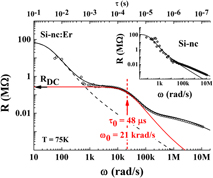
To fabricate practical light-emitting devices, identification and minimization of nonradiative processes are necessary. In this study, an electrical measurement technique for time-resolved analyses of nonradiative processes was proposed. From the comparison between a commercial light-emitting diode (LED) and rare-earth-doped semiconductors, the technique, called electrical frequency-response analysis (FRA), revealed differences in the charge behaviors in the pn junction of bulk semiconductors and impurities. Although the charge response time constant on the order of a nanosecond realized effective recombination of the electron–hole pairs in a LED, the time constant larger than a microsecond still limited the emission intensity of the rare-earth-doped semiconductors such as Er-doped Si nanocrystals and GaAs with Er and O codopants. The energy-loss processes of the Er-doped semiconductors were investigated, and countermeasures to enhance the emission intensity were proposed.
We derive the dispersion relation of SiC substrate phonon-induced surface plasmon polariton (SPP) in epitaxial graphene (EG) grown on 4H–SiC, in SiC's restrahlen band (8–10 μm) by solving Maxwell equation in transverse magnetic mode. We also fabricated EG waveguide using photolithography and RIE etching for experimental study. Both theory and experimental data correlate in good agreement. Finally, we explain the viability of plasmonic device in EG both in theoretical and experimental point of view to explain electron–hole pair recombination. SPP formation finds application in nanophotonic devices for optical computing because of graphene's unique plasmonic properties. This can be applicable for high speed data switching in microprocessor and random access memory as well as optical interconnect in modern VLSI technology.