To save content items to your account,
please confirm that you agree to abide by our usage policies.
If this is the first time you use this feature, you will be asked to authorise Cambridge Core to connect with your account.
Find out more about saving content to .
To save content items to your Kindle, first ensure no-reply@cambridge.org
is added to your Approved Personal Document E-mail List under your Personal Document Settings
on the Manage Your Content and Devices page of your Amazon account. Then enter the ‘name’ part
of your Kindle email address below.
Find out more about saving to your Kindle.
Note you can select to save to either the @free.kindle.com or @kindle.com variations.
‘@free.kindle.com’ emails are free but can only be saved to your device when it is connected to wi-fi.
‘@kindle.com’ emails can be delivered even when you are not connected to wi-fi, but note that service fees apply.
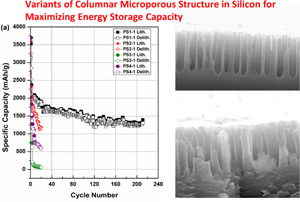
Silicon electrodes with the columnar macroporous structure were investigated to determine the effect of variations in the columnar pore morphology on lithiation and energy storage capacity in Li-ion cells. Several variants of macroporous Si columnar electrodes were electrochemically cycled against the Li reference electrode. The changes in macro-pore size and Si wall thickness of the columnar architecture greatly affected the cyclic Li storage and discharge capacities. A strong correlation of the Li-storage capacity with the ratio of Si wall thickness to pore diameter is found to exist. Specifically, one columnar Si electrode with an optimum macroporous structure exhibited a very high reversible specific capacity of ~1250 mAh/g (total capacity 1.2 mAh/cm2) for over 200 cycles. Electron microscopy revealed that the high reversible Li-storage capacity is due to the macropores accommodating the change in volume of lithiation and providing nearly complete reconstruction of Si walls upon delithiation. The present observations can lead to practical, high-capacity, and damage-resistant Si electrodes for Li-ion batteries.
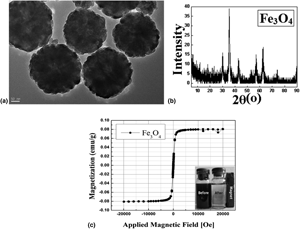
Three-dimensional porous materials with the hydrophobic/oleophilic surface have attracted significant interest in the fields of oil/water separation. In this paper, superhydrophobic magnetic polyurethane sponge was fabricated by the self-polymerization of dopamine to bind the Fe3O4 nanoparticles tightly on the sponge and then soaking in cheap stearic acid aqueous solution. The obtained sponge has the superhydrophobic property and good magnetic property. The surface structure, composition, and properties of the modified sponges were characterized by scanning electron microscopy, energy dispersive spectrometer, Fourier-transform infrared spectrum, and water contact angle (WCA) measurements. The as-prepared superhydrophobic magnetic sponge was able to collect a wide range of oils and organic solvents from oil–water mixture with an absorption capacity up to 16–60 times of its own weight. Under an external magnetic field, it can be guided to a designated area. In addition, combined with the vacuum system, continuous oil separation can be carried out, which is of great significance for removing a good deal of dirty oil on the water surface. Furthermore, the WCA of sponge remains above 141°, and the oil absorption is basically unchanged through repeated cyclic experiments.
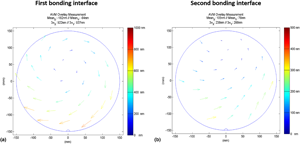
Recent applications require vertical chip stacking to increase the performance of many devices without the need of advanced node components. Image sensors and vision systems will embed more and more smart functions, for instance, image processing, object recognition, and movement detection. In this perspective, the combination of Cu-to-Cu direct hybrid bonding technology with Through-Silicon-Via (TSV) will allow 3D interconnection between pixels and the associated computing and memory structures, each function fabricated on a separate wafer. Wafer-to-wafer hybrid bonding was achieved with multi-pitch design—1–4 μm—of single levels of Cu damascene patterned on 300 mm silicon substrates. Defect-free bonding, as far as the extreme edge of the wafer, was demonstrated on a stack with three wafers. Middle wafers thinning was done with grinding only and with a thickness uniformity (TTV) <2 μm to an ultimate thinning as low as 3 μm. Alignment performance was characterized by post-bonding for two superposed hybrid bonding interfaces. In our set of wafers, modeling the alignment with translation, rotation, and scaling components enables us to optimize the residuals down to 3σ < 100 nm. A process flow of thin TSV with a fine pitch of 2 μm for high-density vertical interconnect through a three-wafer stack was developed. Via-last TSV architecture was adopted with 1 μm TSV diameter and 10 μm thickness. Lithography, etching solutions, Ti/TiN barrier deposition, and void-free Cu filling solutions were demonstrated. TSV cross sections after CMP and connections with top and bottom Cu damascene lines show good profile control. Process developments are matured and can be reliably used in the fabrication of an electrical test vehicle including vertical interconnects associating multi-wafers stacking with a hybrid bonding process and high-density thin TSV applicable to low pitches (<5 μm).
The effects of CaTiO3 (CT) and BaZrO3 (BZ) modification upon the crystal structure and electromechanical properties of lead-free Bi0.5Na0.5TiO3–SrTiO3 piezoelectric ceramics were compared within a doping range of 0–4 mol%. The different effects of CT and BZ modification upon the phase transition are clearly observed in the polarization and strain hysteresis loops. The CT-modified specimens maintain strong ferroelectricity without any abnormal enhancement in the electric field-induced strain. However, the addition of as little as 1 mol% BZ induces a transition from a nonergodic relaxor phase to an ergodic relaxor phase, thus resulting in disruption of the ferroelectric order and the generation of a high field-induced strain. The present authors believe that the substitution of large ions (such as Zr4+) into the B-sites, rather than the A-sites, of the Bi0.5Na0.5TiO3-based ceramics plays a significant role in the phase transition behavior.
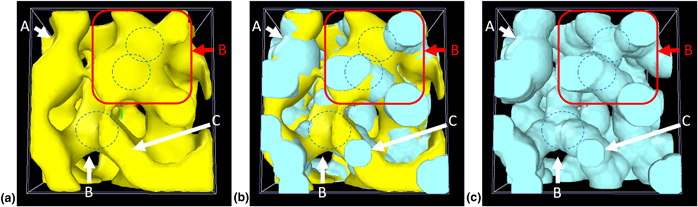
Soyarslan et al. [J. Mater. Res. 33(20), 3371 (2018)] proposed a beam-finite element model for the computation of effective elastic properties of nanoporous materials, where the ligament diameter along the skeleton is determined with the biggest sphere algorithm. Although this algorithm is often used in the literature, it is known that it systematically overestimates the diameter in network structures. Thus, the need for further stiffening of the junction zones as proposed by the authors is in contradiction to the literature. Furthermore, the factor 40 appears to be one order of magnitude too high. We show that the 3D microstructures generated from random Gaussian fields contain features that are violating the assumption of circular cross-sections and, therefore, cannot be captured by the biggest sphere algorithm. Consequently, the authors required an unphysically high value of 40 to compensate this hidden effect.
Vibration-based methods can be used effectively to characterize the physical properties of biological materials, with an increasing interest focused on the mechanics of individual, living cells. Real-time measurements of cell properties, such as mass and Young's modulus, can yield important insights into many aspects of cell growth and metabolism as well as the interaction of cells with external stimuli (e.g., drugs). Vibrational test structures designed for the study of such cell properties often use fixed configurations and operational modes, with associated limitations in determining multiple characteristics of the cell, simultaneously. Recent development of mechanics-guided techniques for deterministic assembly of three-dimensional (3D) microstructures provides a route to vibrational frameworks that offer tunable configurations, vibration modes, and resonant frequencies. Here we propose a method that exploits such tunable vibrational structures to simultaneously determine the mass and modulus of a single adherent cell, or of other biological materials or small-scale living systems (e.g., organoids), through theoretical modeling and finite element analysis. The idea involves a 3D architecture that supports two different vibrational structures and can be converted from one to the other through application of strain to an elastomeric substrate. Specifically, tailored designs for serpentine ribbons in these systems enable a decoupling of the dependence of the resonant frequencies of the two structures to the cell mass and modulus, with an associated ability to measure these two properties accurately and independently. These same concepts can be scaled to apply to various types of cells, as well as to organoids (3D clusters of cells) and other biological materials with small geometries, across a range of values of mass and modulus. This method could serve as the foundation for microelectromechanical systems capable of monitoring mass and modulus in real time for use in research in biomechanics and dynamic biological processes.
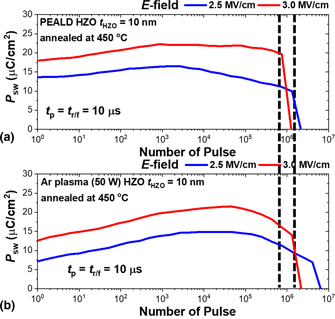
The doped/alloyed HfO2 and ZrO2 thin films revolutionized not only the field of ferroelectric physics but also various ranges of device applications. Especially when the two oxides are combined in an 1:1 ratio, the ferroelectric polarization of the material became the most distinctive. Many researchers have investigated various different process conditions such as controlling Hf0.5Zr0.5O2 (HZO) film thickness and modifying different metal electrodes. Here, we explored the effect of additional Ar plasma treatment to the HZO film. The additional Ar plasma was exposed to the plasma-enhanced atomic layer deposition (PEALD) HZO for this study. Then, the sample was compared with a conventional PEALD and thermal ALD HZO films. By understanding the polarization–electric field (P–E), current–electric field (I–E), and electrical breakdown characteristics of the different samples, it was found that the Ar plasma treatment can control the degree of ferroelectric and antiferroelectric phases of HZO film.
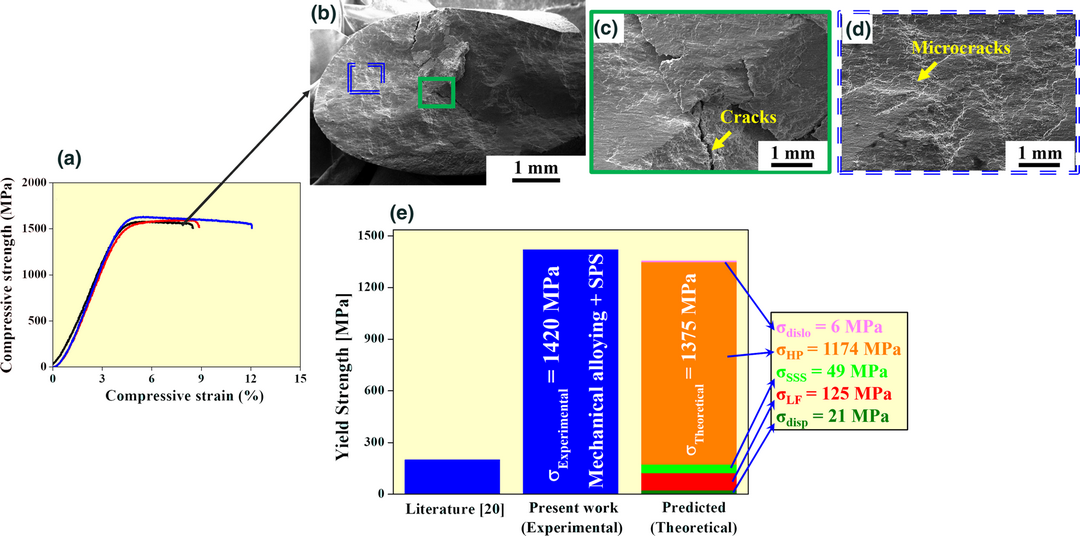
Al0.1CoCrFeNi high-entropy alloy (HEA) was synthesized successfully from elemental powders by mechanical alloying (MA) and subsequent consolidation by spark plasma sintering (SPS). The alloying behavior, microstructure, and mechanical properties of the HEA were assessed using X-ray diffraction, electron microscope, hardness, and compression tests. MA of the elemental powders for 8 h has resulted in a two-phased microstructure: α-fcc and β-bcc phases. On the other hand, the consolidated bulk Al0.1CoCrFeNi-HEA sample reveals the presence of α-fcc and Cr23C6 phases. The metastable β-bcc transforms into a stable α-fcc during the SPS process due to the supply of thermal energy. The hardness of the consolidated bulk HEA samples is found to be 370 ± 50 HV0.5, and the yield and ultimate compressive strengths are found to be 1420 and 1600 MPa, respectively. Such high strength in the Al0.1CoCrFeNi HEA is attributed to the grain refinement strengthening.
Solid solution 0.94Na0.5Bi0.5TiO3–6BaTiO3 (NBT–6BT) is considered to be one kind of lead-free piezoelectric materials with excellent electrical properties due to the existence of morphotropic phase boundary (MPB). However, its relatively lower depolarization temperature is a long-standing bottleneck for the application of NBT-based piezoelectric ceramics. In this work, the influence of thermal quenching on depolarization temperature and electrical properties of rare-earth Ho-doped NBT–6BT lead-free ceramics was investigated. It was shown that the relative high piezoelectric performance, as well as an improvement of depolarization temperature (Td), can be realized by thermal quenching. The results showed that the quenching process induced high concentration of oxygen vacancy, giving rise to the change of octahedra mode and enhanced lattice distortion, which is benefit to the temperature stability of piezoelectric and ferroelectric properties. Furthermore, up-conversion photoluminescence (PL) of Ho-doped NBT–6BT could be effectively tuned by the introduction of oxygen vacancy, suggesting a promising potential in optical–electrical multifunctional devices.
This work investigated the photophysical pathways for light absorption, charge generation, and charge separation in donor–acceptor nanoparticle blends of poly(3-hexylthiophene) and indene-C60-bisadduct. Optical modeling combined with steady-state and time-resolved optoelectronic characterization revealed that the nanoparticle blends experience a photocurrent limited to 60% of a bulk solution mixture. This discrepancy resulted from imperfect free charge generation inside the nanoparticles. High-resolution transmission electron microscopy and chemically resolved X-ray mapping showed that enhanced miscibility of materials did improve the donor–acceptor blending at the center of the nanoparticles; however, a residual shell of almost pure donor still restricted energy generation from these nanoparticles.
Potassium and cerium co-doped Bi4Ti2.86W0.14O12 ceramics with a formula of (K0.5Ce0.5)xBi4−xTi2.86W0.14O12 (abbreviated as KC100x-BITW, x = 0, 0.02, 0.04, 0.06, 0.08, 0.1) were prepared by a conventional solid-state reaction method. The effect of (K0.5Ce0.5) complex doping amount on the structure, dielectric, and piezoelectric properties of the KC100x-BITW ceramics was investigated. X-ray diffraction results indicated that the KC100x-BITW ceramics are Aurivillius-type phase with the bismuth layer structure. (K0.5Ce0.5) complex addition first increases and then decreases the grain size which can be observed by scanning electron microscopy. With the increase of (K0.5Ce0.5) complex doping amount, the Curie temperature (TC) was slightly decreased from 632 to 608 oC. The dielectric and piezoelectric properties were optimized in KC100x-BITW ceramics with x = 0.08 as follows: d33 = 24 pC/N, kp = 8.2%, Qm = 6766, εr = 135 (@100 kHz), tanδ = 0.28% (@100 kHz), Tc = 611 oC, and resistivity ρ = 2.9 × 10⁶ Ω cm at 500 oC, indicating that the KC100x-BITW ceramics are suitable for high-temperature piezoelectric sensing applications.
Agricultural intensification within forage systems has reduced grassland floral diversity by promoting ryegrass (Lolium spp.), damaging soil functionality which underpins critical ecosystem services. Diverse forage mixtures may enhance environmental benefits of pastures by decreasing nutrient leaching, increasing soil carbon storage, and with legume inclusion, reduce nitrogen fertilizer input. This UK study reports on how species-rich forage mixtures affect soil carbon, phosphorus, and nitrogen at dry, medium and wet soil moisture sites, compared to ryegrass monoculture. Increasing forage mixture diversity (from 1 to 17 species) affected soil carbon at the dry site. No effect of forage mixture on soil phosphorus was found, while forage mixture and site did interact to affect soil nitrate/nitrite availability. Results suggest that forage mixtures could be used to improve soil function, but longer-term studies are needed to conclusively demonstrate environmental and production benefits of high-diversity forages.
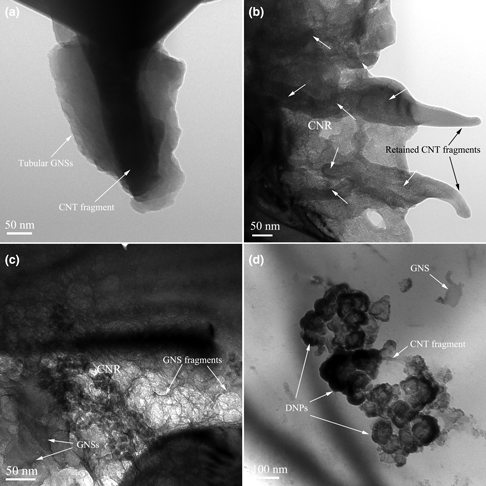
Nickel-coated carbon nanotubes (Ni-CNTs) were achieved by electroless plating. Laser cladded IN718 and IN718 with 10, 30, and 50 wt% additions of Ni-CNTs were fabricated. The structural evolution of CNTs in the laser-deposited layers was studied; the microstructure, tensile, and wear properties of the laser-cladded alloys were characterized. The results show that CNTs in the laser-deposited layers are mostly transformed to carbon nanoproducts (CNPs) in the forms of graphene nanosheets, graphene fragments, carbon nanoribbons, and diamond-like nanoparticles by unzipping, interbonding, collapsing, and curvature of CNTs. The interdendritic Laves phase formation is dramatically depressed due to the addition of Ni-CNTs, but the excess addition of the Ni-CNTs can undesirably increase the formation of NbC. The addition of Ni-CNTs effectively improves the tensile and wear properties. The most superior tensile and wear properties are achieved in the layers with 30 and 50 wt% additions of Ni-CNTs, respectively. The generation of intermetallic phase and CNPs are revealed to be two dominant effects both on the tensile and wear properties of the laser-cladded alloys.
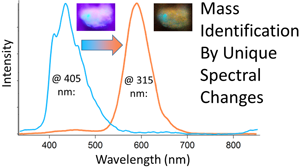
Tracing the flow of solid matter during an explosion requires a rugged tag that can be measured by a unique identifiable signature. Silica-covered semiconductor quantum dots (QDs) provide a unique and tunable photoluminescent signature that emits from within a sacrificial outer layer. Five types of silica-covered zinc sulfide QDs were synthesized and covalently bound to commercial luminescent powders. The combination of five dots and five powders enables a matrix of 25 unique tags. The tracers are shown to be tolerant of environments associated with chemical explosives and provides a unique tag to evaluate debris fields.
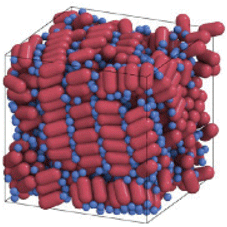
The field of self-assembly has moved far beyond early work, where the focus was primarily the resultant beautiful two- and three-dimensional structures, to a focus on forming materials and devices with important properties either otherwise not available, or only available at great cost. Over the last few years, materials with unprecedented electronic, photonic, energy-storage, and chemical separation functionalities were created with self-assembly, while at the same time, the ability to form even more complex structures in two and three dimensions has only continued to advance. Self-assembly crosscuts all areas of materials. Functional structures have now been realized in polymer, ceramic, metallic, and semiconducting systems, as well as composites containing multiple classes of materials. As the field of self-assembly continues to advance, the number of highly functional systems will only continue to grow and make increasingly greater impacts in both the consumer and industrial space.
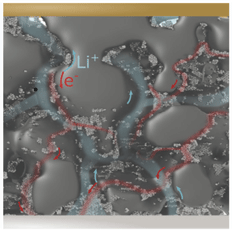
Electrochemical energy-storage systems such as supercapacitors and lithium-ion batteries require complex intertwined networks that provide fast transport pathways for ions and electrons without interfering with their energy density. Self-assembly of nanomaterials into hierarchical structures offers exciting possibilities to create such pathways. This article summarizes recent research achievements in self-assembled zero-dimensional, one-dimensional, and two-dimensional nanomaterials, ordered pore structure materials, and the interfaces between these. We analyze how self-assembly strategies can create storage architectures that improve device performance toward higher energy densities, longevity, rate capability, and device safety. At the end, the remaining challenges of scalable low-cost manufacturing and future opportunities such as self-healing are discussed.
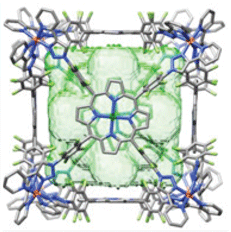
One of the leading challenges in chemical sciences is the separation of complex mixtures. This is of vital importance for areas such as commodity chemical generation, where there is a need for the generation of high-purity chemical streams. Due to this, there has been a strong push toward the investigation of new materials capable of achieving chemoselective separation, with self-assembled materials having shown a great deal of promise for such separations. Many self-assembled materials are desirable candidates due to their low-cost synthesis, structural self-regulation, tunable properties, and an overall ease of composite material preparation. In this article, we aim to introduce examples of novel self-assembled materials and their practical usage in chemical separations. The specific approaches to fabricate these materials, as well as the strengths and shortcomings associated with their structures, will also be described. The strategies presented here will emphasize the production and employment of nonconventional self-assembled materials that exhibit a high potential for the advancement of the science of chemical separations.