To save content items to your account,
please confirm that you agree to abide by our usage policies.
If this is the first time you use this feature, you will be asked to authorise Cambridge Core to connect with your account.
Find out more about saving content to .
To save content items to your Kindle, first ensure no-reply@cambridge.org
is added to your Approved Personal Document E-mail List under your Personal Document Settings
on the Manage Your Content and Devices page of your Amazon account. Then enter the ‘name’ part
of your Kindle email address below.
Find out more about saving to your Kindle.
Note you can select to save to either the @free.kindle.com or @kindle.com variations.
‘@free.kindle.com’ emails are free but can only be saved to your device when it is connected to wi-fi.
‘@kindle.com’ emails can be delivered even when you are not connected to wi-fi, but note that service fees apply.
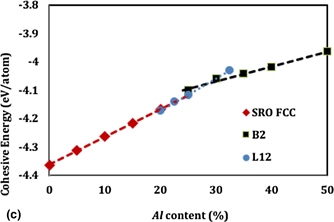
A set of embedded atom model (EAM) interatomic potentials was developed to represent highly idealized face-centered cubic (FCC) mixtures of Fe–Ni–Cr–Co–Al at near-equiatomic compositions. Potential functions for the transition metals and their crossed interactions are taken from our previous work for Fe–Ni–Cr–Co–Cu [D. Farkas and A. Caro: J. Mater. Res. 33 (19), 3218–3225, 2018], while cross-pair interactions involving Al were developed using a mix of the component pair functions fitted to known intermetallic properties. The resulting heats of mixing of all binary equiatomic random FCC mixtures not containing Al is low, but significant short-range ordering appears in those containing Al, driven by a large atomic size difference. The potentials are utilized to predict the relative stability of FCC quinary mixtures, as well as ordered L12 and B2 phases as a function of Al content. These predictions are in qualitative agreement with experiments. This interatomic potential set is developed to resemble but not model precisely the properties of this complex system, aiming at providing a tool to explore the consequences of the addition of a large size-misfit component into a high entropy mixture that develops multiphase microstructures.
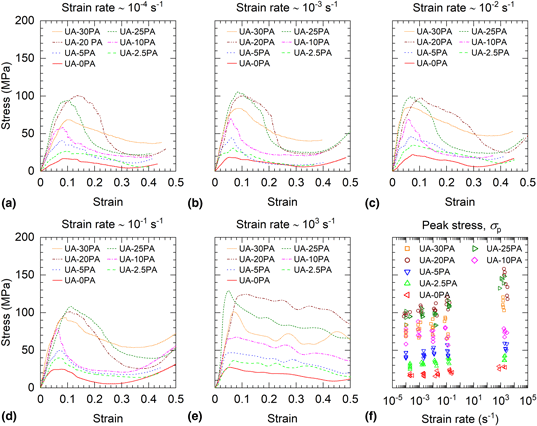
This study revealed that the mass ratio of large anisometric particles (platelets) to ultrafine, equiaxed particles strongly influences dynamic and quasistatic compressive response and the process of damage evolution in ice-templated alumina materials. The improved sinterability between particles of significantly dissimilar size and morphology enabled the utilization of a high mass ratio of the particles in harnessing a markedly enhanced level of strength in highly porous ice-templated ceramics. The high volume fraction of platelets increased lamellar bridge density and resulted in dendritic morphology as opposed to lamellar morphology without platelets. All the materials showed strain rate-sensitivity, where strength increased with strain rate. Materials with highly dendritic morphology exhibited the best performance in terms of maximum strength and energy absorption capacity, and the performance improved from quasistatic to dynamic regime. Direct observation of the process of damage evolution revealed the effects of both strain rate and ratio of platelets to ultrafine particles.
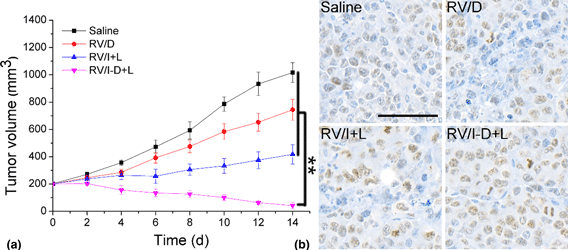
The cellular accumulation of drug delivery systems (DDSs) is a critical parameter to determine the final outcome of cancer chemotherapy. Herein, we designed a red blood cells membrane-based vehicle (RV) and employed it to load both doxorubicin (Dox) and IR 780 (RV/I-D). The photothermal-assisted chemotherapy efficacy of RV/I-D on the treatment of cancer was tested on a prostate cancer model. Excitingly, the results showed that RV/I-D was stable and safe nanoparticles with size at about 100 nm. Moreover, upon the increase of system temperature using photothermal effects of IR780, the drug release of the DDS was accelerated. Above all, the DDS also increased the accumulation of drugs into the Dox-resistant prostate cancer cells (PC-3/Dox) both in vitro and in vivo and showed enhanced anticancer performance.
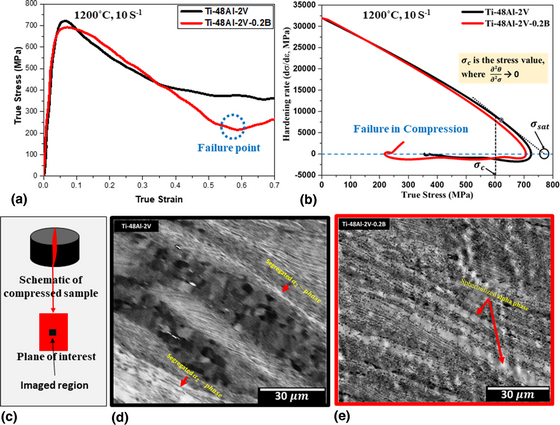
Hot deformation and softening response for the titanium aluminide Ti–48Al–2V–0.2B has been investigated. The deformation response to softening mechanisms has been examined. Deformation experiments were carried out in the strain rate range 0.01–10 s−1 keeping the temperature constant at 1200 °C and in the temperature range 1000–1200 °C at the strain rate 1 s−1. With an increase in strain rate, the microstructural changes associated with the softening mechanism include breaking of the lamellae, spheroidization of the broken laths and dynamic recrystallization. For the strain rate 1 s−1, deformation in the (α2 +γ) phase field leads to fine recrystallized grains, remnant lamellae and cavitation along the grain boundaries (for temperatures 1000 and 1100 °C). Deformation in the (α +γ) phase field leads to dynamic recrystallization at the shear bands, within the lamellae, breaking and rotation of the α phase during the continuous increase in the deformation strain.
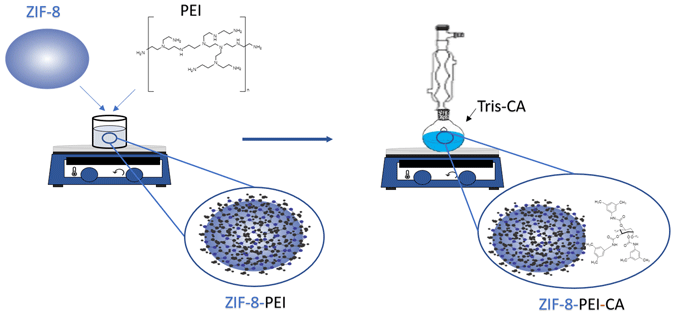
Commercial chiral stationary phases (CSPs) are based mainly on polysaccharides supported on silica; however, the pharmaceutical industry shows a special interest on chiral separations, exhibiting high financial investment in the development of new CSPs. These can be structured by a new optically active compound or different support. Thus, metal–organic frameworks (MOFs) are crystalline materials that arise with great potential for support, due to its high porosity, the strong intermolecular force between the metal and the ligand selectivity, and high adsorption capacity. Interested in this, this work proposes a new CSP using the metal–organic structure ZIF-8 (Basolite Z1200) due to its high mechanical stability. To this end, it is proposed the modification of the ZIF-8 with the optically active compound, tris-3,5-dimethylphenylcarbamate amylose. Through characterization textural, structural, and physicochemical performed, it is possible to confirm the synthesis of the chiral compound (amylose carbamate), as well as the functionalization of the metal–organic structure with tris-3,5-dimethylphenylcarbamate amylose (ZIF-8-PEI-CA). In addition, as a validation technique, HPLC can detect the presence of enantiomers present in the racemic mixture of Troger bases.
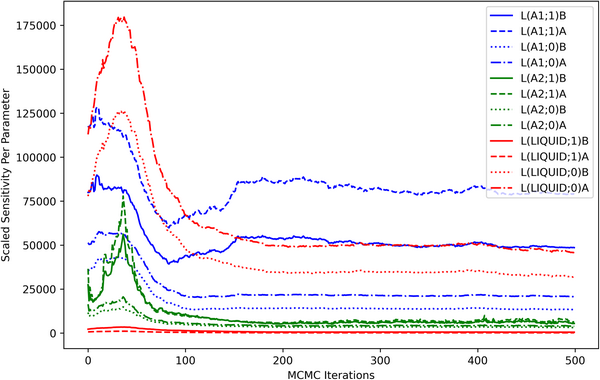
The development of a consistent framework for Calphad model sensitivity is necessary for the rational reduction of uncertainty via new models and experiments. In the present work, a sensitivity theory for Calphad was developed, and a closed-form expression for the log-likelihood gradient and Hessian of a multi-phase equilibrium measurement was presented. The inherent locality of the defined sensitivity metric was mitigated through the use of Monte Carlo averaging. A case study of the Cr–Ni system was used to demonstrate visualizations and analyses enabled by the developed theory. Criteria based on the classical Cramér–Rao bound were shown to be a useful diagnostic in assessing the accuracy of parameter covariance estimates from Markov Chain Monte Carlo. The developed sensitivity framework was applied to estimate the statistical value of phase equilibria measurements in comparison with thermochemical measurements, with implications for Calphad model uncertainty reduction.
We investigated high-resistivity cadmium zinc telluride (CdZnTe):In single crystals annealed in hydrogen to reveal the passivation effect of defects. An overall reduction in the concentration of defect levels induced by annealing was obviously observed by thermally stimulated current measurements. There is a large decrease by 56.51% in the concentration of secondly ionized Cd vacancies (T3) after hydrogenation. The concentration of firstly ionized Cd vacancies (T2) was a little bit lower (17.99%) in the hydrogenated CZT crystals. The formation of neutral InH complex and lower occupation of VCd by In dopant would result in a significant decrease (68.31%) in the trap density of ${\rm In}_{\rm Cd}^ +$ related shallow donor (T1) after hydrogenation. The bulk resistivity was calculated from I–V characteristic curves to be ~1.97 × 10¹⁰ Ωcm before annealing and ~1.78 × 10¹⁰ Ωcm after annealing. Hall measurements also reveal n-type conduction for the hydrogenated crystals. Electron mobility was fitted to be about 110 cm2/Vs before annealing and 488 cm2/Vs after annealing, demonstrating better carrier transport properties. Electron mobility-lifetime product could be fitted to be about 3.60 × 10⁻⁴ cm2/V before annealing and 5.45 × 10⁻⁴ cm2/V after annealing, demonstrating better detector performances.
Lead-free ferroelectric electrocaloric ceramics that could convert electrical energy into heat are the promising candidate for environment-friendly cooling devices. For refrigeration devices, a large temperature change (ΔT) and good temperature stability are required, which are highly related to the phase structure and the applied electric field. In this work, a diffused ferroelectric–paraelectric (FP) phase transition is formed in (K, Na)NbO3 (KNN) by using appropriate composition engineering. The relaxor ferroelectrics in this work present both a large ΔT of 1.24 K and a high ΔT/ΔE of 0.19 K mm/kV. In addition, a wide temperature span exceeds 55 °C at the high electrocaloric effect (ECE) criterion (ΔT ≥ 0.5 K) could also be observed. This work not only opens a new strategy for obtaining high-performance ceramics for refrigeration devices but also extends the application area of the KNN-based lead-free ferroelectrics from sensors, actuators and energy harvesting to solid-state cooling applications.
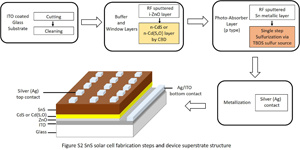
In this work, RF-sputtered metallic tin (Sn) film was sulfurized through di-tert-butyl-disulfide vapor at 350 °C for 150, 180, 210, and 240 min. According to the Raman spectra analysis, 210 min was sufficient to form dominantly SnS film. X-ray diffraction and X-ray photoelectron spectroscopy (XPS) studies of SnS film were evaluated. The n-type window layers CdS and high transmittance Cd(S,O) were deposited by chemical bath deposition through two different baths without and with TX-100 surfactant, respectively. XPS analysis of CdS and Cd(S,O) films was carried out. SnS solar cells formed in the superstrate solar cell device configuration. The photovoltaic performances were evaluated.
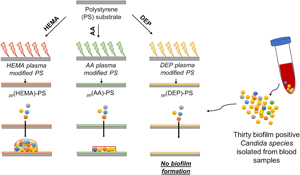
This work investigates the antifungal effect of plasma polymer films produced by low-pressure RF-generated plasma system using acrylic acid, 2–hydroxyethyl methacrylate, and diethyl phosphite (DEP). Unmodified and plasma-modified polystyrene (PS) microplate wells were tested by 30 biofilm-positive Candida spp. isolated from blood samples and two control strains using a quantitative plaque assay method. Regardless of the precursors and plasma parameters, biofilm formation was inhibited for all plasma-modified microplate wells. The most significant anti-biofilm effect was observed on PS modified by DEP at 90 W plasma power with the inhibition of all Candida species’ biofilm formation.
Bisphenol-A (BPA) is associated with adverse health outcomes and is found in many canned foods. It is not understood if some BPA contamination can be washed away by rinsing. The objective of this single-blinded crossover experiment was to determine whether BPA exposure, as measured by urinary concentrations, could be decreased by rinsing canned beans prior to consumption. Three types of hummus were prepared from dried beans, rinsed, and unrinsed canned beans. Fourteen healthy participants ate two samples of each hummus over six experimental days and collected spot urine specimens for BPA measurement. The geometric mean BPA levels for dried beans BPA (GM = 0.97 ng/ml, 95%CI = 0.74,1.26) was significantly lower than rinsed (GM = 1.89 ng/ml, 1.37,2.59) and unrinsed (GM = 2.46 ng/ml, 1.44,4.19). Difference-in-difference estimates showed an increase in GM BPA from pre- to post-hummus between unrinsed and rinsed canned beans of 1.39 ng/ml, p-value = 0.0400. Rinsing canned beans was an effective method to reduce BPA exposure.
Validating phase quantification procedures of powder X-ray diffraction (XRD) data for an implementation in an ISO/IEC 17025 accredited environment has been challenging due to a general lack of suitable certified reference materials. The preparation of highly pure and crystalline reference materials and mixtures thereof may exceed the costs for a profitable and justifiable implementation. This study presents a method for the validation of XRD phase quantifications based on semi-synthetic datasets that reduces the effort for a full method validation drastically. Datasets of nearly pure reference substances are stripped of impurity signals and rescaled to 100% crystallinity, thus eliminating the need for the preparation of ultra-pure and -crystalline materials. The processed datasets are then combined numerically while preserving all sample- and instrument-characteristic features of the peak profile, thereby creating multi-phase diffraction patterns of precisely known composition. The number of compositions and repetitions is only limited by computational power and storage capacity. These datasets can be used as input files for the phase quantification procedure, in which statistical validation parameters such as precision, accuracy, linearity, and limits of detection and quantification can be determined from a statistically sound number of datasets and compositions.
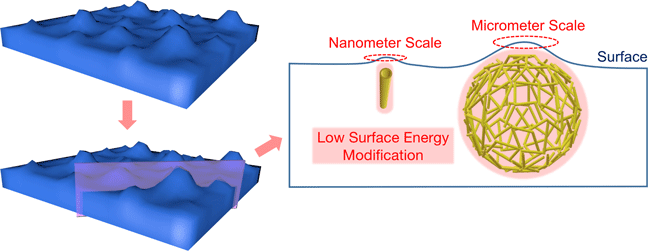
The construction of halloysite spherical capsules (halloysite aerogels) was reported for the first time in our previous work. The excellent performance of the microcapsule in functional carrying was also found in our further research. In this work, the anti-icing surface was fabricated by using halloysite nanotubes and halloysite spherical microcapsules. The fabrication of the anti-icing coating was investigated, and the ice nucleation behavior of droplet on the coating surface was studied. The modified halloysite nanotubes (F-HNTs) and the modified halloysite microcapsules (F-HAs) were characterized by Fourier-transform infrared spectroscopy, thermal gravimetric, and pore size distribution. The results show that the introduction of F-HNTs and F-HAs have successfully formed a micro-nano structure on the coating surface with superhydrophobicity performance. The icing temperature of the coating has decreased 2.3 °C compared with bare glass, and the ice adhesion strength has decreased 82%. According to the ice dynamic mechanics, the ice nucleation rate on the coating is significantly reduced, thus the halloysite microcapsule coating has good icephobic performance.
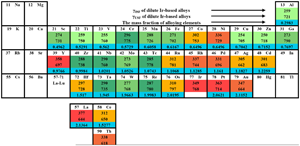
Iridium (Ir) has an extremely high melting point (2443 °C), high chemical stability and is one of the most promising high-temperature materials. However, Ir is more difficult to process compared with other face-centered cubic metals, such as Ni and Al, which limits its applications. To solve this problem, we study the effect of 32 alloying elements (X) on stacking fault energy of dilute Ir-based alloys generated by shear deformation using the first-principles calculations. The investigation reveals that there are many alloying elements studied herein decrease the stacking fault energy of face-centered cubic (fcc) Ir, and the most effective element in reducing stacking fault energy of fcc Ir is Zn. The microscopic mechanism is caused by electron redistribution in the local stacking fault area. These results are expected to provide valuable guidance for the further design and application of Ir-based alloys.
During summer 2020, observations of the mesosphere using a 53.5 MHz radar on Svalbard, at 78.2°N 15.1°E, revealed the well-known Polar Mesospheric Summer Echoes (PMSE). At the same time, a co-located meteor detection radar, operating at 31 MHz detected corresponding echoes very distinct from those associated with meteor trails. Comparing as many days as possible during 2020, incontestable evidence arose to demonstrate that the meteor detection radar was capable of observing PMSE, although not in the optimised fashion of the 53.5 MHz system. We present examples of results from both systems, supplementing the earlier findings of Swarnalingam et al. (2009), and simultaneously show very first results from this particular geographical location.
Denture-related stomatitis caused by Candida spp. affects elderly individuals using partial/total prosthesis, provoking several discomforts including burning sensation and altered taste. Herein, we have studied 52 denture-wearing individuals (>60 years-old), attended at the dentistry clinic of UNIVALE, aiming to isolate Candida spp. directly from the stomatitis lesions and to evaluate their potential to produce virulence attributes. A low prevalence of denture-related stomatitis was reported in these patients (4/52; 7.7%). Candida albicans was isolated in the 4 selected patients, with the ability to form biofilm over a polystyrene surface and to produce aspartic protease, esterase and hemolysin. However, neither phospholipase nor caseinase activities were detected. Planktonic-growing yeasts were susceptible to amphotericin B and caspofungin, while the susceptibility to azoles (fluconazol, itraconazole and voriconazole) varied depending on either the isolate or antifungal. Relevantly, biofilm-forming C. albicans cells exhibited resistance to all studied antifungals. So, new effective drugs against resistant C. albicans isolates causing denture-related stomatitis are urgently required.
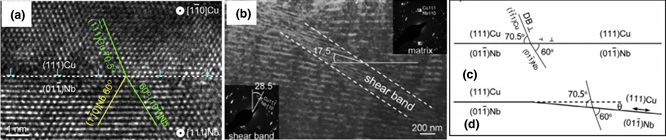
Nanocrystalline metals possess high strength and outstanding resistance to irradiation damage. However, the high-density grain boundaries in nanocrystalline metals lead to low plasticity and poor thermal stability. In recent years, interface engineering has gradually become an important way to improve the comprehensive properties of nanocrystalline metals. In this paper, the interface structure, deformation mechanism, and physical properties of Cu–Nb nanolayered composites fabricated by physical vapor deposition and accumulative roll bonding are reviewed. Both Cu–Nb nanolayered composites possess semi-coherent interfaces. The nanolayered composites could achieve excellent resistance to irradiation damage since the interfaces are good sinks for the irradiation point defects. In addition, nanolayered metallic composites with abundant heterogeneous interfaces have better thermal stability compared to nanocrystalline metallic materials. Moreover, the interactions between dislocations and interfaces can be adjusted effectively through controlling the atomistic interface structure and alignment of slip systems across the interface, so as to achieve high strength and high plastic deformation ability simultaneously.