To save content items to your account,
please confirm that you agree to abide by our usage policies.
If this is the first time you use this feature, you will be asked to authorise Cambridge Core to connect with your account.
Find out more about saving content to .
To save content items to your Kindle, first ensure no-reply@cambridge.org
is added to your Approved Personal Document E-mail List under your Personal Document Settings
on the Manage Your Content and Devices page of your Amazon account. Then enter the ‘name’ part
of your Kindle email address below.
Find out more about saving to your Kindle.
Note you can select to save to either the @free.kindle.com or @kindle.com variations.
‘@free.kindle.com’ emails are free but can only be saved to your device when it is connected to wi-fi.
‘@kindle.com’ emails can be delivered even when you are not connected to wi-fi, but note that service fees apply.
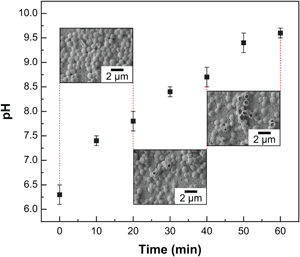
The understanding of adhesion and survival behavior of bacterial pathogens on implant surfaces are critical to control and reduce implant-associated infections. Herein, the authors investigate the interactions of Staphylococcus aureus, one of the most prevalent causes of implant infections, with Mg–4Zn–0.5Ca implants. It was found that within 60 min of exposure, 99.1% of adherent bacteria were inactivated. The combination of unique mechanical properties, biodegradation kinetics, and antimicrobial characteristics of Mg–4Zn–0.5Ca alloy makes it a promising candidate for future implant applications.
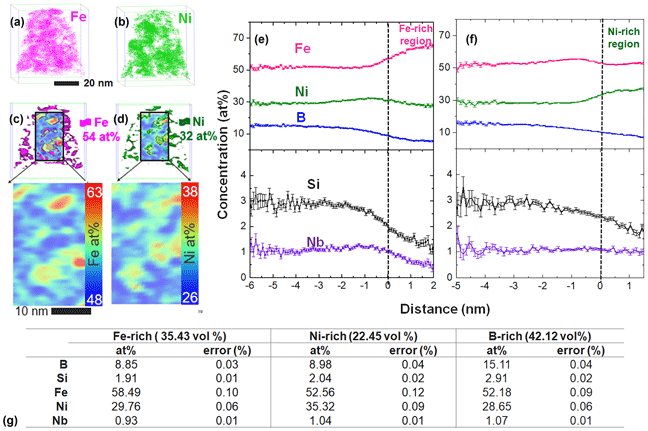
Soft magnetic metal amorphous nanocomposite alloys are produced through rapid solidification and thermal annealing yielding nanocrystals embedded within an amorphous precursor. Similar free energies in Co-rich and FeNi-based alloy systems result in multiple nanocrystalline phases being formed during devitrification. Studies of multi-phase crystallization processes have been reported for Co-rich alloys but relatively few have investigated FeNi-based systems. A detailed characterization of compositional partitioning and microstructure of an optimally annealed FeNi-based MANC (Fe70Ni30)80Nb4Si2B14 alloy is presented through complementary high-resolution transmission electron microscopy (HRTEM) and atom probe tomography (APT). HRTEM demonstrates orientation relationships between FCC and BCC nanocrystals, suggesting heterogeneous nucleation of nanocrystals in the amorphous matrix or a cooperative mechanism of nucleation between BCC and FCC nanocrystallites. APT results show evidence for (i) the segregation of Fe and Ni between nanocrystals of different phases, (ii) B partitioning to the amorphous phase, and (iii) an Nb-enriched shell surrounding nanocrystals.
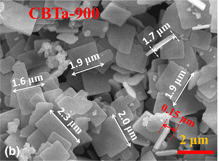
The molten-salt method was used to synthesize CaBi2Ta2O9 (CBTa) powder, and the influence of temperature on the structure and micromorphology of products was investigated using X-ray diffraction and the scanning and transmission electron microscope. The results showed that highly crystalline CBTa nanoplates exhibit single orthorhombic symmetry and could be obtained in the temperature range of 850–900 °C. Among which, the nanoplates prepared at 900 °C have optimal properties (average grain size of 1.7 μm and uniform size distribution). Above 900 °C, various CaO–Ta2O5 binary compounds, Bi2O3, and BiTaO4 formed due to the decomposition of CBTa and subsequent reactions of decomposition products, transforming plate-like grains to cuboid nano-particles with a small amount of prismatic grains. Possible reaction mechanisms at different synthesizing temperature were proposed. This work provides a method for the preparation of template grains to synthesize textured CaBi2Ta2O9 high-temperature piezoelectric ceramics by the template grain growth method.
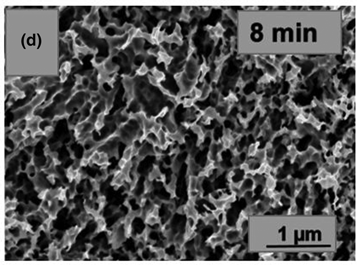
The demands of modern materials are highly challenging as well as partially contradictory. For example, materials should be strong like steels but chemically inert like soft low-surface energy polymers. These conflicts can be overcome by effectively combining disparate materials in composites that allow fusing of the traditional material classes like ceramics, polymers, and metals. Such combinations require sufficient adhesion between the individual materials. If adhesion is based on mechanical interlocking, the chemistry and chemical compatibility of the individual materials play a negligible role for the adhesion, but the mechanical properties of the materials are exclusively important. This work focusses on a technologically relevant example of a micro-mechanical interlocking surface structure on grade 304 stainless steel (SST) by nanoscale sculpturing. Using a low aggressive/low toxic seawater-like and diluted HNO3-based electrolyte, the resulting structure is free from preferential grain-boundary etching. The sculptured surface is super hydrophilic with undercuts suitable for mechanical interlocking with polymers. In single-lap shear tests, different two-component adhesives failed cohesively on structured SST while showing more than a doubling of the ultimate shear strength compared to the state-of-the-art grit-blasted SST composites which only showed adhesive failure.
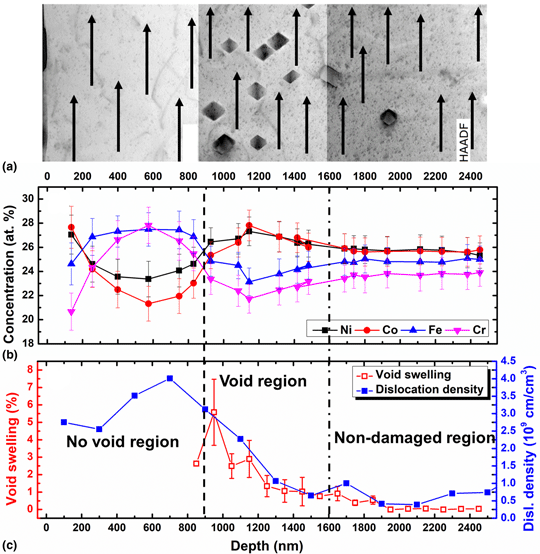
High-entropy alloys (HEAs) are proposed as potential structural materials for advanced nuclear systems, but little is known about the response of matrix chemistry in HEAs upon irradiation. Here, we reveal a substantial change of matrix chemical concentration as a function of irradiation damage (depth) in equiatomic NiCoFeCr HEA irradiated by 3 MeV Ni ions. After ion irradiation, the matrix contains more Fe/Cr in depth shallower than ~900–1000 nm but more Ni/Co from ~900–1000 nm to the end of the ion-damaged region due to the preferential diffusion of vacancies through Fe/Cr. Preferential diffusion also facilitates migration of vacancies from high radiation damage region to low radiation damage region, leading to no void formation below ~900–1000 nm and void formation around the end of the ion-damaged region at a fluence of 5 × 1016 cm−2 (~123 dpa, displacements per atom, peak dose under full cascade mode). As voids grow significantly at an increased fluence (8 × 1016 cm−2, 196 dpa), the matrix concentration does not change dramatically due to new voids formed below ~900–1000 nm.
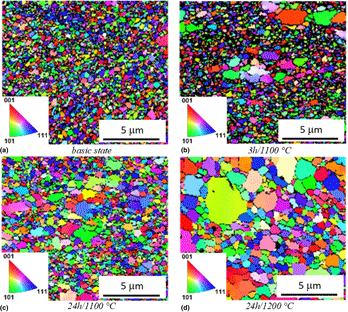
Fe–Al–O ODS alloy prepared via mechanical alloying was subjected to three different heat treatments. Material basic state exhibited a fine-grained (300–500 nm) microstructure with fine dispersion of aluminum oxide particles (60% up to 20 nm). Heat treatment at 1100 °C for 3 h resulted in local grain and particles coarsening. Prolongation of the heat treatment to 24 h resulted in further grain (50 % up to 5 μm) and particle (25 % with size 25–40 nm) coarsening. Annealing at 1200 °C for 24 h led to a bimodal microstructure (35 % of grains with size 100–250 μm and 45 % of particles with size 30–60 nm) and substantial oxide particle coarsening. Microstructural changes resulted in tensile strength decrease and ductility increase. Tensile tests at 800 °C revealed a 90% decrease of tensile strength while ductility increased 4–6 times when compared to the room temperature tests. The hardening ratio was below 10 % for all the alloys and both test temperatures.
Ag3O was synthesized by jet-milling magnetron-sputtered Ag–Ag2O thin films. Heating the jet-milled powders in air and N2 from 40 to 148 °C at ambient pressure produced Ag3O-rich powders. The phase composition and unit-cell parameters of the jet-milled powders were measured as a function of temperature with in situ X-ray powder diffraction experiments from −186 to 293 °C. Ag3O was also produced by ball milling and sonicating jet-milled films at ambient conditions. The phase composition, unit-cell parameters, and thermal-reaction rates indicate nonstoichiometric Ag3O was produced from the reaction of metastable, nonstoichiometric Ag2O (cuprite structure) and ccp Ag. The thermal expansion of Ag3O is anisotropic; below 25 °C, the a-axis expansion is about twice the c-axis expansion resulting in a negative slope of c/a(T). The reversal of the sign of c/a(T) near 25 °C is dramatic. The thermal reaction is arrested when the temperature is rapidly increased from ambient to 130 °C. Ag3O is metastable and decreases its unit-cell volume during kinetic decomposition to Ag when heated above ambient temperature in air and nitrogen. The relative volume expansion of Ag3O is about 80% less than Ag at room temperature and below. The suite of nonstoichiometric Ag3O produced by heating displays a linear relation between c/a and unit-cell volume at room temperature. The c/a and unit-cell volume of a hydrothermally grown Ag3O single crystal reported in a published structure determination was the Ag-rich, low-volume end member of the linear series. The c/a and unit-cell volume are sensitive indicators of the oxygen content and state of disorder.
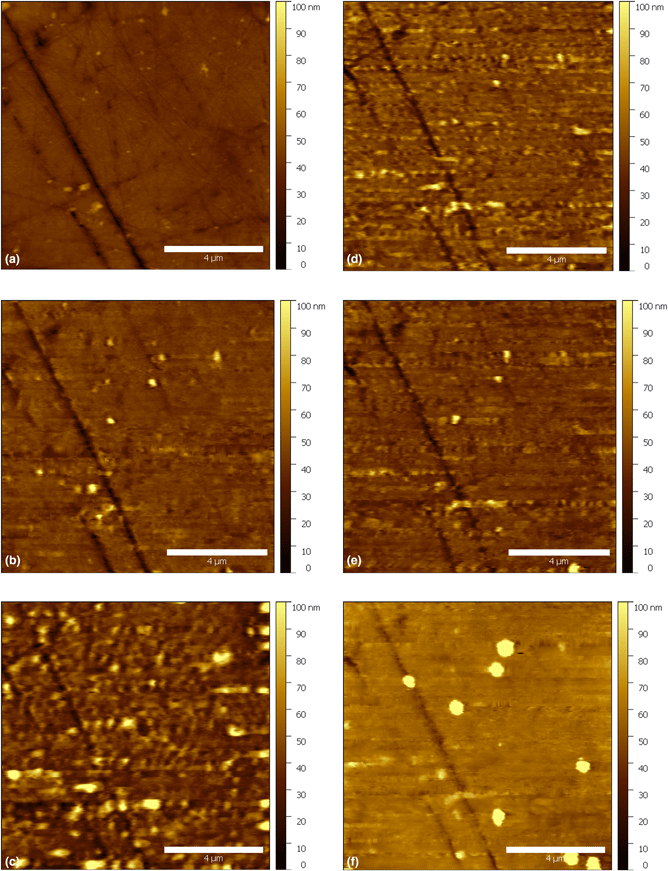
An electrochemical cell was designed to enable in situ atomic force microscopy (AFM) measurements. The finite-element method was implemented using COMSOL Multiphysics to simulate the electrical field within the cell and to find the current and potential distribution. A comparative three-dimensional simulation study was made to compare two different designs and to elucidate the importance of the geometry on the electrical field distribution. The design was optimized to reduce the uncertainty in the measurement of the electrochemical impedance. Then, an in situ, simultaneous electrochemical and time-resolved AFM experiments were conducted to study the surface evolution of the aluminum alloy AA2024-T3 exposed to 0.5 M NaCl. The temporal change of the surface topography was recorded during the application of chrono-amperometric pulses using a newly designed electrochemical cell. Electrochemical impedance spectroscopy was conducted on the sample to confirm the recorded topographical change. The newly developed cell made it possible to monitor the surface change and the growth of the oxyhydroxide layer on the AA2024-T3 with the simultaneous application of electrochemical methods.
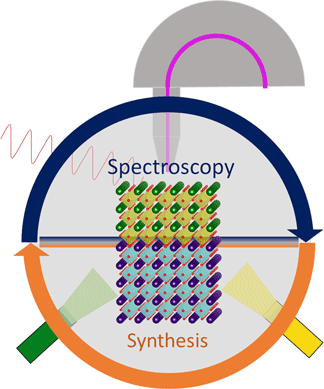
Emergent behavior at oxide interfaces has driven research in complex oxide films for the past 20 years. Interfaces have been engineered for applications in spintronics, topological quantum computing, and high-speed electronics with properties not observed in bulk materials. Advances in synthesis have made the growth of these interfaces possible, while X-ray photoelectron spectroscopy (XPS) studies have often explained the observed interfacial phenomena. This review discusses leading recent research, focusing on key results and the XPS studies that enabled them. We describe how the in situ integration of synthesis and spectroscopy improves the growth process and accelerates scientific discovery. Specific techniques include determination of interfacial intermixing, valence band alignment, and interfacial charge transfer. A recurring theme is the role that atmospheric exposure plays on material properties, which we highlight in several material systems. We demonstrate how synchrotron studies have answered questions that are impossible in lab-based systems and how to improve such experiments in the future.
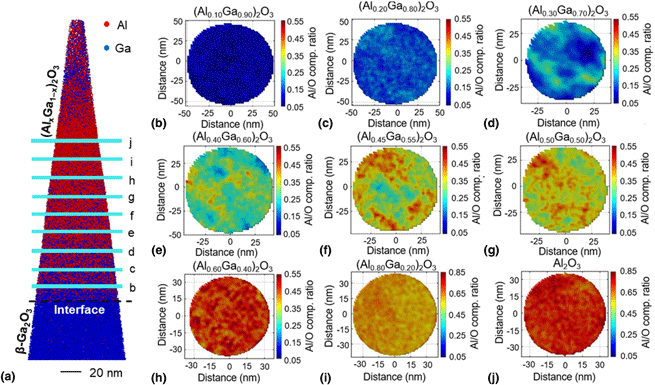
(AlxGa1−x)2O3 is a novel ultra-wide bandgap semiconductor with the potential to dominate future power electronics industries. High-performance devices demand high Al content in (AlxGa1−x)2O3 but are limited by crystallinity degradation resulting from phase separation. Additionally, the solubility limit of Al is still under debate, and conclusive research is in progress. (AlxGa1−x)2O3 is also limited in high-frequency applications owing to low carrier mobility and requires n-type doping. For commercializing this material, the major obstacle is understanding dopant's behavior in the host (AlxGa1−x)2O3. To investigate these issues, an advanced characterization technique, atom probe tomography (APT), was employed to analyze the structural-chemical evolution of (AlxGa1−x)2O3. In this review, we summarized our recent works on the structure-chemistry investigation of (AlxGa1−x)2O3 with alloy composition and doping interaction. We introduced machine learning algorithms on APT data to reveal unrivaled knowledge, previously not achievable with conventional methodologies. The outstanding capabilities of APT to study (AlxGa1−x)2O3 with Al composition and doping will be considered significant for the wide bandgap semiconductors community.
Since the photocatalytic effect of a single conventional photocatalyst is often not ideal, it is particularly important to design and construct an efficient and stable photocatalyst in a compound way. In this study, we exploited the sol–gel method to combine BiOCl and TiO2 and gave full play to their respective advantages to prepare BiOCl/TiO2 composite materials. Then, X-ray diffraction (XRD), scanning electron microscope (SEM), and transmission electron microscope (TEM) characterization techniques were utilized to study important indicators of composites—composition, morphology, and structure. In the photodegradation experiment of methyl orange (MO), it was found that the photocatalytic performance of 10BTO (the molar ratio of TiO2 to BiOCl is 10:1) was the best among all the composite photocatalysts, and almost complete degradation of MO was realized. Besides, repeated experiments and recyclability tests on composite materials display favorable stability. Through ultraviolet–visible diffuse reflectance spectroscopy (UV–Vis DRS), photoluminescence (PL), transient photocurrent response, electrochemical impedance spectroscopy (EIS), and electron spin resonance (ESR), a possible degradation mechanism is proposed. Given that there are serious environmental pollution problems in our country, we sincerely hope this research will do its best to degrade organic pollutants in wastewater.
Potential clinically significant life-threatening drug–drug interactions (DDIs) of lopinavir (LPV) and ritonavir (RTV) used in the treatment of COVID-19 is not systematically reviewed. It was aimed to identify severe DDI pairs of LPV/RTV from international resources predicted to cause life-threatening adverse drug reactions (ADRs). Severe DDI pairs predicted to cause life-threatening ADRs were identified from the FDA and Liverpool COVID-19 prescribing information of LPV/RTV. In total, 62 severe DDI pairs were identified from the FDA and Liverpool COVID-19 resources predicted to cause life-threatening ADRs in patients with COVID-19. Of these, seven unique DDI pairs (11.3%; 95% CI 3%–19%) were identified from the FDA only whereas 45 unique DDI pairs (72.6%; 95% CI 61%–84%) were identified from the Liverpool COVID-19 drug interactions resource. Of interest, only 10 DDI pairs (16.1%; 95% CI 7%–25%) were recognized by both of these drug interaction resources. Clinicians should not entirely rely on any individual DDI resource for checking life threatening ADRs of LPV/RTV in patients with COVID-19.
Sodium niobate (NaNbO3)-based dielectrics have received much attention for energy storage applications due to their low-cost, lightweight, and nontoxic nature. The field-induced metastable ferroelectric phase in NaNbO3-based dielectrics, however, leads to a large hysteresis of the polarization–electric field (P–E) loops and hence deteriorate the energy storage performance. In this study, the hysteresis was successfully reduced by introducing Bi3+ and Ti4+ into A-site and B-site of NaNbO3, respectively. MnO2 addition was added to further increase the ceramic density and enhance the cycling reliability. As a result, a high recoverable energy density of 4.3 J/cm3 and a high energy efficiency of 90% were simultaneously achieved in the ceramic capacitor at an applied electric field of 360 kV/cm. Of particular importance is that the ceramic capacitor exhibits a stable energy storage properties over a wide temperature range of −70 to 170 °C, with much improved electric cycling reliability up to 105 cycles.
This manuscript reports structure–function studies of Catechol 2,3-dioxygenase (C23O64), which is the second enzyme in the metabolic degradation pathway of 3-nitrotoluene by Diaphorobacter sp. strain DS2. The recombinant protein is a ring cleavage enzyme for 3-methylcatechol and 4-methylcatechol products formed after dioxygenation of the aromatic ring. Here we report the substrate-free, substrate-bound, and substrate-analog bound crystal structures of C23O64. The protein crystallizes in the P6(2)22 space-group. The structures were determined by molecular replacement and refined to resolutions of 2.4, 2.4, 2.2 Å, respectively. A comparison of the structures with related extradiol dioxygenases showed 22 conserved residues. A comparison of the active site pocket with catechol 2,3-dioxygenase (LapB) from Pseudomonas sp KL28 and homoprotocatechuate 2,3-dioxygenase (HPCD) from Brevibacterium fuscum shows significant similarities to suggest that the mechanism of enzyme action is similar to HPCD.
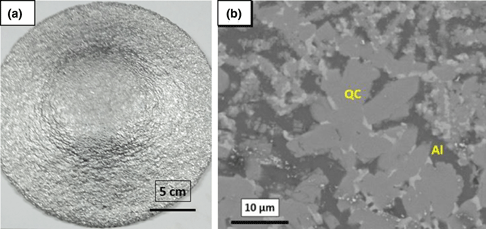
Quasicrystalline alloys and their composites have been extensively studied due to their complex atomic structures, mechanical properties, and their unique tribological and thermal behaviors. However, technological applications of these materials have not yet come of age and still require additional developments. In this review, we discuss the recent advances that have been made in the last years toward optimizing fabrication processes and properties of Al-matrix composites reinforced with quasicrystals. We discuss in detail the high-strength rapid-solidified nanoquasicrystalline composites, the challenges involved in their manufacturing processes and their properties. We also bring the latest findings on the fabrication of Al-matrix composites reinforced with quasicrystals by powder metallurgy and by conventional metallurgical processes. We show that substantial developments were made over the last decade and discuss possible future studies that may result from these recent findings.
Understanding individual differences in attitudes to autism is crucial for improving attitudes and reducing stigma towards autistic people, yet there is limited and inconsistent research on this topic. This is compounded by a lack of appropriate measures and multivariate analyses. Addressing these issues, using up-to-date measures and multiple linear regression, we examined the relative contributions of participant age, sex, autism knowledge, level of contact with autistic people, and autistic traits to attitudes towards autistic people. We found that greater autism knowledge and higher levels of contact, but no other variables, were uniquely predictive of attitudes towards autistic people. We conclude that, in addition to public awareness campaigns to raise knowledge of autism, it may be important to increase contact between autistic and non-autistic people to improve public attitudes towards autistic people.
Organo-modified clay nanoparticles were mixed at 1 and 5 wt% concentrations with a molten blend of 75 wt% of polylactide (PLA) and 25 wt% poly[(butylene adipate)-co-terephthalate] (PBAT). Three mixing strategies were used to control the localization of nanoclay. Small amplitude oscillatory shear (SAOS) and stress growth tests were conducted to clarify the nanoclay interactions with the blend components and its effect on the molecular relaxation behavior. SAOS and weighted relaxation spectra properties were determined before and after pre-shearing at a rate of 0.01 s−1. Molecular relaxation and its characteristics were influenced by PLA degradation, PBAT droplet coalescence, and nanoclay localization.