To save content items to your account,
please confirm that you agree to abide by our usage policies.
If this is the first time you use this feature, you will be asked to authorise Cambridge Core to connect with your account.
Find out more about saving content to .
To save content items to your Kindle, first ensure no-reply@cambridge.org
is added to your Approved Personal Document E-mail List under your Personal Document Settings
on the Manage Your Content and Devices page of your Amazon account. Then enter the ‘name’ part
of your Kindle email address below.
Find out more about saving to your Kindle.
Note you can select to save to either the @free.kindle.com or @kindle.com variations.
‘@free.kindle.com’ emails are free but can only be saved to your device when it is connected to wi-fi.
‘@kindle.com’ emails can be delivered even when you are not connected to wi-fi, but note that service fees apply.
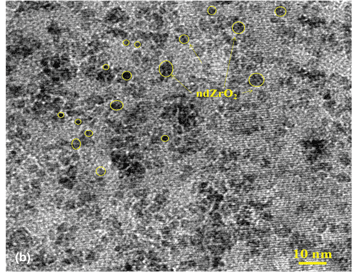
The authors report results of the studies relating to the synthesis of nanodot zirconia that has been utilized for the fabrication of electrochemical biosensing platform for the detection of CYFRA-21-1 biomarker, secreted in saliva samples of oral cancer patients. For the synthesis of nanodot zirconia (ndZrO2), the hydrothermal process was used and further functionalized with 3-aminopropyl triethoxysilane (APTES). Electrophoretic deposition technique was employed for its deposition onto the ITO electrode. The EDC-NHS reaction was used for anti-CYFRA-21-1 immobilization and bovine serum albumin (BSA) was used for blocking of the nonspecific binding sites. The fabricated biosensing platform (BSA/anti-CYFRA-21-1/APTES/ndZrO2/ITO) exhibited a wide linear detection range (0.5–50 ng/mL) with excellent sensitivity (0.53 μA mL/ng cm2).
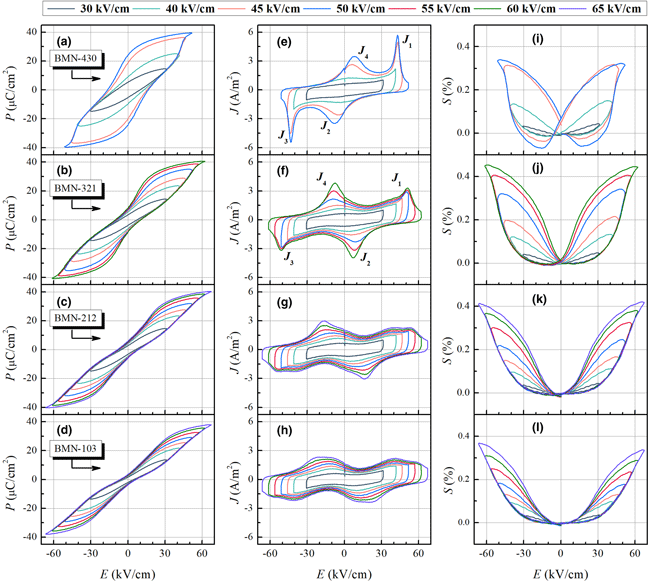
A new series of ternary perovskite 0.975(0.8Bi1/2Na1/2TiO3–0.2Bi1/2K1/2TiO3)–0.025Bix/3Mgy/3Nbz/3O3 (BNT–BKT–BMN, BMN-xyz) ceramics were designed and synthesized. The effect of the element ratio in the doping component BMN on the strain, ferroelectric, piezoelectric, and dielectric properties of the BNT–BKT matrix were studied. The BMN-430 composition without Nb element exhibits the typical features of non-ergodic relaxor, which is characterized by a higher piezoelectric coefficient d33 and a butterfly-shaped strain curve with negative strain. The introduction of trace Nb can significantly enhance the ergodicity of the system, reflecting in the high positive strain response and strain coefficient $\lpar {d_{33}^\ast \gt 750\;{\rm pm/V}} \rpar$ of BMN-321 composition. In contrast, there is no significant difference in the properties between the presence and absence of Mg element. The temperature-dependent electrical behaviors of BMN-xyz ceramics were analyzed based on impedance spectroscopy. This study may be helpful to the design of the chemical modification strategy for the BNT-based relaxor ferroelectrics.

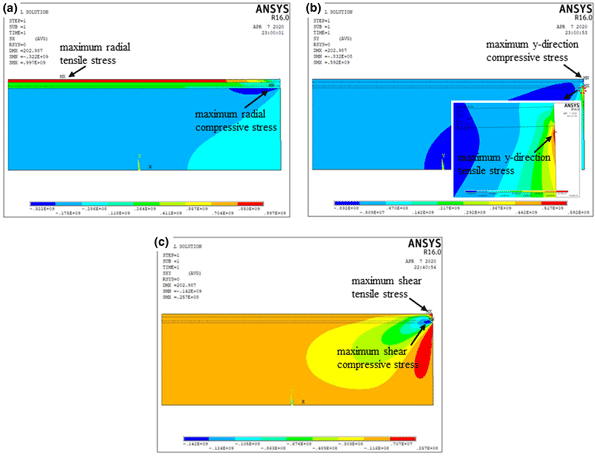
To reveal the thermal shock resistance of double-layer thermal barrier coatings (TBCs), two types of TBCs were prepared via atmospheric plasma spraying, i.e., Gd2Zr2O7/yttria-stabilized zirconia (GZ/YSZ) TBCs and La2Zr2O7 (LZ)/YSZ TBCs, respectively. Subsequently, thermal cycling tests of the two TBCs were conducted at 1100 °C and their thermal shock resistance and failure mechanism were comparatively investigated through experiments and the finite element method. The results showed that the thermal shock failure of the two TBCs occurred inside the top ceramic coating. However, the GZ/YSZ TBCs had longer thermal cycling life. It was the mechanical properties of the top ceramic coating, and the thermal stresses arising from the thermal mismatch between the top ceramic coating and the substrate that determined the thermal cycling life of the two TBCs together. Compared with the LZ layer in the LZ/YSZ TBCs, the GZ layer in the GZ/YSZ TBCs had smaller elastic modulus, larger fracture toughness, and smaller thermal stresses, which led to the higher crack propagation resistance and less spallation tendency of the GZ/YSZ TBCs. Therefore, the GZ/YSZ TBCs exhibited superior thermal shock resistance to the LZ/YSZ TBCs.
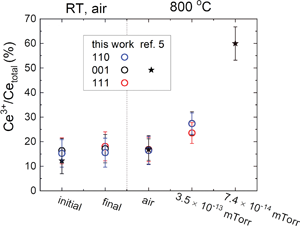
The enhanced reducibility of the surface of ceria relative to the bulk has long been established. Several studies also show that ceria nanoparticles with different facets exhibit different catalytic activities. Despite consensus that the activity is correlated with the surface Ce3+ concentration, experimental measurements of this concentration as a function of termination are lacking. Here, X-ray absorption near-edge spectroscopy (XANES) is used to quantify the Ce3+ concentration in films with (001), (110), and (111) surface terminations under reaction relevant conditions. While an enhanced Ce3+ concentration is found at the surfaces, it is surprisingly insensitive to film orientation.
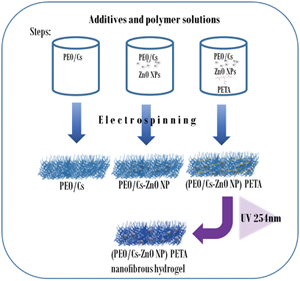
UV-initiated crosslinking of electrospun poly(ethylene) oxide (PEO)/chitosan (CS) nanofibers doped with zinc oxide nanoparticles (ZnO-NPs) was performed using pentaerythritol triaclyrate (PETA) as the photoinitiator and crosslinker agent. The influence of the addition of PETA to the PEO/CS diameter and crosslinking of nanofibers was evaluated. The effect of irradiation time on the morphology and swelling properties of the crosslinked nanofibers were investigated. For ZnO-NPs, the minimum inhibitory concentrations were found at 1 mg/mL, and the minimum bactericidal concentrations at 2 mg/mL for all the strains tested. The nanofibrous hydrogel antibacterial effect was tested. This material enters the realm of fibrous hydrogels which have potential use in several applications as in the biomedical area.
Earlier reports revealed oxysterol metabolites of Opisthorchis spp. liver fluke origin conjugated with DNA bases, suggesting that the generation of these DNA-adducts may underlie the mutagenicity and carcinogenicity of the infection with these food-borne pathogens. Here, we employed liquid chromatography-mass spectrometry to investigate, compare and contrast spectrograms of soluble extracts from Fasciola hepatica adult worms from bile ducts of cattle with those from O. viverrini and O.felineus from experimentally infected hamsters. F. hepatica and Opisthorchis spp. shared common compounds including oxysterol-like metabolites, bile acids and DNA-adducts, but the spectrometric profiles of F. hepatica included far fewer compounds than Opisthorchis species. These findings support the postulate that parasitic oxysterol-like metabolites could be related to carcinogenesis associated to infection and they point to a molecular basis for the differences among major groups of liver flukes concerning infection-induced malignancy.
Chordoma is a rare bone cancer for which there are no approved drugs. Surgery is the principle treatment but complete resection can be challenging due to the location of the tumours in the spine and therefore finding an effective drug treatment is a pressing unmet clinical need. A major recent study identified the transcription factor Brachyury as the primary vulnerability and drug target in chordoma. Previously, all-trans retinoic acid (ATRA) has been shown to negatively influence expression of the Brachyury gene, TBXT. Here we extend this finding and demonstrate that ATRA lowers Brachyury protein levels in chordoma cells and reduces proliferation of the chordoma cell line U-CH1 as well as causing loss of distinctive chordoma cell morphology. ATRA is available as a generic drug and is the first line treatment for acute promyelocytic leukaemia (APL). This study implies ATRA could have therapeutic value if repurposed for chordoma.
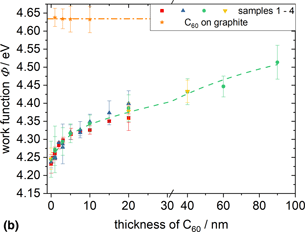
Lead-free perovskite layers may provide a good alternative to the commonly used lead-halide-based perovskite absorber layers in photovoltaics. Energy level alignment of the active semiconductor with contact layers is a key factor in device performance. Kelvin probe force microscopy was used during vapor deposition of C60 onto formamidinium tin iodide to investigate contact formation with detailed local resolution of these materials that are significant for photovoltaic cells. Significant differences dependent on the growth rate of C60 were detected. Sufficiently high deposition rates were essential to reach compact C60 films needed for good contact. A space charge layer larger than 90 nm within the C60 layer was established without indication of interfacial dipoles. The present analysis gives a clear indication of a well-functioning contact of fullerenes to formamidinium tin iodide that is suitable for the use in photovoltaic devices provided that thin compact fullerene films are formed.
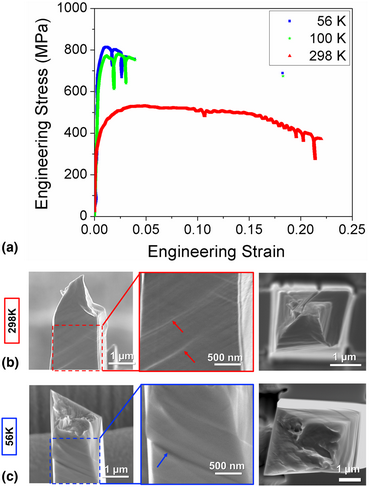
The plasticity of body-centered cubic (bcc) metals is dependent of temperature as well as sample dimension at the micrometer scale, but the effects of cryogenic temperature on the plasticity and the related failure process in micron-sized bcc metals have not been studied under uniaxial tension. In this work, we utilized in situ cryogenic micro-tensile tests, transmission electron microscopy, and dislocation dynamic simulations to examine the plasticity and failure processes of [001]-oriented bcc niobium micropillars. Our study reveals that a strong suppression of cross-slip at low temperatures prevents dislocation multiplication and leads to a dislocation starvation state, at which no mobile dislocation exists due to the rapid annihilation of dislocations at free surfaces. New dislocations are then nucleated until stress concentration at a slip step creates a micro-crack, the propagation of which leads to catastrophic failure. This unique failure process results from the combined effects of sample dimension and temperature.
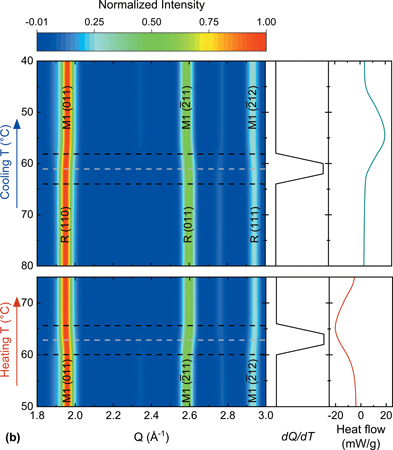
Vanadium dioxide (VO2) has been widely studied due to its metal-insulator phase transition at 68 °C, below which it is a semiconducting monoclinic phase, P21/c, and above it is a metallic tetragonal phase, P42/mnm. Substituting vanadium with transition metals allows transition temperature tunability. An accelerated microwave-assisted synthesis for VO2 and 5d tungsten-substituted VO2 presented herein decreased synthesis time by three orders of magnitude while maintaining phase purity, particle size, and transition character. Tungsten substitution amount was determined using inductively coupled plasma-optical emission spectroscopy. Differential scanning calorimetry, superconducting quantum interference device measurements, and in situ heating and cooling experiments monitored through synchrotron X-ray diffraction (XRD) confirmed the transition temperature decreased with increased tungsten substitution. Scanning electron microscopy analyzed through the line-intercept method produced an average particle size of 3–5 μm. Average structure and local structure phase purity was determined through the Rietveld analysis of synchrotron XRD and the least-squares refinement of pair distribution function data.
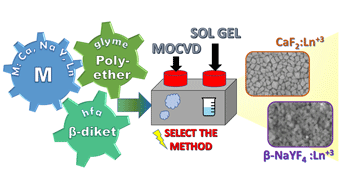
A careful engineering of the central metal coordination spheres provides adducts with excellent properties for application as precursors in vapor phase and solution processes. The family of precursors under study concerns the fluorinated metal-organic β-diketonates of alkaline, alkaline-earth and rare-earth metals adducted with a polyether, with general formula M(hfa)n·L (M = Ca, Na, Y, Yb, Er, Tm; Hhfa = 1,1,1,5,5,5 hexafluoroacetylacetone, L = diglyme or tetraglyme). Mass transport properties, such as volatility and thermal stability, of these adducts have been deeply analyzed through thermogravimetric analysis and differential scanning calorimetric measurements. These properties are rationalized in relation to the metal coordination sphere in the precursors and their applications. In particular, the precursors under focus have been applied to metal organic chemical vapor deposition and a combined sol–gel/spin-coating approach. Both methods allow us to obtain selectively and reproducibly CaF2 and NaYF4 phases with several combinations of lanthanide doping ions, using a proper mixture of fluorinated precursors. A careful optimization of both synthetic strategies is the key point for the production of different lanthanide-doped binary and multicomponent fluoride films, i.e., CaF2:Yb3+,Er3+; CaF2:Yb3+,Tm3+; CaF2:Yb3+,Er3+,Tm3+ and NaYF4:Yb3+,Er3+; NaYF4:Yb3+,Tm3+, with suitable morphologies, compositions and crystalline structures. The films show very promising upconversion properties, thus pointing to their appealing applications in photovoltaic systems and white light emission devices.
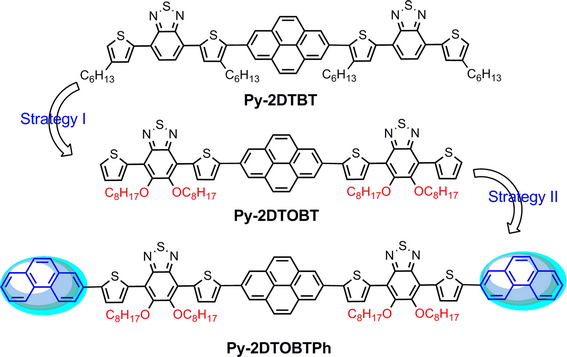
A–Ar–A-type small molecule (SM) of Py-2DTOBT and Py-2DTOBTPh with an Ar(A–D)2 framework were synthesized, in which 2,7-pyrene (Py) and alkoxyl-substituted benzothiadiazole (OBT) were, respectively, used as the central aryl (Ar) and arm acceptor (A), while 3-phenanthrene (Ph) was used as a terminal donor (D) in Py-2DTOBTPh. By comparison with the parent SM of Py-2DTBT, where 2,7-pyrene (Py) and benzothiadiazole (BT) were used as the central aryl (Ar) and arm acceptor (A), the effects of non-covalent interactions and the terminal group on optical, electrochemical, and photovoltaic properties were investigated. The gradually improved photovoltaic performances were observed among Py-2DTBT, Py-2DTOBT, and Py-2DTOBTPh based organic solar cells. A power conversion efficiency (PCE) of 2.83% was obtained in the Py-2DTOBTPh/PC71BM-based device, which is a 53% improvement related to that of Py-2DTOBT and three times enhanced related to that of Py-2DTBT(Py-2DTOBT:PCE of 1.86%, Py-2DTBT:PCE of 0.74%).
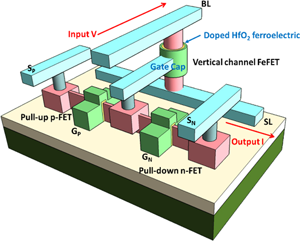
Recent discovery of ferroelectricity in doped HfO2 has reignited research interest in the ferroelectric field-effect transistor (FeFET) as emerging embedded nonvolatile memory with the potential for neuro-inspired computing. This paper reviews two major aspects for its application in neuro-inspired computing: ferroelectric devices as multilevel synaptic devices and the circuit primitive design with FeFET for in-memory computing. First, the authors survey representative FeFET-based synaptic devices. Then, the authors introduce 2T-1FeFET synaptic cell design that improves its in situ training accuracy to approach software baseline. Then, the authors introduce the FeFET drain–erase scheme for array-level operations, which makes the in situ training feasible for FeFET-based hardware accelerator. Finally, the authors give an outlook on the future 3D-integrated 2T-1FeFET design.
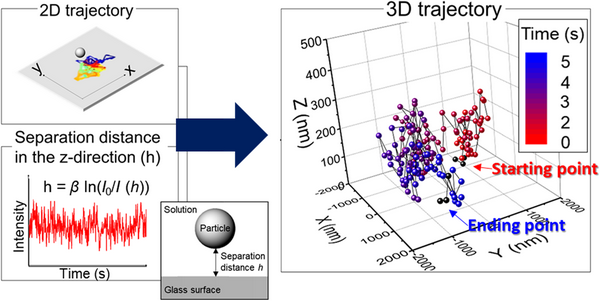
We extend our recent 2D trajectory (x–y plane) and diffusion coefficient data of ceria particles near a glass surface obtained at pH 3, 5, and 7 using evanescent wave microscopy and video imaging to 3D trajectories by analyzing the separation distance between the particles and the glass surface in the vertical z-direction. Mean squared displacement (MSD3D) of ceria particles was calculated to quantify 3D trajectories. Three-dimensional diffusion coefficients were obtained from the MSD3D curves and were compared with two-dimensional diffusion coefficients. By analyzing the MSD curves, we found that ceria particles exhibited only confined motion at pH 3 and 5, while both confined and Brownian motion were showed at pH 7. We also evaluated the cleaning ability of DI water adjusted to pH 10 and 12 to remove ceria particles from glass surfaces and related the results to the calculated trajectory, diffusion coefficient, and interaction potential data.
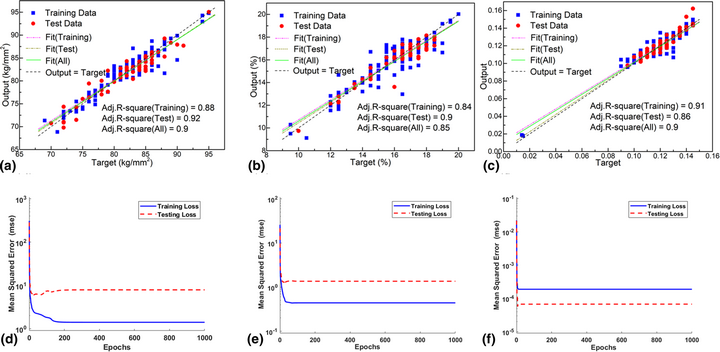
In the alloy materials, their mechanical properties mightly rely on the compositions and concentrations of chemical elements. Therefore, looking for the optimum elemental concentration and composition is still a critical issue to design high-performance alloy materials. Traditional alloy designing method via “trial and error” or domain experts’ experiences is barely possible to solve the issue. Here, we propose a “composition-oriented” method combined machine learning to design the Cu–Zn alloys with the high strengths, high ductility, and low friction coefficient. The method of separate training for each attribute label is used to study the effects of elemental concentrations on the mechanical properties of Cu–Zn alloys. Moreover, the elemental concentrations of new Cu–Zn alloys with the good mechanical properties are predicted by machine learning. The current results reveal the vital importance of the “composition-oriented” design method via machine learning for the development of high-performance alloys in a broad range of elemental compositions.
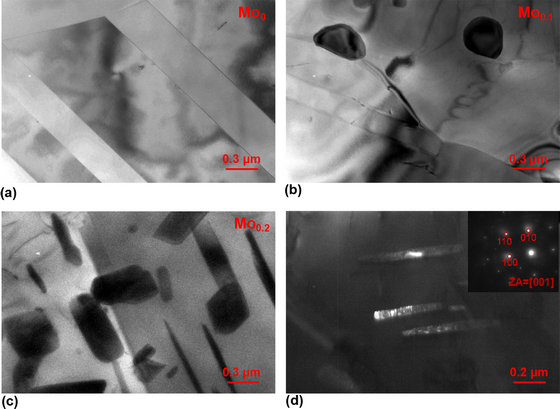
The CoCrNiMox (x = 0, 0.1, and 0.2 in molar ratio) medium entropy alloys (MEAs) were fabricated by vacuum arc melting, followed by cold rolling and annealing treatments. The X-ray diffraction (XRD), electron back-scattered diffraction (EBSD), and transmission electron microscopy (TEM) were employed to characterize the microstructures. It has been shown that the CoCrNi MEA has a single FCC phase and the Mo-containing MEAs contain (Cr, Mo)-rich σ precipitates. In addition, the Mo addition caused significant grain refinement, due to the fact that the presence of σ phase exerts a strong pinning effect on the grain boundary migration. The hardness testing results indicate an increment in Vickers hardness from 187.5 ± 4.5 Hv of CoCrNi alloy to 309.5 ± 10.3 Hv of CoCrNiMo0.2 alloy. The yield strength and ultimate tensile strength also increase from 339 ± 2 to 644 ± 5 MPa and from 810 ± 5 to 1071 ± 17 MPa, respectively, but the elongation drops from 88.4 ± 4.0% to 29.5 ± 7.6%. The grain refinement and the precipitation of σ phase make synergistic contribution to the reinforcement of Mo-containing CoCrNi-based MEAs. The details and explanations in this study may guide the future design and research of the CoCrNi-based quaternary alloys with enhanced properties.
There is a significant interest in developing the corrosion-resistant magnesium (Mg) alloy as a degradable biomaterial. In this work, the magnesium–zirconium (Zr = 1 wt%)–strontium (Sr = 2 wt%)–cerium (Ce = 0, 0.5 wt%) alloy was developed using the casting process. Effects of Ce addition on alloy microstructure, corrosion behavior, and biocompatibility were systematically investigated. Detailed microstructural analysis indicated that 0.5 wt% Ce addition refined the second phase (Mg17Sr2) in the Mg–2Sr–1Zr alloy. Furthermore, phase analysis of corrosion product showed the formation of stable CeO2 oxide layer on the corroded surface of the Mg alloy. Both the precipitate refinement and stable CeO2 layer formation significantly contributed toward enhanced corrosion resistance of the Mg–Sr–Zr–Ce alloy, as determined by both electrochemical and immersion corrosion in phosphate-buffered saline. Significantly higher osteoblast-like cell (MG-63) proliferation was observed in Ce-containing Mg alloy at both day 1 and day 3. Overall, the results showed that Ce addition could modulate degradation behavior and biocompatibility of the ternary Mg alloy.