Refine search
Actions for selected content:
26063 results in Abstract analysis
Preface
-
- Book:
- Defocusing Nonlinear Schrödinger Equations
- Published online:
- 28 March 2019
- Print publication:
- 28 March 2019, pp ix-xi
-
- Chapter
- Export citation
1 - A First Look at the Mass-Critical Problem
-
- Book:
- Defocusing Nonlinear Schrödinger Equations
- Published online:
- 28 March 2019
- Print publication:
- 28 March 2019, pp 1-40
-
- Chapter
- Export citation
5 - Low-Dimensional Well-Posedness Results
-
- Book:
- Defocusing Nonlinear Schrödinger Equations
- Published online:
- 28 March 2019
- Print publication:
- 28 March 2019, pp 164-235
-
- Chapter
- Export citation
Contents
-
- Book:
- Defocusing Nonlinear Schrödinger Equations
- Published online:
- 28 March 2019
- Print publication:
- 28 March 2019, pp vii-viii
-
- Chapter
- Export citation
2 - The Cubic NLS in Dimensions Three and Four
-
- Book:
- Defocusing Nonlinear Schrödinger Equations
- Published online:
- 28 March 2019
- Print publication:
- 28 March 2019, pp 41-63
-
- Chapter
- Export citation
Frontmatter
-
- Book:
- Defocusing Nonlinear Schrödinger Equations
- Published online:
- 28 March 2019
- Print publication:
- 28 March 2019, pp i-iv
-
- Chapter
- Export citation
3 - The Energy-Critical Problem in Higher Dimensions
-
- Book:
- Defocusing Nonlinear Schrödinger Equations
- Published online:
- 28 March 2019
- Print publication:
- 28 March 2019, pp 64-101
-
- Chapter
- Export citation
In search of a new economic model determined by logistic growth
- Part of
-
- Journal:
- European Journal of Applied Mathematics / Volume 31 / Issue 2 / April 2020
- Published online by Cambridge University Press:
- 27 March 2019, pp. 339-368
-
- Article
- Export citation
GMJ volume 61 issue 2 Cover and Back matter
-
- Journal:
- Glasgow Mathematical Journal / Volume 61 / Issue 2 / May 2019
- Published online by Cambridge University Press:
- 26 March 2019, pp. b1-b3
-
- Article
-
- You have access
- Export citation
Entire solutions of the Fisher–KPP equation on the half line
- Part of
-
- Journal:
- European Journal of Applied Mathematics / Volume 31 / Issue 3 / June 2020
- Published online by Cambridge University Press:
- 26 March 2019, pp. 407-422
-
- Article
- Export citation
-
In this paper, we study the entire solutions of the Fisher–KPP (Kolmogorov–Petrovsky–Piskunov) equation ut = uxx + f(u) on the half line [0, ∞) with Dirichlet boundary condition at x = 0. (1) For any $c \ge 2\sqrt {f'(0)} $, we show the existence of an entire solution ${{\cal U}^c}(x,t)$ which connects the traveling wave solution φc(x + ct) at t = −∞ and the unique positive stationary solution V(x) at t = +∞; (2) We also construct an entire solution ${{\cal U}}(x,t)$ which connects the solution of ηt = f(η) at t = −∞ and V(x) at t = +∞.


GMJ volume 61 issue 2 Cover and Front matter
-
- Journal:
- Glasgow Mathematical Journal / Volume 61 / Issue 2 / May 2019
- Published online by Cambridge University Press:
- 26 March 2019, pp. f1-f2
-
- Article
-
- You have access
- Export citation
Pointwise stability of reaction diffusion fronts
- Part of
-
- Journal:
- Proceedings of the Royal Society of Edinburgh. Section A: Mathematics / Volume 150 / Issue 5 / October 2020
- Published online by Cambridge University Press:
- 25 March 2019, pp. 2216-2254
- Print publication:
- October 2020
-
- Article
- Export citation
Asymptotic behaviour of solutions of Fisher–KPP equation with free boundaries in time-periodic environment
- Part of
-
- Journal:
- European Journal of Applied Mathematics / Volume 31 / Issue 3 / June 2020
- Published online by Cambridge University Press:
- 25 March 2019, pp. 423-449
-
- Article
- Export citation
-
We study a free boundary problem of the form: ut = uxx + f(t, u) (g(t) < x < h(t)) with free boundary conditions h′(t) = −ux(t, h(t)) – α(t) and g′(t) = −ux(t, g(t)) + β(t), where β(t) and α(t) are positive T-periodic functions, f(t, u) is a Fisher–KPP type of nonlinearity and T-periodic in t. This problem can be used to describe the spreading of a biological or chemical species in time-periodic environment, where free boundaries represent the spreading fronts of the species. We study the asymptotic behaviour of bounded solutions. There are two T-periodic functions α0(t) and α*(t; β) with 0 < α0 < α* which play key roles in the dynamics. More precisely, (i) in case 0 < β< α0 and 0 < α < α*, we obtain a trichotomy result: (i-1) spreading, that is, h(t) – g(t) → +∞ and u(t, ⋅ + ct) → 1 with $c\in (-\overline{l},\overline{r})$, where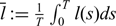 $ \overline{l}:=\frac{1}{T}\int_{0}^{T}l(s)ds$,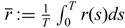 $\overline{r}:=\frac{1}{T}\int_{0}^{T}r(s)ds$, the T-periodic functions −l(t) and r(t) are the asymptotic spreading speeds of g(t) and h(t) respectively (furthermore, r(t) > 0 > −l(t) when 0 < β < α < α0; r(t) = 0 > −l(t) when 0 < β < α = α0; $0 \gt \overline{r} \gt -\overline{l}$ when 0 < β < α0 < α < α*); (i-2) vanishing, that is, $\lim\limits_{t \to \mathcal {T}}h(t) = \lim\limits_{t \to \mathcal {T}}g(t)$ and $\lim\limits_{t \to \mathcal {T}}\max\limits_{g(t)\leq x\leq h(t)} u(t,x)=0$, where $\mathcal {T}$ is some positive constant; (i-3) transition, that is, g(t) → −∞, h(t) → −∞, $0<\lim\limits_{t \to \infty}[h(t)-g(t)] \lt +\infty$ and u(t, ⋅) → V(t, ⋅), where V is a T-periodic solution with compact support. (ii) in case β ≥ α0 or α ≥ α*, vanishing happens for any solution.


ON ASYMPTOTIC UNIFORM SMOOTHNESS AND NONLINEAR GEOMETRY OF BANACH SPACES
- Part of
-
- Journal:
- Journal of the Institute of Mathematics of Jussieu / Volume 20 / Issue 1 / January 2021
- Published online by Cambridge University Press:
- 25 March 2019, pp. 65-102
- Print publication:
- January 2021
-
- Article
- Export citation
Muckenhoupt Class Weight Decomposition and BMO Distance to Bounded Functions
- Part of
-
- Journal:
- Proceedings of the Edinburgh Mathematical Society / Volume 62 / Issue 4 / November 2019
- Published online by Cambridge University Press:
- 25 March 2019, pp. 1017-1031
-
- Article
- Export citation
n-T-COTORSION-FREE MODULES
- Part of
-
- Journal:
- Glasgow Mathematical Journal / Volume 62 / Issue 2 / May 2020
- Published online by Cambridge University Press:
- 25 March 2019, pp. 297-311
-
- Article
-
- You have access
- Export citation
Asymptotic Behaviour of the Energy Integral of a Two-Parameter Homogenization Problem with Nonlinear Periodic Robin Boundary Conditions
- Part of
-
- Journal:
- Proceedings of the Edinburgh Mathematical Society / Volume 62 / Issue 4 / November 2019
- Published online by Cambridge University Press:
- 22 March 2019, pp. 985-1016
-
- Article
- Export citation
A NOTE ON A-ANNIHILATED GENERATORS OF H*QX
- Part of
-
- Journal:
- Glasgow Mathematical Journal / Volume 62 / Issue 2 / May 2020
- Published online by Cambridge University Press:
- 21 March 2019, pp. 281-295
-
- Article
-
- You have access
- Export citation
-
For a path connected space X, the homology algebra $H_*(QX; \mathbb{Z}/2)$ is a polynomial algebra over certain generators QIx. We reinterpret a technical observation, of Curtis and Wellington, on the action of the Steenrod algebra A on the Λ algebra in our terms. We then introduce a partial order on each grading of H*QX which allows us to separate terms in a useful way when computing the action of dual Steenrod operations $Sq^i_*$ on $H_*(QX; \mathbb{Z}/2)$. We use these to completely characterise the A-annihilated generators of this polynomial algebra. We then propose a construction for sequences I so that QIx is A-annihilated. As an application, we offer some results on the form of potential spherical classes in H*QX upon some stability condition under homology suspension. Our computations provide new numerical conditions in the context of hit problem.

First-order expansions for eigenvalues and eigenfunctions in periodic homogenization
- Part of
-
- Journal:
- Proceedings of the Royal Society of Edinburgh. Section A: Mathematics / Volume 150 / Issue 5 / October 2020
- Published online by Cambridge University Press:
- 20 March 2019, pp. 2189-2215
- Print publication:
- October 2020
-
- Article
- Export citation
-
For a family of elliptic operators with periodically oscillating coefficients, $-{\rm div}(A(\cdot /\varepsilon )\nabla )$ with tiny ε > 0, we comprehensively study the first-order expansions of eigenvalues and eigenfunctions (eigenspaces) for both the Dirichlet and Neumann problems in bounded, smooth and strictly convex domains (or more general domains of finite type). A new first-order correction term is introduced to derive the expansion of eigenfunctions in L2 or $H^1_{\rm loc}$. Our results rely on the recent progress on the homogenization of boundary layer problems.

Hyers–Ulam stability for equations with differences and differential equations with time-dependent and periodic coefficients
- Part of
-
- Journal:
- Proceedings of the Royal Society of Edinburgh. Section A: Mathematics / Volume 150 / Issue 5 / October 2020
- Published online by Cambridge University Press:
- 20 March 2019, pp. 2175-2188
- Print publication:
- October 2020
-
- Article
- Export citation
-
Let q be a positive integer and let (an) and (bn) be two given ℂ-valued and q-periodic sequences. First we prove that the linear recurrence in ℂ0.1
is Hyers–Ulam stable if and only if the spectrum of the monodromy matrix Tq: = Aq−1 · · · A0 (i.e. the set of all its eigenvalues) does not intersect the unit circle Γ = {z ∈ ℂ: |z| = 1}, i.e. Tq is hyperbolic. Here (and in as follows) we let0.2 $$x_{n + 2} = a_nx_{n + 1} + b_nx_n,\quad n\in {\open Z}_+ $$Secondly we prove that the linear differential equation0.3
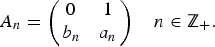 $$A_n = \left( {\matrix{ 0 & 1 \cr {b_n} & {a_n} \cr } } \right)\quad n\in {\open Z}_+ .$$(where a(t) and b(t) are ℂ-valued continuous and 1-periodic functions defined on ℝ) is Hyers–Ulam stable if and only if P(1) is hyperbolic; here P(t) denotes the solution of the first-order matrix 2-dimensional differential system0.4
 $${x}^{\prime \prime}(t) = a(t){x}^{\prime}(t) + b(t)x(t),\quad t\in {\open R},$$where I2 is the identity matrix of order 2 and0.5
 $${X}^{\prime}(t) = A(t)X(t),\quad t\in {\open R},\quad X(0) = I_2,$$
 $$A(t) = \left( {\matrix{ 0 & 1 \cr {b(t)} & {a(t)} \cr } } \right),\quad t\in {\open R}.$$
