
Contents
Research Article
Hyers–Ulam stability for equations with differences and differential equations with time-dependent and periodic coefficients
- Part of:
-
- Published online by Cambridge University Press:
- 20 March 2019, pp. 2175-2188
-
- Article
- Export citation
-
Let q be a positive integer and let (an) and (bn) be two given ℂ-valued and q-periodic sequences. First we prove that the linear recurrence in ℂ0.1
is Hyers–Ulam stable if and only if the spectrum of the monodromy matrix Tq: = Aq−1 · · · A0 (i.e. the set of all its eigenvalues) does not intersect the unit circle Γ = {z ∈ ℂ: |z| = 1}, i.e. Tq is hyperbolic. Here (and in as follows) we let0.2 $$x_{n + 2} = a_nx_{n + 1} + b_nx_n,\quad n\in {\open Z}_+ $$Secondly we prove that the linear differential equation0.3
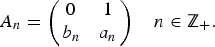 $$A_n = \left( {\matrix{ 0 & 1 \cr {b_n} & {a_n} \cr } } \right)\quad n\in {\open Z}_+ .$$(where a(t) and b(t) are ℂ-valued continuous and 1-periodic functions defined on ℝ) is Hyers–Ulam stable if and only if P(1) is hyperbolic; here P(t) denotes the solution of the first-order matrix 2-dimensional differential system0.4
 $${x}^{\prime \prime}(t) = a(t){x}^{\prime}(t) + b(t)x(t),\quad t\in {\open R},$$where I2 is the identity matrix of order 2 and0.5
 $${X}^{\prime}(t) = A(t)X(t),\quad t\in {\open R},\quad X(0) = I_2,$$
 $$A(t) = \left( {\matrix{ 0 & 1 \cr {b(t)} & {a(t)} \cr } } \right),\quad t\in {\open R}.$$
First-order expansions for eigenvalues and eigenfunctions in periodic homogenization
- Part of:
-
- Published online by Cambridge University Press:
- 20 March 2019, pp. 2189-2215
-
- Article
- Export citation
-
For a family of elliptic operators with periodically oscillating coefficients, $-{\rm div}(A(\cdot /\varepsilon )\nabla )$ with tiny ε > 0, we comprehensively study the first-order expansions of eigenvalues and eigenfunctions (eigenspaces) for both the Dirichlet and Neumann problems in bounded, smooth and strictly convex domains (or more general domains of finite type). A new first-order correction term is introduced to derive the expansion of eigenfunctions in L2 or $H^1_{\rm loc}$. Our results rely on the recent progress on the homogenization of boundary layer problems.

Pointwise stability of reaction diffusion fronts
- Part of:
-
- Published online by Cambridge University Press:
- 25 March 2019, pp. 2216-2254
-
- Article
- Export citation
Local existence of strong solutions and weak–strong uniqueness for the compressible Navier–Stokes system on moving domains
- Part of:
-
- Published online by Cambridge University Press:
- 01 April 2019, pp. 2255-2300
-
- Article
- Export citation
Profinite groups with restricted centralizers of commutators
- Part of:
-
- Published online by Cambridge University Press:
- 01 April 2019, pp. 2301-2321
-
- Article
- Export citation
-
A group G has restricted centralizers if for each g in G the centralizer $C_G(g)$ either is finite or has finite index in G. A theorem of Shalev states that a profinite group with restricted centralizers is abelian-by-finite. In the present paper we handle profinite groups with restricted centralizers of word-values. We show that if w is a multilinear commutator word and G a profinite group with restricted centralizers of w-values, then the verbal subgroup w(G) is abelian-by-finite.

Global well-posedness of advective Lotka–Volterra competition systems with nonlinear diffusion
- Part of:
-
- Published online by Cambridge University Press:
- 03 April 2019, pp. 2322-2348
-
- Article
- Export citation
Existence of positive solutions for a class of semipositone problem in whole ℝN
- Part of:
-
- Published online by Cambridge University Press:
- 05 April 2019, pp. 2349-2367
-
- Article
- Export citation
-
In this paper we show the existence of solution for the following class of semipositone problemP
where N ≥ 3, a > 0, h : ℝN → (0, + ∞) and f : [0, + ∞) → [0, + ∞) are continuous functions with f having a subcritical growth. The main tool used is the variational method together with estimates that involve the Riesz potential. $$\left\{\matrix{-\Delta u & = & h(x)(f(u)-a) & \hbox{in} & {\open R}^N, \cr u & \gt & 0 & \hbox{in} & {\open R}^N, \cr}\right.$$
Fullness of crossed products of factors by discrete groups
- Part of:
-
- Published online by Cambridge University Press:
- 23 April 2019, pp. 2368-2378
-
- Article
- Export citation
-
Let M be an arbitrary factor and $\sigma : \Gamma \curvearrowright M$ an action of a discrete group. In this paper, we study the fullness of the crossed product $M \rtimes _\sigma \Gamma $. When Γ is amenable, we obtain a complete characterization: the crossed product factor $M \rtimes _\sigma \Gamma $ is full if and only if M is full and the quotient map $\overline {\sigma } : \Gamma \rightarrow {\rm out}(M)$ has finite kernel and discrete image. This answers the question of Jones from [11]. When M is full and Γ is arbitrary, we give a sufficient condition for $M \rtimes _\sigma \Gamma $ to be full which generalizes both Jones' criterion and Choda's criterion. In particular, we show that if M is any full factor (possibly of type III) and Γ is a non-inner amenable group, then the crossed product $M \rtimes _\sigma \Gamma $ is full.


Surface groups, infinite generating sets, and stable commutator length
-
- Published online by Cambridge University Press:
- 23 April 2019, pp. 2379-2386
-
- Article
- Export citation
The massive Thirring system in the quarter plane
- Part of:
-
- Published online by Cambridge University Press:
- 23 April 2019, pp. 2387-2416
-
- Article
- Export citation
Linear instability and nondegeneracy of ground state for combined power-type nonlinear scalar field equations with the Sobolev critical exponent and large frequency parameter
-
- Published online by Cambridge University Press:
- 07 May 2019, pp. 2417-2441
-
- Article
- Export citation
Embeddings for the space $LD_\gamma ^{p}$ on sets of finite perimeter
-
- Published online by Cambridge University Press:
- 07 May 2019, pp. 2442-2461
-
- Article
- Export citation
-
Given an open set with finite perimeter $\Omega \subset {\open R}^n$, we consider the space $LD_\gamma ^{p}(\Omega )$, $1\les p<\infty $, of functions with pth-integrable deformation tensor on Ω and with pth-integrable trace value on the essential boundary of Ω. We establish the continuous embedding $LD_\gamma ^{p}(\Omega )\subset L^{pN/(N-1)}(\Omega )$. The space $LD_\gamma ^{p}(\Omega )$ and this embedding arise naturally in studying the motion of rigid bodies in a viscous, incompressible fluid.


Existence and uniqueness of monotone wavefronts in a nonlocal resource-limited model
- Part of:
-
- Published online by Cambridge University Press:
- 07 May 2019, pp. 2462-2483
-
- Article
- Export citation
Smoothness of topological equivalence on the half line for nonautonomous systems
- Part of:
-
- Published online by Cambridge University Press:
- 07 May 2019, pp. 2484-2502
-
- Article
- Export citation
Global Euler obstruction, global Brasselet numbers and critical points
- Part of:
-
- Published online by Cambridge University Press:
- 14 May 2019, pp. 2503-2534
-
- Article
- Export citation
A tale of two approaches to heteroclinic solutions for Φ-Laplacian systems
- Part of:
-
- Published online by Cambridge University Press:
- 14 May 2019, pp. 2535-2572
-
- Article
- Export citation
-
In this article, the existence of heteroclinic solution of a class of generalized Hamiltonian system with potential $V : {\open R}^{n} \longmapsto {\open R}$ having a finite or infinite number of global minima is studied. Examples include systems involving the p-Laplacian operator, the curvature operator and the relativistic operator. Generalized conservation of energy is established, which leads to the property of equipartition of energy enjoyed by heteroclinic solutions. The existence problem of heteroclinic solution is studied using both variational method and the metric method. The variational approach is classical, while the metric method represents a more geometrical point of view where the existence problem of heteroclinic solution is reduced to that of geodesic in a proper length metric space. Regularities of the heteroclinic solutions are discussed. The results here not only provide alternative solution methods for Φ-Laplacian systems, but also improve existing results for the classical Hamiltonian system. In particular, the conditions imposed upon the potential are very mild and new proof for the compactness is given. Finally in ℝ2, heteroclinic solutions are explicitly written down in closed form by using complex function theory.
Unimodality of independence polynomials of rooted products of graphs
- Part of:
-
- Published online by Cambridge University Press:
- 04 June 2019, pp. 2573-2585
-
- Article
- Export citation
Existence of multiple periodic solutions to a semilinear wave equation with x-dependent coefficients
- Part of:
-
- Published online by Cambridge University Press:
- 04 June 2019, pp. 2586-2606
-
- Article
- Export citation
A priori bounds and existence of non-real eigenvalues for singular indefinite Sturm–Liouville problems with limit-circle type endpoints
- Part of:
-
- Published online by Cambridge University Press:
- 07 June 2019, pp. 2607-2619
-
- Article
- Export citation
Quasiconvex relaxation of isotropic functions in incompressible planar hyperelasticity
- Part of:
-
- Published online by Cambridge University Press:
- 11 June 2019, pp. 2620-2631
-
- Article
-
- You have access
- Open access
- Export citation