Refine search
Actions for selected content:
238160 results in Physics and Astronomy
8 - Gravitational Waves: Curvature in Motion
-
- Book:
- The Irresistible Attraction of Gravity
- Published online:
- 02 March 2023
- Print publication:
- 02 March 2023, pp 205-259
-
- Chapter
- Export citation
1 - Gravity … Attracts!
-
- Book:
- The Irresistible Attraction of Gravity
- Published online:
- 02 March 2023
- Print publication:
- 02 March 2023, pp 4-12
-
- Chapter
- Export citation
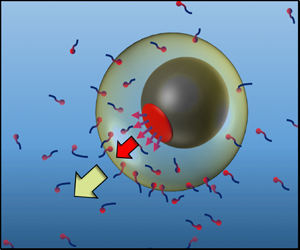
Dynamics of a surface tension driven colloidal motor based on an active Janus particle encapsulated in a liquid drop
-
- Journal:
- Journal of Fluid Mechanics / Volume 958 / 10 March 2023
- Published online by Cambridge University Press:
- 02 March 2023, A12
-
- Article
- Export citation
Contents
-
- Book:
- The Irresistible Attraction of Gravity
- Published online:
- 02 March 2023
- Print publication:
- 02 March 2023, pp xi-xii
-
- Chapter
- Export citation
Reviews
-
- Book:
- The Irresistible Attraction of Gravity
- Published online:
- 02 March 2023
- Print publication:
- 02 March 2023, pp ii-iv
-
- Chapter
- Export citation
Notes
-
- Book:
- The Irresistible Attraction of Gravity
- Published online:
- 02 March 2023
- Print publication:
- 02 March 2023, pp 263-273
-
- Chapter
- Export citation
3 - Spacetime, Curvature and Gravity
-
- Book:
- The Irresistible Attraction of Gravity
- Published online:
- 02 March 2023
- Print publication:
- 02 March 2023, pp 25-48
-
- Chapter
- Export citation
The End of the Journey
-
- Book:
- The Irresistible Attraction of Gravity
- Published online:
- 02 March 2023
- Print publication:
- 02 March 2023, pp 260-261
-
- Chapter
- Export citation
6 - Black Holes: Champions of Curvature
-
- Book:
- The Irresistible Attraction of Gravity
- Published online:
- 02 March 2023
- Print publication:
- 02 March 2023, pp 105-145
-
- Chapter
- Export citation
5 - Neutron Stars: Wonders of Physics
-
- Book:
- The Irresistible Attraction of Gravity
- Published online:
- 02 March 2023
- Print publication:
- 02 March 2023, pp 65-104
-
- Chapter
- Export citation
Epigraph
-
- Book:
- The Irresistible Attraction of Gravity
- Published online:
- 02 March 2023
- Print publication:
- 02 March 2023, pp ix-x
-
- Chapter
- Export citation
NAV volume 76 issue 2-3 Cover and Front matter
-
- Journal:
- The Journal of Navigation / Volume 76 / Issue 2-3 / March 2023
- Published online by Cambridge University Press:
- 15 August 2023, pp. f1-f2
- Print publication:
- March 2023
-
- Article
-
- You have access
- Export citation
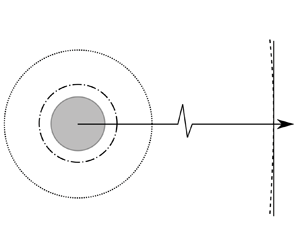
Droplet evaporation in inert gases
-
- Journal:
- Journal of Fluid Mechanics / Volume 958 / 10 March 2023
- Published online by Cambridge University Press:
- 01 March 2023, A18
-
- Article
-
- You have access
- Open access
- HTML
- Export citation
-
A general mixed kinetic-diffusion boundary condition is formulated to account for the out-of-equilibrium kinetics in the Knudsen layer. The mixed boundary condition is used to investigate the problem of quasi-steady evaporation of a droplet in an infinite domain containing inert gases. The widely adopted local thermodynamic equilibrium assumption is found to be the limiting case of infinitely large kinetic Péclet number ${{Pe}_k}$, and it introduces significant error for ${{Pe}_k} \leqslant O(10)$, which corresponds to a typical droplet radius $a$ of a few micrometres or smaller. When compared with experimental data, solutions based on the mixed boundary condition, which take into account the temperature jump across the Knudsen layer, better predict the time evolution of $a$ than the classical $D^2$-law (i.e. $a^2 \propto t$, where $t$ denotes time). In the slow evaporation limit, an analytical solution is obtained by linearising the full formulation about the equilibrium condition, which shows that the $D^2$-law can be recovered only in the large ${{Pe}_k}$ limit. For small ${{Pe}_k}$, where the process is dominated by kinetics, a linear relation, i.e. $a \propto t$, emerges. When the gas phase density approaches the liquid density (e.g. at high-pressure or low-temperature conditions), the increase in the chemical potential of the liquid phase due to the presence of inert gases needs to be accounted for when formulating the mixed boundary condition, an effect largely ignored in the literature so far.


Non-trace full-F gyro-fluid interchange impurity advection
-
- Journal:
- Journal of Plasma Physics / Volume 89 / Issue 1 / February 2023
- Published online by Cambridge University Press:
- 01 March 2023, 905890110
-
- Article
-
- You have access
- Open access
- HTML
- Export citation
Minimum required accuracy for HD maps
-
- Journal:
- The Journal of Navigation / Volume 76 / Issue 2-3 / March 2023
- Published online by Cambridge University Press:
- 22 June 2023, pp. 238-254
- Print publication:
- March 2023
-
- Article
-
- You have access
- Open access
- HTML
- Export citation
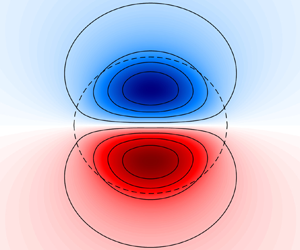
Oceanic dipoles in a surface quasi-geostrophic model
-
- Journal:
- Journal of Fluid Mechanics / Volume 958 / 10 March 2023
- Published online by Cambridge University Press:
- 01 March 2023, R2
-
- Article
-
- You have access
- Open access
- HTML
- Export citation
Ionospheric correction of S-band tracking radar data using NavIC S-band signals in missile test range applications
-
- Journal:
- The Journal of Navigation / Volume 76 / Issue 2-3 / March 2023
- Published online by Cambridge University Press:
- 05 April 2023, pp. 225-237
- Print publication:
- March 2023
-
- Article
- Export citation
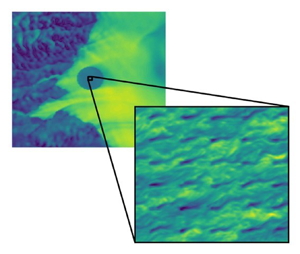
Understanding wind farm power densities
-
- Journal:
- Journal of Fluid Mechanics / Volume 958 / 10 March 2023
- Published online by Cambridge University Press:
- 01 March 2023, F1
-
- Article
-
- You have access
- Open access
- HTML
- Export citation
FLM volume 957 Cover and Front matter
-
- Journal:
- Journal of Fluid Mechanics / Volume 957 / 25 February 2023
- Published online by Cambridge University Press:
- 01 March 2023, p. f1
-
- Article
-
- You have access
- Export citation
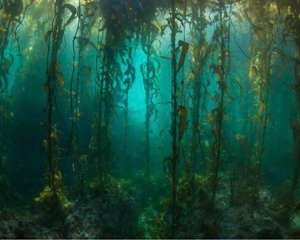
Surface waves and currents in aquatic vegetation
-
- Journal:
- Journal of Fluid Mechanics / Volume 958 / 10 March 2023
- Published online by Cambridge University Press:
- 01 March 2023, A14
-
- Article
-
- You have access
- Open access
- HTML
- Export citation
