Refine search
Actions for selected content:
238152 results in Physics and Astronomy

Conical focusing: mechanism for singular jetting from collapsing drop-impact craters
-
- Journal:
- Journal of Fluid Mechanics / Volume 958 / 10 March 2023
- Published online by Cambridge University Press:
- 27 February 2023, R1
-
- Article
-
- You have access
- Open access
- HTML
- Export citation
-
Fast microjets can emerge out of liquid pools from the rebounding of drop-impact craters, or when a bubble bursts at its surface. The fastest jets are the narrowest and are a source of aerosols both from the ocean and from a glass of champagne, of importance to climate and the olfactory senses. The most singular jets, which we observe experimentally at a maximum velocity of $137\pm 4\ {\rm m}\ {\rm s}^{-1}$ and a diameter of $12\ \mathrm {\mu }{\rm m}$, under reduced ambient pressure, are produced when a small dimple forms at the crater bottom and rebounds without pinching off a small bubble. The radial collapse and rebounding of this dimple is purely inertial, but highly sensitive to initial conditions. High-resolution numerical simulations reveal a new focusing mechanism, which drives the fastest jet within a converging conical channel, where an entrained air sheet provides effective slip at the outer boundary of the conically converging flow into the jet. This configuration bypasses any viscous cutoff of the jetting speed and explains the extreme sensitivity to initial conditions observed in detailed experiments of the phenomenon.

Suppressing small-scale self-focusing of high-power femtosecond pulses
-
- Journal:
- High Power Laser Science and Engineering / Volume 11 / 2023
- Published online by Cambridge University Press:
- 27 February 2023, e28
-
- Article
-
- You have access
- Open access
- HTML
- Export citation
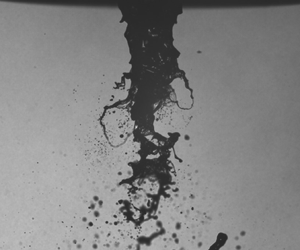
Aerodynamic droplet atomization model (ADAM)
-
- Journal:
- Journal of Fluid Mechanics / Volume 958 / 10 March 2023
- Published online by Cambridge University Press:
- 27 February 2023, A2
-
- Article
- Export citation
First checklist triggering the inventory of marine fish ectoparasites in the Syrian coast (Eastern Mediterranean)
-
- Journal:
- Experimental Results / Accepted manuscript
- Published online by Cambridge University Press:
- 27 February 2023, pp. 1-17
-
- Article
-
- You have access
- Open access
- Export citation
Boolean algebras, Morita invariance and the algebraic K-theory of Lawvere theories
- Part of
-
- Journal:
- Mathematical Proceedings of the Cambridge Philosophical Society / Volume 175 / Issue 2 / September 2023
- Published online by Cambridge University Press:
- 27 February 2023, pp. 253-270
- Print publication:
- September 2023
-
- Article
-
- You have access
- Open access
- HTML
- Export citation
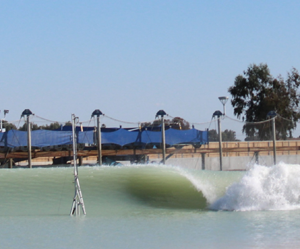
Cross-shore wind-induced changes to field-scale overturning wave shape
-
- Journal:
- Journal of Fluid Mechanics / Volume 958 / 10 March 2023
- Published online by Cambridge University Press:
- 27 February 2023, A4
-
- Article
-
- You have access
- Open access
- HTML
- Export citation
-
The shape of depth-limited breaking-wave overturns is important for turbulence injection, bubble entrainment and sediment suspension. Overturning wave shape depends on a nonlinearity parameter $H/h$, where $H$ is the wave height, and $h$ is the water depth. Cross-shore wind direction (offshore/onshore) and magnitude affect laboratory shoaling wave shape and breakpoint location $X_{{bp}}$, but wind effects on overturning wave shape are largely unstudied. We perform field-scale experiments at the Surf Ranch wave basin with fixed bathymetry and $\approx 2.25$ m shoaling solitons with small height variations propagating at $C=6.7\ \mathrm {m}\ \mathrm {s}^{-1}$. Observed non-dimensional cross-wave wind $U_w$ was onshore and offshore, varying realistically ( $-1.2 < U_{w}/C < 0.7$). Georectified images, a wave staff, and lidar are used to estimate $X_{{bp}}$, $H/h$, overturn area $A$ and aspect ratio for 22 waves. The non-dimensionalized $X_{{bp}}$ was inversely related to $U_{w}/C$. The non-dimensional overturn area and aspect ratio also were inversely related to $U_{w}/C$, with smaller and narrower overturns for increasing onshore wind. No overturning shape dependence on the weakly varying $H/h$ was seen. The overturning shape variation was as large as prior laboratory experiments with strong $H/h$ variations without wind. An idealized potential air flow simulation on steep shoaling soliton shape has strong surface pressure variations, potentially inducing overturning shape changes. Through wave-overturning impacts on turbulence and sediment suspension, coastal wind variations could be relevant for near-shore morphology.


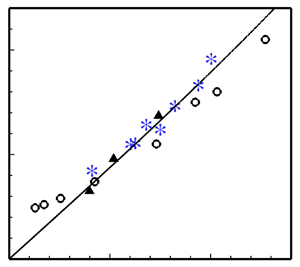
Compressibility effects on Reynolds stress amplification and shock structure in shock–isotropic turbulence interactions
-
- Journal:
- Journal of Fluid Mechanics / Volume 958 / 10 March 2023
- Published online by Cambridge University Press:
- 27 February 2023, A1
-
- Article
-
- You have access
- Open access
- HTML
- Export citation
Feminism and gender in thinking about extraterrestrial intelligence
-
- Journal:
- International Journal of Astrobiology / Volume 22 / Issue 3 / June 2023
- Published online by Cambridge University Press:
- 24 February 2023, pp. 238-246
-
- Article
-
- You have access
- Open access
- HTML
- Export citation
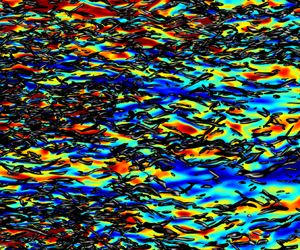
How spanwise travelling transversal surface waves change the near-wall flow
-
- Journal:
- Journal of Fluid Mechanics / Volume 957 / 25 February 2023
- Published online by Cambridge University Press:
- 23 February 2023, A30
-
- Article
- Export citation
-
The alteration of the near-wall flow field of a turbulent boundary layer flow subjected to spanwise travelling transversal surface waves at a friction Reynolds number $Re_\tau \approx 1525$ is investigated. The results of a spatial noise-assisted multivariate empirical mode decomposition reveal that this flow control method periodically induces near-wall large-scale bursts while simultaneously lowering the energetic content of small-scale features. The increasing occurrence of intense large-scale ejections in the near-wall region is of particular importance for reducing the wall-shear stress since these ejections balance large-scale sweeps originating from the outer layer. Thus, they corrupt the outer-layer impact on the near-wall dynamics and, consequently, the overall fluctuation intensity at the wall is attenuated. This disturbed top-down momentum exchange is highlighted by an inner–outer interaction analysis, which further reveals an increased bottom-up communication provoked by the large-scale ejections. Moreover, it is shown that the periodic secondary flow field induced by the actuation interferes with the quasi-streamwise vortices in the near-wall region. The velocity gradients of the secondary flow field deform the vortices’ cross-section into an elliptic shape, which yields an unstable vortex state resulting in vortex disintegration. In combination with the effect of the large-scale ejections, the reduced number of quasi-streamwise vortices compared with the undisturbed boundary layer flow results in a decreased wall-normal momentum exchange and the widening and weakening of near-wall streaks. This yields a reduced fluctuation intensity in the near-wall region that lowers the overall wall-shear stress level.

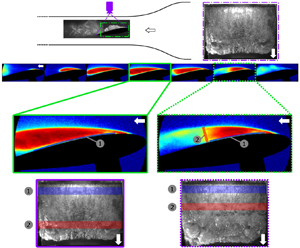
Partial cavity shedding on a hydrofoil resulting from re-entrant flow and bubbly shock waves
-
- Journal:
- Journal of Fluid Mechanics / Volume 957 / 25 February 2023
- Published online by Cambridge University Press:
- 23 February 2023, A28
-
- Article
-
- You have access
- Open access
- HTML
- Export citation
Appendix 4
-
- Book:
- Physics of Charged Macromolecules
- Published online:
- 16 February 2023
- Print publication:
- 23 February 2023, pp 445-446
-
- Chapter
- Export citation
Acknowledgments
-
- Book:
- Physics of Charged Macromolecules
- Published online:
- 16 February 2023
- Print publication:
- 23 February 2023, pp xv-xvi
-
- Chapter
- Export citation
Preface
-
- Book:
- Physics of Charged Macromolecules
- Published online:
- 16 February 2023
- Print publication:
- 23 February 2023, pp xiii-xiv
-
- Chapter
- Export citation
6 - Structure and Thermodynamics in Homogeneous Polyelectrolyte Solutions
-
- Book:
- Physics of Charged Macromolecules
- Published online:
- 16 February 2023
- Print publication:
- 23 February 2023, pp 159-195
-
- Chapter
- Export citation
1 - Introduction to Charged Macromolecules
-
- Book:
- Physics of Charged Macromolecules
- Published online:
- 16 February 2023
- Print publication:
- 23 February 2023, pp 1-14
-
- Chapter
- Export citation
Appendix 8
-
- Book:
- Physics of Charged Macromolecules
- Published online:
- 16 February 2023
- Print publication:
- 23 February 2023, pp 473-475
-
- Chapter
- Export citation
4 - Charged Interfaces and Geometrical Objects
-
- Book:
- Physics of Charged Macromolecules
- Published online:
- 16 February 2023
- Print publication:
- 23 February 2023, pp 70-91
-
- Chapter
- Export citation
References
-
- Book:
- Physics of Charged Macromolecules
- Published online:
- 16 February 2023
- Print publication:
- 23 February 2023, pp 483-501
-
- Chapter
- Export citation
Appendix 6
-
- Book:
- Physics of Charged Macromolecules
- Published online:
- 16 February 2023
- Print publication:
- 23 February 2023, pp 451-470
-
- Chapter
- Export citation
11 - Epilogue
-
- Book:
- Physics of Charged Macromolecules
- Published online:
- 16 February 2023
- Print publication:
- 23 February 2023, pp 434-435
-
- Chapter
- Export citation
