We partner with a secure submission system to handle manuscript submissions.
Please note:
You will need an account for the submission system, which is separate to your Cambridge Core account. For login and submission support, please visit the
submission and support pages.
Please review this journal's author instructions, particularly the
preparing your materials
page, before submitting your manuscript.
Click Proceed to submission system to continue to our partner's website.
To save this undefined to your undefined account, please select one or more formats and confirm that you agree to abide by our usage policies. If this is the first time you used this feature, you will be asked to authorise Cambridge Core to connect with your undefined account.
Find out more about saving content to .
To send this article to your Kindle, first ensure no-reply@cambridge.org is added to your Approved Personal Document E-mail List under your Personal Document Settings on the Manage Your Content and Devices page of your Amazon account. Then enter the ‘name’ part of your Kindle email address below. Find out more about sending to your Kindle.
Find out more about saving to your Kindle.
Note you can select to save to either the @free.kindle.com or @kindle.com variations. ‘@free.kindle.com’ emails are free but can only be saved to your device when it is connected to wi-fi. ‘@kindle.com’ emails can be delivered even when you are not connected to wi-fi, but note that service fees apply.
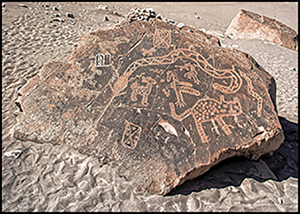
Detailed documentation of thousands of petroglyphs and recent excavations conducted at the site of Toro Muerto in Peru reveal new information about the symbolic spatial organisation and ritual functions of the largest pre-Columbian rock art complex.
The Batn el-Hagar in Sudan has traditionally been characterised as sparsely occupied during the Middle Kingdom Period, with most activity limited to the Egyptian fortresses along the Second Cataract. A new survey programme undertaken by the Uronarti Regional Archaeological Project offers evidence for a more richly occupied landscape.
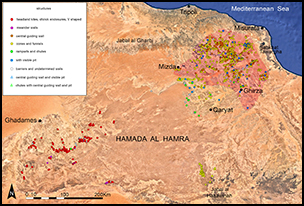
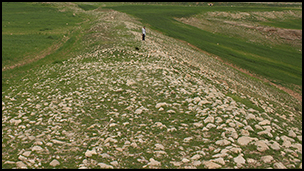
Recent archaeological survey has revealed large numbers of stone structures, known as desert kites, in north-western Libya. The numbers of these structures and their evident adaptation over time demonstrate a longevity of use and a high degree of specialisation and cooperation among the people who built them.
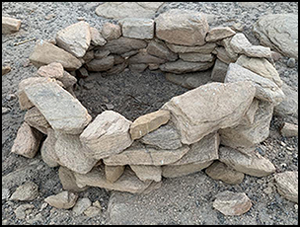
The small, Middle Pre-Pottery Neolithic B site (tenth millennium cal BP) of Nahal Yarmuth 38 in central Israel consists of a unique series of rectilinear structures with plastered floors, beneath which multiple interments were found. The nature of the finds combined with existing knowledge of burial customs of this period make Nahal Yarmuth 38 an ideal site for investigating designated burial sites in the Middle Pre-Pottery Neolithic B.
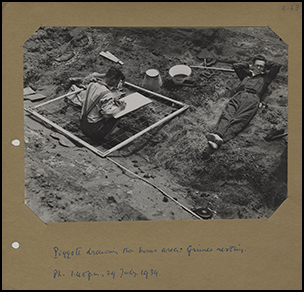
This article presents data obtained in the first geophysical survey undertaken in the Decapolis city of Gerasa (Jerash) in northern modern Jordan, and reflects on the value of openly sharing data in the academic community.
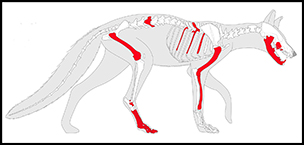
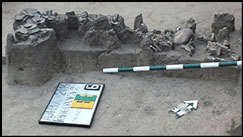
The recent discovery of a Late/Final Pre-Pottery Neolithic B burial of an adult and two children associated with fox bones at the site of Motza, Israel, demonstrates the broader socio-cultural perspective, and possibly continued animistic world views, of Neolithic foragers at the onset of the agricultural revolution.
This project aims to reconstruct the settlement patterns and palaeoenvironment of the Sąspów Valley in the Polish Jura by combining unpublished archaeological fieldwork with results of recent excavations at 13 cave sites.
In 2017, Hurricane Maria exposed a colonial-era settlement at LaSoye on the Caribbean island of Dominica. Evidence suggests that this was a seventeenth- to eighteenth-century Dutch trading factory built over an earlier Kalinago settlement, and a place of early interaction between Indigenous peoples and Europeans.
Survey at Sar Pol-e Zahab has revealed a hitherto unknown long wall in western Iran. Possibly dating to the Partho-Sasanian period, the wall extends more than 100km along the modern border of Iraq and Iran.
Human sacrifice is a well-attested and much mythologised phenomenon of human society, but what constitutes human sacrifice? Why is socially sanctioned violence considered sacrifice? And why are human lives sacrificed? New research uses archaeological case studies from Scandinavia to understand performative violence.
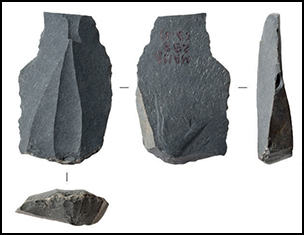
Well-stratified Middle Palaeolithic assemblages are extremely rare in Mongolia. Initially investigated between the 1960s and 1990s, three major Middle Palaeolithic sites in the Orkhon Valley of central Mongolia yielded a large quantity of data and generated many research questions that still await answers. Re-investigation of these sites has uncovered chronostratigraphic and cultural sequences that may shed new light on human dispersal routes.
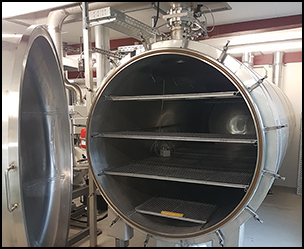
The authors introduce an ongoing project that explores a solution for the long-term preservation of proxies in archaeological and geological sediment cores to protect unique palaeoenvironmental data. To prevent alterations of organic properties and/or fungal growth, the sediment cores are vacuum freeze-dried, allowing long-term storage at 55 per cent relative humidity (RH).
O.G.S. Crawford was not only a prominent archaeologist, but also an active photographer who prioritised this relatively new medium in archaeological reserach. This article examines archival images taken by Crawford during the 1939 Sutton Hoo excavation, on the eve of its eightieth anniversary.
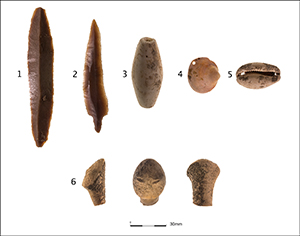
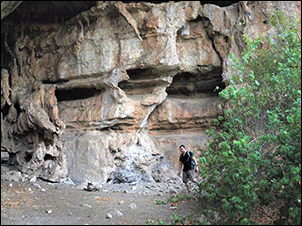
Archaeological reconnaissance and test excavation conducted in south-central Ethiopia reveal the region's rich Stone Age and Holocene archaeology. Ongoing lithic, faunal and dating analyses aim to understand chronological and behavioural contexts of prioritised rockshelters as part of a newly launched project. Speleothems in some of the caves promise high-resolution palaeoclimatic reconstruction.
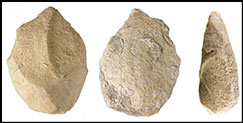
Artefacts in quartzite have been found in a unique topographical location on the highest terrace of the Rhône Valley in France. These discoveries offer new opportunities for dating early European occupations.
The National Museum in Copenhagen responds to Søren Sindbæk's (2019) review of their revitalised Viking gallery, arguing that the new ‘Meet the Vikings’ exhibit increases public accessibility and engagement, while also reflecting contemporary research into Viking life.
Sherds of the San Pedro pottery complex found in situ in association with new radiocarbon dates at the Real Alto site provide new insights into the origin of pottery technology in South America and cultural diversity during the Early Formative period on the coast of Ecuador.
Settlement in Neolithic South-eastern Europe has traditionally been divided into tell sites and flat sites. The results of rescue excavations at Kyparissi challenge a strict dichotomy.
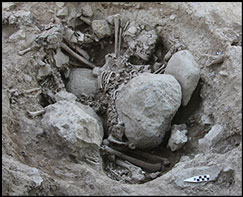
The discovery of a burial pit at Uğurlu on the Aegean island of Gökçeada, in which bodies were deposited one on top of another, raises questions about whether this apparently careless discarding of the dead was local burial custom or a ceremonial ritual.