We partner with a secure submission system to handle manuscript submissions.
Please note:
You will need an account for the submission system, which is separate to your Cambridge Core account. For login and submission support, please visit the
submission and support pages.
Please review this journal's author instructions, particularly the
preparing your materials
page, before submitting your manuscript.
Click Proceed to submission system to continue to our partner's website.
To save this undefined to your undefined account, please select one or more formats and confirm that you agree to abide by our usage policies. If this is the first time you used this feature, you will be asked to authorise Cambridge Core to connect with your undefined account.
Find out more about saving content to .
To send this article to your Kindle, first ensure no-reply@cambridge.org is added to your Approved Personal Document E-mail List under your Personal Document Settings on the Manage Your Content and Devices page of your Amazon account. Then enter the ‘name’ part of your Kindle email address below. Find out more about sending to your Kindle.
Find out more about saving to your Kindle.
Note you can select to save to either the @free.kindle.com or @kindle.com variations. ‘@free.kindle.com’ emails are free but can only be saved to your device when it is connected to wi-fi. ‘@kindle.com’ emails can be delivered even when you are not connected to wi-fi, but note that service fees apply.
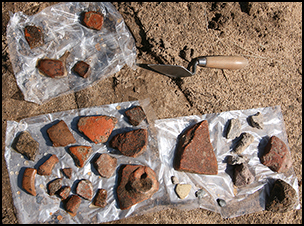
Excavation at Pauli Stincus in Sardinia has revealed an ancient plough soil, with associated evidence of intensive prehistoric agricultural activities.
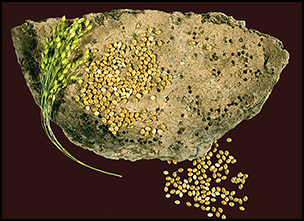
A programme of radiocarbon dating aims to correlate the onset of millet cultivation in northern Germany with cultural and technological changes during the Bronze Age.
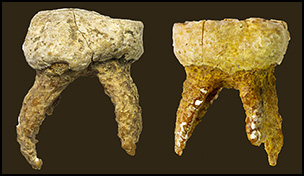
New data from Strashnaya Cave have revealed previously unknown complexity in hominin occupation of the Altai Mountains, including the first regional evidence for the presence of anatomically modern humans.
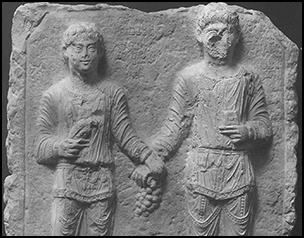
Since 2012, the ‘Palmyra Portrait Project’ has collected, studied and digitised over 3700 limestone funerary portraits from Palmyra dating to the first three centuries AD. This represents the largest collection of funerary representations from one place in the classical world.
A response to the recent debate piece in Antiquity by González-Ruibal et al., examining the role of epistemic popularism in critical heritage studies and public archaeology.
New excavations at the Jebel Moya cemetery in Sudan reveal extensive evidence for Meroitic-era occupation, providing valuable data on contemporaneous diet, migration, exchange and population composition in sub-Saharan Africa.
Rescue excavations in Bethlehem undertaken by the Sapienza University of Rome and the Palestinian Ministry of Tourism and Antiquities—Department of Archaeology and Cultural Heritage—have revealed four Bronze Age necropolises. These newly discovered sites illuminate the development of pre-Classical Bethlehem.
Geochemical analysis of the first obsidian artefact discovered in Belarus reveals its source to be the Trans-Caucasus, rather than the expected Carpathian source for prehistoric obsidian in Eastern Europe.
Predictive modelling has identified rockshelter sites to the north-east of the Laacher See volcano in western Germany. These will be excavated to investigate the impacts of volcanic eruption on Late Pleistocene foragers.
The authors respond to the recent debate piece in Antiquity by González-Ruibal et al., which they claim misrepresents public archaeology by ignoring the dominant practice of cultural resource management (CRM).
Recent changes to the availability and accessibility of LiDAR data in Italy have greatly expanded the potential for their exploration by members of the general public. Further promotion of this fact and how to engage with such data could prove to be of significant value to both archaeologists and other interested parties.
This paper presents the results of a non-photorealistic rendering approach to analysing Roman inscriptions, which uses line drawings to highlight the text of two epigraphs from Galicia in north-west Spain.
A previously unknown painting of Christ’s face, recently discovered at the Byzantine site of Shivta in the Negev Desert of southern Israel, represents the first pre-iconoclastic baptism-of-Christ scene to be found in the Holy Land.
Satellite imagery analysis has revealed the presence of at least 330 stone structures—akin to ‘desert kites’ recorded elsewhere—on and around the Hamada al Hamra Plateau in Libya. These structures, which probably vary in shape based on local geomorphology, may have been used for hunting or herding animals.
Analysis of seven newly discovered engraved La Tène beads from the Mathay-Mandeure sanctuary in Doubs, France, has refined the chronology for the manufacture of such rare artefacts, and increases our understanding of Late Iron Age ritual deposition practices.
The Tappino Area Archaeological Project combines remote sensing, intensive survey methods and excavation to illuminate the development and working of ancient society in the Apennine Mountains, southern Italy.
The Basquesmith project aims to illuminate the cycle of iron production and consumption by early medieval rural farming communities in the Álava province, Basque Country, northern Spain.
Newly discovered archaeological sites in the Uribe Kosta region of northern Spain are illuminating the establishment of late prehistoric coastal farming settlements and specialised tool-production activities.
A new project aims to define the origins and dispersal patterns of the opium poppy in Neolithic Western Europe through a comprehensive programme of radiocarbon dating.
Recent research investigating the origins of Bahama archipelago habitation conducted archaeological surveys on the remote Bahamian Guinchos Cay and Cay Lobos. A complete lack of prehistoric evidence, however, suggests that they played no significant role in the colonisation of The Bahamas.