We partner with a secure submission system to handle manuscript submissions.
Please note:
You will need an account for the submission system, which is separate to your Cambridge Core account. For login and submission support, please visit the
submission and support pages.
Please review this journal's author instructions, particularly the
preparing your materials
page, before submitting your manuscript.
Click Proceed to submission system to continue to our partner's website.
To save this undefined to your undefined account, please select one or more formats and confirm that you agree to abide by our usage policies. If this is the first time you used this feature, you will be asked to authorise Cambridge Core to connect with your undefined account.
Find out more about saving content to .
To send this article to your Kindle, first ensure no-reply@cambridge.org is added to your Approved Personal Document E-mail List under your Personal Document Settings on the Manage Your Content and Devices page of your Amazon account. Then enter the ‘name’ part of your Kindle email address below. Find out more about sending to your Kindle.
Find out more about saving to your Kindle.
Note you can select to save to either the @free.kindle.com or @kindle.com variations. ‘@free.kindle.com’ emails are free but can only be saved to your device when it is connected to wi-fi. ‘@kindle.com’ emails can be delivered even when you are not connected to wi-fi, but note that service fees apply.
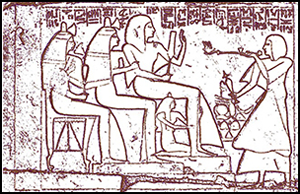
This paper presents the results of a non-photorealistic rendering technique applied to three different types of reliefs from the ancient Egyptian tomb of Meryneith at Saqqara.
The discovery of a multi-chambered long cairn in central Brittany dating to the Middle Neolithic period challenges previous conceptions of the coastal focus of Neolithic society in this region.
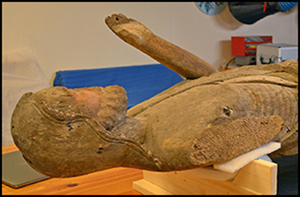
This project develops theoretical as well as methodological tools for the study of ancient wood, focusing on wood-use in North-eastern Europe within the period AD 1100–1600. The authors approach wood within the framework of object biographies and link the study of wooden artefacts with broader archaeological understandings of formation processes and environmental reconstruction.
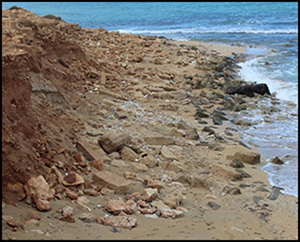
The ‘Maritime Endangered Archaeology’ (MarEA) project is conducting remote, large-scale identification and assessment of vulnerable maritime heritage to assist in its management in the face of challenges such as climate change and rapid urbanisation.
A multi-disciplinary research project in the Aras Valley, Armenia, focuses on the remains of the Late Bronze/Early Iron Age settlement of Metsamor. The results challenge prior understandings of the settlement's past and the role it played in the region, especially during the first centuries of the first millennium BC.
A sickle boat petroglyph in Wadi Asafir, North-west Arabia, can potentially stretch the geographic scope of the connection between Egypt and Western Arabia in the fourth millennium BC.
Excavations in marginal areas of the loess uplands in southern Poland have revealed that the northern periphery of the Sandomierz Upland was intensely colonised in the sixth and fifth millennia BC by Linearbandkeramik and Malice Culture Danubian communities. This research suggests that analogous settlement clusters may exist in other marginal regions of the Central European loess belt, previously thought to be uninhabited.
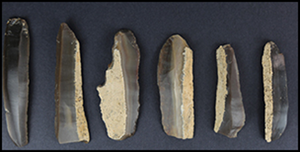
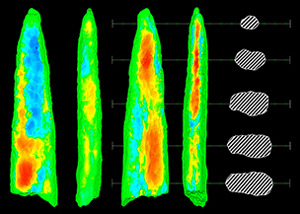
The first formal bone tool in the Central Altai of Russia was found in an Early Upper Palaeolithic assemblage at the Kara-Bom open-air site. Here the authors report the results of AMS dating, use-wear analysis, 3D-modelling and zooarchaeological and collagen fingerprinting analysis, which reveal important new insights into the osseous technology of the Kara-Bomian tradition.
The discovery of an Early Upper Palaeolithic rockshelter, Nahal Rahaf 2, in the southern Judean Desert revives the debate about whether the Levantine Aurignacian extended into the arid regions of the Southern Levant.
A Late Bronze Age hoard from Karmin, Poland, contained 16 socketed axes, half of which were made of copper. The copper axes represent the same local type as the bronze objects and bear the same traces of manufacturing and use. The authors argue that the move to copper was a response to unexpected difficulties in the tin supply.
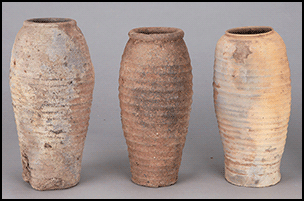
Ceramics discovered at Yan'an, Shaanxi, are glazed using a polychrome technique previously unknown in the Han Dynasty. Chemical analysis shows similar technological methods to those used during the Warring States period. This paper demonstrates two possible influences for the polychrome decoration that ultimately suggest Eurasian cultural hybridity and exchange.
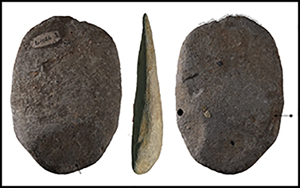
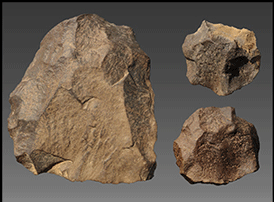
Archaeological excavations at Kota Tampan in West Malaysia recovered a large stone assemblage dated to 70 kya and believed to be associated with the presence of early Anatomically Modern Humans in Mainland Southeast Asia. New technological analysis demonstrates that almost all these stone artefacts result from early stage reduction through freehand and bipolar percussion.
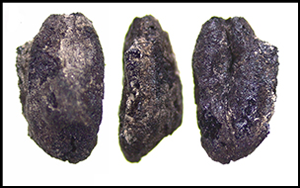
A combined archaeobotanical and micro-refuse analysis is being implemented at two Early Neolithic tells currently under excavation in the Pelagonia Valley: Vrbjanska Čuka and Veluška Tumba. The first results suggest similarities with Greek sites that show a relatively broad crop spectrum.
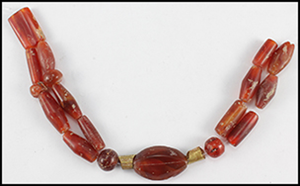
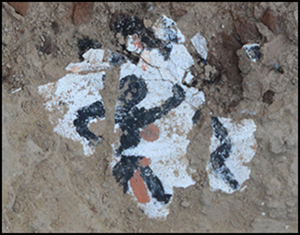
Excavations at Gonur Oasis in the ancient delta of the Murghab River revealed a unique polychrome painting at the Bactria-Margiana Archaeological Complex. Found in an unusual grave at Gonur 20, the painting may offer new insights into ancient technologies and interaction between Old World civilisations.
A multidisciplinary project challenges traditional approaches to the rural landscape of Petra in order to understand its agricultural systems and the quantitative and qualitative aspects of a lived landscape.
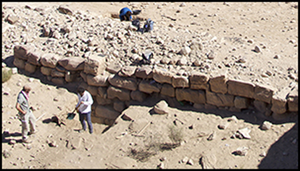
Survey and excavation of a medieval fort in central Himalaya has provided evidence for a unique system of defence. Radiocarbon dates provide a chronology for the fort and fortalices (small forts or fortified houses) in the Garhwal region.
Sudan is a vitally important region for understanding the migrations of Anatomically Modern Humans from the African continent. Here, the authors present the results of a preliminary survey in the Kerma region, during which, 16 new Middle Stone Age sites were discovered.
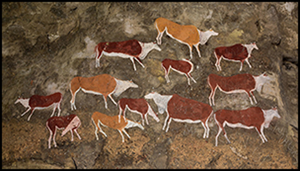
A new project maps mobility patterns and social networks from prehistory to historical times in the western piedmont of the Maloti-Drakensberg, South Africa, and considers how rock art sites relate to seasonal or transhumance patterns in the region.
Here the authors report on a project that aims to understand zinc-production technologies at the earliest zinc-smelting site in China. Excavations at the site of Linjiangerdui, south of the Yangtze River, have provided a chronological sequence for smelting sites and revealed new evidence for methods of production.
It is often claimed that changes in material culture signify adaptations to changing environments. Deploying novel conceptual models and computational techniques, research funded by the European Research Council seeks to reconstruct the patterns and processes of cultural transmission and adaptation at the turbulent transition from the Pleistocene to the Holocene.