Published on behalf of The London Mathematical Society
We partner with a secure submission system to handle manuscript submissions.
Please note:
Click Proceed to submission system to continue to our partner's website.
We study a class of two-variable polynomials called exact polynomials which contains  $A$-polynomials of knot complements. The Mahler measure of these polynomials can be computed in terms of a volume function defined on the vanishing set of the polynomial. We prove that the local extrema of the volume function are on the two-dimensional torus and give a closed formula for the Mahler measure in terms of these extremal values. This formula shows that the Mahler measure of an irreducible and exact polynomial divided by $\pi$ is greater than the amplitude of the volume function. We also prove a K-theoretic criterion for a polynomial to be a factor of an $A$-polynomial and give a topological interpretation of its Mahler measure.
We show a rigidity theorem for the Seiberg–Witten invariants mod 2 for families of spin 4-manifolds. A mechanism of this rigidity theorem also gives a family version of 10/8-type inequality. As an application, we prove the existence of non-smoothable topological families of 4-manifolds whose fiber, base space, and total space are smoothable as manifolds. These non-smoothable topological families provide new examples of  $4$-manifolds $M$ for which the inclusion maps $\operatorname {Diff}(M) \hookrightarrow \operatorname {Homeo}(M)$ are not weak homotopy equivalences. We shall also give a new series of non-smoothable topological actions on some spin $4$-manifolds.
We introduce irregular constructible sheaves, which are  ${\mathbb {C}}$-constructible with coefficients in a finite version of the Novikov ring $\Lambda$ and special gradings. We show that the bounded derived category of cohomologically irregular constructible complexes is equivalent to the bounded derived category of holonomic ${\mathcal {D}}$-modules by a modification of D’Agnolo and Kashiwara's irregular Riemann–Hilbert correspondence. The bounded derived category of cohomologically irregular constructible complexes is equipped with the irregular perverse $t$-structure, which is a straightforward generalization of usual perverse $t$-structure, and we prove that its heart is equivalent to the abelian category of holonomic ${\mathcal {D}}$-modules. We also develop the algebraic version of the theory.
We study the question of dualizability in higher Morita categories of locally presentable tensor categories and braided tensor categories. Our main results are that the 3-category of rigid tensor categories with enough compact projectives is 2-dualizable, that the 4-category of rigid braided tensor categories with enough compact projectives is 3-dualizable, and that (in characteristic zero) the 4-category of braided multi-fusion categories is 4-dualizable. Via the cobordism hypothesis, this produces respectively two-, three- and four-dimensional framed local topological field theories. In particular, we produce a framed three-dimensional local topological field theory attached to the category of representations of a quantum group at any value of  $q$.
$q$.
We study the depth filtration on multiple zeta values, on the motivic Galois group of mixed Tate motives over  $\mathbb {Z}$ and on the Grothendieck–Teichmüller group, and its relation to modular forms. Using period polynomials for cusp forms for $\mathrm {SL} _2(\mathbb {Z})$, we construct an explicit Lie algebra of solutions to the linearized double shuffle equations, which gives a conjectural description of all identities between multiple zeta values modulo $\zeta (2)$ and modulo lower depth. We formulate a single conjecture about the homology of this Lie algebra which implies conjectures due to Broadhurst and Kreimer, Racinet, Zagier, and Drinfeld on the structure of multiple zeta values and on the Grothendieck–Teichmüller Lie algebra.
A spectral sequence is established whose  $E_{2}$ page is Bar-Natan's variant of Khovanov homology and which abuts to a deformation of instanton homology for knots and links. This spectral sequence arises as a specialization of a spectral sequence whose $E_{2}$ page is a characteristic-2 version of $F_{5}$ homology in Khovanov's classification.
We construct examples of smooth proper rigid-analytic varieties admitting formal models with projective special fibers and violating Hodge symmetry for cohomology in degrees  ${\geq }3$. This answers negatively the question raised by Hansen and Li.
Let  $\mathcal {F}$ be a polystable sheaf on a smooth minimal projective surface of Kodaira dimension 0. Then the differential graded (DG) Lie algebra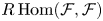 $R\operatorname {Hom}(\mathcal {F},\mathcal {F})$ of derived endomorphisms of $\mathcal {F}$ is formal. The proof is based on the study of equivariant $L_{\infty }$ minimal models of DG Lie algebras equipped with a cyclic structure of degree 2 which is non-degenerate in cohomology, and does not rely (even for K3 surfaces) on previous results on the same subject.
