This journal utilises an Online Peer Review Service (OPRS) for submissions. By clicking "Continue" you will be taken to our partner site https://cup.msp.org/submit/pem. Please be aware that your Cambridge account is not valid for this OPRS and registration is required. We strongly advise you to read all "Author instructions" in the "Journal information" area prior to submitting.
Motivated by new examples of functional Banach spaces over the unit disk, arising as the symbol spaces in the study of random analytic functions, for which the monomials 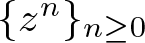 $\{z^n\}_{n\geq 0}$ exhibit features of an unconditional basis yet they often don’t even form a Schauder basis, we introduce a notion called solid basis for Banach spaces and p-Banach spaces and study its properties. Besides justifying the rich existence of solid bases, we study their relationship with unconditional bases, the weak-star convergence of Taylor polynomials, the problem of a solid span and the curious roles played by c0. The two features of this work are as follows: (1) during the process, we are led to revisit the axioms satisfied by a typical Banach space of analytic functions over the unit disk, leading to a notion of $\mathcal{X}^\mathrm{max}$ (and $\mathcal{X}^\mathrm{min}$), as well as a number of related functorial constructions, which are of independent interests; (2) the main interests of solid basis lie in the case of non-separable (p-)Banach spaces, such as BMOA and the Bloch space instead of VMOA and the little Bloch space.
In dimension n = 1, we obtain  $L^{p_1}(\mathbb R) \times\dots\times L^{p_m}(\mathbb R)$ to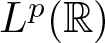 $L^p(\mathbb R)$ boundedness for the multilinear spherical maximal function in the largest possible open set of indices and we provide counterexamples that indicate the optimality of our results.
Let Mn and Tn denote the nth Motzkin number and the nth central trinomial coefficient respectively. We prove that for any prime  $p\ge 5$,
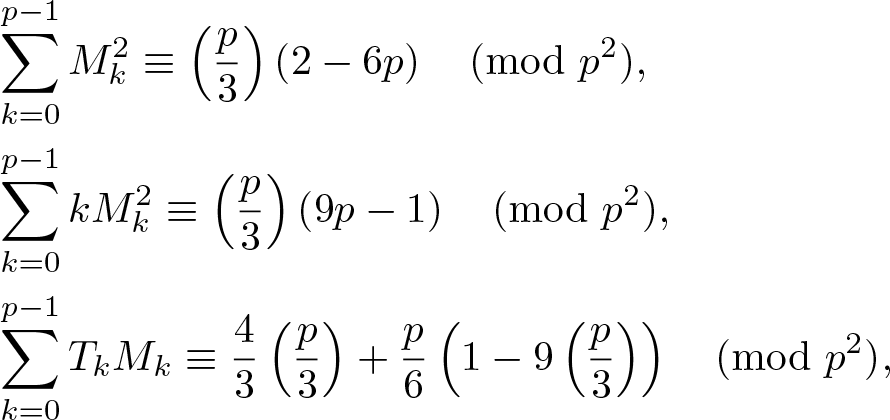 \begin{equation*}\begin{aligned}\\[-22pt]&\sum_{k=0}^{p-1}M_k^2\equiv \left(\frac{p}{3}\right)\left(2-6p\right)\pmod{p^2},\\&\sum_{k=0}^{p-1}kM_k^2\equiv \left(\frac{p}{3}\right)\left(9p-1\right)\pmod{p^2},\\&\sum_{k=0}^{p-1}T_kM_k\equiv \frac{4}{3}\left(\frac{p}{3}\right)+\frac{p}{6}\left(1-9\left(\frac{p}{3}\right)\right)\pmod{p^2},\\[-6pt]\end{aligned}\end{equation*}
where  $\left(-\right)$ is the Legendre symbol. These results confirm three supercongruences conjectured by Z.-W. Sun in 2010.
In this paper, we consider blowup of solutions to the Cauchy problem for the following biharmonic nonlinear Schrödinger equation (NLS), \begin{equation*}\text{i } \partial_t u=\Delta^2 u-\mu \Delta u-|u|^{2 \sigma} u \quad \text{in} \,\, \mathbb{R} \times \mathbb{R}^d,\end{equation*}
where  $d \geq 1$,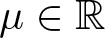 $\mu \in \mathbb{R}$ and $0 \lt \sigma \lt \infty$ if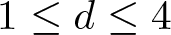 $1 \leq d \leq 4$ and $0 \lt \sigma \lt 4/(d-4)$ if $d \geq 5$. In the mass critical and supercritical cases, we establish the existence of blowup solutions to the problem for cylindrically symmetric data. The result extends the known ones with respect to blowup of solutions to the problem for radially symmetric data.
Let  $X, Y$ be two locally compact Hausdorff spaces and $T:C_0(X)\rightarrow C_0(Y)$ be a standard surjective ɛ-norm-additive map, i.e.
 \begin{equation*}\big|\|T(f)+T(g)\|-\|f+g\|\big|\leq \varepsilon,\;{\rm for\;all}\; f, g\in C_0(X).\end{equation*}
Then there exist a homeomorphism  $\varphi:Y\rightarrow X$ and a continuous function $\lambda:Y\rightarrow\lbrace\pm1\rbrace$ such that
 \begin{equation*}|T(f)(y)-\lambda(y)f(\varphi(y))|\leq\frac{3}{2}\varepsilon,\;{\rm for\;all}\;y\in Y,\;f\in C_0(X).\end{equation*}
The estimate ‘ $\frac{3}{2}\varepsilon$’ is optimal. And this result can be regarded as a new nonlinear extension of the Banach–Stone theorem.
Let 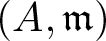 $(A,\mathfrak{m})$ be a regular local ring of dimension $d \geq 1$, I an $\mathfrak{m}$-primary ideal. Let N be a nonzero finitely generated A-module. Consider the functions
 \begin{equation*}t^I(N, n) = \sum_{i = 0}^{d}\ell(\text{Tor}^A_i(N, A/I^n)) \ \text{and}\ e^I(N, n) = \sum_{i = 0}^{d}\ell(\text{Ext}_A^i(N, A/I^n))\end{equation*}
of polynomial type and let their degrees be 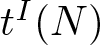 $t^I(N) $ and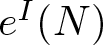 $e^I(N)$. We prove that $t^I(N) = e^I(N) = \max\{\dim N, d -1 \}$. A crucial ingredient in the proof is that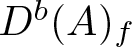 $D^b(A)_f$, the bounded derived category of A with finite length cohomology, has no proper thick subcategories.
Given a Gromov hyperbolic domain 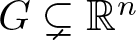 $G\subsetneq \mathbb{R}^n$ with uniformly perfect Gromov boundary, Zhou and Rasila recently proved that for all quasiconformal homeomorphisms $\psi\colon G\to G$ with identity value on the Gromov boundary, the quasihyperbolic displacement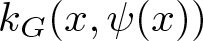 $k_G(x,\psi(x))$ for all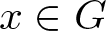 $x\in G$ is bounded above. In this paper, we generalize this result and establish Teichmüller displacement theorem for quasi-isometries of Gromov hyperbolic spaces in a quantitative way. As applications, we obtain its connections to bilipschitz extensions of certain Gromov hyperbolic spaces.
Let G be a finite solvable group. We prove that if 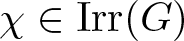 $\chi\in{{\operatorname{Irr}}}(G)$ has odd degree and $\chi(1)$ is the minimal degree of the nonlinear irreducible characters of G, then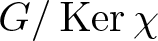 $G/\operatorname{Ker}\chi$ is nilpotent-by-abelian.
Let f(x) and g(x) be polynomials in  $\mathbb F_{2}[x]$ with ${\rm deg}\text{ } f=n$. It is shown that for $n\gg 1$, there is an $g_{1}(x)\in \mathbb F_{2}[x]$ with ${\rm deg}\text{ } g_{1}\leqslant \max\{{\rm deg}\text{ } g, 6.7\log n\}$ and $g(x)-g_{1}(x)$ having $ \lt 6.7\log n$ terms such that $\gcd(f(x), g_{1}(x))=1$. As an application, it is established using a result of Dubickas and Sha that given $f(x)\in \mathbb F_{2}[x]$ of degree $n\geqslant 1$, there is a separable $g(x)\in 2[x]$ with ${\rm deg}\text{ } g= {\rm deg}\text{ } f$ and satisfying that $f(x)-g(x)$ has $\leqslant 6.7\log n$ terms. As a simple consequence, the latter result holds in $\mathbb Z[x]$ after replacing ‘number of terms’ by the L1-norm of a polynomial and $6.7\log n$ by $6.8\log n$. This improves the bound $(\log n)^{\log 4 +\operatorname{\varepsilon}}$ obtained by Filaseta and Moy.
We study a maximal average along a family of curves  $\{(t,m(x_1)\gamma(t)):t\in [-r,r]\}$, where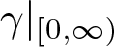 $\gamma|_{[0,\infty)}$ is a convex function and m is a measurable function. Under the assumption of the doubling property of $\gamma'$ and $1\leqslant m(x_1)\leqslant 2$, we prove the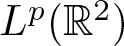 $L^p(\mathbb{R}^2)$ boundedness of the maximal average. As a corollary, we obtain the pointwise convergence of the average in r > 0 without any size assumption for a measurable m.
Given a non-negative integer n and a ring R with identity, we construct a hereditary abelian model structure on the category of left R-modules where the class of cofibrant objects coincides with 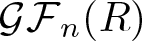 $\mathcal{GF}_n(R)$ the class of left R-modules with Gorenstein flat dimension at most n, the class of fibrant objects coincides with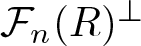 $\mathcal{F}_n(R)^\perp$ the right ${\rm Ext}$-orthogonal class of left R-modules with flat dimension at most n, and the class of trivial objects coincides with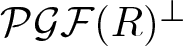 $\mathcal{PGF}(R)^\perp$ the right ${\rm Ext}$-orthogonal class of PGF left R-modules recently introduced by Šaroch and
  . The homotopy category of this model structure is triangulated equivalent to the stable category $\underline{\mathcal{GF}(R)\cap\mathcal{C}(R)}$ modulo flat-cotorsion modules and it is compactly generated when R has finite global Gorenstein projective dimension.
The second part of this paper deals with the PGF dimension of modules and rings. Our results suggest that this dimension could serve as an alternative definition of the Gorenstein projective dimension. We show, among other things, that (n-)perfect rings can be characterized in terms of Gorenstein homological dimensions, similar to the classical ones, and the global Gorenstein projective dimension coincides with the global PGF dimension.
