Contents
Article
Unique continuation properties for polyharmonic maps between Riemannian manifolds
- Part of:
-
- Published online by Cambridge University Press:
- 25 August 2021, pp. 1-28
-
- Article
- Export citation
Algorithms yield upper bounds in differential algebra
- Part of:
-
- Published online by Cambridge University Press:
- 29 September 2021, pp. 29-51
-
- Article
- Export citation
1324- and 2143-avoiding Kazhdan–Lusztig immanants and k-positivity
- Part of:
-
- Published online by Cambridge University Press:
- 14 May 2021, pp. 52-82
-
- Article
- Export citation
-
Immanants are functions on square matrices generalizing the determinant and permanent. Kazhdan–Lusztig immanants, which are indexed by permutations, involve $q=1$ specializations of Type A Kazhdan–Lusztig polynomials, and were defined by Rhoades and Skandera (2006, Journal of Algebra 304, 793–811). Using results of Haiman (1993, Journal of the American Mathematical Society 6, 569–595) and Stembridge (1991, Bulletin of the London Mathematical Society 23, 422–428), Rhoades and Skandera showed that Kazhdan–Lusztig immanants are nonnegative on matrices whose minors are nonnegative. We investigate which Kazhdan–Lusztig immanants are positive on k-positive matrices (matrices whose minors of size $k \times k$ and smaller are positive). The Kazhdan–Lusztig immanant indexed by v is positive on k-positive matrices if v avoids 1324 and 2143 and for all noninversions $i< j$ of v, either $j-i \leq k$ or $v_j-v_i \leq k$. Our main tool is Lewis Carroll’s identity.


An arithmetic property of intertwining operators for p-adic groups
- Part of:
-
- Published online by Cambridge University Press:
- 17 September 2021, pp. 83-107
-
- Article
- Export citation
PDE comparison principles for Robin problems
- Part of:
-
- Published online by Cambridge University Press:
- 23 September 2021, pp. 108-139
-
- Article
- Export citation
-
We compare the solutions of two Poisson problems in a spherical shell with Robin boundary conditions, one with given data, and one where the data have been cap symmetrized. When the Robin parameters are nonnegative, we show that the solution to the symmetrized problem has larger convex means. Sending one of the Robin parameters to $+\infty $, we obtain mixed Robin/Dirichlet comparison results in shells. We prove similar results on balls and prove a comparison principle on generalized cylinders with mixed Robin/Neumann boundary conditions.

Unitary representations of type B rational Cherednik algebras and crystal combinatorics
- Part of:
-
- Published online by Cambridge University Press:
- 29 September 2021, pp. 140-169
-
- Article
- Export citation
-
We compare crystal combinatorics of the level $2$ Fock space with the classification of unitary irreducible representations of type B rational Cherednik algebras to study how unitarity behaves under parabolic restriction. We show that the crystal operators that remove boxes preserve the combinatorial conditions for unitarity, and that the parabolic restriction functors categorifying the crystals send irreducible unitary representations to unitary representations. Furthermore, we find the supports of the unitary representations.

A $\mathcal {C}^k$-seeley-extension-theorem for Bastiani’s differential calculus
- Part of:
-
- Published online by Cambridge University Press:
- 20 October 2021, pp. 170-201
-
- Article
- Export citation
-
We generalize a classical extension result by Seeley in the context of Bastiani’s differential calculus to infinite dimensions. The construction follows Seeley’s original approach, but is significantly more involved as not only $C^k$-maps (for
 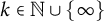 ) on (subsets of) half spaces are extended, but also continuous extensions of their differentials to some given piece of boundary of the domains under consideration. A further feature of the generalization is that we construct families of extension operators (instead of only one single extension operator) that fulfill certain compatibility (and continuity) conditions. Various applications are discussed as well.


Cohomological invariants of root stacks and admissible double coverings
- Part of:
-
- Published online by Cambridge University Press:
- 02 November 2021, pp. 202-224
-
- Article
- Export citation
Invertibility Threshold for Nevanlinna Quotient Algebras
- Part of:
-
- Published online by Cambridge University Press:
- 10 September 2021, pp. 225-244
-
- Article
- Export citation
-
Let $\mathcal {N}$ be the Nevanlinna class, and let B be a Blaschke product. It is shown that the natural invertibility criterion in the quotient algebra $\mathcal {N} / B \mathcal {N}$, that is, $|f| \ge e^{-H} $ on the set $B^{-1}\{0\}$ for some positive harmonic function H, holds if and only if the function $- \log |B|$ has a harmonic majorant on the set $\{z\in \mathbb {D}:\rho (z,\Lambda )\geq e^{-H(z)}\}$, at least for large enough functions H. We also study the corresponding class of positive harmonic functions H on the unit disc such that the latter condition holds. We also discuss the analogous invertibility problem in quotients of the Smirnov class.


Polynomiality of factorizations in reflection groups
- Part of:
-
- Published online by Cambridge University Press:
- 09 December 2021, pp. 245-266
-
- Article
- Export citation
-
We study the number of ways of factoring elements in the complex reflection groups $G(r,s,n)$ as products of reflections. We prove a result that compares factorization numbers in $G(r,s,n)$ to those in the symmetric group $S_n$, and we use this comparison, along with the Ekedahl, Lando, Shapiro, and Vainshtein (ELSV) formula, to deduce a polynomial structure for factorizations in $G(r,s,n)$.


Invariants for metabelian groups of prime power exponent, colorings, and stairs
- Part of:
-
- Published online by Cambridge University Press:
- 10 December 2021, pp. 267-297
-
- Article
- Export citation
-
We study the free metabelian group $M(2,n)$ of prime power exponent n on two generators by means of invariants $M(2,n)'\to \mathbb {Z}_n$ that we construct from colorings of the squares in the integer grid $\mathbb {R} \times \mathbb {Z} \cup \mathbb {Z} \times \mathbb {R}$. In particular, we improve bounds found by Newman for the order of $M(2,2^k)$. We study identities in $M(2,n)$, which give information about identities in the Burnside group $B(2,n)$ and the restricted Burnside group $R(2,n)$.


Euler characteristics and their congruences for multisigned Selmer groups
- Part of:
-
- Published online by Cambridge University Press:
- 10 January 2022, pp. 298-321
-
- Article
-
- You have access
- Open access
- HTML
- Export citation
-
The notion of the truncated Euler characteristic for Iwasawa modules is a generalization of the the usual Euler characteristic to the case when the Selmer groups are not finite. Let p be an odd prime, $E_{1}$ and $E_{2}$ be elliptic curves over a number field F with semistable reduction at all primes $v|p$ such that the $\operatorname {Gal}(\overline {F}/F)$-modules $E_{1}[p]$ and $E_{2}[p]$ are irreducible and isomorphic. We compare the Iwasawa invariants of certain imprimitive multisigned Selmer groups of $E_{1}$ and $E_{2}$. Leveraging these results, congruence relations for the truncated Euler characteristics associated to these Selmer groups over certain $\mathbb {Z}_{p}^{m}$-extensions of F are studied. Our results extend earlier congruence relations for elliptic curves over $\mathbb {Q}$ with good ordinary reduction at p.


On multiplicative energy of subsets of varieties
- Part of:
-
- Published online by Cambridge University Press:
- 13 January 2022, pp. 322-340
-
- Article
- Export citation
Front Cover (OFC, IFC) and matter
CJM volume 75 issue 1 Cover and Front matter
-
- Published online by Cambridge University Press:
- 22 February 2023, pp. f1-f3
-
- Article
-
- You have access
- Export citation
Back Cover (OBC, IBC) and matter
CJM volume 75 issue 1 Cover and Back matter
-
- Published online by Cambridge University Press:
- 22 February 2023, pp. b1-b2
-
- Article
-
- You have access
- Export citation