Refine listing
Actions for selected content:
1421984 results in Open Access
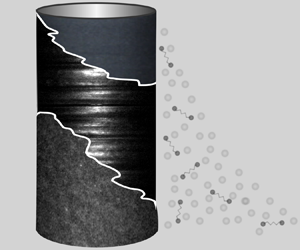
Elasto-inertial dissipation in particle-laden viscoelastic Taylor–Couette flow
-
- Journal:
- Journal of Fluid Mechanics / Volume 997 / 25 October 2024
- Published online by Cambridge University Press:
- 10 October 2024, A19
-
- Article
- Export citation
-
Many natural and industrial processes involve the flow of fluids made of solid particles suspended in non-Newtonian liquid matrices, which are challenging to control due to the fluid's nonlinear rheology. In the present work, a Taylor–Couette canonical system is used to investigate the flow of dilute to semi-dilute suspensions of neutrally buoyant spherical particles in highly elastic base polymer solutions. Friction measurement synchronized with direct flow visualization are combined to characterize the critical conditions for the onset of elasto-inertial instabilities, expected here as a direct transition to elasto-inertial turbulence (EIT). Adding a low particle volume fraction ( ${\leq }2\,\%$, dilute regime) does not affect the nature of the primary transition and reduces the critical Weissenberg number for the onset of EIT, despite a significant decrease in the apparent fluid elasticity. However, for particle volume fractions ${\geq }6\,\%$ (semi-dilute regime), EIT is no longer observed in the explored Reynolds range, suggesting an apparent relaminarization with yet not further decrease in fluid elasticity. Instead, a new regime, termed here elasto-inertial dissipative (EID), was uncovered. It originates from particle–particle interactions altering particle–polymer interactions and occurring under elasto-inertial conditions comparable to those of EIT. Increasing particle volume fraction in the semi-dilute regime and, in so, the particle contribution to the overall viscosity, delays the onset of EID similarly to what was observed previously for EIT in lower elasticity fluids. After this onset, a decrease in the pseudo-Nusselt number observed with increasing inertia and particle-to-polymer concentration ratio confirms a particle-induced alteration of energy transfer in the flow.


ROB volume 42 issue 7 Cover and Front matter
-
- Article
-
- You have access
- Export citation
Exeporfinium chloride (XF-73) nasal gel significantly reduces Staphylococcus aureus nasal carriage in cardiac surgery patients throughout surgery and the early recovery period: results from a randomized placebo-controlled Phase 2 study
-
- Journal:
- Infection Control & Hospital Epidemiology / Volume 45 / Issue 11 / November 2024
- Published online by Cambridge University Press:
- 10 October 2024, pp. 1355-1357
- Print publication:
- November 2024
-
- Article
- Export citation
Up and to the Right: The Development, Diffusion, and Impact of the Casey Life Cycle Model on Venture Capital Policy and Practice
-
- Journal:
- Enterprise & Society / Volume 26 / Issue 2 / June 2025
- Published online by Cambridge University Press:
- 10 October 2024, pp. 457-484
- Print publication:
- June 2025
-
- Article
-
- You have access
- Open access
- HTML
- Export citation
Diverse Disconnectedness: Homophily, Social Capital Inequality, and Student Experiences in Law School
-
- Journal:
- Law & Social Inquiry / Volume 50 / Issue 1 / February 2025
- Published online by Cambridge University Press:
- 10 October 2024, pp. 90-128
- Print publication:
- February 2025
-
- Article
-
- You have access
- Open access
- HTML
- Export citation
Remembering Paulin Hountondji: The Zairian Interlude
-
- Journal:
- African Studies Review / Volume 67 / Issue 2 / June 2024
- Published online by Cambridge University Press:
- 10 October 2024, pp. 464-466
-
- Article
-
- You have access
- HTML
- Export citation
Role of BT shunt in tetralogy of Fallot
-
- Journal:
- Cardiology in the Young / Volume 34 / Issue 11 / November 2024
- Published online by Cambridge University Press:
- 10 October 2024, pp. 2445-2448
-
- Article
- Export citation
Recurrent acute kidney injury is associated with delayed language development in infants with Congenital Heart Disease
-
- Journal:
- Cardiology in the Young / Volume 34 / Issue 11 / November 2024
- Published online by Cambridge University Press:
- 10 October 2024, pp. 2377-2381
-
- Article
- Export citation
Failure of China's COVID-19 health diplomacy in wining hearts and minds in Thailand and the Philippines: political efficacy constrained by local politics
-
- Journal:
- International Journal of Asian Studies / Volume 22 / Issue 1 / January 2025
- Published online by Cambridge University Press:
- 10 October 2024, pp. 83-102
-
- Article
-
- You have access
- Open access
- HTML
- Export citation
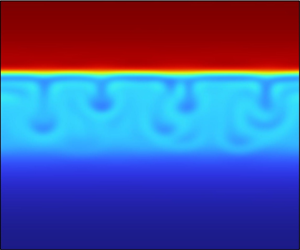
Phase segregation of a partially miscible binary mixture subjected to an external force field
-
- Journal:
- Journal of Fluid Mechanics / Volume 997 / 25 October 2024
- Published online by Cambridge University Press:
- 10 October 2024, A29
-
- Article
-
- You have access
- Open access
- HTML
- Export citation
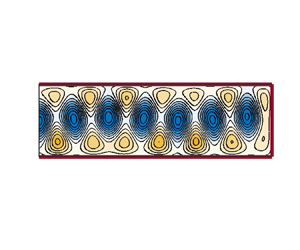
Steady solutions of quasi-geostrophic flows in basins, gulfs and channels on a β-plane
-
- Journal:
- Journal of Fluid Mechanics / Volume 997 / 25 October 2024
- Published online by Cambridge University Press:
- 10 October 2024, A24
-
- Article
- Export citation
-
Nonlinear steady solutions of the barotropic quasi-geostrophic equation in basins, gulfs and channels on a $\beta$-plane are presented. The domains are rectangular with arbitrary aspect ratios. The two-dimensional solutions assume a linear relationship between the potential vorticity $q$ and the stream function $\psi$. The sign of the slope in the linear $q\unicode{x2013}\psi$ relationship defines two broad sets of solutions. For a positive slope, the solutions in a closed basin correspond to the inertial gyres derived by Fofonoff in 1954. The negative slope solutions consist of normal modes that can be resonant. For gulfs and channels, the conditions at the open boundaries are almost arbitrary flows entering or leaving the domain. Such conditions allow a great variety of solutions in the interior, characterised mainly by arrays of vortices with alternate signs. Several examples are presented and discussed.


SURESHKUMAR MUTHUKUMARAN, THE TROPICAL TURN: AGRICULTURAL INNOVATION IN THE ANCIENT MIDDLE EAST AND THE MEDITERRANEAN. Oakland, CA: University of California Press, 2023. Pp. xix + 294, illus., maps. isbn 9780520390836 (hbk) £80.00; 9780520390843 (pbk) £30.00; 9780520390850 e-book.
-
- Journal:
- The Journal of Roman Studies / Volume 114 / November 2024
- Published online by Cambridge University Press:
- 10 October 2024, pp. 254-255
- Print publication:
- November 2024
-
- Article
- Export citation
Social Capital, Social Health Insurance, and Health-related Quality of Life among People with Chronic Disease: Cultural and Ideational Perspectives
-
- Journal:
- Social Policy and Society , First View
- Published online by Cambridge University Press:
- 10 October 2024, pp. 1-18
-
- Article
-
- You have access
- Open access
- HTML
- Export citation

Toward ab initio molecular simulation of reacting air: Mach 15 air flow over a blunt wedge
-
- Journal:
- Journal of Fluid Mechanics / Volume 997 / 25 October 2024
- Published online by Cambridge University Press:
- 10 October 2024, A27
-
- Article
- Export citation
-
We present a Mach 15 air flow over a blunt two-dimensional wedge simulated using the direct molecular simulation method. As electronically excited states are not modelled, the resulting air mixture around the wedge contains the electronic ground states only, namely ${\rm N}_2(\text {X}^1 \varSigma _g^{+})$, ${\rm O}_2(\text {X}^3 \varSigma _g^{-})$, ${\rm NO}(\text {X}^2\varPi _r)$, ${\rm N}(^4{\rm S})$ and ${\rm O}(^3{\rm P})$. All the potential energy surfaces (PESs) that are used to model the various interactions between air particles are ab initio, with two notable exceptions, namely ${\rm N}_2+{\rm NO}$ and ${\rm O}_2+{\rm NO}$. At the selected free-stream conditions, strong vibrational non-equilibrium is observed in the shock layer. The flow is characterized by significant chemical activity, with near-complete oxygen dissociation, considerable formation of NO and minimal molecular nitrogen dissociation. Complex mass diffusion kinetics, driven by composition, temperature and pressure gradients, are identified in the shock layer. All these physical phenomena are directly coupled to, and responsible for, the mechanics of the gas flow and are all solely traceable to the PESs’ inputs, without the need for any thermochemical models, mixing rules or constitutive laws for transport properties. Because the flow is entirely at near-continuum conditions, it is a gas-phase thermophysics benchmark that is useful to enhance the fidelity of continuum models used in computational fluid dynamics of hypersonic flows.


Longitudinal echocardiographic parameters for evaluation of pulmonary hypertension in preterm infants with very low birth weight
-
- Journal:
- Cardiology in the Young / Volume 34 / Issue 11 / November 2024
- Published online by Cambridge University Press:
- 10 October 2024, pp. 2388-2397
-
- Article
- Export citation
Perturbations of norm-additive maps between continuous function spaces
- Part of
-
- Journal:
- Proceedings of the Edinburgh Mathematical Society / Volume 67 / Issue 4 / November 2024
- Published online by Cambridge University Press:
- 10 October 2024, pp. 1099-1114
-
- Article
- Export citation
-
Let $X, Y$ be two locally compact Hausdorff spaces and $T:C_0(X)\rightarrow C_0(Y)$ be a standard surjective ɛ-norm-additive map, i.e.
 \begin{equation*}\big|\|T(f)+T(g)\|-\|f+g\|\big|\leq \varepsilon,\;{\rm for\;all}\; f, g\in C_0(X).\end{equation*}
Then there exist a homeomorphism $\varphi:Y\rightarrow X$ and a continuous function $\lambda:Y\rightarrow\lbrace\pm1\rbrace$ such that
 \begin{equation*}|T(f)(y)-\lambda(y)f(\varphi(y))|\leq\frac{3}{2}\varepsilon,\;{\rm for\;all}\;y\in Y,\;f\in C_0(X).\end{equation*}
The estimate ‘ $\frac{3}{2}\varepsilon$’ is optimal. And this result can be regarded as a new nonlinear extension of the Banach–Stone theorem.


Gary Dorrien, Anglican Identities: Logos Idealism, Imperial Whiteness, Commonweal Ecumenism (Waco, TX: Baylor University Press, 2024).
-
- Journal:
- Journal of Anglican Studies , First View
- Published online by Cambridge University Press:
- 10 October 2024, pp. 1-3
-
- Article
- Export citation
Global longitudinal strain is a surrogate marker for time constant of isovolumic relaxation in post-Fontan operation patients with single right ventricle and preserved ejection fraction
-
- Journal:
- Cardiology in the Young / Volume 34 / Issue 12 / December 2024
- Published online by Cambridge University Press:
- 10 October 2024, pp. 2587-2595
-
- Article
- Export citation
The hidden dangers of the coronary anomalies: an ARCAPA case report
-
- Journal:
- Cardiology in the Young / Volume 34 / Issue 9 / September 2024
- Published online by Cambridge University Press:
- 10 October 2024, pp. 2005-2006
-
- Article
- Export citation
Amar Sohal: The Muslim Secular: Parity and the Politics of India's Partition. (Oxford: Oxford University Press, 2023. Pp. x, 328.)
-
- Journal:
- The Review of Politics / Volume 86 / Issue 4 / Fall 2024
- Published online by Cambridge University Press:
- 10 October 2024, pp. 565-568
-
- Article
- Export citation
