Refine listing
Actions for selected content:
1355424 results in Open Access

Formation of turbulent secondary vortex street in absence of vortex shedding instability
-
- Journal:
- Journal of Fluid Mechanics / Volume 1024 / 10 December 2025
- Published online by Cambridge University Press:
- 26 November 2025, A7
-
- Article
-
- You have access
- Open access
- HTML
- Export citation
Canonization of a random circulant graph by counting walks
- Part of
-
- Journal:
- Combinatorics, Probability and Computing / Volume 35 / Issue 2 / March 2026
- Published online by Cambridge University Press:
- 26 November 2025, pp. 178-206
-
- Article
- Export citation
-
It is well known that almost all graphs are canonizable by a simple combinatorial routine known as colour refinement, also referred to as the 1-dimensional Weisfeiler–Leman algorithm. With high probability, this method assigns a unique label to each vertex of a random input graph and, hence, it is applicable only to asymmetric graphs. The strength of combinatorial refinement techniques becomes a subtle issue if the input graphs are highly symmetric. We prove that the combination of colour refinement and vertex individualization yields a canonical labelling for almost all circulant digraphs (i.e., Cayley digraphs of a cyclic group). This result provides first evidence of good average-case performance of combinatorial refinement within the class of vertex-transitive graphs. Remarkably, we do not even need the full power of the colour refinement algorithm. We show that the canonical label of a vertex $v$ can be obtained just by counting walks of each length from $v$ to an individualized vertex. Our analysis also implies that almost all circulant graphs are compact in the sense of Tinhofer, that is, their polytops of fractional automorphisms are integral. Finally, we show that a canonical Cayley representation can be constructed for almost all circulant graphs by the more powerful 2-dimensional Weisfeiler–Leman algorithm.


EARLY RELIGION IN THE NEAR EAST - Nicola Laneri, From Ritual to God in the Ancient Near East. Tracing the Origins of Religion. Pp. xiv + 251, ills, map. Cambridge: Cambridge University Press, 2024. Cased, £100, US$130. ISBN: 978-1-009-30664-5.
-
- Journal:
- The Classical Review , First View
- Published online by Cambridge University Press:
- 26 November 2025, pp. 1-3
-
- Article
- Export citation
THE ROMAN PROVINCE OF ASIA - Bradley Jordan, Imperial Power, Provincial Government, and the Emergence of Roman Asia, 133 bce–14 ce. Pp. xiv + 276. Oxford: Oxford University Press, 2023. Cased, £88, US$115. ISBN: 978-0-19-888706-5.
-
- Journal:
- The Classical Review , First View
- Published online by Cambridge University Press:
- 26 November 2025, pp. 1-2
-
- Article
- Export citation
Liouville-type theorems for the quasilinear elliptic equation and inequality with logarithmic nonlinearity
- Part of
-
- Journal:
- Proceedings of the Royal Society of Edinburgh. Section A: Mathematics , First View
- Published online by Cambridge University Press:
- 26 November 2025, pp. 1-15
-
- Article
- Export citation
-
This paper is concerned with Liouville-type theorems of positive weak solutions to elliptic $m$-Laplace equation and inequality with the logarithmic nonlinearity $u^q(\log u)^p (q,p\geqslant0)$. Using a direct Bernstein method we obtain a first range of values of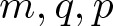 $m,q,p$ in which all positive weak solutions of equation are constants, this holds in the following cases: (i) $1 \lt m \lt 2$, $m-1 \lt q \lt 1$, $0 \lt p \lt q$; (ii)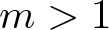 $m \gt 1$, $q\geqslant1$,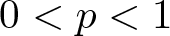 $0 \lt p \lt 1$. When $q=1$, the positive weak solutions are required to be bounded. Based on transformation of inequality and the utilization of suitable cut-off functions, we establish a Liouville-type theorem for positive weak solutions of inequality; this result also remains valid on complete noncompact Riemannian manifold.


Infrastructural Attachments: Austerity, Sovereignty, and Expertise in Kenya by Emma Park Durham and London: Duke University Press, 2024. xv + 282 pp. US$28.95 (pbk).
-
- Journal:
- The Journal of Modern African Studies / Volume 63 / Issue 2 / June 2025
- Published online by Cambridge University Press:
- 26 November 2025, pp. 171-172
-
- Article
- Export citation
Subnational ethnic conflict: the case of the African Great Lakes Region
-
- Journal:
- The Journal of Modern African Studies / Volume 63 / Issue 2 / June 2025
- Published online by Cambridge University Press:
- 26 November 2025, pp. 149-169
-
- Article
-
- You have access
- Open access
- HTML
- Export citation
Going Home: Ngũgĩ wa Thiong’o
-
- Journal:
- African Studies Review , First View
- Published online by Cambridge University Press:
- 26 November 2025, pp. 1-4
-
- Article
-
- You have access
- HTML
- Export citation
Selective Humanitarianism in Asylum Policies: Yezidi Refugees in Germany and France
-
- Journal:
- Nationalities Papers , FirstView
- Published online by Cambridge University Press:
- 26 November 2025, pp. 1-16
-
- Article
-
- You have access
- Open access
- HTML
- Export citation
Depression, Anxiety, and PTSD Among Southern California Residents After the January 2025 Los Angeles Wildfires
-
- Journal:
- Disaster Medicine and Public Health Preparedness / Volume 19 / 2025
- Published online by Cambridge University Press:
- 26 November 2025, e327
-
- Article
-
- You have access
- Open access
- HTML
- Export citation
MOA volume 63 issue 2 Cover and Front matter
-
- Journal:
- The Journal of Modern African Studies / Volume 63 / Issue 2 / June 2025
- Published online by Cambridge University Press:
- 26 November 2025, pp. f1-f3
-
- Article
-
- You have access
- Export citation
ITALIAN INSCRIPTIONS - Marco Buonocore (ed.), Inscriptiones Calabriae Apuliae Samnii Sabinorum Piceni Latinae. Regio Italiae quarta. Supplementum. Fasciculus 4: Sabini (CIL IX 8188–9004). (Corpus Inscriptionum Latinarum 9.) Pp. 64 + 534, ills, colour map. Berlin and Boston: De Gruyter, 2022. Cased, £226.50, €249, US$290. ISBN: 978-3-11-077109-1.
-
- Journal:
- The Classical Review , First View
- Published online by Cambridge University Press:
- 26 November 2025, pp. 1-3
-
- Article
- Export citation

Modelling external particle jet formation in explosive granular dispersal systems
-
- Journal:
- Journal of Fluid Mechanics / Volume 1024 / 10 December 2025
- Published online by Cambridge University Press:
- 26 November 2025, A5
-
- Article
- Export citation

Asymptotic flow states in turbulent viscoelastic Taylor–Couette flow: transition between states and commensurate scale interaction
-
- Journal:
- Journal of Fluid Mechanics / Volume 1024 / 10 December 2025
- Published online by Cambridge University Press:
- 26 November 2025, A2
-
- Article
- Export citation
-
Asymptotic flow states with limiting drag modification are explored via direct numerical simulations in a moderate-curvature viscoelastic Taylor–Couette flow of the FENE-P fluid. We show that asymptotic drag modification (ADM) states are achieved at different solvent-to-total viscosity ratios ( $\beta$) by gradually increasing the Weissenberg number from 10 to 150. As $\beta$ decreases from 0.99 to 0.90, for the first time, a continuous transition pathway is realised from the maximum drag reduction to the maximum drag enhancement, revealing a complete phase diagram of the ADM states. This transition originates from the competition between Reynolds stress reduction and polymer stress development, namely, a mechanistic change in angular momentum transport. Reduced $\beta$ has been found to effectively enhance elastic instability, suppressing large-scale Taylor vortices while promoting the formation of small-scale elastic Görtler vortices. The enhancement and in turn dominance of small-scale structures result in stronger incoherent transport, facilitating efficient mixing and substantial polymer stress development that ultimately drives the AMD state transition. Further analysis of the scale-decomposed transport equation of turbulent kinetic energy reveals an inverse energy cascade in the gap centre, which is attributed to the polymer-induced energy redistribution: polymers extract more energy from large scales than they can dissipate, with the excess energy redirected to smaller scales. However, the energy accumulating at smaller scales cannot be dissipated immediately and is consequently transferred back to larger scales via nonlinear interactions, thereby unravelling a novel polymer-mediated cycle for the reverse energy cascade. Overall, this study unravels the challenging puzzle of the existence of distinct dynamically connected ADM states and paves the way for coordinated experimental, simulation and theoretical studies of transition pathways to desired ADM states.


Partial Hopf actions on generalized matrix algebras
- Part of
-
- Journal:
- Glasgow Mathematical Journal , First View
- Published online by Cambridge University Press:
- 26 November 2025, pp. 1-22
-
- Article
- Export citation
-
Let $\Bbbk$ be a field, $H$ a Hopf algebra over $\Bbbk$, and $R = (_iM_j)_{1 \leq i,j \leq n}$ a generalized matrix algebra. In this work, we establish necessary and sufficient conditions for $H$ to act partially on $R$. To achieve this, we introduce the concept of an opposite covariant pair and demonstrate that it satisfies a universal property. In the special case where $H = \Bbbk G$ is the group algebra of a group $G$, we recover the conditions given in [7] for the existence of a unital partial action of $G$ on $R$.
$R$.


RELIGIOUS ASSOCIATIONS - Annelies Cazemier / Stella Skaltsa (edd.), Associations and Religion in Context. The Hellenistic and Roman Eastern Mediterranean. (Kernos Supplément 39.) Pp. 381, b/w & colour ills. Liège: Presses Universitaires de Liège, 2022. Paper, €40. ISBN: 978-2-87562-304-1.
-
- Journal:
- The Classical Review , First View
- Published online by Cambridge University Press:
- 26 November 2025, pp. 1-3
-
- Article
- Export citation
Recension de: Speaking Truth to Canadians about Their Public Service
-
- Journal:
- Canadian Journal of Political Science/Revue canadienne de science politique / Volume 59 / Issue 1 / March 2026
- Published online by Cambridge University Press:
- 26 November 2025, pp. 242-243
-
- Article
-
- You have access
- Open access
- HTML
- Export citation
DEATH AND THE ORESTEIA - Amit Shilo, Beyond Death in the Oresteia. Poetics, Ethics, and Politics. Pp. xii + 247. Cambridge: Cambridge University Press, 2022. Cased, £75, US$99.99. ISBN: 978-1-108-83274-8.
-
- Journal:
- The Classical Review , First View
- Published online by Cambridge University Press:
- 26 November 2025, pp. 1-2
-
- Article
- Export citation
Maurizio Ferraris lecteur de Kant. Le nouveau réalisme et le renversement de l’architectonique kantienne
-
- Journal:
- Dialogue: Canadian Philosophical Review / Revue canadienne de philosophie , First View
- Published online by Cambridge University Press:
- 26 November 2025, pp. 1-17
-
- Article
-
- You have access
- Open access
- HTML
- Export citation
HORRIFIC ELEMENTS IN EARLY GREEK TEXTS - Carman Romano, Theologies of Fear in Early Greek Epic. Pp. x + 221. London and New York: Routledge, 2025. Cased, £135, US$180. ISBN: 978-1-032-68989-0.
-
- Journal:
- The Classical Review , First View
- Published online by Cambridge University Press:
- 26 November 2025, pp. 1-3
-
- Article
- Export citation
