Refine listing
Actions for selected content:
142921 results in Open Access
Ukrainian War Humor and Civic Activism in 2022
-
- Journal:
- Nationalities Papers , FirstView
- Published online by Cambridge University Press:
- 31 October 2024, pp. 1-38
-
- Article
-
- You have access
- Open access
- HTML
- Export citation
Epilogue
- from Part II - Kicking out the Turks
-
- Book:
- Foreign in Two Homelands
- Published online:
- 31 August 2024
- Print publication:
- 31 October 2024, pp 305-318
-
- Chapter
-
- You have access
- Open access
- HTML
- Export citation
Predicting mobility aspirations in Lebanon and Turkey: a data-driven exploration using machine learning
- Part of
-
- Journal:
- Data & Policy / Volume 6 / 2024
- Published online by Cambridge University Press:
- 31 October 2024, e47
-
- Article
-
- You have access
- Open access
- HTML
- Export citation
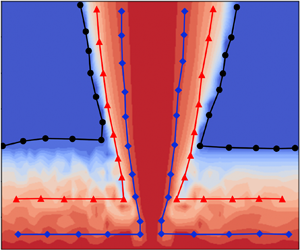
Predicting bifurcation and amplitude death characteristics of thermoacoustic instabilities from PINNs-derived van der Pol oscillators
-
- Journal:
- Journal of Fluid Mechanics / Volume 998 / 10 November 2024
- Published online by Cambridge University Press:
- 31 October 2024, A46
-
- Article
-
- You have access
- Open access
- HTML
- Export citation
Impact of neonatal sepsis on serum selenium levels: Evidence of decreased selenium in sepsis-affected neonates
-
- Journal:
- Journal of Clinical and Translational Science / Volume 8 / Issue 1 / 2024
- Published online by Cambridge University Press:
- 31 October 2024, e183
-
- Article
-
- You have access
- Open access
- HTML
- Export citation
A leader I can(not) trust: understanding the path from epistemic trust to political leader choices via dogmatism
-
- Journal:
- Politics and the Life Sciences / Volume 44 / Issue 1 / Spring 2025
- Published online by Cambridge University Press:
- 31 October 2024, pp. 88-107
-
- Article
-
- You have access
- Open access
- HTML
- Export citation
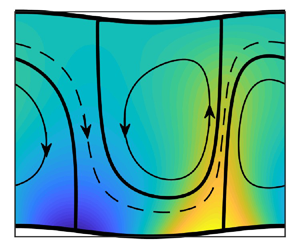
On the intensification of thermal drift
-
- Journal:
- Journal of Fluid Mechanics / Volume 998 / 10 November 2024
- Published online by Cambridge University Press:
- 31 October 2024, A41
-
- Article
-
- You have access
- Open access
- HTML
- Export citation
-
Consider the flow through a channel with grooved edges on one (or both) side(s). If heating is applied to the boundaries, thermal drift is the flow generated by the interaction of the groove and heating patterns. It is known that, if one side of a channel is smooth while the other is grooved, the application of heating forms a so-called ‘thermal drift engine’. Two thermal drift engines are activated if both surfaces are grooved, and these may reinforce or oppose each other. Carefully choosing these engines can lead to an intensification of the thermal drift. The interplay of two drift engines is explored using a horizontal slot with grooves that have a sinusoidal profile with a prescribed wavenumber $\alpha $. It is shown that the strength of the flow decreases proportional to $\alpha $ as $\alpha \to 0$ and proportional to ${\alpha ^{ - 1}}$ as $\alpha \to \infty $. We determine the value of $\alpha $ corresponding to the strongest flow and characterize how the conclusions should be modified if a uniform heating component is added to the heating pattern.


The Study of Intraparty Frictions: Conceptual Reflections on Preference Heterogeneity, Disagreement, and Conflict
-
- Journal:
- Perspectives on Politics / Volume 23 / Issue 3 / September 2025
- Published online by Cambridge University Press:
- 31 October 2024, pp. 885-900
- Print publication:
- September 2025
-
- Article
-
- You have access
- Open access
- HTML
- Export citation
Combining Type Checking and Set Constraint Solving to Improve Automated Software Verification
-
- Journal:
- Theory and Practice of Logic Programming / Volume 24 / Issue 5 / September 2024
- Published online by Cambridge University Press:
- 31 October 2024, pp. 1011-1030
-
- Article
-
- You have access
- Open access
- HTML
- Export citation
-
This technical note shows how we have combined prescriptive type checking and constraint solving to increase automation during software verification. We do so by defining a type system and implementing a typechecker for $\{log\}$ (read ‘setlog’), a Constraint Logic Programming language and satisfiability solver based on set theory. The constraint solver is proved to be safe w.r.t. the type system. Two industrial-strength case studies are presented where this combination is used with very good results.

“Like Us, but Not Quite Us”: Researching Gender Politics in Autocratic Contexts
-
- Journal:
- Perspectives on Politics / Volume 23 / Issue 2 / June 2025
- Published online by Cambridge University Press:
- 31 October 2024, pp. 705-716
- Print publication:
- June 2025
-
- Article
-
- You have access
- Open access
- HTML
- Export citation
Part II - Kicking out the Turks
-
- Book:
- Foreign in Two Homelands
- Published online:
- 31 August 2024
- Print publication:
- 31 October 2024, pp 175-318
-
- Chapter
-
- You have access
- Open access
- HTML
- Export citation
Dedication
-
- Book:
- Foreign in Two Homelands
- Published online:
- 31 August 2024
- Print publication:
- 31 October 2024, pp v-v
-
- Chapter
-
- You have access
- Open access
- HTML
- Export citation
Concordances
-
- Book:
- Cretan Hieroglyphic
- Published online:
- 17 October 2024
- Print publication:
- 31 October 2024, pp 288-298
-
- Chapter
-
- You have access
- Open access
- Export citation
Access scarcity, legislative generalization, and the business-oriented shift of the congressional agenda
-
- Journal:
- Business and Politics / Volume 27 / Issue 2 / June 2025
- Published online by Cambridge University Press:
- 31 October 2024, pp. 194-215
-
- Article
-
- You have access
- Open access
- HTML
- Export citation
Epigraph
-
- Book:
- Foreign in Two Homelands
- Published online:
- 31 August 2024
- Print publication:
- 31 October 2024, pp vi-viii
-
- Chapter
-
- You have access
- Open access
- HTML
- Export citation
Radicalised Conservatism in the Hungarian Constitution: An Analysis of Justifications for Rule of Law Backsliding
-
- Journal:
- European Constitutional Law Review / Volume 20 / Issue 3 / September 2024
- Published online by Cambridge University Press:
- 31 October 2024, pp. 424-450
-
- Article
-
- You have access
- Open access
- HTML
- Export citation
Clinical information extraction for lower-resource languages and domains with few-shot learning using pretrained language models and prompting
-
- Journal:
- Natural Language Processing / Volume 31 / Issue 5 / September 2025
- Published online by Cambridge University Press:
- 31 October 2024, pp. 1210-1233
-
- Article
-
- You have access
- Open access
- HTML
- Export citation
-
A vast amount of clinical data are still stored in unstructured text. Automatic extraction of medical information from these data poses several challenges: high costs of clinical expertise, restricted computational resources, strict privacy regulations, and limited interpretability of model predictions. Recent domain adaptation and prompting methods using lightweight masked language models showed promising results with minimal training data and allow for application of well-established interpretability methods. We are first to present a systematic evaluation of advanced domain-adaptation and prompting methods in a lower-resource medical domain task, performing multi-class section classification on German doctor’s letters. We evaluate a variety of models, model sizes (further-pre)training and task settings, and conduct extensive class-wise evaluations supported by Shapley values to validate the quality of small-scale training data and to ensure interpretability of model predictions. We show that in few-shot learning scenarios, a lightweight, domain-adapted pretrained language model, prompted with just 20 shots per section class, outperforms a traditional classification model, by increasing accuracy from $48.6\%$ to $79.1\%$. By using Shapley values for model selection and training data optimization, we could further increase accuracy up to $84.3\%$. Our analyses reveal that pretraining of masked language models on general-language data is important to support successful domain-transfer to medical language, so that further-pretraining of general-language models on domain-specific documents can outperform models pretrained on domain-specific data only. Our evaluations show that applying prompting based on general-language pretrained masked language models combined with further-pretraining on medical-domain data achieves significant improvements in accuracy beyond traditional models with minimal training data. Further performance improvements and interpretability of results can be achieved, using interpretability methods such as Shapley values. Our findings highlight the feasibility of deploying powerful machine learning methods in clinical settings and can serve as a process-oriented guideline for lower-resource languages and domains such as clinical information extraction projects.


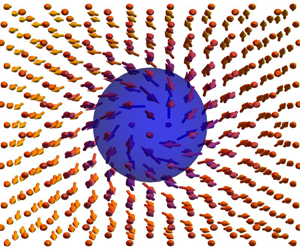
Odd viscous flow past a sphere at low but non-zero Reynolds numbers
-
- Journal:
- Journal of Fluid Mechanics / Volume 998 / 10 November 2024
- Published online by Cambridge University Press:
- 31 October 2024, A40
-
- Article
-
- You have access
- Open access
- HTML
- Export citation
Dedication
-
- Book:
- The IPCC and the Politics of Writing Climate Change
- Published online:
- 04 July 2024
- Print publication:
- 31 October 2024, pp v-vi
-
- Chapter
-
- You have access
- Open access
- HTML
- Export citation
List of Contributors
-
- Book:
- Cretan Hieroglyphic
- Published online:
- 17 October 2024
- Print publication:
- 31 October 2024, pp xvi-xvii
-
- Chapter
-
- You have access
- Open access
- Export citation
