To save content items to your account,
please confirm that you agree to abide by our usage policies.
If this is the first time you use this feature, you will be asked to authorise Cambridge Core to connect with your account.
Find out more about saving content to .
To save content items to your Kindle, first ensure no-reply@cambridge.org
is added to your Approved Personal Document E-mail List under your Personal Document Settings
on the Manage Your Content and Devices page of your Amazon account. Then enter the ‘name’ part
of your Kindle email address below.
Find out more about saving to your Kindle.
Note you can select to save to either the @free.kindle.com or @kindle.com variations.
‘@free.kindle.com’ emails are free but can only be saved to your device when it is connected to wi-fi.
‘@kindle.com’ emails can be delivered even when you are not connected to wi-fi, but note that service fees apply.
Machine reading comprehension (MRC) refers to the process of instructing machines to comprehend and respond to inquiries based on a provided text. There are two primary methodologies for achieving this: extracting answers directly from the text or predicting them. Extracting answers involves anticipating the specific segment of text containing the answer, pinpointed by its starting and ending indices within the paragraph. Despite the increasing interest in MRC, exploration within the framework of the Arabic language faces limitations due to various challenges. A significant impediment arises from the inadequacy of resources available for Arabic textual content, which impedes the development of effective models. Furthermore, the inherent intricacies of Arabic, manifesting in its diverse linguistic forms including classical, modern standard, and colloquial, present distinctive hurdles for tasks involving language comprehension. This paper proposes an enhanced version of the bidirectional attention flow (BIDAF) model for Arabic MRC, constructed upon the Arabic Span-Extraction-based Reading Comprehension Benchmark (ASER). ASER comprises 10,000 sets of questions, answers, and passages, partitioned into a training set constituting 90% of the data and a testing set making up the remaining 10%. By introducing a new input feature based on parts-of-speech (POS) word embeddings and replacing Bidirectional Long Short-Term Memory (bi-LSTM) with bidirectional gated recurrent unit, significant improvements were observed. Eight different POS word embeddings were generated using both Continuous Bag of Words (CBOW) and Skip-gram methods, with varying dimensionalities. Evaluation metrics, including exact match (EM) and F1-measure, were utilized to assess model performance, with emphasis on the latter for its accuracy. The proposed enhanced BIDAF model achieved a remarkable accuracy of 75.22% on the ASER dataset, demonstrating its efficacy in Arabic MRC tasks. Additionally, rigorous statistical evaluation using a two-tailed paired samples t-test further validated the findings, highlighting the significance of the proposed enhancements in advancing Arabic language processing capabilities.
A mass casualty incident (MCI) is unpredictable and involves many casualties at the same time and place. This brief report will present the results from an evaluation a full-scale MCI exercise, aiming to increase preparedness for such events, from the perspectives of future health-care professionals, as well as personnel in various emergency teams taking part in MCI response.
Methods
All participants in a 2-day, full-scale MCI exercise (N = 206) were invited to participate in an investigator-developed survey.
Results
In total, 124 participants (60.2%) responded to the questionnaire. Most of the respondents were satisfied with the information and frames of the full-scale MCI exercise. Based on their experiences, over half of the respondents perceived that the county ambulance, police, and fire departments were well prepared in case of an MCI in the future. Reported areas of improvement were specifically related to communication lines and triage.
Conclusion
Weakness in communication lines and triage were assumed a threat to effective handling of MCIs. However, further studies are needed to decide the content needed in MCI exercises to effectively increase regional preparedness for such events.
In the concluding chapter, I look back at the question I began with and the answer I found in the practice of writing. I re-visit accounts of science and politics and describe the three sides to this relationship that I observed in the IPCC. I identify sites within the UNFCCC that have been designed to bring climate science and climate politics closer together, such as in the Global Stocktake of the Paris Agreement. While this brings accountability against the approved knowledge base, it is likely to further increase the political pressure on the IPCC as an organisation and as a practice for writing climate change. From the IPCC’s location in global climate politics, I move inward to the actors, activities and forms of authority that constitute and shape this practice of writing. The book reveals the importance of looking beyond scientific and political forms of authority and describes why the TSUs matter as actors that have the potential to uphold or challenge the scientific order of relations. I explore the implications of science as a site of politics, the global asymmetries in the knowledge economy, and their effects on participation for the design of new intergovernmental assessment bodies, which from the outset must design for meaningful participation by all in these critical sites of agreement-making.
The book begins in the Turkish beach town of Şarköy, home to a community of first- and second-generation return migrants who were interviewed for this book. These returnees are just some of the millions of people who have journeyed back and forth between Turkey and Germany for over 60 years. The introduction lays out the book’s four core arguments, which together reveal that Turkish-German migration history is far more dynamic than typically told. First, return migration was not an illusion or unrealized dream but rather a core component of all migrants’ lives, and migration was not a one-directional event but rather a transnational process of reciprocal exchange that fundamentally reshaped both countries’ politics, societies, economies, and cultures. Second, migration introduced new ambivalence into European identities: although Germans assailed Turks’ alleged inability to integrate, they had integrated enough to be criticized in Turkey as “Germanized Turks” (Almancı). Third, examining West German efforts to “kick out” the Turks in the 1980s exposes the reality of racism in the liberal, democratic Federal Republic of Germany. Finally, including Muslims and Turks in European history expands our idea of what “Europe” is and who “Europeans” are.
Working equids support the livelihoods of millions of low-income households worldwide and face several welfare challenges. Although equipment-related wounds are common, little is known about specific risk factors. This cross-sectional study surveyed equids used for cart-work in three Ethiopian towns. Number, size, severity and location of wounds were recorded for each animal, as well as work equipment characteristics and indicators of equipment fit and assembly. Questionnaires were conducted with each cart-driver focusing on equipment practices and attitudes. Logistic regression models were generated to investigate associations between equipment-related wounds (outcome) and equipment, work, driver and animal-related factors (predictors). In total, 369 equids and cart-drivers were surveyed. The prevalence of equipment-related wounds was 72.6% (268/369) with girth wounds being the predominant wound type in horses (50%; 122/244) while donkeys had predominantly shaft-related wounds (59%; 72/122). Donkeys were two times more likely to have equipment-related wounds than horses. The presence of equipment-related wounds was associated with factors such as previously having wounds, inadequate collar positioning and using purchased equipment compared to partly home-made equipment. Characteristics of specific equipment components were also associated with certain wound types, such as narrow saddle pressure points and saddle wounds. Equipment-related wounds are highly prevalent in working equids, representing a serious welfare concern. Factors relating to equipment design, fit and assembly were associated with the presence of wounds. Importantly, species differences require tailoring of preventive approaches amongst working equids. A better understanding of work equipment should therefore be promoted as part of wound prevention and animal welfare strategies.
Challenging the myth of non-return, this chapter shows that, by the 1970s, many guest workers did want to return to Turkey. But instead of support, they encountered opposition from the Turkish government. In the 1970s, the link between return migration and financial investments dominated bilateral discussions between Turkey and West Germany. After the Oil Crisis, West Germany devised bilateral policies to promote remigration. Turkey, then mired in unemployment, hyperinflation, and debt, actively resisted those efforts. The Turkish government realized that guest workers played a significant role in mitigating the country’s economic crisis. To repay its foreign debt, Turkey needed guest workers’ remittance payments in high-performing Deutschmarks. If guest workers returned to Turkey, then that stream would dry up. Turkish officials thus strove to prevent mass return migration at all costs – even when it contradicted guest workers’ interests. These tensions also manifested in Turkey’s charging of exorbitant fees for citizens abroad who sought exemptions from mandatory military service, prompting young migrants to create an activist organization that critiqued this policy. The knowledge that they were unwanted in both countries widened the rift between the migrants and their home country, which disparaged them as “Germanized” yet relied on them as “remittance machines.”
We study the autophoretic motion of a spherical active particle interacting chemically and hydrodynamically with its fluctuating environment in the limit of rapid diffusion and slow viscous flow. Then, the chemical and hydrodynamic fields can be expressed in terms of integrals. The resulting boundary-domain integral equations provide a direct way of obtaining the traction on the particle, requiring the solution of linear integral equations. An exact solution for the chemical and hydrodynamic problems is obtained for a particle in an unbounded domain. For motion near boundaries, we provide corrections to the unbounded solutions in terms of chemical and hydrodynamic Green's functions, preserving the dissipative nature of autophoresis in a viscous fluid for all physical configurations. Using this, we give the fully stochastic update equations for the Brownian trajectory of an autophoretic particle in a complex environment. First, we analyse the Brownian dynamics of particles capable of complex motion in the bulk. We then introduce a chemically permeable planar surface of two immiscible liquids in the vicinity of the particle and provide explicit solutions to the chemo-hydrodynamics of this system. Finally, we study the case of an isotropically phoretic particle hovering above an interface as a function of interfacial solute permeability and viscosity contrast.
Understanding the generation of large-scale magnetic fields and flows in magnetohydro-dynamical (MHD) turbulence remains one of the most challenging problems in astrophysical fluid dynamics. Although much work has been done on the kinematic generation of large-scale magnetic fields by turbulence, relatively little attention has been paid to the much more difficult problem in which fields and flows interact on an equal footing. The aim is to find conditions for long-wavelength instabilities of stationary MHD states. Here, we first revisit the formal exposition of the long-wavelength linear instability theory, showing how long-wavelength perturbations are governed by four mean field tensors; we then show how these tensors may be calculated explicitly under the ‘short-sudden’ approximation for the turbulence. For MHD states with relatively little disorder, the linear theory works well: average quantities can be readily calculated, and stability to long-wavelength perturbations determined. However, for disordered basic states, linear perturbations can grow without bound and the purely linear theory, as formulated, cannot be applied. We then address the question of whether there is a linear response for sufficiently weak mean fields and flows in a dynamical (nonlinear) evolution, where perturbations are guaranteed to be bounded. As a preliminary study, we first address the nature of the response in a series of one-dimensional maps. For the full MHD problem, we show that in certain circumstances, there is a clear linear response; however, in others, mean quantities – and hence the nature of the response – can be difficult to calculate.
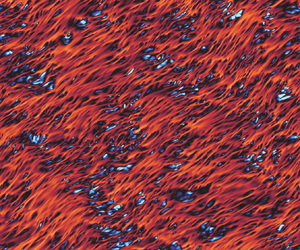
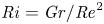
Turbulent shear flows driven by a combination of a pressure gradient and buoyancy forcing are investigated using direct numerical simulations. Specifically, we consider the set-up of a differentially heated vertical channel subject to a Poiseuille-like horizontal pressure gradient. We explore the response of the system to its three control parameters: the Grashof number $Gr$, the Prandtl number $Pr$, and the Reynolds number $Re$ of the pressure-driven flow. From these input parameters, the relative strength of buoyancy driving to the pressure gradient can be quantified by the Richardson number $Ri=Gr/Re^2$. We compare the response of the mixed vertical convection configuration to that of mixed Rayleigh–Bénard convection, and find a nearly identical behaviour, including an increase in wall friction at higher $Gr$, and a drop in the heat flux relative to natural convection for $Ri=O(1)$. This closely matched response is despite vastly different flow structures in the systems. No large-scale organisation is visible in visualisations of mixed vertical convection – an observation that is confirmed quantitatively by spectral analysis. This analysis, combined with a statistical description of the wall heat flux, highlights how moderate shear suppresses the growth of small-scale plumes and reduces the likelihood of extreme events in the local wall heat flux. Vice versa, starting from a pure shear flow, the addition of thermal driving enhances the drag due to the emission of thermal plumes.
Crowd monitoring for sports games is important to improve public safety, game experience, and venue management. Recent crowd-crushing incidents (e.g., the Kanjuruhan Stadium disaster) have caused 100+ deaths, calling for advancements in crowd-monitoring methods. Existing monitoring approaches include manual observation, wearables, video-, audio-, and WiFi-based sensing. However, few meet the practical needs due to their limitations in cost, privacy protection, and accuracy.
In this paper, we introduce a novel crowd monitoring method that leverages floor vibrations to infer crowd reactions (e.g., clapping) and traffic (i.e., the number of people entering) in sports stadiums. Our method allows continuous crowd monitoring in a privacy-friendly and cost-effective way. Unlike monitoring one person, crowd monitoring involves a large population, leading to high uncertainty in the vibration data. To overcome the challenge, we bring in the context of crowd behaviors, including (1) temporal context to inform crowd reactions to the highlights of the game and (2) spatial context to inform crowd traffic in relation to the facility layouts. We deployed our system at Stanford Maples Pavilion and Michigan Stadium for real-world evaluation, which shows a 14.7% and 12.5% error reduction compared to the baseline methods without the context information.
Bell’s palsy is acute facial palsy due to inflammation involving the facial nerve related to infections. Rates have not been noted to differ by ethnicity. We studied the lifetime prevalence in First Nations and all other Manitobans in people with type 2 diabetes mellitus aged 7 and older in 2013–2014 and 2016–2017. We found a crude lifetime prevalence of 9.9% [95% CI 9.4–10.4%] in the First Nations population versus 3.9% [95% CI 3.8–4.0%] in all other Manitobans. It is unknown if there were differences in glycemic control. The increased prevalence was found in all five provincial health regions. This study indicates that ethnicity may be an important risk factor for Bell’s palsy.
Delirium is a severe neuropsychiatric syndrome caused by physical illness, associated with high mortality. Understanding risk factors for delirium is key to targeting prevention and screening. Whether severe mental illness (SMI) predisposes people to delirium is not known. We aimed to establish whether pre-existing SMI diagnosis is associated with higher risk of delirium diagnosis and mortality following delirium diagnosis.
Methods
A retrospective cohort and nested case–control study using linked primary and secondary healthcare databases from 2000–2017. We identified people diagnosed with SMI, matched to non-SMI comparators. We compared incidence of delirium diagnoses between people with SMI diagnoses and comparators, and between SMI subtypes; schizophrenia, bipolar disorder and ‘other psychosis’. We compared 30-day mortality following a hospitalisation involving delirium between people with SMI diagnoses and comparators, and between SMI subtypes.
Results
We identified 20 566 people with SMI diagnoses, matched to 71 374 comparators. Risk of delirium diagnosis was higher for all SMI subtypes, with a higher risk conferred by SMI in the under 65-year group, (aHR:7.65, 95% CI 5.45–10.7, ⩾65-year group: aHR:3.35, 95% CI 2.77–4.05). Compared to people without SMI, people with an SMI diagnosis overall had no difference in 30-day mortality following a hospitalisation involving delirium (OR:0.66, 95% CI 0.38–1.14).
Conclusions
We found an association between SMI and delirium diagnoses. People with SMI may be more vulnerable to delirium when in hospital than people without SMI. There are limitations to using electronic healthcare records and further prospective study is needed to confirm these findings.
This article reviews the development of mental health and psychiatric services in Australia for the international reader. The development of relevant legislation, health-care systems, and the effectiveness of treatment for people with schizophrenia is reviewed. Gaps in service delivery and future directions are considered.