Refine search
Actions for selected content:
15 results
Stability, corners, and other two-dimensional shapes
- Part of
-
- Journal:
- Canadian Journal of Mathematics , First View
- Published online by Cambridge University Press:
- 26 December 2025, pp. 1-29
-
- Article
-
- You have access
- Open access
- HTML
- Export citation
-
We introduce a relaxation of stability, called almost sure stability, which is insensitive to perturbations by subsets of Loeb measure $0$ in a non-standard finite group. We show that almost sure stability satisfies a stationarity principle in the sense of geometric stability theory for measure-independent elements. We apply this principle to deduce the existence of squares in dense almost surely stable subsets of Cartesian products of non-standard finite groups, possibly non-abelian. Our results imply qualitative asymptotic versions for Cartesian products of finite groups. In the final section, we establish the existence of $3\times 2$-grids (and thus of L-shapes) in dense almost surely stable two-dimensional subsets of finite abelian groups of odd order.


PSEUDOFINITENESS AND MEASURABILITY OF THE EVERYWHERE INFINITE FOREST
- Part of
-
- Journal:
- The Journal of Symbolic Logic , First View
- Published online by Cambridge University Press:
- 10 December 2025, pp. 1-28
-
- Article
-
- You have access
- Open access
- HTML
- Export citation
ASYMPTOTIC TRUTH-VALUE LAWS IN MANY-VALUED LOGICS
- Part of
-
- Journal:
- The Journal of Symbolic Logic / Volume 90 / Issue 4 / December 2025
- Published online by Cambridge University Press:
- 12 February 2025, pp. 1756-1778
- Print publication:
- December 2025
-
- Article
-
- You have access
- Open access
- HTML
- Export citation
-
This paper studies which truth-values are most likely to be taken on finite models by arbitrary sentences of a many-valued predicate logic. The classical zero-one law (independently proved by Fagin and Glebskiĭ et al.) states that every sentence in a purely relational language is almost surely false or almost surely true, meaning that the probability that the formula is true in a randomly chosen finite structures of cardinal n is asymptotically $0$ or $1$ as n grows to infinity. We obtain generalizations of this result for any logic with values in a finite lattice-ordered algebra, and for some infinitely valued logics, including Łukasiewicz logic. The finitely valued case is reduced to the classical one through a uniform translation and Oberschelp’s generalization of the zero-one law. Moreover, it is shown that the complexity of determining the almost sure value of a given sentence is PSPACE-complete (generalizing Grandjean’s result for the classical case), and for some logics we describe completely the set of truth-values that can be taken by sentences almost surely.


COUNTING IN UNCOUNTABLY CATEGORICAL PSEUDOFINITE STRUCTURES
- Part of
-
- Journal:
- The Journal of Symbolic Logic / Volume 89 / Issue 4 / December 2024
- Published online by Cambridge University Press:
- 16 April 2024, pp. 1455-1475
- Print publication:
- December 2024
-
- Article
-
- You have access
- Open access
- HTML
- Export citation
EXTENSIONS AND LIMITS OF THE SPECKER–BLATTER THEOREM
- Part of
-
- Journal:
- The Journal of Symbolic Logic / Volume 89 / Issue 3 / September 2024
- Published online by Cambridge University Press:
- 21 March 2024, pp. 1284-1312
- Print publication:
- September 2024
-
- Article
- Export citation
-
The original Specker–Blatter theorem (1983) was formulated for classes of structures $\mathcal {C}$ of one or several binary relations definable in Monadic Second Order Logic MSOL. It states that the number of such structures on the set $[n]$ is modularly C-finite (MC-finite). In previous work we extended this to structures definable in CMSOL, MSOL extended with modular counting quantifiers. The first author also showed that the Specker–Blatter theorem does not hold for one quaternary relation (2003).
If the vocabulary allows a constant symbol c, there are n possible interpretations on $[n]$ for c. We say that a constant c is hard-wired if c is always interpreted by the same element $j \in [n]$. In this paper we show:
 (i) The Specker–Blatter theorem also holds for CMSOL when hard-wired constants are allowed. The proof method of Specker and Blatter does not work in this case.
(ii) The Specker–Blatter theorem does not hold already for $\mathcal {C}$ with one ternary relation definable in First Order Logic FOL. This was left open since 1983.
Using hard-wired constants allows us to show MC-finiteness of counting functions of various restricted partition functions which were not known to be MC-finite till now. Among them we have the restricted Bell numbers $B_{r,A}$, restricted Stirling numbers of the second kind $S_{r,A}$ or restricted Lah-numbers $L_{r,A}$. Here r is a non-negative integer and A is an ultimately periodic set of non-negative integers.


DEGREE OF SATISFIABILITY IN HEYTING ALGEBRAS
- Part of
-
- Journal:
- The Journal of Symbolic Logic / Volume 90 / Issue 2 / June 2025
- Published online by Cambridge University Press:
- 09 January 2024, pp. 533-551
- Print publication:
- June 2025
-
- Article
- Export citation
-
We investigate degree of satisfiability questions in the context of Heyting algebras and intuitionistic logic. We classify all equations in one free variable with respect to finite satisfiability gap, and determine which common principles of classical logic in multiple free variables have finite satisfiability gap. In particular we prove that, in a finite non-Boolean Heyting algebra, the probability that a randomly chosen element satisfies $x \vee \neg x = \top $ is no larger than $\frac {2}{3}$. Finally, we generalize our results to infinite Heyting algebras, and present their applications to point-set topology, black-box algebras, and the philosophy of logic.

FORBIDDEN INDUCED SUBGRAPHS AND THE ŁOŚ–TARSKI THEOREM
- Part of
-
- Journal:
- The Journal of Symbolic Logic / Volume 89 / Issue 2 / June 2024
- Published online by Cambridge University Press:
- 04 January 2024, pp. 516-548
- Print publication:
- June 2024
-
- Article
- Export citation
-
Let $\mathscr {C}$ be a class of finite and infinite graphs that is closed under induced subgraphs. The well-known Łoś–Tarski Theorem from classical model theory implies that $\mathscr {C}$ is definable in first-order logic by a sentence $\varphi $ if and only if $\mathscr {C}$ has a finite set of forbidden induced finite subgraphs. This result provides a powerful tool to show nontrivial characterizations of graphs of small vertex cover, of bounded tree-depth, of bounded shrub-depth, etc. in terms of forbidden induced finite subgraphs. Furthermore, by the Completeness Theorem, we can compute from $\varphi $ the corresponding forbidden induced subgraphs. This machinery fails on finite graphs as shown by our results:
 – There is a class $\mathscr {C}$ of finite graphs that is definable in first-order logic and closed under induced subgraphs but has no finite set of forbidden induced subgraphs.
– Even if we only consider classes $\mathscr {C}$ of finite graphs that can be characterized by a finite set of forbidden induced subgraphs, such a characterization cannot be computed from a first-order sentence $\varphi $ that defines $\mathscr {C}$ and the size of the characterization cannot be bounded by $f(|\varphi |)$ for any computable function f.
Besides their importance in graph theory, the above results also significantly strengthen similar known theorems for arbitrary structures.


Decidability of the class of all the rings $\mathbb {Z}/m\mathbb {Z}$: A problem of Ax
- Part of
-
- Journal:
- Forum of Mathematics, Sigma / Volume 11 / 2023
- Published online by Cambridge University Press:
- 24 July 2023, e64
-
- Article
-
- You have access
- Open access
- HTML
- Export citation
-
We prove that the class of all the rings $\mathbb {Z}/m\mathbb {Z}$ for all $m>1$ is decidable. This gives a positive solution to a problem of Ax asked in his celebrated 1968 paper on the elementary theory of finite fields [1, Problem 5, p. 270]. In our proof, we reduce the problem to the decidability of the ring of adeles $\mathbb {A}_{\mathbb {Q}}$ of $\mathbb {Q}$.


ON DOUBLE-MEMBERSHIP GRAPHS OF MODELS OF ANTI-FOUNDATION
- Part of
-
- Journal:
- Bulletin of Symbolic Logic / Volume 29 / Issue 1 / March 2023
- Published online by Cambridge University Press:
- 17 October 2022, pp. 128-144
- Print publication:
- March 2023
-
- Article
-
- You have access
- Open access
- HTML
- Export citation
-
We answer some questions about graphs that are reducts of countable models of Anti-Foundation, obtained by considering the binary relation of double-membership $x\in y\in x$. We show that there are continuum-many such graphs, and study their connected components. We describe their complete theories and prove that each has continuum-many countable models, some of which are not reducts of models of Anti-Foundation.

MODAL QUANTIFIERS, POTENTIAL INFINITY, AND YABLO SEQUENCES
- Part of
-
- Journal:
- The Review of Symbolic Logic / Volume 19 / Issue 1 / March 2026
- Published online by Cambridge University Press:
- 17 March 2022, pp. 1-22
- Print publication:
- March 2026
-
- Article
- Export citation
-
When properly arithmetized, Yablo’s paradox results in a set of formulas which (with local disquotation in the background) turns out to be consistent, but $\omega $-inconsistent. Adding either uniform disquotation or the $\omega $-rule results in inconsistency. Since the paradox involves an infinite sequence of sentences, one might think that it doesn’t arise in finitary contexts. We study whether it does. It turns out that the issue depends on how the finitistic approach is formalized. On one of them, proposed by M. Mostowski, all the paradoxical sentences simply fail to hold. This happens at a price: the underlying finitistic arithmetic itself is $\omega $-inconsistent. Finally, when studied in the context of a finitistic approach which preserves the truth of standard arithmetic (developed by one of the authors), the paradox strikes back—it does so with double force, for now the inconsistency can be obtained without the use of uniform disquotation or the $\omega $-rule.


FINITE RELATION ALGEBRAS
- Part of
-
- Journal:
- The Journal of Symbolic Logic / Volume 88 / Issue 2 / June 2023
- Published online by Cambridge University Press:
- 19 October 2021, pp. 874-888
- Print publication:
- June 2023
-
- Article
- Export citation
-
We will show that almost all nonassociative relation algebras are symmetric and integral (in the sense that the fraction of both labelled and unlabelled structures that are symmetric and integral tends to $1$), and using a Fraïssé limit, we will establish that the classes of all atom structures of nonassociative relation algebras and relation algebras both have $0$–
$0$– $1$ laws. As a consequence, we obtain improved asymptotic formulas for the numbers of these structures and broaden some known probabilistic results on relation algebras.


MULTIDIMENSIONAL EXACT CLASSES, SMOOTH APPROXIMATION AND BOUNDED 4-TYPES
- Part of
-
- Journal:
- The Journal of Symbolic Logic / Volume 85 / Issue 4 / December 2020
- Published online by Cambridge University Press:
- 07 September 2020, pp. 1305-1341
- Print publication:
- December 2020
-
- Article
- Export citation
-
In connection with the work of Anscombe, Macpherson, Steinhorn and the present author in [1] we investigate the notion of a multidimensional exact class (R-mec), a special kind of multidimensional asymptotic class (R-mac) with measuring functions that yield the exact sizes of definable sets, not just approximations. We use results about smooth approximation [24] and Lie coordinatization [13] to prove the following result (Theorem 4.6.4), as conjectured by Macpherson: For any countable language $\mathcal {L}$ and any positive integer d the class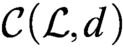 $\mathcal {C}(\mathcal {L},d)$ of all finite $\mathcal {L}$-structures with at most d 4-types is a polynomial exact class in $\mathcal {L}$, where a polynomial exact class is a multidimensional exact class with polynomial measuring functions.


ON EXTENSIONS OF PARTIAL ISOMORPHISMS
- Part of
-
- Journal:
- The Journal of Symbolic Logic / Volume 87 / Issue 1 / March 2022
- Published online by Cambridge University Press:
- 20 July 2020, pp. 416-435
- Print publication:
- March 2022
-
- Article
- Export citation
-
In this paper we study a notion of HL-extension (HL standing for Herwig–Lascar) for a structure in a finite relational language $\mathcal {L}$
 . We give a description of all finite minimal HL-extensions of a given finite $\mathcal {L}$
 -structure. In addition, we study a group-theoretic property considered by Herwig–Lascar and show that it is closed under taking free products. We also introduce notions of coherent extensions and ultraextensive $\mathcal {L}$
 -structures and show that every countable $\mathcal {L}$
 -structure can be extended to a countable ultraextensive structure. Finally, it follows from our results that the automorphism group of any countable ultraextensive $\mathcal {L}$
 -structure has a dense locally finite subgroup.


FIRST-ORDER RECOGNIZABILITY IN FINITE AND PSEUDOFINITE GROUPS
- Part of
-
- Journal:
- The Journal of Symbolic Logic / Volume 85 / Issue 2 / June 2020
- Published online by Cambridge University Press:
- 20 July 2020, pp. 852-867
- Print publication:
- June 2020
-
- Article
- Export citation
SIMPLE EXTENSIONS OF COMBINATORIAL STRUCTURES
- Part of
-
- Journal:
- Mathematika / Volume 57 / Issue 2 / July 2011
- Published online by Cambridge University Press:
- 21 December 2010, pp. 193-214
- Print publication:
- July 2011
-
- Article
- Export citation
