Refine search
Actions for selected content:
22 results
Simplicity of crossed products by FC-hypercentral groups
- Part of
-
- Journal:
- Compositio Mathematica / Volume 161 / Issue 9 / September 2025
- Published online by Cambridge University Press:
- 28 October 2025, pp. 2272-2319
- Print publication:
- September 2025
-
- Article
-
- You have access
- Open access
- HTML
- Export citation
-
In this paper, we give a complete, two-way characterization, of when a noncommutative crossed product $A \rtimes_\lambda G$ is simple, in the case of G being an FC-hypercentral group. This is a large class of amenable groups that contains all virtually nilpotent groups, and in the finitely generated setting, coincides with the set of groups which have polynomial growth. We further completely characterize the ideal intersection property under the assumption that the group is FC, meaning that every element has a finite conjugacy class. Finally, for minimal actions of arbitrary discrete groups on unital C*-algebras, we are able to characterize when the crossed product $A \rtimes_\lambda G$ is prime.


1 - Background
- from Part I - Tools and Theory
-
- Book:
- Harmonic Functions and Random Walks on Groups
- Published online:
- 16 May 2024
- Print publication:
- 23 May 2024, pp 3-49
-
- Chapter
- Export citation
2 - Lie groups and coadjoint orbits
- from Part I - Mathematical background
-
- Book:
- Quantum Geometry, Matrix Theory, and Gravity
- Published online:
- 04 April 2024
- Print publication:
- 11 April 2024, pp 13-28
-
- Chapter
- Export citation
Substreetutions and more on trees
- Part of
-
- Journal:
- Ergodic Theory and Dynamical Systems / Volume 44 / Issue 9 / September 2024
- Published online by Cambridge University Press:
- 08 April 2024, pp. 2399-2453
- Print publication:
- September 2024
-
- Article
- Export citation
-
We define a notion of substitution on colored binary trees that we call substreetution. We show that a point fixed by a substreetution may (or not) be almost periodic, and thus the closure of the orbit under the $\mathbb {F}_{2}^{+}$-action may (or not) be minimal. We study one special example: we show that it belongs to the minimal case and that the number of preimages in the minimal set increases just exponentially fast, whereas it could be expected a super-exponential growth. We also give examples of periodic trees without invariant measures on their orbit. We use our construction to get quasi-periodic colored tilings of the hyperbolic disk.

Global rigidity of higher rank lattice actions with dominated splitting
- Part of
-
- Journal:
- Ergodic Theory and Dynamical Systems / Volume 44 / Issue 3 / March 2024
- Published online by Cambridge University Press:
- 27 April 2023, pp. 799-828
- Print publication:
- March 2024
-
- Article
- Export citation
-
Let $\alpha $ be a $C^{\infty }$ volume-preserving action on a closed n-manifold M by a lattice $\Gamma $ in $\mathrm {SL}(n,\mathbb {R})$, $n\ge 3$. Assume that there is an element $\gamma \in \Gamma $ such that $\alpha (\gamma )$ admits a dominated splitting. We prove that the manifold M is diffeomorphic to the torus ${{\mathbb T}^{n}={\mathbb R}^{n}/{\mathbb Z}^{n}}$ and $\alpha $ is smoothly conjugate to an affine action. Anosov diffeomorphisms and partial hyperbolic diffeomorphisms admit a dominated splitting. We obtained a topological global rigidity when $\alpha $ is $C^{1}$. We also prove similar theorems for actions on $2n$-manifolds by lattices in $\textrm {Sp}(2n,{\mathbb R})$ with $n\ge 2$ and $\mathrm {SO}(n,n)$ with $n\ge 5$.


Abstract almost periodicity for group actions on uniform topological spaces
- Part of
-
- Journal:
- Canadian Journal of Mathematics / Volume 76 / Issue 3 / June 2024
- Published online by Cambridge University Press:
- 11 April 2023, pp. 798-829
- Print publication:
- June 2024
-
- Article
-
- You have access
- Open access
- HTML
- Export citation
Free rank of symmetry of products of Dold manifolds
- Part of
-
- Journal:
- Proceedings of the Edinburgh Mathematical Society / Volume 66 / Issue 1 / February 2023
- Published online by Cambridge University Press:
- 30 March 2023, pp. 117-132
-
- Article
- Export citation
-
Dold manifolds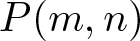 $P(m,n)$ are certain twisted complex projective space bundles over real projective spaces and serve as generators for the unoriented cobordism algebra of smooth manifolds. The paper investigates the structure of finite groups that act freely on products of Dold manifolds. It is proved that if a finite group G acts freely and $ \mathbb{Z}_2 $ cohomologically trivially on a finite CW-complex homotopy equivalent to ${\prod_{i=1}^{k} P(2m_i,n_i)}$, then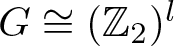 $G\cong (\mathbb{Z}_2)^l$ for some $l\leq k$ (see Theorem A for the exact bound). We also determine some bounds in the case when for each i, ni is even and mi is arbitrary. As a consequence, the free rank of symmetry of these manifolds is determined for cohomologically trivial actions.


ON LARGE ORBITS OF FINITE SOLVABLE GROUPS ON CHARACTERS
- Part of
-
- Journal:
- Bulletin of the Australian Mathematical Society / Volume 108 / Issue 3 / December 2023
- Published online by Cambridge University Press:
- 07 February 2023, pp. 438-442
- Print publication:
- December 2023
-
- Article
- Export citation
4 - The Lorentz Group and the Poincaré Group
- from PART I - Basics
-
- Book:
- What Is a Quantum Field Theory?
- Published online:
- 22 February 2022
- Print publication:
- 17 March 2022, pp 102-131
-
- Chapter
- Export citation
We the People: Is the Polity the State?
-
- Journal:
- Journal of the American Philosophical Association / Volume 7 / Issue 1 / Spring 2021
- Published online by Cambridge University Press:
- 22 February 2021, pp. 78-97
-
- Article
- Export citation
MÖBIUS–FROBENIUS MAPS ON IRREDUCIBLE POLYNOMIALS
- Part of
-
- Journal:
- Bulletin of the Australian Mathematical Society / Volume 104 / Issue 1 / August 2021
- Published online by Cambridge University Press:
- 14 December 2020, pp. 66-77
- Print publication:
- August 2021
-
- Article
- Export citation
-
Let n be a positive integer and let $\mathbb{F} _{q^n}$ be the finite field with $q^n$ elements, where q is a prime power. We introduce a natural action of the projective semilinear group ${\mathrm{P}\Gamma\mathrm{L}} (2, q^n)={\mathrm{PGL}} (2, q^n)\rtimes {\mathrm{Gal}} ({\mathbb F_{q^n}} /\mathbb{F} _q)$ on the set of monic irreducible polynomials over the finite field $\mathbb{F} _{q^n}$. Our main results provide information on the characterisation and number of fixed points.


The Implementation of Collective Redress – A Comparative Approach
-
- Journal:
- German Law Journal / Volume 21 / Issue 8 / December 2020
- Published online by Cambridge University Press:
- 01 December 2020, pp. 1606-1624
-
- Article
-
- You have access
- Open access
- HTML
- Export citation
A Comment on Ergodic Theorem for Amenable Groups
- Part of
-
- Journal:
- Canadian Mathematical Bulletin / Volume 63 / Issue 2 / June 2020
- Published online by Cambridge University Press:
- 29 July 2019, pp. 257-261
- Print publication:
- June 2020
-
- Article
-
- You have access
- Export citation
THE NUMBER OF CYCLIC SUBGROUPS OF FINITE ABELIAN GROUPS AND MENON’S IDENTITY
- Part of
-
- Journal:
- Bulletin of the Australian Mathematical Society / Volume 101 / Issue 2 / April 2020
- Published online by Cambridge University Press:
- 17 May 2019, pp. 201-206
- Print publication:
- April 2020
-
- Article
-
- You have access
- Export citation
Actions of Semitopological Groups
- Part of
-
- Journal:
- Canadian Mathematical Bulletin / Volume 62 / Issue 2 / June 2019
- Published online by Cambridge University Press:
- 04 January 2019, pp. 441-450
- Print publication:
- June 2019
-
- Article
-
- You have access
- Export citation
A NEW MENON’S IDENTITY FROM GROUP ACTIONS
- Part of
-
- Journal:
- Bulletin of the Australian Mathematical Society / Volume 99 / Issue 3 / June 2019
- Published online by Cambridge University Press:
- 28 November 2018, pp. 369-375
- Print publication:
- June 2019
-
- Article
-
- You have access
- Export citation
-
Let $n$ be a positive integer. We obtain new Menon’s identities by using the actions of some subgroups of $(\mathbb{Z}/n\mathbb{Z})^{\times }$ on the set $\mathbb{Z}/n\mathbb{Z}$. In particular, let $p$ be an odd prime and let $\unicode[STIX]{x1D6FC}$ be a positive integer. If $H_{k}$ is a subgroup of $(\mathbb{Z}/p^{\unicode[STIX]{x1D6FC}}\mathbb{Z})^{\times }$ with index $k=p^{\unicode[STIX]{x1D6FD}}u$ such that $0\leqslant \unicode[STIX]{x1D6FD}<\unicode[STIX]{x1D6FC}$ and $u\mid p-1$, then where
 $$\begin{eqnarray}\mathop{\sum }_{x\in H_{k}}(x-1,p^{\unicode[STIX]{x1D6FC}})=\frac{\unicode[STIX]{x1D711}(p^{\unicode[STIX]{x1D6FC}})}{k}\bigg(1+k(\unicode[STIX]{x1D6FC}-\unicode[STIX]{x1D6FD})+u\frac{p^{\unicode[STIX]{x1D6FD}}-1}{p-1}\bigg),\end{eqnarray}$$ $\unicode[STIX]{x1D711}(n)$ is the Euler totient function.


IDEAL CHAINS IN RESIDUALLY FINITE DEDEKIND DOMAINS
- Part of
-
- Journal:
- Bulletin of the Australian Mathematical Society / Volume 99 / Issue 1 / February 2019
- Published online by Cambridge University Press:
- 28 November 2018, pp. 56-67
- Print publication:
- February 2019
-
- Article
-
- You have access
- Export citation
-
Let $\mathfrak{D}$ be a residually finite Dedekind domain and let $\mathfrak{n}$ be a nonzero ideal of $\mathfrak{D}$. We consider counting problems for the ideal chains in $\mathfrak{D}/\mathfrak{n}$. By using the Cauchy–Frobenius–Burnside lemma, we also obtain some further extensions of Menon’s identity.


Orbifold Zeta Functions for Dual Invertible Polynomials
- Part of
-
- Journal:
- Proceedings of the Edinburgh Mathematical Society / Volume 60 / Issue 1 / February 2017
- Published online by Cambridge University Press:
- 23 May 2016, pp. 99-106
-
- Article
- Export citation
-
An invertible polynomial in n variables is a quasi-homogeneous polynomial consisting of n monomials so that the weights of the variables and the quasi-degree are well defined. In the framework of the construction of mirror symmetric orbifold Landau–Ginzburg models, Berglund, Hübsch and Henningson considered a pair (f, G) consisting of an invertible polynomial f and an abelian group G of its symmetries together with a dual pair
 . Here we study the reduced orbifold zeta functions of dual pairs (f, G) and and show that they either coincide or are inverse to each other depending on the number n of variables.
 . Here we study the reduced orbifold zeta functions of dual pairs (
GROUP ACTION PRESERVING THE HAAGERUP PROPERTY OF $C^{\ast }$-ALGEBRAS
- Part of
-
- Journal:
- Bulletin of the Australian Mathematical Society / Volume 93 / Issue 2 / April 2016
- Published online by Cambridge University Press:
- 11 August 2015, pp. 295-300
- Print publication:
- April 2016
-
- Article
-
- You have access
- Export citation
-
From the viewpoint of $C^{\ast }$-dynamical systems, we define a weak version of the Haagerup property for the group action on a $C^{\ast }$-algebra. We prove that this group action preserves the Haagerup property of $C^{\ast }$-algebras in the sense of Dong [‘Haagerup property for $C^{\ast }$-algebras’, J. Math. Anal. Appl.377 (2011), 631–644], that is, the reduced crossed product $C^{\ast }$-algebra $A\rtimes _{{\it\alpha},\text{r}}{\rm\Gamma}$ has the Haagerup property with respect to the induced faithful tracial state $\widetilde{{\it\tau}}$ if $A$ has the Haagerup property with respect to ${\it\tau}$.


Cumulants and partition lattices III: Multiply-indexed arrays
- Part of
-
- Journal:
- Journal of the Australian Mathematical Society. Series A. Pure Mathematics and Statistics / Volume 40 / Issue 2 / April 1986
- Published online by Cambridge University Press:
- 09 April 2009, pp. 161-182
-
- Article
-
- You have access
- Export citation
