To save content items to your account,
please confirm that you agree to abide by our usage policies.
If this is the first time you use this feature, you will be asked to authorise Cambridge Core to connect with your account.
Find out more about saving content to .
To save content items to your Kindle, first ensure no-reply@cambridge.org
is added to your Approved Personal Document E-mail List under your Personal Document Settings
on the Manage Your Content and Devices page of your Amazon account. Then enter the ‘name’ part
of your Kindle email address below.
Find out more about saving to your Kindle.
Note you can select to save to either the @free.kindle.com or @kindle.com variations.
‘@free.kindle.com’ emails are free but can only be saved to your device when it is connected to wi-fi.
‘@kindle.com’ emails can be delivered even when you are not connected to wi-fi, but note that service fees apply.
Wiggle-match dating of tree-ring sequences is particularly promising for achieving high-resolution dating across periods with reversals and plateaus in the calibration curve, such as the entire post-Columbian period of North American history. Here we describe a modified procedure for wiggle-match dating that facilitates precise dating of wooden museum objects while minimizing damage due to destructive sampling. We present two case studies, a dugout canoe and wooden trough, both expected to date to the 18th–19th century. (1) Tree rings were counted and sampled for dating from exposed, rough cross-sections in the wood, with no or minimal surface preparation, to preserve these fragile objects; (2) dating focused on the innermost and outermost portions of the sequences; and (3) due to the crude counting and sampling procedures, the wiggle-match was approximated using a simple ordered Sequence, with gaps defined as Intervals. In both cases, the outermost rings were dated with precision of 30 years or better, demonstrating the potential of wiggle-match dating for post-European Contact canoes and other similar objects.
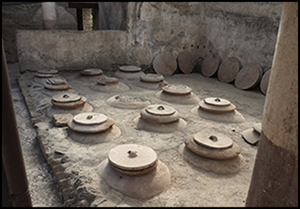
Wine was deeply embedded in all aspects of Roman life and its role in society, culture and the economy has been much studied. Ancient Roman texts and archaeological research provide valuable insights into viticulture and the manufacture, trade and consumption of wine but little is known of the sensory nature of this prized commodity. Here, the authors offer a novel oenological approach to the study of Roman dolia through their comparison with modern Georgian qvevri and associated wine-production techniques. Far from being mundane storage vessels, dolia were precisely engineered containers whose composition, size and shape all contributed to the successful production of diverse wines with specific organoleptic characteristics.
Archaeologists seek to improve our understanding of the past by studying, preserving, protecting, and sharing nonreplaceable archaeological resources. Archaeological collections hold information that can assist these aims as long as they are properly cared for, identified, and accessible. One of the most serious barriers is the lack of large-scale coordinated efforts to make archaeological collections findable and accessible. This article suggests that developing and implementing the use of a standardized set of attributes regarding collections provides solutions and strategies to find collections. These attributes can connect and standardize existing archaeological collections from a variety of sources (federal and state agencies, CRM firms, Indigenous and descendant communities, and academic departments), serving the profession in multiple ways. Most critically, the baseline data can be synthesized to inform and direct priorities for future fieldwork, thereby decreasing redundancy in archaeological collections and improving curation efforts nationwide. Such efforts would also provide a resource to students and researchers looking to understand and interpret the past at multiple scales by encouraging more collections-based research and less archaeological site destruction. Access for descendant communities will also be improved with information about their cultural heritage. This, in turn, encourages transparency and collaboration between those communities and archaeologists.
In 1952 Michael Ventris deciphered the script found on the Linear B tablets from Crete and the Greek mainland, therefore revealing the earliest known form of Greek. In 1956 he and John Chadwick published Documents in Mycenaean Greek, which gave an account of the decipherment, of the language of the tablets, of the society and economy revealed by the documents and a series of chapters giving texts, translations and commentary of the most important tablets. Though partially updated in 1973, Documents is now very much outdated: there has been a vast accrual of bibliography on the subject since 1973, and discoveries of tablets at new sites. This new survey, written by fourteen of the world's leading experts, will bring the reader fully up-to-date with developments in all aspects of Mycenaean studies, concluding with a new, full glossary of all the most recently discovered words.
Geopolitics of Digital Heritage analyzes and discusses the political implications of the largest digital heritage aggregators across different scales of governance, from the city-state governed Singapore Memory Project, to a national aggregator like Australia's Trove, to supranational digital heritage platforms, such as Europeana, to the global heritage aggregator, Google Arts & Culture. These four dedicated case studies provide focused, exploratory sites for critical investigation of digital heritage aggregators from the perspective of their geopolitical motivations and interests, the economic and cultural agendas of involved stakeholders, as well as their foreign policy strategies and objectives. The Element employs an interdisciplinary approach and combines critical heritage studies with the study of digital politics and communications. Drawing from empirical case study analysis, it investigates how political imperatives manifest in the development of digital heritage platforms to serve different actors in a highly saturated global information space, ranging from national governments to transnational corporations.
A mixed Romano-Punic tomb discovered on private property to the west of Msallata contains many small stone chests containing cremated human remains. Some of these chests carry the name of the deceased written in the Latin or neo-Punic alphabet. Besides the stone chests, there are pottery jars containing animal remains. Figurative relief and religious symbols suggest the practice of rituals associated with the Tophet (sanctuary-necropolis) of Carthage. In addition to the stone chests and pottery urns there are many other objects that are typical of the grave goods usually buried with the Phoenician dead: oil lamps, tableware, coins, medals.
After an intercomparison age experiment carried out in the framework of the first MODIS (MOrtar Dating Inter-comparison Study) project, the results showed general agreement both between optically stimulated luminescence (OSL) dating laboratories and with radiocarbon (14C) dating results. As the needs for the selection of samples convenient for an inter-comparison are not the same between 14C and OSL, for the second running, it has been decided to choose two different sample sets, one to share between the radiocarbon labs and one for the OSL dating ones. The results obtained by applying different experimental protocols (multigrain and single grain techniques) and different statistical models (weighted mean, central age mode, average dose model, minimum age model and exponential exposure dose) are discussed in this work.
Seven accelerator mass spectrometry radiocarbon (AMS 14C) dates (7260±106∼7607±95 BP averaged 7444±103 BP) on a giant oyster shell, collected from an ancient shore of the Taipei Basin, are similar to the LSC (liquid scintillation counting) 14C age (7260±46 BP) of a grass sample inside the shell. The calibrated 14C ages of the C. gigas by Marine20 are 7490±240∼7805±230 cal BP (average 7660±96 cal BP), generally agreed with the calibrated LSC 14C ages of the grass and the oyster shell. Combined with other 14C ages of shoreline samples in the Taipei Basin, it is evident that sea level rose from 8600 to 7600 cal BP and reached a stand higher than modern sea level. During this marine transgression, the sedimentation rate along the shoreline was very high because 14C dating was not able to detect age differences for 4–5 m thick sediment sequences. Sixty-nine analyses of δ18O and δ13C from the oldest part of the shell exhibit clear seasonal cycles, with a 4-year period of growth in the 5.5-cm section. According to the δ18O values, the ancient oyster grew in a warmer-than-present shoreline environment, suggesting that the current absence of the giant oyster in Taiwan is not due to warming conditions.
There is much discussion in archaeological circles about challenges associated with the millions of artifacts generated by fieldwork. Most of these discussions are limited to issues within the profession, such as care of collections, accessibility for research, orphaned collections, and shortcomings in training on collections awareness. An underrecognized third party in these discussions is the public. Despite a broadly held ethos of the importance of archaeology for all, archaeologists have paid comparatively little attention to sharing/exposing collections (and the outcomes of excavations) with audiences outside of the profession. This research discusses negative ramifications of not sharing collections with broader audiences and then presents some options for broadening this much-needed engagement through developing more public outreach efforts, providing alternative uses of collections, collaborating with private collectors, and using digital technology to increase access to collections.
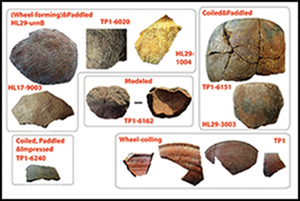
Myanmar is located within an important geographic corridor of prehistoric demographic and technological exchange, yet relatively few archaeological sites have been securely dated. Here, the authors present a new radiocarbon chronology for Halin, a UNESCO-listed complex in the north-central Sagaing Division of Myanmar, which contributes to the generation of nuanced regional chronologies and to improving the temporal resolution of Southeast Asia more generally. Discussion of 94 radiocarbon determinates, together with site stratigraphy and pottery traditions, provides a chronological sequence from the early third millennium BC to the early second millennium AD. Corroboration of the beginning of this sequence would place Halin as the oldest currently dated Neolithic site in Mainland Southeast Asia and would provide support for the two-layer model of Neolithic migration.
This article discusses ethical frameworks for planning and implementing composite research in the United States. Composites, defined here as archaeological materials with multiple genetic sources, include materials such as sediment, coprolites, birch pitch, and dental calculus. Although composites are increasingly used in genetic research, the ethical considerations of their use in ancient DNA studies have not been widely discussed. Here, we consider how composites’ compositions, contexts, and potential to act as proxies can affect research plans and offer an overview of the primary ethical concerns of ancient DNA research. It is our view that ethical principles established for analyses of Ancestral remains and related materials can be used to inform research plans when working with composite evidence. This work also provides a guide to archaeologists unfamiliar with genetics analyses in planning research when using composite evidence from the United States with a focus on collaboration, having a clear research plan, and using lab methods that provide the desired data with minimal destruction. Following the principles discussed in this article and others allows for engaging in composite research while creating and maintaining positive relationships with stakeholders.
Grain-cooking traditions in Neolithic China have been characterised as a ‘wet’ cuisine based on the boiling and steaming of sticky varieties of cereal. One of these, broomcorn millet, was one of the earliest Chinese crops to move westward into Central Asia and beyond, into regions where grains were typically prepared by grinding and baking. Here, the authors present the genotypes and reconstructed phenotypes of 13 desiccated broomcorn millet samples from Xinjiang (1700 BC–AD 700). The absence in this area of sticky-starch millet and vessels for boiling and steaming suggests that, as they moved west, East Asian cereal crops were decoupled from traditional cooking practices and were incorporated into local cuisines.
Archaeologists are taught about the importance of professional recordation and our ethical obligations to those associated records and data. These teachings imply that practitioners are meeting a professional standard of recordation that will stand the test of time, but the ongoing digital revolution is changing the way records and data are created and preserved. Best practices for the management and use of digital archaeological records have been published, and devoted digital archives offer these services. However, the ability of traditional archaeological repositories to adopt best practices or pay for digital curation is poorly understood. This article presents the results of a survey asking how the flood of digital records and data has impacted the ability of archaeological repositories to collect, manage, preserve, use, and make accessible digital archaeological records and data. Are repositories adopting the best practices that have been outlined? What kinds of challenges do repositories face regarding digital records and data? Are they being overcome successfully? The survey results offer a snapshot of current practice and point to future directions that should be pursued to ensure that the discipline is meeting its professional obligations.
We examined a Late Holocene sea-level stillstand using phreatic overgrowths on speleothems (POS) recovered from Medvjeđa Špilja [Bear Cave] (northern Adriatic Sea) from −1.28 ± 0.15 m below present mean sea level. Different mineralogical analyses were performed to characterize the POS and better understand the mechanisms of their formation. Results reveal that the fibrous overgrowth is formed of calcite and that both the supporting soda straw and the overgrowth have very similar trace element compositions. This suggests that the drip-water and groundwater pool from which the POS formed have similar chemical compositions. Four subsamples were dated by means of uranium-series. We found that ca. 2800 years ago, the relative sea level was stable for about 300 years at a depth of approximately −1.28 ± 0.15 m below the current mean sea level. This finding roughly corresponds with the end of a relatively stable sea-level period, between 3250 and 2800 cal yr BP, previously noted in the southern Adriatic. Our research confirms the presence of POS in the Adriatic region and establishes the Medvjeđa Špilja pool as a conducive environment for calcite POS formation, which encourages further investigations at this study site.
The structure and origin of the Pleistocene (Marine Isotope Stage [MIS] 5) coastal Barrier III in southern Brazil were investigated through analysis of lithofacies, numerical ages, and ground-penetrating radar (GPR) data obtained in outcrops and subsurface deposits. The stratigraphic succession is characteristic of transgressive barriers, with muddy lagoon bottom facies unconformably overlying an older unit (Barrier II) and overlain by landward-dipping lagoon margin and aeolian facies. The back-barrier lagoon was filled with sediments and shells transferred from the foreshore through overwash and/or inlets during the MIS 5e transgressive-high-stand phase, with a higher sea level that reached about +6 to +7 m relative to the present. Marine sediments and shells on the seaward side of the barrier dated to ~100–106 ka indicate another high stand at +4 to +5.1 m during MIS 5c. One shell dated to ~87 ka and aeolian deposits dated to ~82 and ~85 ka suggest a third high stand during MIS 5a that reached at least −2 m relative to the present. The two (possibly three) juxtaposed marine deposits show that Barrier III is a more complex unit than previously recognized, built by successive orbitally forced eustatic sea-level oscillations also recorded in other deposits along the Brazilian coast and worldwide.
In considering the long trajectory of human societies, researchers have too often favored models of despotic control by the few or structural models that fail to grant agency to those with less power in shaping history. Recent scholarship demonstrates such models to be not only limiting but also empirically inaccurate. This Element reviews archaeological approaches to collective action drawing on theoretical perspectives from across the globe and case studies from prehispanic Mesoamerica. It highlights how institutions and systems of governance matter, vary over space and time, and can oscillate between more pluralistic and more autocratic forms within the same society, culture, or polity. The historical coverage examines resource dilemmas and ways of mediating them, how ritual and religion can foster both social solidarity and hierarchy, the political financing of institutions and variability in forms of governance, and lessons drawn to inform the building of more resilient communities in the present.
The absolute dating of mortar by accelerator mass spectrometry (AMS) has been the subject of renewed interest for several years. International intercomparison campaigns, called MODIS (MOrtar Dating Intercomparison Study), have been carried out. The first MODIS-1 campaign highlighted limitations in mortar dating, due to the similarity between the primary material to be dated (binder) and the contaminant (exogenous CaCO3). Methods have since emerged to overcome this problem and the need for a good preliminary characterization has been proven. The Laboratoire de Mesure du Carbone 14 (LMC14) took part in the second intercomparison campaign, MODIS2, by applying thermal decomposition increments to distinguish the carbonated binder, the organic matter contaminants (late in formation pyrogenic carbonate, LDH) and limestone. The LMC14 results on MODIS2 are quite conclusive on “pure” re-carbonated lime mortar binders containing little contaminant geological limestone but show their weaknesses for mortars heavily contaminated in Dolomites, which are difficult to discern from the binder. Recommendations for users of radiocarbon (14C) dating on mortar-based materials are made in the conclusion.