Refine search
Actions for selected content:
212777 results in Engineering
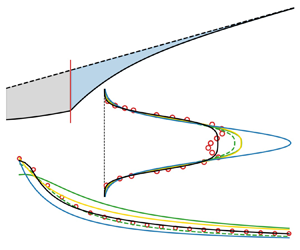
A diffusion-based wind turbine wake model
-
- Journal:
- Journal of Fluid Mechanics / Volume 1001 / 25 December 2024
- Published online by Cambridge University Press:
- 06 December 2024, A13
-
- Article
-
- You have access
- Open access
- HTML
- Export citation
10 GeV proton generation driven by 5 PW light spring pulses
-
- Journal:
- High Power Laser Science and Engineering / Volume 12 / 2024
- Published online by Cambridge University Press:
- 06 December 2024, e72
-
- Article
-
- You have access
- Open access
- HTML
- Export citation

A long-wave model for a falling upper convected Maxwell film inside a tube
-
- Journal:
- Journal of Fluid Mechanics / Volume 1001 / 25 December 2024
- Published online by Cambridge University Press:
- 06 December 2024, A14
-
- Article
-
- You have access
- Open access
- HTML
- Export citation
-
A long-wave asymptotic model is developed for a viscoelastic falling film along the inside of a tube; viscoelasticity is incorporated using an upper convected Maxwell model. The dynamics of the resulting model in the inertialess limit is determined by three parameters: Bond number Bo, Weissenberg number We and a film thickness parameter $a$. The free surface is unstable to long waves due to the Plateau–Rayleigh instability; linear stability analysis of the model equation quantifies the degree to which viscoelasticity increases both the rate and wavenumber of maximum growth of instability. Elasticity also affects the classification of instabilities as absolute or convective, with elasticity promoting absolute instability. Numerical solutions of the nonlinear evolution equation demonstrate that elasticity promotes plug formation by reducing the critical film thickness required for plugs to form. Turning points in travelling wave solution families may be used as a proxy for this critical thickness in the model. By continuation of these turning points, it is demonstrated that in contrast to Newtonian films in the inertialess limit, in which plug formation may be suppressed for a film of any thickness so long as the base flow is strong enough relative to surface tension, elasticity introduces a maximum critical thickness past which plug formation occurs regardless of the base flow strength. Attention is also paid to the trade-off of the competing effects introduced by increasing We (which increases growth rate and promotes plug formation) and increasing Bo (which decreases growth rate and inhibits plug formation) simultaneously.

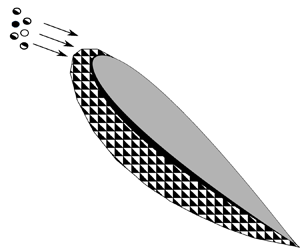
An enthalpy-based model for the physics of ice-crystal icing
-
- Journal:
- Journal of Fluid Mechanics / Volume 1001 / 25 December 2024
- Published online by Cambridge University Press:
- 06 December 2024, A12
-
- Article
-
- You have access
- Open access
- HTML
- Export citation
An elementary method to generate asymmetric profiles and some applications in X-ray diffraction analysis
-
- Journal:
- Powder Diffraction / Volume 40 / Issue 1 / March 2025
- Published online by Cambridge University Press:
- 06 December 2024, pp. 21-35
-
- Article
- Export citation
Research on multiple quadrotor UAV formation obstacle avoidance based on finite-time consensus
-
- Journal:
- The Aeronautical Journal / Volume 129 / Issue 1334 / April 2025
- Published online by Cambridge University Press:
- 06 December 2024, pp. 939-959
-
- Article
- Export citation
Modeling sector route segment capacity under convective weather based on machine learning – CORRIGENDUM
-
- Journal:
- The Aeronautical Journal , First View
- Published online by Cambridge University Press:
- 06 December 2024, p. 1
-
- Article
-
- You have access
- HTML
- Export citation

Mixed-Signal CMOS for Wireline Communication
- Transistor-Level and System-Level Design Considerations
-
- Published online:
- 05 December 2024
- Print publication:
- 12 December 2024
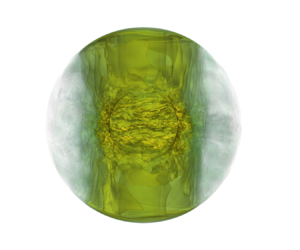
Transition to turbulence in the wide-gap spherical Couette system
-
- Journal:
- Journal of Fluid Mechanics / Volume 1001 / 25 December 2024
- Published online by Cambridge University Press:
- 05 December 2024, A1
-
- Article
-
- You have access
- Open access
- HTML
- Export citation
Enterprise systems thinking applied to community biology labs
-
- Journal:
- Research Directions: Biotechnology Design / Volume 3 / 2025
- Published online by Cambridge University Press:
- 05 December 2024, e1
-
- Article
-
- You have access
- Open access
- HTML
- Export citation
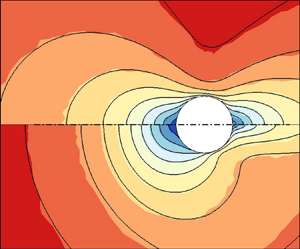
Kinetic modelling of rarefied gas mixtures with disparate mass in strong non-equilibrium flows
-
- Journal:
- Journal of Fluid Mechanics / Volume 1001 / 25 December 2024
- Published online by Cambridge University Press:
- 05 December 2024, A5
-
- Article
- Export citation
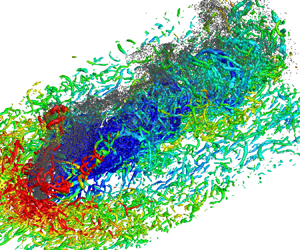
Eulerian–Lagrangian direct numerical simulation of turbulence modulation in a compressible multiphase transverse jet
-
- Journal:
- Journal of Fluid Mechanics / Volume 1001 / 25 December 2024
- Published online by Cambridge University Press:
- 05 December 2024, A10
-
- Article
- Export citation
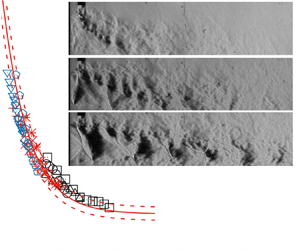
Parametric study and scaling of a minijet-manipulated supersonic jet
-
- Journal:
- Journal of Fluid Mechanics / Volume 1001 / 25 December 2024
- Published online by Cambridge University Press:
- 05 December 2024, A2
-
- Article
- Export citation
-
This work aims to perform a parametric study on a round supersonic jet with a design Mach number Md = 1.8, which is manipulated using a single steady radial minijet with a view to enhancing its mixing. Four control parameters are examined, i.e. the mass flow rate ratio Cm and diameter ratio d/D of the minijet to main jet, and exit pressure ratio Pe/Pa and fully expanded jet Mach number Mj, where Pe and Pa are the nozzle exit and atmospheric pressures, respectively. Extensive pressure and schlieren flow visualization measurements are conducted on the natural and manipulated jets. The supersonic jet core length Lc/D exhibits a strong dependence on the four control parameters. Careful scaling analysis of experimental data reveals that Lc/D = f1(Cm, d/D, Pe/Pa, Mj) may be reduced to Lc/D = f2(ξ), where f1 and f2 are different functions. The scaling factor $\xi = J({d_i}/{D_j})/(\gamma M_j^2{P_e}/{P_a})$ is physically the penetration depth of the minijet into the main jet, where $J({d_i}/{D_j})$ is the square root of the momentum ratio of the minijet to main jet (di and Dj are the fully expanded diameters of d and D, respectively), γ is the specific heat ratio and $\gamma M_j^2{P_e}/{P_a}$ is the non-dimensional exit pressure ratio. Important physical insight may be gained from this scaling law into the optimal choice of control parameters such as d/D and Pe/Pa for practical applications. It has been found for the first time that the minijet may induce a street of quasi-periodical coherent structures once Cm exceeds a certain level for a given ${P_e}/{P_a}$. Its predominant dimensionless frequency Ste (≡ feDj/Uj) scales with a factor $\zeta = J({d_i}/{D_j})\; \sqrt {\gamma M_j^2{P_e}/{P_a}} $, which is physically the ratio of the minijet momentum thrust to the ambient pressure thrust. The formation mechanism of the street and its role in enhancing jet mixing are also discussed.


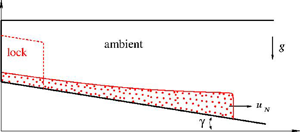
On the initial down-slope propagation of a lock-release particle-driven gravity current: shallow-water predictions and comparisons with previously published data
-
- Journal:
- Journal of Fluid Mechanics / Volume 1000 / 10 December 2024
- Published online by Cambridge University Press:
- 05 December 2024, A97
-
- Article
-
- You have access
- Open access
- HTML
- Export citation
-
We consider the initial ‘slumping phase’ of a lock-release gravity current (GC) on a down slope with focus on particle-driven (turbidity) flows, in the inertia–buoyancy (large Reynolds number) and Boussinesq regime. We use a two-layer shallow-water (SW) model for the depth-averaged variables, and compare the predictions with previously published experimental data. In particular, we analyse the empirical conclusion of Gadal et al. (J. Fluid Mech., vol. 974, 2023, A4) that the slumping displays a constant speed for a significant range of slopes and particle-sedimentation speeds. We emphasize the physical definition of the slumping phase (stage): the adjustment process during which (a) the fluid in the lock is set into motion by the dam break, then (b) forms a tail from the backwall to the nose. We focus on the question of if and when the propagation speed $u_N$ of the nose (front) of the GC is constant during this process (there is consensus that a significant deceleration of $u_N$ appears in the post-slumping stage.) The SW theory predicts correctly the adjustment of the flow field during the slumping stage, but indicates that a constant $u_N$ appears only for the classical case ( $\gamma =E=c_D=\beta =0$) where $\gamma, E, c_D, \beta$ are the slope, entrainment and drag coefficients, and the scaled particle settling speed for a particle-driven GC. However, since $\gamma, E, c_D, \beta$ are typically small, the change of $u_N$ during the slumping phase is also small in many cases of interest. The interaction between the various driving and hindering mechanisms is elucidated. We show that, in a system with a horizontal (open) top (typical laboratory experiments), the height of the ambient increases along the slope, and this compensates for buoyancy loss due to particle sedimentation. We point out the need for further experimental and simulation studies for a better understanding of the slumping phase and transition to the next phases, and further assessment/improvement of the SW predictions.


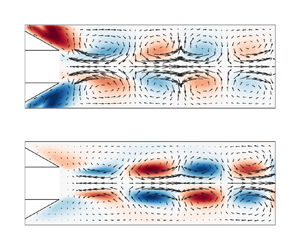
Linear amplification of inertial-wave-driven swirl fluctuations in turbulent swirling pipe flows: a resolvent analysis approach
-
- Journal:
- Journal of Fluid Mechanics / Volume 1000 / 10 December 2024
- Published online by Cambridge University Press:
- 05 December 2024, A91
-
- Article
- Export citation
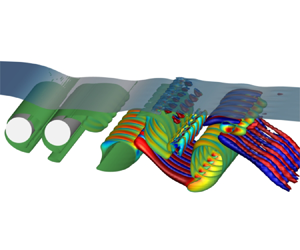
Free-surface effects on the flow around two circular cylinders in tandem
-
- Journal:
- Journal of Fluid Mechanics / Volume 1001 / 25 December 2024
- Published online by Cambridge University Press:
- 05 December 2024, A7
-
- Article
- Export citation
-
This paper presents a numerical study on the flow around two tandem circular cylinders beneath a free surface at a Reynolds number of $180$. The free-surface effects on the wake dynamics and hydrodynamic forces are investigated through a parametric study, covering a parameter space of gap ratios from $0.20$ to $2.00$, spacing ratios from $1.50$ to $4.00$ and Froude numbers from $0.2$ to $0.8$. A jet-like flow accompanied by a shear layer of positive vorticity separating from the free surface is formed in the wake at small gap ratios, which significantly alters the wake pattern through its dynamic behaviours. At shallow submergence depths, the three-dimensional wake transitions from mode B to mode A as the distance between the cylinders increases. As submergence depth increases, the wavy deformation of the primary vortex cores disappears in the wake, and the flow transitions to a two-dimensional state. Higher Froude numbers can extend the effect of the free surface to deeper submergence depths. The critical spacing ratio tends to be larger at higher Froude numbers. Furthermore, the free-surface deformation is examined. The free-surface profile typically comprises a hydraulic jump immediately ahead of the upstream cylinder, trapped waves in the vicinity of the two tandem cylinders and well-defined travelling waves on the downstream side. The frequencies of the waves cluster around the vortex shedding frequency, indicating a close association between the generation of waves and the vortex shedding process.


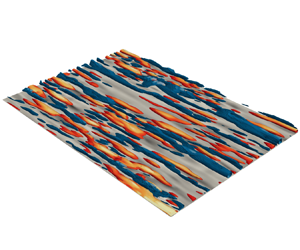
Informative and non-informative decomposition of turbulent flow fields
-
- Journal:
- Journal of Fluid Mechanics / Volume 1000 / 10 December 2024
- Published online by Cambridge University Press:
- 05 December 2024, A95
-
- Article
-
- You have access
- Open access
- HTML
- Export citation
-
Not all the information in a turbulent field is relevant for understanding particular regions or variables in the flow. Here, we present a method for decomposing a source field into its informative $\boldsymbol {\varPhi }_{I}(\boldsymbol {x},t)$ and residual $\boldsymbol {\varPhi }_{R}(\boldsymbol {x},t)$ components relative to another target field. The method is referred to as informative and non-informative decomposition (IND). All the necessary information for physical understanding, reduced-order modelling and control of the target variable is contained in $\boldsymbol {\varPhi }_{I}(\boldsymbol {x},t)$, whereas $\boldsymbol {\varPhi }_{R}(\boldsymbol {x},t)$ offers no substantial utility in these contexts. The decomposition is formulated as an optimisation problem that seeks to maximise the time-lagged mutual information of the informative component with the target variable while minimising the mutual information with the residual component. The method is applied to extract the informative and residual components of the velocity field in a turbulent channel flow, using the wall shear stress as the target variable. We demonstrate the utility of IND in three scenarios: (i) physical insight into the effect of the velocity fluctuations on the wall shear stress; (ii) prediction of the wall shear stress using velocities far from the wall; and (iii) development of control strategies for drag reduction in a turbulent channel flow using opposition control. In case (i), IND reveals that the informative velocity related to wall shear stress consists of wall-attached high- and low-velocity streaks, collocated with regions of vertical motions and weak spanwise velocity. This informative structure is embedded within a larger-scale streak–roll structure of residual velocity, which bears no information about the wall shear stress. In case (ii), the best-performing model for predicting wall shear stress is a convolutional neural network that uses the informative component of the velocity as input, while the residual velocity component provides no predictive capabilities. Finally, in case (iii), we demonstrate that the informative component of the wall-normal velocity is closely linked to the observability of the target variable and holds the essential information needed to develop successful control strategies.


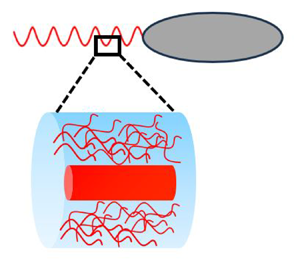
A swimming bacterium in a two-fluid model of a polymer solution
-
- Journal:
- Journal of Fluid Mechanics / Volume 1001 / 25 December 2024
- Published online by Cambridge University Press:
- 05 December 2024, A8
-
- Article
-
- You have access
- Open access
- HTML
- Export citation
-
We analyse the motion of a flagellated bacterium in a two-fluid medium using slender body theory. The two-fluid model is useful for describing a body moving through a complex fluid with a microstructure whose length scale is comparable to the characteristic scale of the body. This is true for bacterial motion in biological fluids (entangled polymer solutions), where the entanglement results in a porous microstructure with typical pore diameters comparable to or larger than the flagellar bundle diameter, but smaller than the diameter of the bacterial head. Thus, the polymer and solvent satisfy different boundary conditions on the flagellar bundle and move with different velocities close to it. This gives rise to a screening length $L_B$ within which the fluids exchange momentum and the relative velocity between the two fluids decays. In this work, both the solvent and polymer of the two-fluid medium are modelled as Newtonian fluids with different viscosities $\mu _s$ and $\mu _p$ (viscosity ratio $\lambda = \mu _p/\mu _s$), thereby capturing the effects solely introduced by the microstructure of the complex fluid. From our calculations, we observe an increased drag anisotropy for a rigid, slender flagellar bundle moving through this two-fluid medium, resulting in an enhanced swimming velocity of the organism. The results are sensitive to the interaction between the bundle and the polymer, and we discuss two physical scenarios corresponding to two types of interaction. Our model provides an explanation for the experimentally observed enhancement of swimming velocity of bacteria in entangled polymer solutions and motivates further experimental investigations.


Biodesign: a means to preserving indigenous craft practices
-
- Journal:
- Research Directions: Biotechnology Design / Volume 2 / 2024
- Published online by Cambridge University Press:
- 05 December 2024, e23
-
- Article
-
- You have access
- Open access
- HTML
- Export citation
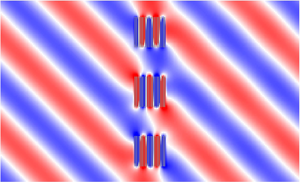
Wave scattering by plate array metacylinders of arbitrary cross-section
-
- Journal:
- Journal of Fluid Mechanics / Volume 1001 / 25 December 2024
- Published online by Cambridge University Press:
- 05 December 2024, A6
-
- Article
-
- You have access
- Open access
- HTML
- Export citation
