Refine search
Actions for selected content:
212822 results in Engineering
A meta-analysis of frequency selective rasorber (FSR)
-
- Journal:
- International Journal of Microwave and Wireless Technologies / Volume 16 / Issue 9 / November 2024
- Published online by Cambridge University Press:
- 05 November 2024, pp. 1465-1480
-
- Article
- Export citation
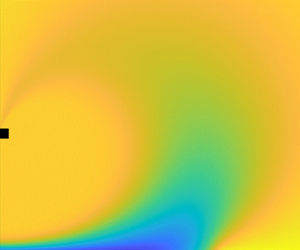
A mathematical model for wind-generated particle–fluid flow fields with an application to the helicopter cloud problem
-
- Journal:
- Journal of Fluid Mechanics / Volume 998 / 10 November 2024
- Published online by Cambridge University Press:
- 05 November 2024, A61
-
- Article
-
- You have access
- Open access
- HTML
- Export citation
Improved machine learning models with a similarity-based approach for remaining useful life prediction
-
- Journal:
- The Aeronautical Journal / Volume 129 / Issue 1332 / February 2025
- Published online by Cambridge University Press:
- 04 November 2024, pp. 485-505
-
- Article
- Export citation
Tunable X-ray frequency comb generation at the Shanghai soft X-ray Free-Electron Laser facility
-
- Journal:
- High Power Laser Science and Engineering / Volume 12 / 2024
- Published online by Cambridge University Press:
- 04 November 2024, e60
-
- Article
-
- You have access
- Open access
- HTML
- Export citation
Characterization of blast waves induced by femtosecond laser irradiation in solid targets
- Part of
-
- Journal:
- High Power Laser Science and Engineering / Volume 12 / 2024
- Published online by Cambridge University Press:
- 04 November 2024, e59
-
- Article
-
- You have access
- Open access
- HTML
- Export citation
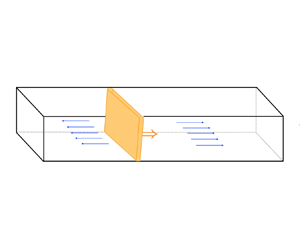
Hydrodynamic theory of premixed flames propagating in closed vessels: flame speed and Markstein lengths
-
- Journal:
- Journal of Fluid Mechanics / Volume 998 / 10 November 2024
- Published online by Cambridge University Press:
- 04 November 2024, A59
-
- Article
-
- You have access
- Open access
- HTML
- Export citation
Ultracompact isolated multilayer broadside-coupled balun with arbitrary isolation bandwidth
-
- Journal:
- International Journal of Microwave and Wireless Technologies / Volume 16 / Issue 8 / October 2024
- Published online by Cambridge University Press:
- 04 November 2024, pp. 1355-1363
-
- Article
- Export citation
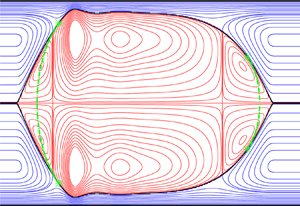
Liquid plugs in narrow tubes: application to airway occlusion
-
- Journal:
- Journal of Fluid Mechanics / Volume 998 / 10 November 2024
- Published online by Cambridge University Press:
- 04 November 2024, A50
-
- Article
- Export citation
Monitoring-supported value generation for managing structures and infrastructure systems
-
- Journal:
- Data-Centric Engineering / Volume 5 / 2024
- Published online by Cambridge University Press:
- 04 November 2024, e27
-
- Article
-
- You have access
- Open access
- HTML
- Export citation
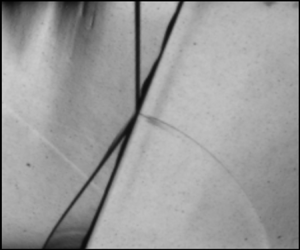
Pseudosteady shock refractions over an air–water interface
-
- Journal:
- Journal of Fluid Mechanics / Volume 998 / 10 November 2024
- Published online by Cambridge University Press:
- 04 November 2024, A49
-
- Article
-
- You have access
- Open access
- HTML
- Export citation
-
Shock refraction in a gas–liquid interface is ubiquitous in nature and engineering. This study investigates the shock refraction phenomena in air–water interfaces for various inclination angles. The interface inclination angles are achieved using a tiltable vertical shock tube. The time-resolved schlieren images are compared with numerical simulations performed using the BlastFoam solver in the OpenFOAM software. The stiffened gas equation of state is used to model water in the simulations. The shock polar analysis using modified shock relations for a stiffened gas is used to elucidate the refraction patterns. A regular refraction pattern with a reflected shock wave and a bound precursor refraction with a regular reflection are observed experimentally for the first time in an air–water system. Further, a new free precursor refraction pattern with a Mach reflection is observed. The transition criteria and the corresponding boundaries for each refraction pattern are demarcated in the ( $M_S, \theta _w^c$)-plane. The refraction sequence and the range for various incident shock strength regimes are also identified.

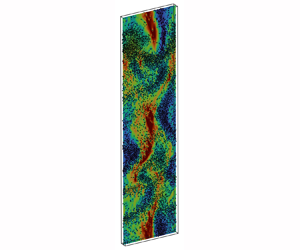
Modelling of filtered drag force for clustered particle-laden flows based on interface-resolved simulation data
-
- Journal:
- Journal of Fluid Mechanics / Volume 998 / 10 November 2024
- Published online by Cambridge University Press:
- 04 November 2024, A57
-
- Article
- Export citation
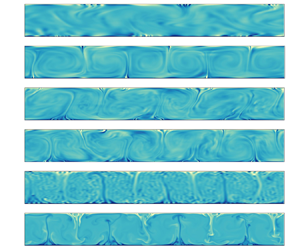
The generalized quasilinear approximation of two-dimensional Rayleigh–Bénard convection
-
- Journal:
- Journal of Fluid Mechanics / Volume 998 / 10 November 2024
- Published online by Cambridge University Press:
- 04 November 2024, A52
-
- Article
-
- You have access
- Open access
- HTML
- Export citation
-
In the generalized quasilinear approximation (GQLA) (Marston et al., Phys. Rev. Lett., vol. 116, 2016, 214501), a threshold wavenumber ( $k_0$) in the direction of translational symmetry segregates the total into large- ( $l$) and small-scale ( $h$) fields. While the governing equation for the large-scale field is fully nonlinear, that for the small scales is linearized with respect to the large-scale field. In addition, some nonlinear triad interactions are omitted in the GQLA. Herein, the GQLA is applied to two-dimensional planar Rayleigh–Bénard convection (RBC). A scale separation between the large-scale convection rolls and small-scale turbulent fluctuations is typical in RBC. The present work explores the efficacy of GQLA in capturing the scale-by-scale energy transfer processes in RBC. The initial condition for the GQLA simulations was either the statistically stationary state obtained in direct numerical simulation (DNS) or random fluctuations superimposed on the linear conductive temperature profile and $\boldsymbol {u}=0$. The GQLA simulations can capture the convection rolls for $k_0$ larger than or equal to the dominant wavenumber for thermal driving of the flow ( $k_0 \ge k_{\hat {Q}}$). Additionally, the GQLA emulates the fully nonlinear dynamics for $k_0$ larger than or equal to the first harmonic of the convection-roll wavenumber ( $k_0 \ge 2k_{roll}$). In the intermediate regime with $2k_{roll} > k_0 \ge k_{\hat {Q}}$, the dynamics captured in GQLA simulations is different from the DNS. In DNS, two primary energy transfer processes dominate: (i) the energy transfer to/from the convection rolls and (ii) the scale-by-scale inverse kinetic energy and forward thermal energy cascades mediated by the convection rolls. The fully nonlinear dynamics is emulated by GQLA when these energy transfer processes are faithfully reproduced. Utilizing the framework of altering the triad interactions in GQLA, an additional intrusive calculation, including target triad interactions, is performed here to study their influence. This intrusive calculation shows that the convection rolls are not captured in GQLA for $k_0 < k_{\hat {Q}}$ because of the exclusion of the $h \to l \to l$ and $l \to h \to h$ triad interactions in GQLA. The inclusion of these triad interactions in the intrusive calculation yields the convection rolls, and the reproduced dynamics is similar to that of the intermediate GQLA regime with $2k_{roll} > k_0 \ge k_{\hat {Q}}$.


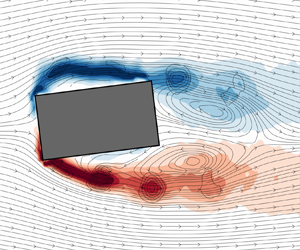
Self-selection of flow instabilities by acoustic perturbations around rectangular cylinder in cross-flow
-
- Journal:
- Journal of Fluid Mechanics / Volume 998 / 10 November 2024
- Published online by Cambridge University Press:
- 04 November 2024, A51
-
- Article
- Export citation
-
This work experimentally investigates the flow structure around a rectangular cylinder with an aspect ratio of 2 under varying incidence angles to examine how acoustic perturbations modify and modulate the unsteady flow instabilities. In the absence of acoustic excitation, the angle of incidence is found to markedly influence the flow topology and the natural shedding pattern altering the vortex formation length and wake dynamics. With acoustic perturbations, it is observed that for incidence angles $\alpha = 0^{\circ }$ and $\alpha = 5^{\circ }$, the masked impinging leading-edge vortex (ILEV)/trailing-edge vortex shedding (TEVS) instability modes of $n= 1$ and $n= 2$ become evident when their frequencies coincide with the frequencies of the acoustic perturbations (i.e. resonant condition). Both trailing-edge and leading-edge vortices were found to be modulated by the acoustic pressure cycle. These instability modes, which are naturally present under non-resonant conditions for significantly higher aspect ratios, highlight the role of incidence angle and self-excited acoustic resonance in virtually augmenting the streamwise length of the cylinder, thereby facilitating the emergence and sustenance of the ILEV/TEVS shedding pattern.


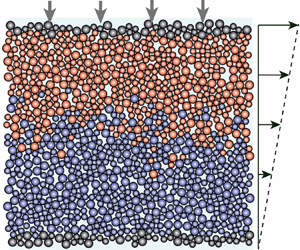
Unifying suspension and granular shear-induced self-diffusion
-
- Journal:
- Journal of Fluid Mechanics / Volume 998 / 10 November 2024
- Published online by Cambridge University Press:
- 04 November 2024, A55
-
- Article
-
- You have access
- Open access
- HTML
- Export citation
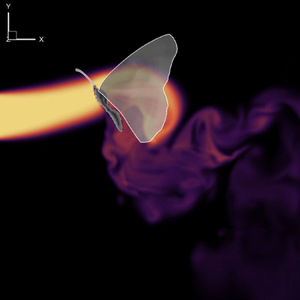
Wing–antenna interaction reduces odour fatigue in butterfly odour-tracking flight
-
- Journal:
- Journal of Fluid Mechanics / Volume 998 / 10 November 2024
- Published online by Cambridge University Press:
- 04 November 2024, A45
-
- Article
-
- You have access
- Open access
- HTML
- Export citation
Design of a pHEMT RF mixer based on compact microstrip diplexer
-
- Journal:
- International Journal of Microwave and Wireless Technologies / Volume 16 / Issue 9 / November 2024
- Published online by Cambridge University Press:
- 04 November 2024, pp. 1597-1608
-
- Article
-
- You have access
- Open access
- HTML
- Export citation
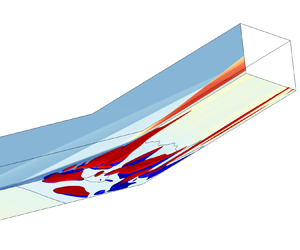
Scales and self-sustained mechanism of reattachment unsteadiness in separated shock wave/boundary layer interaction
-
- Journal:
- Journal of Fluid Mechanics / Volume 998 / 10 November 2024
- Published online by Cambridge University Press:
- 04 November 2024, A54
-
- Article
- Export citation
-
The spatio-temporal scales, as well as a comprehensive self-sustained mechanism of the reattachment unsteadiness in shock wave/boundary layer interaction, are investigated in this study. Direct numerical simulations reveal that the reattachment unsteadiness of a Mach 7.7 laminar inflow causes over $26\,\%$ variation in wall friction and up to $20\,\%$ fluctuation in heat flux at the reattachment of the separation bubble. A statistical approach, based on the local reattachment upstream movement, is proposed to identify the spanwise and temporal scales of reattachment unsteadiness. It is found that two different types, i.e. self-induced and random processes, dominate different regions of reattachment. A self-sustained mechanism is proposed to comprehend the reattachment unsteadiness in the self-induced region. The intrinsic instability of the separation bubble transports vorticity downstream, resulting in an inhomogeneous reattachment line, which gives rise to baroclinic production of quasi-streamwise vortices. The pairing of these vortices initiates high-speed streaks and shifts the reattachment line upstream. Ultimately, viscosity dissipates the vortices, triggering instability and a new cycle of reattachment unsteadiness. The temporal scale and maximum vorticity are estimated with the self-sustained mechanism via order-of-magnitude analysis of the enstrophy. The advection speed of friction, derived from the assumption of coherent structures advecting with a Blasius-type boundary layer, aligns with the numerical findings.


Sub-100 fs pulse generation from dispersion-managed mode-locked Er:ZBLAN fiber laser at 2.8 μm
-
- Journal:
- High Power Laser Science and Engineering / Volume 12 / 2024
- Published online by Cambridge University Press:
- 04 November 2024, e58
-
- Article
-
- You have access
- Open access
- HTML
- Export citation
Multifunctional and tunable bandpass filters with RF codesigned isolator and impedance matching capabilities
-
- Journal:
- International Journal of Microwave and Wireless Technologies / Volume 17 / Issue 2 / March 2025
- Published online by Cambridge University Press:
- 04 November 2024, pp. 303-317
-
- Article
-
- You have access
- Open access
- HTML
- Export citation
A multi-task deep reinforcement learning-based recommender system for co-optimizing energy, comfort, and air quality in commercial buildings with humans-in-the-loop
- Part of
-
- Journal:
- Data-Centric Engineering / Volume 5 / 2024
- Published online by Cambridge University Press:
- 04 November 2024, e26
-
- Article
-
- You have access
- Open access
- HTML
- Export citation
