Refine search
Actions for selected content:
212899 results in Engineering
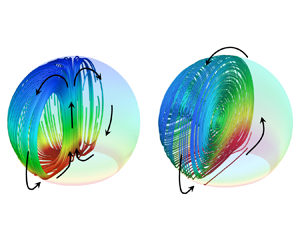
Transition of buoyancy-driven flow from an axisymmetric to non-axisymmetric vortex inside an evaporating sessile droplet
-
- Journal:
- Journal of Fluid Mechanics / Volume 997 / 25 October 2024
- Published online by Cambridge University Press:
- 17 October 2024, A47
-
- Article
- Export citation
Developing and characterizing a typology of soil fabrics
-
- Journal:
- Research Directions: Biotechnology Design / Volume 2 / 2024
- Published online by Cambridge University Press:
- 17 October 2024, e15
-
- Article
-
- You have access
- Open access
- HTML
- Export citation
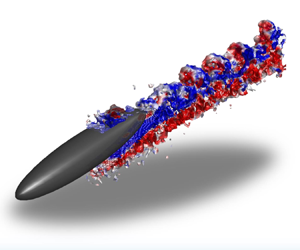
The effects of stratification on the near wake of 6 : 1 prolate spheroid
-
- Journal:
- Journal of Fluid Mechanics / Volume 997 / 25 October 2024
- Published online by Cambridge University Press:
- 17 October 2024, A43
-
- Article
-
- You have access
- Open access
- HTML
- Export citation
-
An experimental study has been conducted on the near wake of a 6 : 1 spheroid, in both uniform and stratified backgrounds. The pitch angle, $\theta$, was varied from $0^\circ \text { to }20^\circ$. When $\theta = 0^\circ$, stratification decreases the characteristic wake element spacing so a characteristic Strouhal number ( $St$) increases from 0.32 to 0.4. However, a similar measure scaled on wake momentum thickness shows the wake spacing to converge on those measured for other bluff and streamlined bodies. There is an apparent effect of Reynolds number, which changes the location of separation lines and hence the initial wake thickness. When $\theta > 0^\circ$, the wake is a combination of the usual drag wake together with a collection of streamwise vortices that have separated from the body, and this wake geometry can evolve in ways that are measurably different from the zero incidence case. These differences may be limited to the near wake, as the later evolution appears to converge with previous bluff- and streamlined bodies, with normalised wake height, $L_V = 0.5$ and centreline velocity, $\bar {u}_0 = 0.3$ at $Nt = 10$, as the early wake enters the non-equilibrium regime with similar values to previously studied stratified wakes. In the presence of density stratification, the inclined wake itself generates large-scale internal wave undulations with time scale $2{\rm \pi} /N$, even when the background stratification is not strong and a body-based Froude number is $O(10)$. The geometry and strengths of the primary streamwise vortices are not symmetric, mirroring previous results from experiments and computations in the literature.


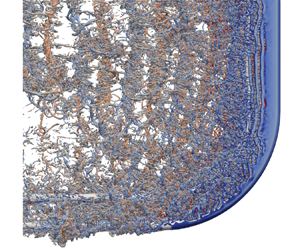
Turbulent flow around convex curved tandem cylinders
-
- Journal:
- Journal of Fluid Mechanics / Volume 997 / 25 October 2024
- Published online by Cambridge University Press:
- 17 October 2024, A58
-
- Article
-
- You have access
- Open access
- HTML
- Export citation
-
Turbulent flow around curved tandem cylinders has been studied for the first time, by means of direct numerical simulation. The convex configuration was used, with a nominal gap ratio of $L/D = 3$ and a Reynolds number of 3900. Along the span, the flow regimes vary from alternating overshoot/reattachment to co-shedding. Three distinct Strouhal numbers coexist in the flow that are tied directly to different tandem cylinder flow regimes. This result differs substantially from convex curved tandem cylinders at a transitional Reynolds number, where only a single dominant frequency is found. All regimes exhibit some degree of instability, so that the flow can be considered multistable. A mode switch from alternating overshoot/reattachment to symmetric reattachment is found. Complex interactions are observed between the primary instability, the shear layer instability and the flow mode alterations. As opposed to previous investigations with single and tandem straight cylinders in the subcritical flow regime, our results indicate that there may be direct feedback from the primary instability to the shear layer instability. The downdraft region in the gap exhibits slow meandering, and may travel upstream and amplify the shear layer instability, causing early transition in the gap shear layer. This downdraft is governed by the slow modulations of the vortex formation region in the lower gap, meaning that the vortex dynamics of this region may indirectly influence the shear layer instability higher up in the gap.

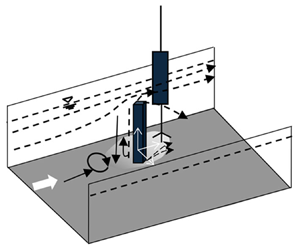
Three-dimensional bursting process and turbulent coherent structure within scour holes at various development stages around a cylindrical structure
-
- Journal:
- Journal of Fluid Mechanics / Volume 997 / 25 October 2024
- Published online by Cambridge University Press:
- 17 October 2024, A61
-
- Article
- Export citation
High beam quality 10 kW light source based on thin-film beam combination
-
- Journal:
- High Power Laser Science and Engineering / Volume 12 / 2024
- Published online by Cambridge University Press:
- 16 October 2024, e55
-
- Article
-
- You have access
- Open access
- HTML
- Export citation
On the self-similarity of unbounded viscous Marangoni flows
-
- Journal:
- Journal of Fluid Mechanics / Volume 997 / 25 October 2024
- Published online by Cambridge University Press:
- 16 October 2024, A45
-
- Article
-
- You have access
- Open access
- HTML
- Export citation
-
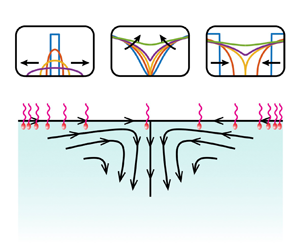
The Marangoni flow induced by an insoluble surfactant on a fluid–fluid interface is a fundamental problem investigated extensively due to its implications in colloid science, biology, the environment and industrial applications. Here, we study the limit of a deep liquid subphase with negligible inertia (low Reynolds number, $Re\ll {1}$), where the two-dimensional problem has been shown to be described by the complex Burgers equation. We analyse the problem through a self-similar formulation, providing further insights into its structure and revealing its universal features. Six different similarity solutions are found. One of the solutions includes surfactant diffusion, whereas the other five, which are identified through a phase-plane formalism, hold only in the limit of negligible diffusion (high surface Péclet number $Pe_s\gg {1}$). Surfactant ‘pulses’, with a locally higher concentration that spreads outward, lead to two similarity solutions of the first kind with a similarity exponent $\beta =1/2$. On the other hand, distributions that are locally depleted and flow inwards lead to similarity of the second kind, with two different exponents that we obtain exactly using stability arguments. We distinguish between ‘dimple’ solutions, where the surfactant has a quadratic minimum and $\beta =2$, from ‘hole’ solutions, where the concentration profile is flatter than quadratic and $\beta =3/2$. Each of these two cases exhibits two similarity solutions, one valid prior to a critical time $t_*$ when the derivative of the concentration is singular, and another one valid after $t_*$. We obtain all six solutions in closed form, and discuss predictions that can be extracted from these results.


The minimal seed for transition to convective turbulence in heated pipe flow
-
- Journal:
- Journal of Fluid Mechanics / Volume 997 / 25 October 2024
- Published online by Cambridge University Press:
- 16 October 2024, A46
-
- Article
- Export citation
-
It is well known that buoyancy suppresses, and can even laminarise, turbulence in upward heated pipe flow. Heat transfer seriously deteriorates in this case. A new direct numerical simulation model is established to simulate flow-dependent heat transfer in an upward heated pipe. The model shows good agreement with experimental results. Three flow states are simulated for different values of the buoyancy parameter $C$: shear turbulence, laminarisation and convective turbulence. The latter two regimes correspond to the heat transfer deterioration regime and the heat transfer recovery regime, respectively (Jackson & Li 2002; Bae et al., Phys. Fluids, vol. 17, issue 10, 2005; Zhang et al., Appl. Energy, vol. 269, 2020, 114962). We confirm that convective turbulence is driven by a linear instability (Su & Chung, J. Fluid Mech., vol. 422, 2000, pp. 141–166) and that the deteriorated heat transfer within convective turbulence is related to a lack of rolls near the wall, which leads to weak mixing between the flow near the wall and the centre of the pipe. Having surveyed the fundamental properties of the system, we perform a nonlinear non-modal stability analysis, which seeks the minimal perturbation that triggers a transition from the laminar state. Given the differences between shear and convective turbulence, we aim to determine how the nonlinear optimal (NLOP) changes as the buoyancy parameter $C$ increases. We find that at first, the NLOP becomes thinner and closer to the wall. Most importantly, the critical initial energy $E_0$ required to trigger turbulence keeps increasing, implying that attempts to trigger it artificially may not be an efficient means to improve heat transfer at larger $C$. At $C=6$, a new type of NLOP is discovered, capable of triggering convective turbulence from lower energy, but over a longer time. It is active only in the centre of the pipe. We next compare the transition processes, from linear instability and by the nonlinear non-modal excitation. At $C=4$, linear instability leads to a state that approaches a travelling wave solution or periodic solutions, while the minimal seed triggers shear turbulence before decaying to convective turbulence. Deeper into the parameter space for convective turbulence, at $C=6$, the new nonlinear optimal triggers convective turbulence directly. Detailed analysis of the periodic solution at $C=4$ reveals three stages: growth of the unstable eigenfunction, the formation of streaks, and the decay of the streaks. The stages of the cycle correspond to changes in the linear instability of the turbulent mean velocity profile. Unlike the self-sustaining process for classical shear flows, where the streak is disrupted via instability, here, decay of the streak is more closely linked to suppression of the linear instability of the mean flow, and hence suppression of the rolls. Flow visualisations at $C$ up to $10$ also show similar processes, suggesting that the convective turbulence in the heat transfer recovery regime is sustained by these three typical processes.


Priority-based intelligent resolution method of multi-aircraft flight conflicts
-
- Journal:
- The Aeronautical Journal / Volume 129 / Issue 1332 / February 2025
- Published online by Cambridge University Press:
- 16 October 2024, pp. 326-350
-
- Article
- Export citation
Two-point statistics in non-homogeneous rotating turbulence
-
- Journal:
- Journal of Fluid Mechanics / Volume 997 / 25 October 2024
- Published online by Cambridge University Press:
- 16 October 2024, A53
-
- Article
- Export citation
3D-printed polarization-independent low-cost flexible frequency selective surface based dual-band microwave absorber
-
- Journal:
- International Journal of Microwave and Wireless Technologies / Volume 16 / Issue 9 / November 2024
- Published online by Cambridge University Press:
- 16 October 2024, pp. 1441-1450
-
- Article
- Export citation
Bouncing behaviour of a particle settling through a density transition layer
-
- Journal:
- Journal of Fluid Mechanics / Volume 997 / 25 October 2024
- Published online by Cambridge University Press:
- 16 October 2024, A49
-
- Article
- Export citation
-
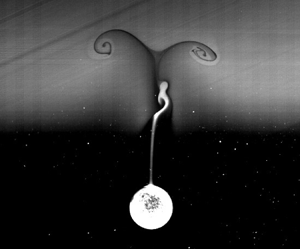
The present work focuses on a specific bouncing behaviour as a spherical particle settles through a density interface in the absence of a neutral buoyant position. This behaviour was initially discovered by Abaid et al. (Phys. Fluids, vol. 16, issue 5, 2004, pp. 1567–1580) in salinity-induced stratification. Both experimental and numerical investigations are conducted to understand this phenomenon. In our experiments, we employ particle image velocimetry (PIV) to measure the velocity distribution around the particle and to capture the transient wake structure. Our findings reveal that the bouncing process begins after the wake detaches from the particle. The PIV results indicate that an upward jet forms at the central axis behind the particle following wake detachment. By performing a force decomposition procedure, we quantify the contributions from the buoyancy of the wake ( $F_{sb}$) and the flow structure ( $F_{sj}$) to the enhanced drag. It is observed that $F_{sb}$ contributes primarily to the enhanced drag at the early stage, whereas $F_{sj}$ plays a critical role in reversing the particle's motion. Furthermore, our results indicate that the jet is a necessary condition for the occurrence of the bouncing motion. We also explore the minimum velocities (where negative values denote the occurrence of bouncing) of the particle, while varying the lower Reynolds number $Re_l$, the Froude number $Fr$, and the upper Reynolds number $Re_u$, within the ranges $1 \leqslant Re_l\leqslant 125$, $115 \leqslant Re_u\leqslant 356$ and $2 \leqslant Fr\leqslant 7$. Our findings suggest that the bouncing behaviour is influenced primarily by $Re_l$. Specifically, we observe that the bouncing motion occurs below a critical lower Reynolds number $Re^\ast _{l}=30$ in our experiments. In the numerical simulations, the highest value for this critical number is $Re^\ast _{l}=46.2$, which is limited to the parametric ranges studied in this work.


Thin-disk multi-pass amplifier for kilowatt-class ultrafast lasers
-
- Journal:
- High Power Laser Science and Engineering / Volume 12 / 2024
- Published online by Cambridge University Press:
- 16 October 2024, e56
-
- Article
-
- You have access
- Open access
- HTML
- Export citation
Flow state transition induced by emergence of orbiting satellite eddies in two-dimensional turbulent Rayleigh–Bénard convection
-
- Journal:
- Journal of Fluid Mechanics / Volume 997 / 25 October 2024
- Published online by Cambridge University Press:
- 16 October 2024, A54
-
- Article
- Export citation
-
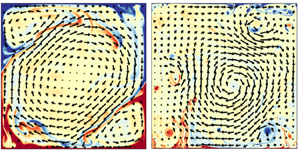
We report a numerical investigation of a previously noticed but less explored flow state transition in two-dimensional turbulent Rayleigh–Bénard convection. The simulations are performed in a square domain over a Rayleigh number range of $10^7 \leq Ra \leq 2 \times 10^{11}$ and a Prandtl number range of $0.25 \leq Pr \leq 20$. The transition is characterized by the emergence of multiple satellite eddies with increasing $Ra$, which orbit around and interact with the main vortex roll in the system. Consequently, the main roll is squeezed to a smaller size compared with the domain and wanders around in the bulk region irregularly and extensively. This is in sharp contrast to the flow state before the transition, which is featured by a domain-sized circulatory roll with its vortex centre ‘condensed’ near the domain's centre. Detailed velocity field analysis reveals that there exists an abrupt increase in the energy fluctuations of the Fourier modes during the transition. Based on this phase-transition-like signal, the critical condition for the transition is found to follow a scaling relation as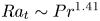 $Ra_t \sim Pr^{1.41}$ where $Ra_t$ is the critical Rayleigh number for the transition. This scaling relation is quantitatively explained by a phenomenological model grounded on the bistability behaviour (i.e. spontaneous and stochastic switching between the two flow states) observed at the edge of the transition. The model can also account for the effects of aspect ratio on the transition reported in the literature (van der Poel et al., Phys. Fluids, vol. 24, 2012).


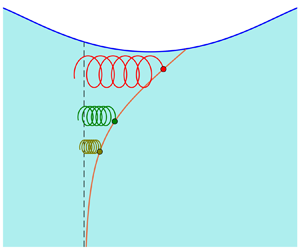
Momentum, energy and vorticity balances in deep-water surface gravity waves
-
- Journal:
- Journal of Fluid Mechanics / Volume 997 / 25 October 2024
- Published online by Cambridge University Press:
- 16 October 2024, A55
-
- Article
-
- You have access
- Open access
- HTML
- Export citation
A modified dumbbell-shaped highly efficient broadband multifunctional polarizer for X and Ku band applications
-
- Journal:
- International Journal of Microwave and Wireless Technologies / Volume 16 / Issue 9 / November 2024
- Published online by Cambridge University Press:
- 16 October 2024, pp. 1552-1560
-
- Article
- Export citation
A proposed crystal structure of lifitegrast sesquihydrate Form A, (C29H24Cl2N2O7S)2(H2O)3
-
- Journal:
- Powder Diffraction / Volume 39 / Issue 4 / December 2024
- Published online by Cambridge University Press:
- 16 October 2024, pp. 275-282
-
- Article
-
- You have access
- Open access
- HTML
- Export citation
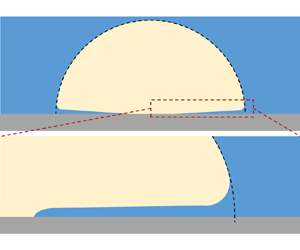
Predicting initial microlayer thickness in nucleate boiling using Landau–Levich theory
-
- Journal:
- Journal of Fluid Mechanics / Volume 997 / 25 October 2024
- Published online by Cambridge University Press:
- 16 October 2024, A44
-
- Article
-
- You have access
- Open access
- HTML
- Export citation
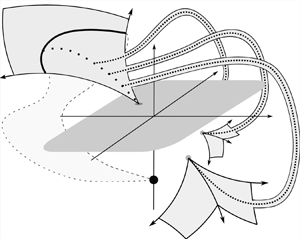
Three-dimensional exponential asymptotics and Stokes surfaces for flows past a submerged point source
-
- Journal:
- Journal of Fluid Mechanics / Volume 997 / 25 October 2024
- Published online by Cambridge University Press:
- 16 October 2024, A50
-
- Article
-
- You have access
- Open access
- HTML
- Export citation
Diagnosing tracer transport in convective penetration of a stably stratified layer
-
- Journal:
- Journal of Fluid Mechanics / Volume 997 / 25 October 2024
- Published online by Cambridge University Press:
- 16 October 2024, A48
-
- Article
-
- You have access
- Open access
- HTML
- Export citation
