Refine search
Actions for selected content:
212908 results in Engineering
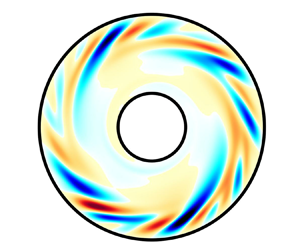
Effect of radius ratio on the sheared annular centrifugal turbulent convection
-
- Journal:
- Journal of Fluid Mechanics / Volume 992 / 10 August 2024
- Published online by Cambridge University Press:
- 13 September 2024, A16
-
- Article
- Export citation
-
We perform linear stability analysis and direct numerical simulations to study the effect of the radius ratio on the instability and flow characteristics of the sheared annular centrifugal Rayleigh–Bénard convection, where the cold inner cylinder and the hot outer cylinder rotate with a small angular velocity difference. With the shear enhancement, the thermal convection is suppressed and finally becomes stable for different radius ratios $\{\eta \in \mathbb {R}|0.2\leqslant \eta \le 0.95\}$. Considering the inhomogeneous distribution of shear stresses in the base flow, a new global Richardson number $Ri_g$ is defined and the marginal-state curves for different radius ratios are successfully unified in the parameter domain of $Ri_g$ and the Rayleigh number $Ra$. The results are consistent with the marginal-state curve of the wall-sheared classical Rayleigh–Bénard convection in the streamwise direction, demonstrating that the basic stabilization mechanisms are identical. Moreover, systems with small radius ratios exhibit greater geometric asymmetry. On the one hand, this results in a smaller equivalent aspect ratio for the system, accommodating fewer convection roll pairs; fewer roll pairs are more likely to cause a transition in the flow structure during shear enhancement. On the other hand, the shear distribution is more inhomogeneous, allowing for an outward shift of the convection region and the elevation of bulk temperature under strong shear.


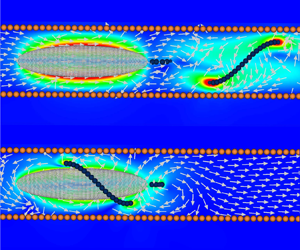
Swimming efficiently by wrapping
-
- Journal:
- Journal of Fluid Mechanics / Volume 993 / 25 August 2024
- Published online by Cambridge University Press:
- 13 September 2024, A7
-
- Article
- Export citation
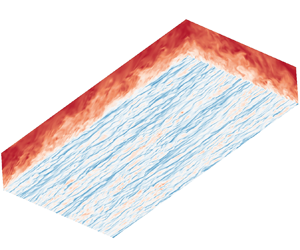
A combined active control method of restricted nonlinear model and machine learning technology for drag reduction in turbulent channel flow
-
- Journal:
- Journal of Fluid Mechanics / Volume 993 / 25 August 2024
- Published online by Cambridge University Press:
- 13 September 2024, A4
-
- Article
- Export citation
-
The practical implementation of machine learning in flow control is limited due to its significant training expenses. In the present study the convolutional neural network (CNN) trained with the data of the restricted nonlinear (RNL) model is used to predict the normal velocity on a detection plane at $y^+=10$ in a turbulent channel flow, and the predicted velocity is used as wall blowing and suction for drag reduction. An active control test is carried out by using the well-trained CNN in direct numerical simulation (DNS). Substantial drag reduction rates up to 19 % and 16 % are obtained based on the spanwise and streamwise wall shear stresses, respectively. Furthermore, we explore the online control of wall turbulence by combining the RNL model with reinforcement learning (RL). The RL is constructed to determine the optimal wall blowing and suction based on its observation of the wall shear stresses without using the label data on the detection plane for training. The controlling and training processes are conducted synchronously in a RNL flow field. The control strategy discovered by RL has similar drag reduction rates with those obtained previously by the established method. Also, the training cost decreases by over thirty times at $Re_{\tau }=950$ compared with the DNS-RL model. The present results provide a perspective that combining the RNL model with machine learning control for drag reduction in wall turbulence can be effective and computationally economical. Also, this approach can be easily extended to flows at higher Reynolds numbers.


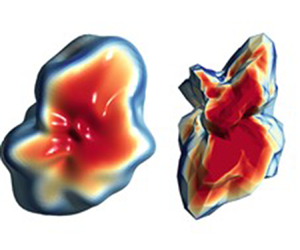
Drag coefficient for irregularly shaped grains: rotational dependence at various Reynolds numbers
-
- Journal:
- Journal of Fluid Mechanics / Volume 994 / 10 September 2024
- Published online by Cambridge University Press:
- 13 September 2024, A1
-
- Article
-
- You have access
- Open access
- HTML
- Export citation
-
The nature and behaviour of the drag coefficient $C_D$ of irregularly shaped grains within a wide range of Reynolds numbers $Re$ is discussed. The morphology of the grains is controlled by their fractal description, and they differ in shape. Using computational fluid dynamics tools, the characteristics of the boundary layer at high $Re$ has been determined by applying the Reynolds-averaged Navier–Stokes turbulence model. Both grid resolution and mesh size dependence are validated with well-reported previous experimental results applied in flow around isolated smooth spheres. The drag coefficient for irregularly shaped grains is shown to be higher than that for spherical shapes, also showing a strong drop in its value at high $Re$. This drag crisis is reported at lower $Re$ compared to the smooth sphere, but higher critical $C_D$, demonstrating that the morphology of the particle accelerates this crisis. Furthermore, the dependence of $C_D$ on $Re$ in this type of geometry can be represented qualitatively by four defined zones: subcritical, critical, supercritical and transcritical. The orientational dependence for both particles with respect to the fluid flow is analysed, where our findings show an interesting oscillatory behaviour of $C_D$ as a function of the angle of incidence, fitting the results to a sine-squared interpolation, predicted for particles within the Stokes laminar regime ( $Re\ll 1$) and for elongated/flattened spheroids up to $Re=2000$. A statistical analysis shows that this system satisfies a Weibullian behaviour of the drag coefficient when random azimuthal and polar rotation angles are considered.


Characterization of MoS2 films via simultaneous grazing incidence X-ray diffraction and grazing incidence X-ray fluorescence (GIXRD/GIXRF)
-
- Journal:
- Powder Diffraction / Volume 39 / Issue 2 / June 2024
- Published online by Cambridge University Press:
- 13 September 2024, pp. 60-68
-
- Article
-
- You have access
- Open access
- HTML
- Export citation
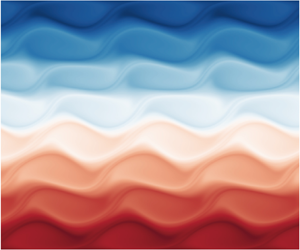
Double diffusive convection in the diffusive regime with a uniform background shear
-
- Journal:
- Journal of Fluid Mechanics / Volume 993 / 25 August 2024
- Published online by Cambridge University Press:
- 13 September 2024, A14
-
- Article
- Export citation
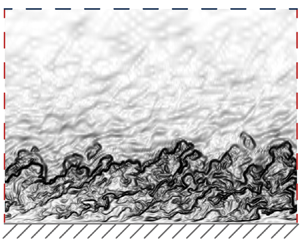
The intrinsic scaling relation between pressure fluctuations and Mach number in compressible turbulent boundary layers
-
- Journal:
- Journal of Fluid Mechanics / Volume 993 / 25 August 2024
- Published online by Cambridge University Press:
- 13 September 2024, A2
-
- Article
- Export citation
-
The scaling relations mapping the turbulence statistics in compressible turbulent boundary layers (TBLs) onto their incompressible counterparts are of fundamental significance for turbulence modelling, such as the Morkovin scaling for velocity fields, while for pressure fluctuation fields, a corresponding scaling relation is currently absent. In this work, the underlying scaling relations of pressure fluctuations about Mach number ( $M$) contained in their generation mechanisms are explored by analysing a series of direct numerical simulation data of compressible TBLs over a wide Mach number range $(0.5\leq M \leq 8.0)$. Based on the governing equation of pressure fluctuations, they are decomposed into components according to the properties of source terms. It is notable that the intensity of the compressible component, predominantly originating from the acoustic mode, obeys a monotonic distribution about the Mach number and wall distance; further, the intensity of the rest of the pressure components, which are mainly generated by the vorticity mode, demonstrates a uniform distribution consistent with its incompressible counterpart. Moreover, the coupling between the two components is negligibly weak. Based on the scaling relations, semiempirical models for the fluctuation intensity of both pressure and its components are constructed. Hence, a mapping relation is obtained that the profiles of pressure fluctuation intensities in compressible TBLs can be mapped onto their incompressible counterparts by removing the contribution from the acoustic mode, which can be provided by the model. The intrinsic scaling relation can provide some basic insight for pressure fluctuation modelling.


Large-scale circulation reversals explained by pendulum correspondence
-
- Journal:
- Journal of Fluid Mechanics / Volume 993 / 25 August 2024
- Published online by Cambridge University Press:
- 13 September 2024, A3
-
- Article
-
- You have access
- Open access
- HTML
- Export citation
-
We introduce a low-order dynamical system to describe thermal convection in an annular domain. The model derives systematically from a Fourier–Laurent truncation of the governing Navier–Stokes Boussinesq equations and accounts for spatial dependence of the flow and temperature fields. Comparison with fully resolved direct numerical simulations (DNS) shows that the model captures parameter bifurcations and reversals of the large-scale circulation (LSC), including states of (i) steady circulating flow, (ii) chaotic LSC reversals and (iii) periodic LSC reversals. Casting the system in terms of the fluid's angular momentum and centre of mass (CoM) reveals equivalence to a damped pendulum with forcing that raises the CoM above the fulcrum. This formulation offers a transparent mechanism for LSC reversals, namely the inertial overshoot of a forced pendulum, and it yields an explicit formula for the frequency $f^*$ of regular LSC reversals in the high-Rayleigh-number (Ra) limit. This formula is shown to be in excellent agreement with DNS and produces the scaling law $f^* \sim {Ra}^{0.5}$.


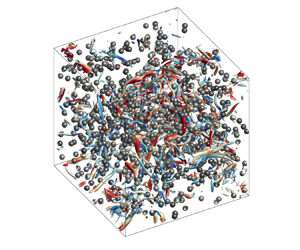
Decay rate of homogeneous isotropic turbulence laden with finite-size particles
-
- Journal:
- Journal of Fluid Mechanics / Volume 993 / 25 August 2024
- Published online by Cambridge University Press:
- 13 September 2024, A15
-
- Article
- Export citation
-
This study conducts particle-resolved direct numerical simulations to analyse how finite-size spherical particles affect the decay rate of turbulent kinetic energy in non-sustained homogeneous isotropic turbulence. The decaying particle-laden homogeneous isotropic turbulence is generated with two set-ups, i.e. (1) releasing particles into a single-phase decaying homogeneous isotropic turbulence and (2) switching off the driving force of a sustained particle-laden homogeneous isotropic turbulence. With both set-ups, the decay of turbulent kinetic energy follows a power-law when the flow is fully relaxed, similar to their single-phase counterparts. The dependence of the power-law decay exponent $n$ on the particle-to-fluid density ratio, particle size and volume fraction is also investigated, and a predictive model is developed. We find that the presence of heavier particles slows down the long-time power-law decay exponent.

Multiple stable postures of a falling object in fluids
-
- Journal:
- Journal of Fluid Mechanics / Volume 993 / 25 August 2024
- Published online by Cambridge University Press:
- 13 September 2024, A17
-
- Article
- Export citation
Net spanwise flow induced by symmetry-breaking streamwise homogeneous surfaces
-
- Journal:
- Journal of Fluid Mechanics / Volume 993 / 25 August 2024
- Published online by Cambridge University Press:
- 13 September 2024, A12
-
- Article
-
- You have access
- Open access
- HTML
- Export citation
Undulatory swimming in suspensions and networks of flexible filaments
-
- Journal:
- Journal of Fluid Mechanics / Volume 993 / 25 August 2024
- Published online by Cambridge University Press:
- 13 September 2024, A10
-
- Article
-
- You have access
- Open access
- HTML
- Export citation
Heat transport in liquid metal convection from onset to turbulence: the effect of small aspect ratio
-
- Journal:
- Journal of Fluid Mechanics / Volume 993 / 25 August 2024
- Published online by Cambridge University Press:
- 13 September 2024, R3
-
- Article
-
- You have access
- Open access
- HTML
- Export citation
-
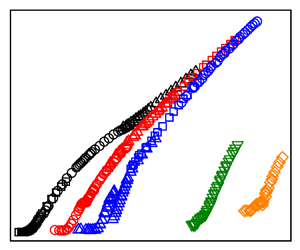
We present a systematic study on the effects of small aspect ratios $\varGamma$ on heat transport in liquid metal convection with a Prandtl number of $Pr=0.029$. The study covers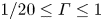 $1/20\le \varGamma \le 1$ experimentally and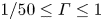 $1/50\le \varGamma \le 1$ numerically, and a Rayleigh number $Ra$ range of $4\times 10^3 \le Ra \le 7\times 10^{9}$. It is found experimentally that the local effective heat transport scaling exponent $\gamma$ changes with both $Ra$ and $\varGamma$, attaining a $\varGamma$-dependent maximum value before transition-to-turbulence and approaches $\gamma =0.25$ in the turbulence state as $Ra$ increases. Just above the onset of convection, Shishkina (Phys. Rev. Fluids, vol 6, 2021, 090502) derived a length scale $\ell =H/(1+1.49\varGamma ^{-2})^{1/3}$. Our numerical study shows $Ra_{\ell }$, i.e. $Ra$ based on $\ell$, serves as a proper control parameter for heat transport above the onset with $Nu-1=0.018(1+0.34/\varGamma ^2)(Ra/Ra_{c,\varGamma }-1)$. Here $Ra_{c,\varGamma }$ represents the $\varGamma$-dependent critical $Ra$ for the onset of convection and $Nu$ is the Nusselt number. In the turbulent state, for a general scaling law of $Nu-1\sim Ra^\alpha$, we propose a length scale $\ell = H/(1+1.49\varGamma ^{-2})^{1/[3(1-\alpha )]}$. In the case of turbulent liquid metal convection with $\alpha =1/4$, our measurement shows that the heat transport will become weakly dependent on $\varGamma$ with $Ra_{\ell }\equiv Ra/(1+1.49\varGamma ^{-2})^{4/3} \ge 7\times 10^5$. Finally, once the flow becomes time-dependent, the growth rate of $Nu$ with $Ra$ declines compared with the linear growth rate in the convection state. A hysteresis is observed in a $\varGamma =1/3$ cell when the flow becomes time-dependent. Measurements of the large-scale circulation suggest the hysteresis is caused by the system switching from a single-roll-mode to a double-roll-mode in an oscillation state.


Predictive near-wall modelling for turbulent boundary layers with arbitrary pressure gradients
-
- Journal:
- Journal of Fluid Mechanics / Volume 993 / 25 August 2024
- Published online by Cambridge University Press:
- 13 September 2024, A1
-
- Article
-
- You have access
- Open access
- HTML
- Export citation
Particle motion in a bed under a rigid plate, submerged and oscillated over its surface, and bed morphologies induced by flexible plates
-
- Journal:
- Journal of Fluid Mechanics / Volume 993 / 25 August 2024
- Published online by Cambridge University Press:
- 13 September 2024, A16
-
- Article
- Export citation
Unified mobility expressions for externally driven and self-phoretic propulsion of particles
-
- Journal:
- Journal of Fluid Mechanics / Volume 994 / 10 September 2024
- Published online by Cambridge University Press:
- 13 September 2024, A2
-
- Article
-
- You have access
- Open access
- HTML
- Export citation
Less is more: modelling polymers in turbulent flows
-
- Journal:
- Journal of Fluid Mechanics / Volume 994 / 10 September 2024
- Published online by Cambridge University Press:
- 13 September 2024, F1
-
- Article
-
- You have access
- Open access
- HTML
- Export citation
Relative dispersion in free-surface turbulence
-
- Journal:
- Journal of Fluid Mechanics / Volume 993 / 25 August 2024
- Published online by Cambridge University Press:
- 13 September 2024, R2
-
- Article
-
- You have access
- HTML
- Export citation
The instability of non-monotonic drag laws
-
- Journal:
- Journal of Fluid Mechanics / Volume 993 / 25 August 2024
- Published online by Cambridge University Press:
- 13 September 2024, A13
-
- Article
- Export citation
Non-overshooting sliding mode for UAV control
-
- Journal:
- The Aeronautical Journal / Volume 128 / Issue 1329 / November 2024
- Published online by Cambridge University Press:
- 12 September 2024, pp. 2483-2529
-
- Article
-
- You have access
- Open access
- HTML
- Export citation
