To save content items to your account,
please confirm that you agree to abide by our usage policies.
If this is the first time you use this feature, you will be asked to authorise Cambridge Core to connect with your account.
Find out more about saving content to .
To save content items to your Kindle, first ensure no-reply@cambridge.org
is added to your Approved Personal Document E-mail List under your Personal Document Settings
on the Manage Your Content and Devices page of your Amazon account. Then enter the ‘name’ part
of your Kindle email address below.
Find out more about saving to your Kindle.
Note you can select to save to either the @free.kindle.com or @kindle.com variations.
‘@free.kindle.com’ emails are free but can only be saved to your device when it is connected to wi-fi.
‘@kindle.com’ emails can be delivered even when you are not connected to wi-fi, but note that service fees apply.
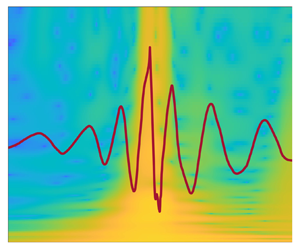
Steep wave breaking on a vertical cylinder (a typical foundation supporting offshore wind turbines) will induce slam loads. Many questions on the important violent wave loading and the associated secondary load cycle remain unanswered. We use laboratory experiments with unidirectional waves to investigate the fluid loading on vertical cylinders. We use a novel three-phase decomposition approach that allows us to separate different types of nonlinearity. Our findings reveal the existence of an additional quasi-impulsive loading component that is associated with the secondary load cycle and occurs in the backwards direction against that of the incoming waves. This quasi-impulsive force occurs at the end of the secondary load cycle and close to the passage of the downward zero-crossing point of the undisturbed wave. Wavelet analysis showed that the impulsive force exhibits superficially similar behaviour to a typical wave-slamming event but in the reverse direction. To monitor the scattered wave field and extract run-up on the cylinder, we installed a four-camera synchronised video system and found a strong temporal correlation between the arrival time of the Type-II scattered wave onto the cylinder and the occurrence of this quasi-impulsive force. The temporal characteristics of this quasi-impulsive force can be approximated by the Goda wave impact model, taking the collision of the Type-II scattered waves at the rear stagnation point as the impact source.
In this work, the synthesis, characterization, and X-ray powder diffraction data for dichloridodioxido-[(4,7-dimethyl)-1,10-phenanthroline]molybdenum(VI) are reported. The crystal structure of this compound was solved from powder diffraction data using the simulated annealing method with a subsequent refinement using the Rietveld method. The dioxo-molybdenum (VI) complex C14H12Cl2MoN2O2 crystallizes in a monoclinic system with space group C2/c (N° 15) with refined unit-cell parameters a = 12.9495 (5) Å, b = 9.7752 (4) Å,c = 12.0069 (6) Å, β = 101.702 (3) °, unit-cell volume V = 1488.27 (11) Å3, and values of Z′ = 0.5 and Z = 4. The molecules are organized into chains diagonally along the a and c axis. Parallel polyhedra are observed along these axes formed by the interactions of Mo, Cl, O, and N atoms present in the coordination sphere. The crystalline packing of this dioxo-molybdenum (VI) complex is dominated by five intermolecular hydrogen bonds, two intramolecular hydrogen bonds, and the four interactions between the centroids (CgI⋯CgJ) of the aromatic rings. An analysis of the Hirshfeld surface revealed that the greatest contributions of the attractive forces are given by H⋯Cl/Cl⋯H, H⋯C/C⋯H, H⋯O/O⋯H, and H⋯H interactions.
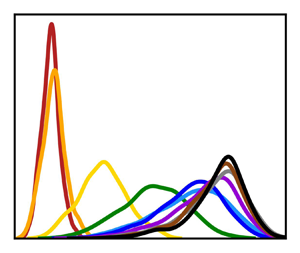
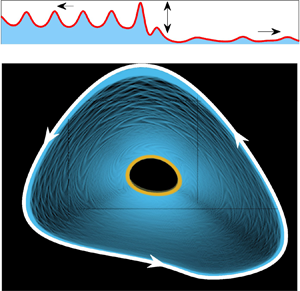
The yield stress and shear thinning properties of mucus are identified as critical for ciliary coordination and mucus transport in human airways. We use here numerical simulations to explore the hydrodynamic coupling of cilia and mucus with these two properties using the Herschel–Bulkley model, in a lattice Boltzmann solver for the fluid flow. Three mucus flow regimes, i.e. a poorly organized regime, a swirly regime, and a fully unidirectional regime, are observed and analysed by parametric studies. We systematically investigate the effects of ciliary density, interaction length, Bingham number and flow index on the mucus flow regime formation. The underlying mechanism of the regime formation is analysed in detail by examining the variation of two physical quantities (polarization and integral length) and the evolution of the flow velocity, viscosity and shear-rate fields. Mucus viscosity is found to be the dominant parameter influencing the regime formation when enhancing the yield stress and shear thinning properties. The present model is able to reproduce the solid body rotation observed in experiments (Loiseau et al., Nat. Phys., vol. 16, 2020, pp. 1158–1164). A more precise prediction can be achieved by incorporating non-Newtonian properties into the modelling of mucus as proposed by Gsell et al. (Sci. Rep., vol. 10, 2020, 8405).
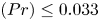
In this experimental study, we explore the dynamics of the thermal boundary layer in liquid metal Rayleigh–Bénard convection, covering the parameter ranges of $0.026 \leq$ Prandtl numbers $(Pr) \leq 0.033$ and Rayleigh numbers ($Ra$) up to $2.9\times 10^9$. Our research focuses on characterising the thermal boundary layer near the top plate of a cylindrical convection cell with an aspect ratio of 0.5, distinguishing between two distinct regions: the shear-dominated region around the centre of the top plate and a location near the side wall where the boundary layer is expected to be affected by the impact or ejection of thermal plumes. The dependencies of the boundary layer thickness on $Ra$ at these positions reveal deviating scaling exponents with the difference diminishing as $Ra$ increases. We find stronger fluctuations in the boundary layer and increasing deviation from the Prandtl–Blasius–Pohlhausen profile with increasing $Ra$, as well as in the measurements outside the centre region. Our data illustrate the complex interplay between flow dynamics and thermal transport in low-$Pr$ convection.
Surface roughness is a critical factor affecting the performance of dental implants. One approach to influence this is through sandblasted, large grit, acid-etched (SLA) modification on pure titanium implant surfaces. In this study, SLA was performed on grade IV pure titanium. Sandblasting was conducted at distances of 2, 4, and 6 cm. Subsequently, the samples were etched with a mixed acid solution of HCl, H2SO4, and H2O for 0, 30, and 60 min. Surface roughness and X-ray diffraction (XRD) characterizations were conducted on the samples. The results revealed that surface roughness increased but was not too significant as the sandblasting distance decreased. Longer etching durations for sandblasted with acid-etched samples led to reduced surface roughness (Sa and Sz). It was found that a 60 min-etched sample resulted in optimal Sa, Sz, and Ssk values, i.e., 1.19 μm, 13.76 μm, and −0.60, respectively. The XRD texture was significantly influenced by sandblasting, with compressive residual stress increasing as the sandblasting distance decreased. Normal stress causes hill formations at shorter sandblasting distances. For etched samples, the residual stress decreased with longer etching durations. Normal stress-decreasing trend aligns with the initial reduction in hill and valley within the samples and subsequent hill enhancement at extended etching duration.
Abrupt changes in aircraft attitude due to encountering terrain turbulence or wind shear at low altitudes can directly lead to serious accidents. Therefore, a highly responsive and reliable active attitude stabiliser on board is necessary to counteract low-level severe atmospheric disturbances. However, gust environments caused by local terrain and structures are difficult to represent with typical models, such as the Dryden continuous gust model in free space. As a result, an optimal model-based control design cannot be applied. To address this problem, this paper introduces an adaptive mechanism for updating motion equations based on atmospheric conditions using in-flight surface pressure-field sensing. Additionally, a dynamic wind tunnel experiment system, which can be constructed at universities at a low cost, is developed and described in detail. The effectiveness of the proposed scheme is evaluated through wind tunnel experiments and numerical simulations using a large number of gust samples.
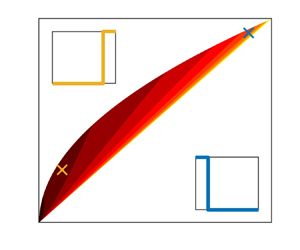
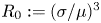
We consider an internally heated fluid between parallel plates with fixed thermal fluxes. For a large class of heat sources that vary in the direction of gravity, we prove that $\smash { \smash {{\langle {\delta T} \rangle _h}} } \geq \sigma R^{-1/3} - \mu$, where $\smash { \smash {{\langle {\delta T} \rangle _h}} }$ is the average temperature difference between the bottom and top plates, $R$ is a ‘flux’ Rayleigh number and the constants $\sigma,\mu >0$ depend on the geometric properties of the internal heating. This result implies that mean downward conduction (for which $\smash { \smash {{\langle {\delta T} \rangle _h}} }< 0$) is impossible for a range of Rayleigh numbers smaller than a critical value $R_0:=(\sigma /\mu )^{3}$. The bound demonstrates that $R_0$ depends on the heating distribution and can be made arbitrarily large by concentrating the heating near the bottom plate. However, for any given fixed heating profile of the class we consider, the corresponding value of $R_0$ is always finite. This points to a fundamental difference between internally heated convection and its limiting case of Rayleigh–Bénard convection with fixed-flux boundary conditions, for which $\smash {{\langle {\delta T} \rangle _h}}$ is known to be positive for all $R$.

Two-dimensional free-surface flow over localised topography is examined, with the emphasis on the stability of hydraulic-fall solutions. A Gaussian topography profile is assumed with a positive or negative amplitude modelling a bump or a dip, respectively. Steady hydraulic-fall solutions to the full incompressible, irrotational Euler equations are computed, and their linear and nonlinear stability is analysed by computing eigenspectra of the pertinent linearised operator and by solving an initial value problem. The computations are carried out numerically using a specially developed computational framework based on the finite-element method. The Hamiltonian structure of the problem is demonstrated, and stability is determined by computing eigenspectra of the pertinent linearised operator. It is found that a hydraulic-fall flow over a bump is spectrally stable. The corresponding flow over a dip is found to be linearly unstable. In the latter case, time-dependent simulations show that ultimately, the flow settles into a time-periodic motion that corresponds to an invariant solution in an appropriately defined phase space. Physically, the solution consists of a localised large-amplitude wave that pulsates above the dip while simultaneously emitting nonlinear cnoidal waves in the upstream direction and multi-harmonic linear waves in the downstream direction.
The unmanned aerial vehicle (UAV) system for composite vertical take-off and landing (VTOL) is a complex, highly coupled, and nonlinear system which is sensitive to external disturbances and model uncertainties. The composite VTOL UAV system consists of a multi-rotor section and a fixed-wing section. To improve observation accuracy, the compensation function observer (CFO) uses a new structure that includes velocity information. The CFO is utilised to estimate the uncertainty and the external disturbances of the system model, which performs superior estimation accuracy compared to the extended state observer (ESO). In the modeling process of the VTOL UAV, the aerodynamic moment is calculated by means of the cross-product operation of force and force arm, which solves the problem of over-reliance on aerodynamic parameters in the traditional modeling approach. The controlled object is refined by CFO, and model compensation control (MCC) is used to realise the velocity and attitude control of the composite VTOL. The numerical simulation of MATLAB/Simulink and hardware-in-loop simulation (HIL) of Rflysim were implemented, and which were used to compare the MCC, active disturbance rejection control (ADRC), and proportion integration differentiation (PID). The simulation results confirm the superiority of MCC in controlling composite VTOL UAVs in terms of anti-disturbance and tracking speed.
Shark vertebrae and their centra (vertebral bodies) are high-performance structures able to survive millions of cycles of high amplitude strain despite lacking a repair mechanism for accumulating damage. Shark centra consist of mineralized cartilage, a biocomposite of bioapatite (bAp), and collagen, and the nanocrystalline bAp's contribution to functionality remains largely uninvestigated. Using the multiple detector energy-dispersive diffraction (EDD) system at 6-BM-B, the Advanced Photon Source, and 3D tomographic sampling, the 3D functionality of entire centra were probed. Immersion in ethanol vs phosphate-buffered saline produces only small changes in bAp d-spacing within a great hammerhead centrum. EDD mapping under in situ loading was performed an entire blue shark centrum, and 3D maps of bAp strain showed the two structural zones of the centrum, the corpus calcareum and intermedialia, contained opposite-signed strains approaching 0.5%, and application of ~8% nominal strain did not alter these strain magnitudes and their spatial distribution.
With the rapid expansion of the aviation industry, an increasing number of Close Spaced Parallel Runway (CSPR) airports are either planning or constructing End Around Taxiways (EAT) to alleviate field operation pressures and enhance safety. Taking Shanghai Hongqiao Airport’s typical CSPR EAT configuration as a case study, this research integrates the airport’s current operational status with the anticipated requirements for future structural renovations and increased flight volumes. Various operational scenarios are established, and simulation research on optimising EAT operations is conducted in advance. The simulation study proceeds as follows: first, an AirTOP simulation model is constructed based on Hongqiao Airport’s actual operational construction. Subsequently, leveraging existing operational scenarios, five simulation scenarios are devised by activating EATs at the departure and approach ends of the eastern zone. The merits and drawbacks of these scenarios are thoroughly analysed. The findings indicate that, with escalating flight volumes, the utilisation of EAT for larger aircraft can curtail their holding duration by nearly 8 min, consequently reducing overall arrival holding duration by 6 min. Departures from gates proximate to T1 experience a 3-min reduction in holding duration through the adoption of EAT at the approach end. Despite an increase in taxi distance due to a higher proportion of aircraft taxiing around, the overall taxi time is diminished. Activating EATs at the departure and approach ends of the eastern zone effectively mitigates the adverse effects of heightened flight volumes on field operational efficiency.
The overall efficiency of a turbofan engine may be expressed as a function of the Mach number, flight level and one other parameter. This may be either the net thrust, the turbine entry temperature or the fuel flow rate. Using basic aero-thermodynamic principles, dimensional analysis, normalisation and curve fitting, five approximate and “near universal” relations have been identified for engines having bypass ratios between 1 and 13. These relations contain five independent characteristic engine parameters. When these parameters are known, the relations form the basis of an estimation method for engine overall efficiency that is simple, fast, open source, completely transparent and, as new information appears, capable of further refinement. Since the empirical relations presented in this analysis are valid for Mach numbers greater than 0.2, the method is applicable to all airborne phases of flight. For a given aircraft, if the flight trajectory is specified in sufficient detail for the variation of net thrust with Mach number and flight level to be determined, only three of the five relations, together with the value of engine overall efficiency at a single reference condition, are needed to estimate the overall efficiency at every point on the trajectory. Comparisons with the data used in this analysis suggest that the accuracy is better than ±5% in most cases. In the completely general case, two additional engine characteristic parameters, one a total temperature ratio and the other a Mach number, are introduced. If these are known, both engine overall efficiency and net thrust can be expressed as functions of Mach number, flight level and turbine entry temperature. This allows the method to be used for the estimation of operating limits in the various phases of flight and in simplified optimisation studies, e.g. finding the environmentally optimum flight trajectory.
In previous work, estimates of engine overall efficiency at the “design optimum” condition have been estimated for 53 aircraft and engine combinations. It is shown that the ‘design optimum’ condition is an appropriate choice for the engine reference condition. Updated and revised values for the relevant parameters for these 53 examples, together with estimates for the two additional engine characteristic parameters, are given in tabular form.
Bird strike accidents are critical threats for aviation safety especially in airport airspaces. Environment friendly solutions are preferred for wildlife managements to achieve harmonic coexistence between airports and surrounding environments. Avian radar systems are the most effective remote sensing approach for long-range and all-weather birds monitoring. Massive historical avian radar datasets and other data sources provide an opportunity to explore relevance between bird behaviour and environments. This paper proposes a bird behaviour characterisation and prediction method to reveal bird behaviour dependency with weather parameters. Bird behaviours are modelled as indices and grades from selected avian radar datasets. Weather dependence are studied from single parameter to multivariable parameters. The random forest model is selected as a behaviour grade prediction model taking four weather parameters as system inputs. Radar datasets for diurnal and nocturnal birds are constructed to validate their behaviour characters and prediction performance, respectively. Experiment results verify the feasibility of bird behaviour prediction using weather parameters, but also reflect some insufficiencies within the proposed method. Data sufficiency and severe weather considerations are also discussed to analyse their impact on prediction accuracy. A more comprehensive prediction model with standardised avian radar data quality and enhanced weather information accuracy is promising to further elevate the application significance of the proposed method.
The aviation industry has rapidly developed in recent years. Due to the increased number of flight operations, managing air traffic has become essential. The air traffic management system aims to reduce the air traffic control workload and use existing resources more efficiently. This study proposed a new mixed integer linear programming model to minimise the total fuel consumption during taxi operations for the runway assignment problem, comparing the actual Istanbul Airport runway assignment data. The average taxi times are calculated using the 30,000-flight operations data for each arrival and departure taxi route. Also, 47 different aircraft types are obtained using the data for the fuel consumption calculation. The International Civil. Aviation Organisation (IACO) aircraft engine emissions databank provides the fuel consumption values for each aircraft according to engine type. This approach allows our model to calculate more realistic fuel consumption for taxi operations, as each aircraft engine type has a different fuel consumption value. The proposed model is implemented at Istanbul Airport, the busiest airport in Turkey, where multiple parallel runway operations are applied. The results showed that the proposed model reduced total fuel consumption for taxi operations between 6.6% and 14.4% compared to the actual Istanbul Airport runway assignment data.
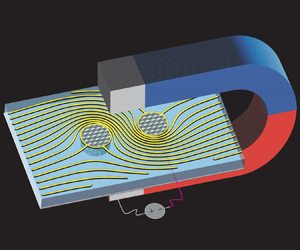
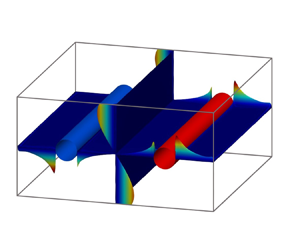
Consider the motion of a thin layer of electrically conducting fluid, between two closely spaced parallel plates, in a classical Hele-Shaw geometry. Furthermore, let the system be immersed in a uniform external magnetic field (normal to the plates) and let electrical current be driven between conducting probes immersed in the fluid layer. In the present paper, we analyse the ensuing fluid flow at low Hartmann numbers. Physically, the system is particularly interesting because it allows for circulation in the flow, which is not possible in the standard pressure-driven Hele-Shaw cell. We first elucidate the mechanism of flow generation both physically and mathematically. After formulating the problem using complex variables, we present mathematical solutions for a class of canonical multiply connected geometries in terms of the prime function framework developed by Crowdy (Solving Problems in Multiply Connected Domains, SIAM, 2020). We then demonstrate how recently developed fast numerical methods may be applied to accurately determine the flow field in arbitrary geometries.
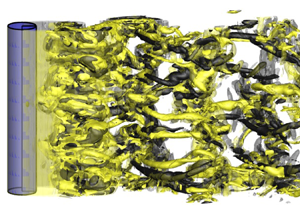
Bluff-body wakes generally become three-dimensional (3-D) and then turbulent when the Reynolds number exceeds a few hundred. Other than an alternate shedding of the spanwise vortices behind the body and a gradual decay and annihilation of the vortices with distance downstream, whether a secondary vortex street would develop in the relatively far wake has been a long-standing argument in the literature. This argument is addressed in the present study. Specifically, direct numerical simulations and transient growth analysis are performed to examine the two-dimensional and 3-D wakes of different bluff bodies, including circular cylinder, square cylinder, diamond cylinder and rectangular cylinders with different cross-sectional aspect ratios. We found that a secondary vortex street is absent for most 3-D and turbulent wakes. The root cause is the weakening of spanwise vortices by 3-D wake instability modes and streamwise circulation/vorticity. The weakened spanwise vortices induce reduced mean shear in the intermediate wake, which then induces much smaller perturbation energy growth that is below the threshold for the emergence of a secondary vortex street. This finding suggests that the 3-D and turbulence characteristics, and the momentum, mass and heat transport in the relatively far wake of bluff bodies, would not be influenced by extra anisotropy or inhomogeneity caused by a secondary vortex street.
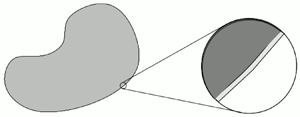
Diffuse interface models are an important class of models used to describe multi-phase flows. In the case of incompressible viscous fluids there are a number of different diffuse interface models which have been known for many years. Nevertheless, a model based on mixture theory with a full set of conservation laws for the conservation of linear momentum of each constituent was not yet available. This gap was filled by ten Eikelder et al. (J. Fluid Mech., in press) recently and a first comparison with known models of Navier–Stokes/Cahn–Hilliard type is given. A detailed understanding of the relations between these models remains an important question.
Liquid metal buoyant flow around two differentially heated horizontal cylinders in the presence of a uniform vertical magnetic field is investigated experimentally. While magneto-convection in pipes or ducts has been studied theoretically and experimentally in recent years, data for heat transfer at immersed obstacles are rare and, to our knowledge, detailed experimental investigations on this fundamental magnetohydrodynamic problem do not exist. In the present work, two horizontal cylinders inserted into an adiabatic rectangular cavity filled with gallium–indium–tin are kept at constant temperatures to establish a driving temperature gradient in the surrounding liquid metal. The buoyancy-driven flow, quantified by the Grashof number $Gr$, is varied in the range ${10^{6} \leq Gr \leq ~5\times 10^{7}}$. With increasing magnetic field, expressed via the Hartmann number $Ha$, different flow regimes are identified from measurements for $0 \leq Ha \leq ~3000$. The effect of the electromagnetic force primarily consists in suppressing turbulence and damping the convective flow. The heat transfer is quantified in terms of the non-dimensional Nusselt number $Nu$, and its dependence on $Gr/{Ha}^{2}$, which is identified as the important group governing the flow, is discussed.