To save content items to your account,
please confirm that you agree to abide by our usage policies.
If this is the first time you use this feature, you will be asked to authorise Cambridge Core to connect with your account.
Find out more about saving content to .
To save content items to your Kindle, first ensure no-reply@cambridge.org
is added to your Approved Personal Document E-mail List under your Personal Document Settings
on the Manage Your Content and Devices page of your Amazon account. Then enter the ‘name’ part
of your Kindle email address below.
Find out more about saving to your Kindle.
Note you can select to save to either the @free.kindle.com or @kindle.com variations.
‘@free.kindle.com’ emails are free but can only be saved to your device when it is connected to wi-fi.
‘@kindle.com’ emails can be delivered even when you are not connected to wi-fi, but note that service fees apply.
New fiscal histories of the United States are in a state of efflorescence. Revisionist work infused with economic heterodoxy and social histories of capitalism have rescued fiscal topics from staid institutionalists, producing work that should enrich the study of inequalities of all stripes. By assembling a collection of recent works on money, public debt, and taxation—subjects treated in isolation within the literature, but which form a totality in practice—this review attempts a composite portrait of the United States’ fiscal state formation in the long run. Present in the foreground and at each stage is real estate: the iconic plot of farmland or single-family home.
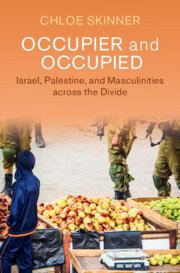
Working from the premise that gender and violence are cyclically related, masculinities' connection to power and violence are frequently simplistically assumed. Yet, amid ongoing colonisation and military occupation, there are other more complex dynamics simultaneously at play across Israel and Palestine. In this book, Chloe Skinner explores these dynamics, untangling the gendered politics of settler colonialism to shed specific light on the ways in which masculinities shift and morph in this context of colonial violence. Oscillating between analysis of Israeli militarism, colonisation, and military occupation in Palestine, each chapter examines the constitutive performance and negotiation of masculinised ideals across these colonial hierarchies. Masculinities are thus analysed across these settings in connection, rather than in isolation, as gendered hierarchies, performances, and identities intertwine and intersect with the racialised violence of settler colonialism.
This book sets out to probe, explore and evaluate the betrayal of anticolonial nationalism in Kenya. Contemporary Kenya's emergence is rooted in the colonial enterprise, its deleterious effects and the subsequent decolonization spearheaded by a fierce anti-colonial nationalism that was embodied in freedom struggles at the cultural, political, and military levels. As a settler colony, the colonial settlers hived off millions of hectares of the best land in the highland areas of Kenya and appropriated them for themselves thereby generating a large mass of the landless. This land alienation constituted one of the most deeply felt grievances which, together with the exclusivist, exploitative and oppressive colonial system, inflamed anti-colonial nationalism that undergirded the struggle for independence. The expectation on the part of the masses was that independence would bring about social justice, restitution of the stolen lands, and a government based on the will and aspirations of the governed. Political developments soon after independence, however, demonstrated the extent of betrayal of the cause of anti-colonial nationalism, which has remained the reality to date. This book covers the extent of this sense of betrayal from the time of independence to the present.
Slovakia has never been a major destination for refugees or migrants and follows a strictly anti-refugee politics. Like other formerly socialist countries in Central Europe which are now EU member states - especially its fellow Visegrád countries Poland, Hungary, and the Czech Republic - Slovakia fiercely rejected refugee redistribution during the 'long summer of 'migration' in 2015-2016. Meanwhile, the few refugees living in Slovakia face restrictive authorities and deficient support infrastructures. Building on ten months of ethnographic fieldwork carried out between 2017 and 2019 and focusing on those often-overlooked actors who do support refugees as NGO employees or volunteers, this book provides an empathetic and ethnographically rich account of their everyday efforts to accommodate 'refugees' needs and state 'authorities' expectations.
The book explores those engagements not as negotiation of political or ideological positions, but primarily as emotional and moral practices. It argues that moral codes and emotional templates shape the implementation of refugee support, structuring encounters and clashes between refugees, helpers, and bureaucrats. They generate lasting formal or informal solutions and even inform new policies in refugee care. Closely connected to this observation is a second finding, namely, that moral dilemmas and conflicting emotions often cause more distress and greater complications than the political controversies surrounding the topic. Actors on opposite ends of the political spectrum - like liberal NGO employees and state bureaucrats - experience the same conflicts of conscience and adopt the same indecisiveness.
Australian Women's Historical Photography: Other Times, Other Views examines the photographs produced by six talented women photographers against the historical backdrop of settler violence towards Indigenous Australians, the First Women's Movement, the Great War of 1914-1918, Australia's imperial occupation of New Guinea, the final years of Chinese Nationalist Party rule in China and debates about photography's status as an art form. Women's works from the nineteenth and early twentieth centuries have been down-played or even ignored in existing accounts of Australia's cultural history, and this study is aimed at rectifying this situation. At the same time, the book demonstrates why amateur works are just as important as commercial works to our understanding of the past.
The book draws on scholarship from history, art history, anthropology, sociology, gender studies and cultural studies to create an interdisciplinary critical framework that will be of interest to a broad range of academic and archival researchers.
This book responds to the pronounced lack of visibility of Australian realist, documentary and commercial women's works. By presenting a carefully contextualized and detailed study of works by six Australian women photographers who worked in the late colonial era and whose works chronicled the impacts of some of the periods more disturbing as well as enlightened events, we will also broaden and enrich the frames of women's photography and Australian history.
This chapter is based on the assumption that conflicts between separate ethnolinguistic identities and imperial cultures have existed throughout history, and often played important roles. The four-volume work, Literature: A World History, serves as a starting-point for a discussion of the effects of such conflicts on various literatures. Examples are taken from, in particular, literatures written in Iranian and Slavonic languages, but the Chinese, Arabic and Turkic/Turkish impact on various literatures is also mentioned. Finally, it is questioned what this four-volume work has done to address the problem of literature and such conflicts, and what can be done to avoid spreading narratives that are – perhaps unconsciously – imperialistic. After all, this work is written in English, the most broadly used imperial language ever, and it is questioned what it means that it is being presented in this language.
Maya Blue is a unique hybrid pigment created by combining organic indigo with the inorganic clay mineral palygorskite. First used for architectonic decoration in the Terminal Preclassic, it became widespread in the Late Classic on figurines, murals, and elite ceramics. Unlike indigo, it is notable for its durability and resistance to degradation by acids, alkalines, organic solvents and fading. The authors analyzed 17 samples of Maya Blue on pottery from the Late-Terminal Classic periods, a.d. 680–860, from Buenavista del Cayo, Belize. Using laser ablation inductively coupled plasma mass spectrometry (LA-ICP-MS), it was determined that the palygorskite in these samples likely came from Sacalum, Yucatan, some 375 km away. The authors suggest several routes by which palygorskite might have been transported from Yucatán to Buenavista. The pigment or knowledge of how to produce it likely was conveyed through high-status exchanges rather than commercial trade. Maya Blue held significant cultural and religious importance. It symbolized water and rain and was associated with the god Chaahk. Maya Blue appeared initially at Buenavista on architecture and rare imported ceramics but its use gradually increased on locally produced Belize Valley wares. Use at Buenavista peaked in the early 9th century before disappearing around a.d. 860. The study demonstrates the potential of trace element analysis in identifying long-distance social interactions in ancient Mesoamerica.
The article examines the challenges that urban teachers faced in unitary systems, where students of different ages and educational levels shared the same classroom and were taught by a single teacher. It aims to compare these challenges across several cities including Alicante, Badajoz, Cádiz, Canary Islands, Málaga, and Zaragoza to determine common issues within Spain. The study is based on sixteen technical reports from 1916 to 1926 and uses qualitative methods to analyze teachers’ narratives for deeper insights. Additionally, a literature review and quantitative analysis of Spanish statistical sources were conducted. Key findings highlight parental disinterest as a significant cause of school absenteeism. The article concludes by stressing the importance of understanding historical educational contexts in informing current educational policies and practices.
This paper deals with symbolic and ontological human–animal relationships at the Early Neolithic (PPNA) site of Göbekli Tepe in southeastern Turkey. Here a series of megalithic round stone buildings, built by hunter-gatherers, were embellished by large stone pillars with depictions of animals, particularly predators. On the basis of an analysis of the pillar iconography and of recent anthropological and archaeological insights about alterity and perceptions of nature and culture, it will be argued that human–animal relationships at Göbekli Tepe were part of an ontology marked by both immanence and hierarchy. Imagistic ritualization in evocative architectural contexts, probably directed by shamans, served to express such relations. The internal logic of this is exemplified in a model of the world of Göbekli Tepe, based on a novel approach with so-called referential relations and compositional hierarchy as ways to explore and interpret relations between beings and things.
The Centenary of the First World War saw unprecedent prominence given to the ‘colonial contribution’ in commemorative discourse. While this newfound public recognition sometimes relied on simplistic and sanitised narratives of the war, scholarship produced in the period has greatly enriched understandings of how conflict was experienced by colonised peoples. In this article, I explore the utility of one of the key conceptual innovations of the Centenary, the Greater War, for the analysis of colonial experiences of the conflict. I do this by considering three key questions: Can the Greater War framework facilitate new comparative histories of violence in the war? How do its expanded chronologies account for colonial contexts? Can we adapt its conceptual frameworks to better integrate colonial histories? Exploring the potential answers to these questions will point to new avenues of research that can ensure the colonial is effectively incorporated into our narratives of the global conflict.
This article uses non-literary essays that appeared in the Peruvian press during the Oncenio period in Peru (1919–30) to nuance our understanding of Latin American Orientalism. Critical study of the extant material shows that there were at least three strands of Orientalism circulating among Peruvian readers, with the presence or absence of Asian communities in Peru and the larger history of Spanish imperialism and Spanish-language Orientalism acting as their conditions of possibility. While the large Chinese community in Peru triggered an Orientalist backlash akin to modern Anglo-French Orientalism, the absence of Southeast Asians in the country allowed for a more medieval-colonial Orientalism to persist, one that focused more on wonder for and exoticisation of Asian cultures. The exception would be the Philippines, which due to its previous history as a Spanish colony, was presented as a ‘modern’ country comparable to any in Latin America. Given that representations of Southeast Asia are often overlooked in the study of Latin American Orientalism—which in turn tends to focus on literary representations by writers from countries like Argentina or Mexico—this article fills these gaps and contributes to the global histories of Latin America and of Orientalism.