To save content items to your account,
please confirm that you agree to abide by our usage policies.
If this is the first time you use this feature, you will be asked to authorise Cambridge Core to connect with your account.
Find out more about saving content to .
To save content items to your Kindle, first ensure no-reply@cambridge.org
is added to your Approved Personal Document E-mail List under your Personal Document Settings
on the Manage Your Content and Devices page of your Amazon account. Then enter the ‘name’ part
of your Kindle email address below.
Find out more about saving to your Kindle.
Note you can select to save to either the @free.kindle.com or @kindle.com variations.
‘@free.kindle.com’ emails are free but can only be saved to your device when it is connected to wi-fi.
‘@kindle.com’ emails can be delivered even when you are not connected to wi-fi, but note that service fees apply.
This article makes use of nearly 25,000 observations representing over 95,000 paid workdays across over 300 years to investigate individual work patterns, work availability, and the changes in work seasonality over time. This sample is comprised of workers in the construction industry, and includes unskilled men and women as well as skilled building craftsmen – the industry that is often used to estimate comparative real wages through early modern Europe. Data come predominantly from Scania, the southernmost region in modern day Sweden, and especially from Malmö, the largest town in the region.
Findings indicate that workers probably do not engage in paid labour on a purely labour-supply-based schedule, but are strongly impacted by the demand for construction labour, which was highly seasonal and impacted by local labour institutions. Seasonality was stronger further back in the past, indicating that finding long-term work may have been more difficult in earlier periods. A typical work year could probably not have been longer than 150 days, and would be made up of shorter work spells at several different sites. This is not enough work to meet standard assumptions of 250 days, or enough work for an unskilled man to support his family at a respectable level. Individual workers rarely worked more than a handful of days in a year on a construction site, even when labour demand was high, indicating that they did not maximize their income from waged labour.
The article explores the evolution of household income in India before the late nineteenth century. At a time when criticism of estimates of global real wages challenges the assumptions arising from the Great Divergence Debate, we aim to provide alternative ways of contributing to the discussion. By looking at individual and household income, as well as consumption levels in different parts of India, we found that members of the household other than the head (namely women) supplied a larger part of its total income than an analysis of wage differentials would suggest. Moreover, we argue that India, in the centuries under review, had a functioning labour market, despite several impediments. This adds to the value of our data as building blocks to reconstruct real wages and, consequently, to better understand welfare levels. Nevertheless, the decline in the Indian skill premium suggests that channels of social mobility decreased over time. The implications of all these findings for the Great Divergence Debate depend on the extent to which our approach also has consequences for our view on household income in other parts of Eurasia. Certainly, they call for a nuanced approach to Indian economic development during the period.
This paper provides an account of a specific operation – the removal of the thymus gland (thymectomy) to treat the rare neurological condition myasthenia gravis – from its first performance in 1936, by the American surgeon Alfred Blalock, to the publication in 2016 of an international multicentre randomised controlled trial (RCT) of the technique. Thymectomy was the subject of a transatlantic controversy in the 1950s, in which the main players were the English surgeon Geoffrey Keynes, and American neurologists and surgeons from New York, Boston, and the Mayo Clinic. The resolution of this controversy involved the use of increasingly sophisticated statistical techniques, but also crucially other influences including the social transformation of thoracic surgery, and competition between the leading American centres. The consensus achieved after this controversy was challenged in the late 1970s, eventually prompting the implementation of a trial acceptable to twenty-first-century evidence-based medicine. This account will demonstrate that surgical innovation in the period covered required increasing attention to the statistical basis of patient selection and outcome evaluation; that the processes of technical innovation cannot be regarded as separate from developments in the professional culture of surgery, and that one of the consequences of these changes has been the gradual eclipse of the prestigious autonomous surgeon.
Puerto Rico’s seven hundred miles of coastline are the most dynamic, biodiverse, heavily populated, and hotly contested part of the archipelago. Hurricanes beat the island from the ocean side while luxury tourist developments encroach from the land. These forces converge in the zona marítimo terrestre (ZMT), which includes littoral areas and navigable portions of waterways in which, according to Puerto Rican law, tides and the biggest waves from storms can be felt. This clunky legal term, notable for its shifting and affective dimension, has become part of everyday conversations and creative practices in contemporary Puerto Rico, but no academic study has considered its cultural significance. This article brings together insights from the fields of environmental justice and environmental humanities to propose that works of art and literature in the ZMT are autogestiones acuáticas, or independently imagined and managed shoreline activities that contest coastal displacement and articulate a decolonial sense of place within nonsovereign dynamics.
Attending to our responsibility to the dead in our present historical moment of danger, this lecture stages three distinct reading experiments in “living together with the dead” with special attention to Palestine and Algeria. The first scene contemplates the times of war and death that constitute what Jalal Toufic refers to as “the withdrawal of tradition past a surpassing disaster.” The second scene explores artistic resurrection in literature by examining antiphonic burial during colonial war while juxtaposing philosophical conceptions of the relationship between death, burial, and history writing. I thus elaborate a concept of death as non-secular and theological, and of history writing as a form of anamnesis that inhabits the isthmus between the Terrestrial realm and the realm of the Unseen. The final scene is a meditation on poetry under conditions of colonial and postcolonial catastrophe. Throughout, theology and poetry serve as provocations to the discipline of history.
This article uses letters from BL, ms Lansdowne 99 to explore how a diverse group of individuals experiencing mental and emotional distress utilised religious ideas as a primary means of interpreting their experience and expressing themselves to those in authority in Elizabethan England. It shifts emphasis away from the causes and towards the construction and experience of distress. It argues that such letters shed important light on the character and progress of the English Reformation by the closing decades of the sixteenth century, as well as on the operation of the process of Reformation itself.
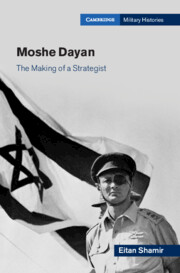
In this major re-evaluation of Moshe Dayan's life and career, Eitan Shamir examines one of the most influential individuals in the history of modern Israel. As IDF Chief of Staff, theatre commander during the Sinai campaign and defence minister during the Six Days and Yom Kippur Wars, Dayan shaped Israeli history as well as the principles of Israel's security and foreign affairs. Eitan Shamir explores the basis and justification for Dayan's reputation as a strategist and what made his command and leadership unique. He reveals the ways in which Moshe Dayan led and planned his campaigns, how he made his decisions and his style as a general and a strategist. His findings shed important new light on broader issues of military command and culture, political-military relations, insurgency and counterinsurgency and the relations between small states and large powers, drawing lasting lessons for strategy today.
Childhood, Pain and Emotion: A British Modern Medical History demonstrates that the history of childhood pain involves three complex problems: the conceptualisation of pain, the lack of scientific unity and the ‘politics of pain’. Manuscript sources, such as hospital records, case notes and medical texts, along with printed sources and non-textual materials like photography, have been mobilised to investigate a subject that has never before been the exclusive focus of historical analysis. The book reveals how diverse professional rivalries and cultural contexts shaped the treatment and understanding of children’s pain. It emphasises the need to reassess historical and contemporary perspectives on childhood pain and its broader social implications.
[T]he people of the affected districts are in such terror of the disease, that they have even broken through their social and religious customs in their endeavours to escape the infection.
By 1891 the disease had travelled eastwards and firmly established itself in Nowgong district and all the intervening territory, and from this year until 1901 there raged, especially in the Nowgong area, the terrible epidemic which has made the ‘kala-azar’ words of terror in Assam…. Whole villages were wiped out, or deserted by the few survivors, and the land on which they stood reverted to jungle.
No other Indian province suffered as severely as Assam did from visceral leishmaniasis, often known as kala-azar. During the colonial era, it wreaked havoc in Assam, destroying nearly every aspect of society and leaving the victims in destitution of an unseen level. The colonial administration took action to control it as soon as it started spreading as an epidemic, and these controls persisted until the end of colonial authority. However, it was unable to provide the anticipated results, and the illness persisted, continuing to pose a major threat to the Assamese population. This chapter attempts to explain the causes, mechanisms, and outcomes of the disease's Brahmaputra-wide spread. The effectiveness of British medical policy and contemporary medicine in halting its advancement is examined in that setting. The chapter also examines how the populace viewed the illness and how they reacted to government anti-kala-azar initiatives. In this context, a short account of the condition of Assam's people and the health scenario of the province as a whole would help understand the context of the outbreak of kala-azar and its perilous effects.
A Brief History of Assam: The Condition of the People and the Outbreak of Disease
Situated on the northeastern part of the British Empire in India and bordering the powerful neighbouring states of China, Burma, and Bhutan, Assam was the most important British possession in this region. The extraordinary fertility of the region, with its vast lowlands and agricultural productivity, made it very attractive to its people and even outsiders. Before the Burmese occupation in the early nineteenth century, Assam was under the Ahom rule (1228–1818) and was, on the whole, prosperous.
The final chapter begins with consideration of the beginnings of source criticism of the first five books of the Bible and the discovery of The Epic of Gilgamesh that cast doubt, as a result, on the literal truth of the Genesis text. This chapter also takes up the development of ‘Creation Science’ as a means of shifting the debate on evolution versus the Bible to one of evolution versus ‘Creation Science’ and the role of Noah and the story of the flood in this transition. It also demonstrates how the belief in Biblical inerrancy leads to the modern conservative Christian quest to find the lost ark and, in the absence of that discovery, to recreate the ark this century in the US state of Kentucky. It shows how the ‘Ark Encounter’ in Kentucky creates a new legend of Noah that goes well beyond the Biblical story.
Social scientists have long been interested in elite cohesion in American society, recognizing its potential implications for democracy and governance. While empirical research has focused on corporate elites and, in particular, on cohesion derived from shared board memberships, cohesion among those in the highest positions in the American state and historical change in that cohesion have been little studied. Drawing on a novel dataset of the career histories of 2,221 people who were appointed to these elite positions between 1898 and 1998, I examine whether administrative elites, prior to their elite appointment, attended the same educational institutions or worked in the same agencies of the federal government at the same time. I find evidence of increasing elite cohesion during the twentieth century. Educational cohesion increases significantly in the three decades following the World War II and then declines slightly toward the end of the century. This increase goes hand in hand with a change from college to graduate education as the primary site generating educational cohesion. Federal government workplace cohesion increases markedly in the 1930s and 1940s and then remains high. As people are appointed to different organizations within the American state, their educational and workplace connections create inter-agency networks that, it is expected, facilitate mutual understanding and coordination and thus help integrate the American administrative state.