To save content items to your account,
please confirm that you agree to abide by our usage policies.
If this is the first time you use this feature, you will be asked to authorise Cambridge Core to connect with your account.
Find out more about saving content to .
To save content items to your Kindle, first ensure no-reply@cambridge.org
is added to your Approved Personal Document E-mail List under your Personal Document Settings
on the Manage Your Content and Devices page of your Amazon account. Then enter the ‘name’ part
of your Kindle email address below.
Find out more about saving to your Kindle.
Note you can select to save to either the @free.kindle.com or @kindle.com variations.
‘@free.kindle.com’ emails are free but can only be saved to your device when it is connected to wi-fi.
‘@kindle.com’ emails can be delivered even when you are not connected to wi-fi, but note that service fees apply.
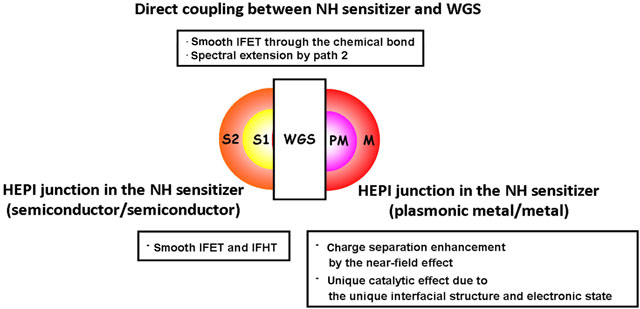
This article reviews the semiconductor and metal-based nanohybrid-sensitized photoelectrochemical (PEC) cells for hydrogen generation from water. The nanoscale hybridization of sensitizers in the photoanode can enhance light harvesting, interfacial charge transfer, charge separation, and induce a catalytic effect in dependence on the kind of the components and interfacial junction state. Subsequent to the introduction, second and third sections present the basic structure and design of the nanohybrid-sensitized PEC cell. Fourth section deals with the effect of the interfacial bond between quantum dots and TiO2 on the electron injection process. Fifth section mainly describes the formation of heteroepitaxial junction between the components of nanohybrids. In the sixth section, the state-of-the-art nanohybrid-sensitized PEC cells are treated with a particular emphasis placed on the interface state.
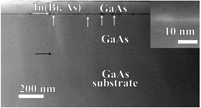
The microstructure of In(As,Bi)/GaAs heterostructures grown by low-temperature molecular beam epitaxy with special attention to the interfaces was studied by scanning/transmission electron microscopy, energy dispersive X-ray microanalysis, and X-ray diffraction and reflectivity. Two samples grown at similar conditions with and without the presence of the Bi-contained layer, formed at 350 °C, are considered. These samples were jointly analyzed to clarify Bi influence on the crystal structure. Two types of QD-like clusters at the GaAs/In(As,Bi) interface were found. The first type exhibited a zinc blend crystal structure, which is typical for A3B5 semiconductors. The second type adopted a tetragonal PbO crystal structure and was found in different orientations. The joint analysis by electron microscopy and X-ray methods demonstrated that the incorporation of Bi atoms into the InAs layer leads to the strain relaxation at the interface in the growth direction. According to electron microscopy data, this strain release is more pronounced around the clusters of the second type.
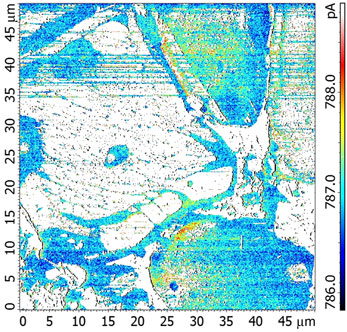
Herein, we show that scanning probe microscopy (SPM) is an effective tool permitting to disclose the nature of the colossal dielectric permittivity characteristic of CaCu3Ti4O12 (CCTO) compound. SPM data confirm the existence of micro- and nanoscale barrier layer capacitance mechanisms which simultaneously contribute to the electrical conductivity of the material. The former mechanism is associated with the potential grain-to-grain barriers. The latter mechanism involves the barriers created by intragrain structural defects. The results of the SPM study shed new light on the origin of the colossal dielectric constant in CCTO.
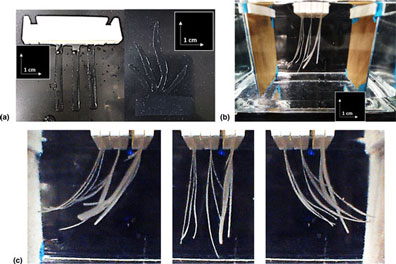
The inefficiencies of the current pipeline from discovery to clinical approval of drugs demand a surrogate method to indicate adverse drug reactions, e.g. liver damage. Organ-on-chip (OOC) models would be an ideal, rapid, and human-specific alternate, which would render animal testing obsolete. The ground-breaking ability of OOCs and Multi-OOC constructs is the accurate simulation of the in vivo conditions of human organs leading to precise drug screens for cytotoxicity and/or drug efficacy at a faster pace and lesser cost. Here we discuss the innovation, architecture, and the progress of OOCs towards human body-on-a-chip.
The structure of polymer networks in hydrogels determines the properties. In this study, we investigated the structure of a charge-balanced polyampholyte, poly(4-vinylbenzenesulfonate-co-[3-(methacryloylamino) propyl] trimethylammonium chloride). From as-prepared samples, nanoscale globules were visualized in polyampholyte hydrogels for the first time. The impact of dialyses processes on polymer structures were also studied. In deionized water, salt ions are leached out, thus polymer chains undergo zipping process to form cellular structure with micrometer-thick polymer walls that allow mechanical toughness to the hydrogel. Samples dialyzed in 6 M potassium hydroxide solution did not show such cellular structure, as in the case of as-prepared samples.
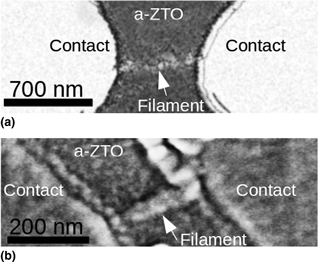
Lateral memristors consisting of planar Ag electrodes (with sub-micrometer separation) supported on thin films of amorphous zinc-tin-oxide have been characterized. After an initial filament-forming process, each device exhibited volatile, resistive switching. In the low resistance state, the transport mechanism and conductance depended on prior activity and on the imposed current limit, mimicking biologic synaptic plasticity. Microscopic observations performed on each device revealed nanoscale filaments between the electrodes. These filaments were subject to Rayleigh instability and exhibited relaxation times determined by their effective radii. The relaxation times and on:off resistance ratios suggest suitability for threshold switching selector devices.
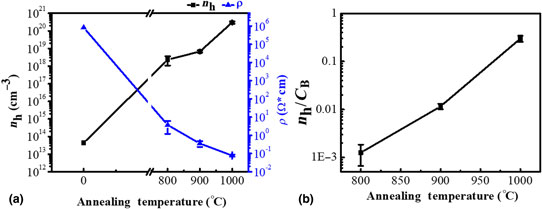
A novel process for Boron doping of ultrananocrystalline diamond (UNCD) films, using thermal diffusion, is described. Hall measurements show an increase in carrier concentration from 1013 to 1020 cm−3. Ultraviolet Photoelectron Spectroscopy and x-ray Photoelectron Spectroscopy show a band gap of 4.4 eV, a work function of 5.1 eV and a Fermi level at 2.0 eV above the valence band. Boron atoms distribution through UNCD films, was measured by Secondary Ion Mass Spectrometry, revealing Boron atoms diffusivity of about 10−14 cm2/s. Raman spectroscopy and x-ray Diffraction analysis revealed that UNCD films did not suffer graphitization nor structural damage during annealing.
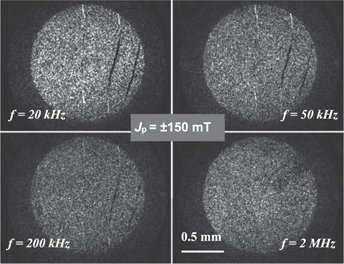
Efficient applications of magnetic cores in sensing and power electronics require low-loss and versatile soft magnetic materials, with excellent response on a wide range of frequencies. This objective is traditionally pursued with ferrite and Permalloy tape cores, available under a variety of properties. Comparable and even superior soft magnetic behavior can, however, be obtained with amorphous and nanocrystalline alloys, with the latter, in particular, combining flexible response to thermal treatments with high magnetic saturation. Broadband precise magnetic characterization of these materials, crucial to their use as inductive cores, is fully appreciated when associated with assessment by physical modeling. Comprehensive measuring approach and significant results obtained in sintered soft ferrites and nanocrystalline ribbons up to 1 GHz are highlighted in this paper. We show how broadband loss and permeability behaviors can be quantitatively interpreted in the framework of the loss separation concept, applied to eddy current and spin damping dissipation mechanisms.
Energy-filtered transmission electron microscopy provides an opportunity to map the nanoscale elemental composition in polymeric systems. Nevertheless, it presents its own set of unique challenges in its application to soft materials. Here, we outline an optimized protocol for elemental mapping in soft materials using sulfur mapping of polymer/fullerene mixtures as an example. Three factors are crucial: (1) focusing at zero-loss, (2) using an objective aperture, and (3) maximizing signal-to-noise and counts for the chosen imaging conditions. Analyzing the corresponding source images, bright field images, and thickness maps can ensure optimum conditions are achieved for elemental mapping of polymers.
Melt electrospinning is a facile fabrication technique that can be utilized in the creation of microfibers without the use of solvent and with good control over feature placement. The available thermal energy of the melt electrospinning technique is often only utilized in the formation of the polymer melt but can also be used to thermodynamically drive chemical reactions. In this study, hybrid perovskite microcrystallites are synthesized in the polymer melt and electrospun to form composite microfibers. Unique hybrid perovskite microstructures were studied, elucidating mechanisms of formation at work in the polymer melt.
Ni2P/ZnS and Ni2P/CdS core/shell composites were synthesized using a simple two-step route at a low temperature. We used X-ray powder diffraction, scanning electron microscopy, energy dispersive spectroscopy, and so on to characterize their composition, structure, and morphology. The characterized results show that Ni2P/ZnS and Ni2P/CdS core/shell composites consist of Ni2P microsphere core and ZnS (or CdS) nanostructure shell, and CdS nanorods and ZnS nanoparticles are deposited on the surface of Ni2P microspheres, respectively. Then choosing methylene blue (MB) as a typical organic dye, the photocatalytic degradation activities of Ni2P/ZnS and Ni2P/CdS are investigated, which exhibit a good photocatalytic activity. When the concentration of MB solution is 1 × 10⁻⁵ mol/L and the mass of the added photocatalyst is 0.05 g, it is found that two composites have enhanced photocatalytic degradation ratios (89 and 78%) compared to that of Ni2P microsphere (65%), which might be due to the effective separation of photogenerated electron-hole pairs.
We developed a facile hydrothermal method to synthesize gold nanoplates with the assistance of surfactant cetyltrimethylammonium chloride (CTAC). Gold nanostructure shapes from triangular, truncated triangular to hexagonal morphology with different sizes can be obtained by accommodating the molar ratios of the surfactant to the gold precursor ([CTAC]/[HAuCl4]). The edge width of gold nanoplates could also be adjusted from tens to hundreds of nanometers, and even several microns. The growth mechanism analysis reveals that the surfactant CTAC directs and promotes the growth of the tabular {111} facets to form nanoplate structures with the size and shape variations. The structure-dependent localized surface plasmon resonance of different gold nanoplates was theoretically and experimentally explained by finite element method simulation and surface-enhanced Raman scattering (SERS) enhancement, respectively. Based on the Raman spectrum analysis of the marker molecule 4-mercaptobenzoic acid (4-MBA) labeled with different gold nanoplates, it demonstrates that the enhanced SERS performance relies on the different plasmonic properties of the gold nanoplates. Therefore, the gold nanoplates may have potential applications in SERS-based sensing and imaging field.
The changes in hydrodesulfurization activity, selectivity, dispersion, sulfidation, and extent of promotion of Co(Ni)Mo catalysts were investigated when the alumina support surface is modified by grafting 4 wt% silica. Adding SiO2 eliminates the most reactive hydroxyl groups on the alumina surface (IR band at 3775 cm−1) decreasing the possibility of generating tetrahedral Mo species difficult to sulfide in favor of octahedral ones capable of contributing to the sulfided active phase. The catalysts were evaluated in the hydrodesulfurization of 4,6-dimethyldibenzothiophene. Incorporating SiO2 to alumina increases the hydrogenation rate constant and therefore the global hydrodesulfurization rate of 4,6-dimethyldibenzothiophene and enhances the promotion of Mo by Co (or Ni). The global sulfidation of Ni is not affected by the addition of silica but the sulfidation of cobalt is significantly improved. The extent of promotion of the NiMo/Al2O3 and NiMo/SiO2/Al2O3 catalysts was greater than the one achieved in their Co-promoted counterparts.
The hot deformation behavior and processing characteristics of Mg–3Zn–0.3Ca–0.4La (wt%) alloys were investigated by hot compression deformation. The results suggested that deformation parameters had significant effects on deformation behavior and dynamic recrystallization of the Mg–Zn–Ca–La alloy. The average activation energy of deformation was calculated to be 188.9 kJ/mol. The processing map was constructed and analyzed based on the dynamic material model, and the optimum hot working window of the alloy was determined to be the temperature of 350 °C and the strain rates between 0.001 and 0.01 s−1. Furthermore, the DRX kinetic model of the Mg–3Zn–0.3Ca–0.4La (wt%) alloy was established, which implied that incomplete dynamic recrystallization occurred for the Mg–Zn–Ca–La alloy in the present work. Microstructure analysis indicated that deformation parameters played a critical role on the microstructure optimization. The dynamically recrystallized (DRXed) region fraction and the DRXed grain size were increased with the increase of deformation temperature and decrease of deformation rates.
We report the structure and physical properties of two quasi-two-dimensional triangular antiferromagnetic materials, Co0.66Al2Se3.53 and Ni0.61Al2Se3.55, which show highly magnetically frustrated characters. Powder X-ray diffractions demonstrate that Co0.66Al2Se3.53 and Ni0.61Al2Se3.55 possess identical space group of P-3m1 with lattice parameters a = 3.8089(1) Å, c = 12.676(1) Å and a = 3.7880(1) Å, c = 12.650(1) Å, respectively. Analyzing the susceptibility data of Co0.66Al2Se3.53 reveal a Curie Weiss temperature of −216 K, and a spin-freezing transition temperature of 4.5 K, giving a frustration index f = −θcw/Tf ≈ 48. Ni0.61Al2Se3.55 possesses an effective moment of 2.38 µB, a Curie–Weiss temperature of −62 K with no sign of spin-freezing transition down to 2 K. The AC susceptibility data of Co0.66Al2Se3.53 suggest a spin glass-like transition, but no intersite mixing between Co2+ and Al3+ was observed from the X-ray photoelectron spectroscopy measurements.
Lead halide perovskite solar cells (PSCs) with a structure of glass/FTO/TiO2/CH3NH3PbI3 with single-walled carbon nanotubes (SWNT) as the transparent top electrodes, followed by polymethyl methacrylate (PMMA) over-coating were fabricated. The SWNT-based PSCs do not require expensive metal electrodes and hole-transporting materials yet produce a decent power conversion efficiency of 11.8%, owing to the densifying effect of SWNTs by PMMA. The resulting devices demonstrate reduced hysteresis, improved stability, and increased power conversion efficiency.