To save content items to your account,
please confirm that you agree to abide by our usage policies.
If this is the first time you use this feature, you will be asked to authorise Cambridge Core to connect with your account.
Find out more about saving content to .
To save content items to your Kindle, first ensure no-reply@cambridge.org
is added to your Approved Personal Document E-mail List under your Personal Document Settings
on the Manage Your Content and Devices page of your Amazon account. Then enter the ‘name’ part
of your Kindle email address below.
Find out more about saving to your Kindle.
Note you can select to save to either the @free.kindle.com or @kindle.com variations.
‘@free.kindle.com’ emails are free but can only be saved to your device when it is connected to wi-fi.
‘@kindle.com’ emails can be delivered even when you are not connected to wi-fi, but note that service fees apply.
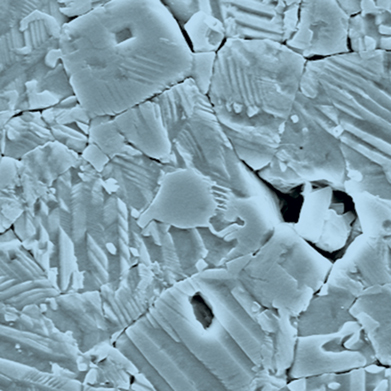
The search for lead-free alternatives to Pb(Zr,Ti)O3 (PZT) piezoelectric ceramics has become a major topic in functional materials research due to legislation in many countries that restricts the use of lead alloys and compounds in commercial products. This article examines both the necessity for regulation and the impacts those regulations have created in the context of piezoelectric materials. It reviews the toxicity of lead, describes current legislation to control the spread of lead in the environment, and attempts to define the risks associated with the manufacture, use, and disposal of lead-based piezoelectric materials. The consequences of current legislation, both intended and unintended, are examined.
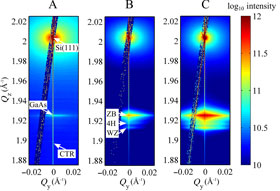
We investigate the impact of increasing number density of self-catalyzed GaAs nanowires (NWs) on their crystal structure, grown by molecular beam epitaxy. To this end, we employ an iterative, lithography-free approach for varying the number density of self-catalyzed GaAs NWs grown on Si(111) covered with native oxide. We use scanning electron microscopy and x-ray diffraction in combination with simulations based on the extended Markov model for the morphologic characterization of the so obtained NWs. Our findings show how both the shape of the Ga-droplet and the NW crystal structure are affected even by relatively small changes of the wire number density, allowing for a quantification of its influence on the local NW growth conditions at nominally identical growth parameters.
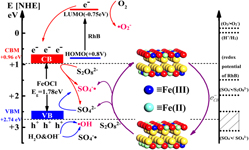
Activation of persulfate (PS) by ultraviolet light or transition metal catalysts has been extensively studied. However, little is known about the activation of PS by iron oxychloride (FeOCl) in the presence of visible light irradiation. Herein, the catalytic activity of FeOCl was developed for oxidative degradation of rhodamine B (RhB) with the FeOCl/PS/Vis process. The characterization of FeOCl for reaction kinetics, degradation mechanism, and catalyst stability was investigated. It is found that the redox cycle of iron species and photoinduced electrons formed on the FeOCl catalyst surface can effectively activate PS, to generate radicals. Based on quenching experiments and electron paramagnetic resonance, the photogenerated holes (h+) and sulfate radicals (SO4−•) are the predominant reactive oxidants for RhB decolorization, while superoxide radicals (•O2−) and hydroxyl radicals (•OH) are also involved. Moreover, FeOCl shows good catalytic performance in a wide range of pH values (pH = 3–10) and excellent reusability and stability, as well.
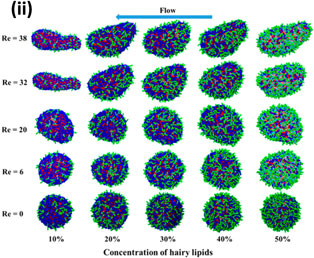
The flow of particles through confined volumes has appeared under different contexts in nature and technology. Some examples include the flow of red blood cells or drug delivery vehicles through capillaries, or surfactant-based particles in nano- or microfluidic cells. The molecular composition of the particles along with external conditions and the characteristics of the confined volume impact the response of the particle to flow. This review focuses on the problem of phospholipid vesicles constrained to flowing in channels. The review examines how experimental and computational approaches have been harnessed to study the response of these particles to the flow.
Effective degradation of organic pollutants in wastewater is of great importance to the environment and human society. TiO2-based electrospun nanofibrous materials combining the properties of the large specific surface area, high aspect ratio, tunable compositions and structures, as well as easy to recycle, show great promise for the efficient removal of organic pollutants. In this Prospective paper, the recent progress in the degradation of organic water contaminants over visible-light-responsive TiO2-based nanofibrous materials is summarized, with emphasis on the strategies for improving the visible-light photocatalytic activity of TiO2-based nanofibrous materials. Finally, the current challenges and future outlook in this field are discussed.
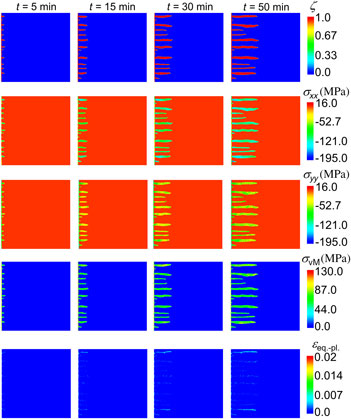
Lithium (Li) dendrite formation in Li-metal batteries (LMBs) remains a key obstacle preventing LMBs from their widespread application. This study focuses on the role of the stress field in the Li electrodeposits formation and growth. Coupled electrochemical and mechanical phase-field model (PFM) is used to investigate electrodeposited Li evolution under different conditions. The PFM results, using both the anisotropic elastic properties of Li and the random delivery of Li-ions through the solid electrolyte interface, show a significant local stress development indicating a direct correlation between the stress field and the origin of the undesired Li filaments initiation.
The use of copper hydroxyphosphate (Cu2PO4OH), also called libethenite, as a near-infrared (NIR) absorbing additive has been investigated. Samples were synthesized by using a hydrothermal treatment or simple wet chemical processing, which was later easily upscaled. All synthesized samples showed a strong absorption in the NIR region. Trials were conducted to produce laser-marked plastic plates and security IR ink printing tests. It was found that when incorporated in plastic and ink formulation, Cu2PO4OH added good NIR absorption properties without influencing other finished product properties too much, which confirms that it is a suitable additive that can be readily manufactured at room temperature and without pressured equipment.
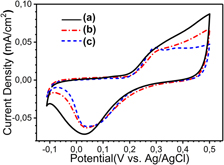
In this study, Au-based nanoglasses in the form of thin films deposited by magnetron sputtering are comparatively dealloyed. The films have either nanograined or nanocolumnar microstructure, depending on the working pressure of Ar in the sputtering chamber. Nanocolumnar thin films exhibit much higher dealloying rate reducing effectively the dealloying time with respect to nanograined and homogenous thin films. Electrocatalysis experiments indicate that the resulting nanoporous films are active for the methanol electrooxidation, with promising results in term of stability especially for the dealloyed nanocolumnar film.
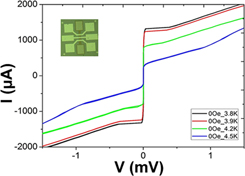
The topological insulator/superconductor heterostructure is one of the most promising platforms to create and manipulate Majorana bound states. Here, we used molecular beam epitaxy to grow high-quality (Bi0.5Sb0.5)2Te3 films on Nb surfaces. To promote proper (Bi0.5Sb0.5)2Te3 film nucleation in the early growth stage, we developed a two-step growth method. Bi, Sb, and Te clusters were first evaporated at a low temperature of 180 °C, which is below the typical growth temperature and then annealed to form a crystalized passivation layer. Second, a standard (Bi0.5Sb0.5)2Te3 film was grown under the normal deposition temperature of 280 °C. We used reflection high-energy electron diffraction, high-resolution transmission electron microscopy, X-ray photoelectron spectroscopy, and X-ray diffraction to further characterize the (Bi0.5Sb0.5)2Te3 film and passivation layer quality. Finally, the top Nb film was laid down by magnetron sputtering at room temperature. The hetero-Nb/epitaxial (Bi0.5Sb0.5)2Te3/Nb stacks were further fabricated into micro-Josephson junctions and showed clear Josephson currents demonstrating an excellent material quality.
The post-processing treatment plays an important role in tailoring the mechanical and biological properties of the three-dimensional powder-printed porous scaffolds. Depending on scaffold material composition, a combination of post-processing treatments can be used to tailor these properties. This work probes into the impact of post-processing on the microstructure and deformation behavior of 3D-printed scaffolds. In this study, we have chosen CaSO4·xH2O (POP), a system for 3D powder printing and two different post-processing methodologies, namely chemical conversion and polymer infiltration. POP-based scaffolds were fabricated using water-based binder with up to 55% interconnected microporosity and moderate compressive strength of 1.5 MPa. Microcomputed tomography (µCT) is extensively utilized to determine the accuracy and efficacy of the adopted printing and post-processing approach. It was shown that the reproducibility of the fine features depends not only on the size but also on the presence of neighboring features. Crucially, µCT-based microstructure modeling and finite elemental simulation were attempted to computationally capture the compression behavior, in silico. Finally, in situ compression coupled with µCT imaging provided us an insight into fracture behavior of 3D powder-printed scaffolds.
Seeking to improve the wear resistance of the Ti6Al4V (Ti64) alloy for biomedical applications, carbon nanotubes (CNTs) and calcium phosphate (CaP) ceramics were added to Ti64 powder and successfully 3D-printed using a commercial laser engineered net shaping (LENS™) system. It was hypothesized that CNTs would allow for in situ carbide formation during laser processing, resulting in increased surface hardness. It was also hypothesized that CaPs would allow for protective tribofilm formation during wear, reducing material loss from wear-induced damage. Scanning electron microscopy images reveal defect-free microstructures with fine carbides evenly distributed, while X-ray diffraction confirms the presence of carbides without additional unwanted intermetallic phases. Vickers microhardness shows an increase in surface hardness in coatings containing both CNTs and CaPs. In vitro tribological studies found reduced coefficient of friction, reduced wear rates, and reduced metal ion-release concentrations in coatings containing both CNTs and CaPs. This study demonstrates the efficacy of CNTs and CaPs to improve wear resistance of Ti64 for potential applications in articulating surfaces of load-bearing implants.
Single-phase polycrystalline samples of RBa2Cu2.9Zn0.1Oy (R = Y, Nd, Gd, Er, and Tm) (ZnR123) were synthesized using the standard solid-state reaction method. They were characterized by X-ray powder diffraction (XRD) and scanning electron microscope. XRD shows that all samples consist essentially of a single phase and retain the orthorhombic structure. The structure of the samples was refined by the Rietveld method with the help of the bond valence sum method. The variation of the lattice parameters and some meaningful bond angles and lengths with the ionic radius are discussed. In these compounds, the variations of the buckling angles Cu2–O(2,3)–Cu2 and Cu2–Cu2–O(2,3) are unique: the bond angles Cu2–O3–Cu2 and Cu2–Cu2–O2 increase, whereas the bond angles Cu2–O2–Cu2 and Cu2–Cu2–O3 decrease. The variation of these bond angles brings about a strong curvature of the Cu2O plane. Furthermore, we have found tree fixed triangles formed by the Cu2, O2, and O3 atoms in addition to another fixed triangle O1–Ba–O1 observed for the first time. BVS of Cu2 atom shows a specific and unique variation compared with other compounds.
This contribution presents a comprehensive analysis of the low temperature deformation behavior of CoCrFeMnNi on the basis of quasistatic tensile tests at temperatures ranging from room temperature down to 4.2 K. Different deformation phenomena occur in the high-entropy alloy in this temperature range. These include (i) serrated plastic flow at certain cryogenic temperatures (4.2 K/8 K), (ii) deformation twinning (4.2 K/8 and 77 K), and (iii) dislocation slip (active from 4.2 K up to room temperature). The importance of deformation twinning for a stable work-hardening rate over an extended stress range as well as strain range has been addressed through the use of comprehensive orientation imaging microscopy studies. The proposed appearance of ε-martensite as well as a previously uninvestigated route of analysis, essentially a quantitative time-dependent, strain-dependent, and stress-dependent evaluation of the serrated plastic flow in CoCrFeMnNi is provided.
The National Institute of Standards and Technology (NIST) certifies a suite of Standard Reference Materials (SRMs) to address specific aspects of the performance of X-ray powder diffraction instruments. This report describes SRM 1879b, the third generation of this powder diffraction SRM. SRM 1879b is intended for use in the preparation of calibration standards for the quantitative analyses of cristobalite by X-ray powder diffraction in accordance with National Institute for Occupational Safety and Health (NIOSH) Analytical Method 7500, or equivalent. A unit of SRM 1879b consists of approximately 5 g of cristobalite powder bottled in an argon atmosphere. It is certified with respect to crystalline phase purity, or amorphous phase content, and lattice parameter. Neutron powder diffraction, both time-of-flight and constant wavelength, was used to certify the phase purity using SRM 676a as an internal standard. A NIST-built diffractometer, incorporating many advanced design features was used for certification measurements for lattice parameters.
In this study, the effects of 3D-printed SiO2 and ZnO-doped tricalcium phosphate (TCP) scaffolds with interconnected pores were evaluated on the in vivo bone formation and healing properties of a rabbit tibial defect model. Pure and doped TCP scaffolds were fabricated by a ceramic powder-based 3D printing technique and implanted into critical sized rabbit tibial defects for up to 4 months. In vivo bone regeneration was evaluated using chronological radiological examination, histological evaluations, SEM micrographs, and fluorochrome labeling studies. Radiograph results showed that Si/Zn-doped samples had slower degradation kinetics than the pure TCP samples. 3D printing of TCP scaffolds improved bone formation. The addition of dopants in the TCP scaffolds improved osteogenic capabilities when compared to the pure scaffolds. In summary, our findings indicate that the addition of dopants to the TCP scaffolds enhanced bone formation and in turn leading to accelerated healing.