To save content items to your account,
please confirm that you agree to abide by our usage policies.
If this is the first time you use this feature, you will be asked to authorise Cambridge Core to connect with your account.
Find out more about saving content to .
To save content items to your Kindle, first ensure no-reply@cambridge.org
is added to your Approved Personal Document E-mail List under your Personal Document Settings
on the Manage Your Content and Devices page of your Amazon account. Then enter the ‘name’ part
of your Kindle email address below.
Find out more about saving to your Kindle.
Note you can select to save to either the @free.kindle.com or @kindle.com variations.
‘@free.kindle.com’ emails are free but can only be saved to your device when it is connected to wi-fi.
‘@kindle.com’ emails can be delivered even when you are not connected to wi-fi, but note that service fees apply.
A model is developed and implemented for load-controlled instrumented conical indentation of a brittle open-cell foam on a dense substrate. A survey of observations suggests that such indentations are typified by displacement excursions at small indentation loads, load-displacement variability, localized crushing, and a discrete to continuum transition at intermediate loads. The model includes all these effects as well as stiffening at large loads as the substrate is encountered. Direct quantitative comparison is made with measurements of a silica foam on a soda-lime glass substrate, strongly supporting the physical basis of the model.
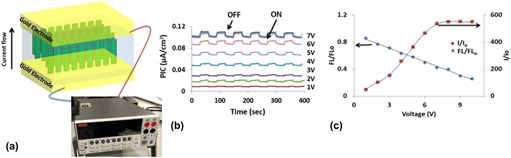
Graphene possesses exceptional mechanical, electrical, and thermal properties that stand out for numerous applications in materials and energy-related areas. The growing demand to produce high-quality large-scale graphene films inexpensively remains a challenge. The work presented in this paper emphasizes a straightforward method of producing high-quality graphene films using cellulose as the starting materials. We demonstrate the synthesis of defect-free graphene films (as thin as ∼10 layers) on substrates up to 7 cm2 in area. Graphitic films were characterized using Infrared Raman, energy-dispersive X-ray spectroscopy, X-ray diffraction (XRD), scanning electron microcopy SEM, and high-resolution transmission electron microscopy (HRTEM). Our XRD, Raman, and HRTEM studies indicated that the synthetic temperature was critical in the synthesis of high-quality graphene films using cellulose as the carbon source material. Systematic studies revealed that defect-free large area graphitic films were produced at a synthetic temperature of ∼900 °C. The Raman D band peak intensity decreased for the samples synthesized at higher temperature but was absent for the samples prepared at 900 °C. Both the HRTEM and selected area electron diffraction confirm the highly ordered arrangement of carbon atoms in the sample matrix. The measured distance between lattice fringes was 0.335 nm, which matches with the literature reported fringe distance for the high-quality graphene. The XRD spectrum of the thin graphitic samples synthesized at 900 °C displayed a sharp diffraction peak 2θ–26.5° characteristic of highly crystalline defect-free graphene. Functional photodetector and photovoltaic (PV) devices were fabricated using graphitic films. The graphitic films were used as one of the electrodes for the PV devices yielded a power conversion efficiency of ∼1%. Our synthetic method can be potentially used for producing high-quality free-standing graphene films inexpensively at large-scale.
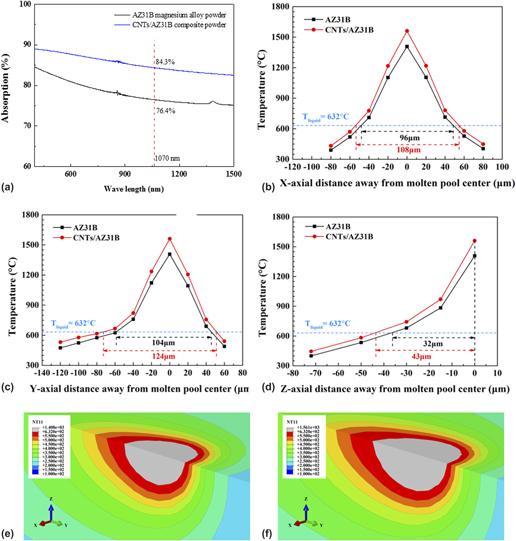
In this research, heat transfer analysis was operated by simulation to investigate the influence of carbon nanotubes (CNTs) on laser absorption and molten pool characteristic as well as the vaporization porosity of a typical magnesium alloy of AZ31B in the selective laser melting (SLM) process. It is concluded that the laser absorption is enhanced by 7.9% through mixing 1.5 wt% CNTs into AZ31B alloy powders. The full melting state of molten pools for CNTs/AZ31B composites was achieved by laser input energy densities (LIEDs) larger than 42 J/mm3. However, vaporization porosity has an ascendent tendency with LIED increasing, which leads to poor densities of manufactured parts. As a result, the optimal relative density and mechanical properties of composites are obtained by an LIED of 42 J/mm3. It may solve the problem of low laser absorption in laser processing for magnesium alloys and provide a referenced method to evaluate the vaporization porosity of the material in the SLM process.
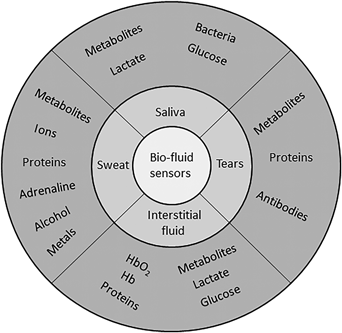
Wearable healthcare technologies should be non-invasive, robust to daily activity/environments, easy to use, and comfortable to wear. Flexible substrate devices for biomarker monitoring can contribute to wearable diagnostic applications. Single-target biosensors have extensively been developed for health-monitoring applications; however, recently multiplex biomarker tests have generated clinical interest. Targeting multiple biomarkers in diagnostic systems (wearable or point of care) offers more focused diagnosis and treatment as changes in a single biomarker can be caused by a series of physiologic conditions. This review highlights flexible substrates that have been successfully demonstrated for multiplex biomarker detection with potential for healthcare monitoring.
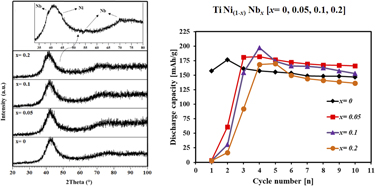
The electrochemical behavior of TiNi(1−x)Nbx (x = 0, 0.05, 0.1, 0.2) ternary intermetallic compounds synthesized by mechanical alloying was investigated and compared to that of binary TiNi. The structure of 20-h milled product with initial stoichiometric composition of TiNi0.95Nb0.05 was found to be amorphous/nanostructured. Upon cycling, this ternary milled product exhibited the highest discharge capacity (166.1 mA h/g) after 10 cycles and best cycle stability (∼91%) while those of the binary TiNi were 147 mA h/g and ∼83%, respectively; i.e., slight amount of Nb substitution (0.05 mol) for Ni in the TiNi not only increased discharge capacity and cycle stability but also enhanced the kinetics of hydrogen absorption/desorption through increasing the exchange current density and hydrogen diffusion coefficient. However, additional Nb content was found to have negative effect on electrochemical properties; this was related to the existence of Nb element in addition to the ternary amorphous/nanocrystalline structures.
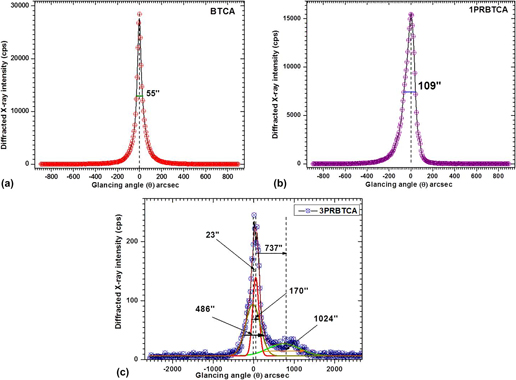
Phenol red dyed bis thiourea cadmium acetate (BTCA) crystals of ∼30 × 10 × 6 mm dimension have been grown for the first time using the slow evaporation solution technique. Diffuse reflectance measurements show absorption bands at 363 and 563 nm in the doped crystal. Optical energy gap was calculated to be 4–5 eV. Photoluminescence spectra were recorded using 320 nm excitation source. The chemical etching study was done and etch pit density was found to be reduced from 4.5 × 10³/cm2 (pure) to 3.0 × 10²/cm2 (dyed). Mechanical strength is increased from 74.1 kg/mm2 for pure to 94.7 kg/mm2 for dyed crystals. The enriched properties of BTCA in the presence of dye suggest that the dyed crystals will be more applicable compared to pure crystals.
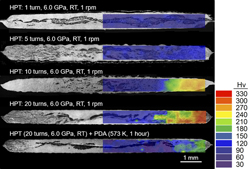
This report summarizes a recent study demonstrating simple and rapid synthesis of a new Al–Mg alloy system and ultimately synthesizing a metal matrix nanocomposite, which was achieved by processing stacked disks of the two dissimilar metals by conventional high-pressure torsion (HPT) processing. The synthesized Al–Mg alloy system exhibits exceptionally high hardness through rapid diffusion bonding and simultaneous nucleation of intermetallic phases with increased numbers of HPT turns through 20, and improved plasticity was demonstrated by increasing strain rate sensitivity in the alloy system after post-deformation annealing. An additional experiment demonstrated that the alternate stacking of high numbers of dissimilar metal disks may produce a faster metal mixture during HPT. Metal combinations of Al–Cu, Al–Fe, and Al–Ti were processed by the same HPT procedure from separate pure metals to examine the feasibility of the processing technique. The microstructural analysis confirmed the capability of HPT for the formation of heterostructures across the disk diameters in these processed alloy systems. The HPT processing demonstrates a considerable potential for the joining and bonding of dissimilar metals at room temperature and the expeditious fabrication of a wide range of new metal systems.
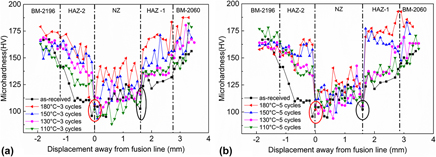
The effects of the thermal cyclic aging treatment on the microstructure and mechanical properties of 2060 Al–Li alloy laser beam welded joints were investigated. Aging treatments were conducted at different temperatures and for different cycles. Test results showed that the tensile strength of the weld joints increased and the elongation slightly decreased after the thermal cycling treatment. It was also found that the heat affected zone (HAZ) of the welds exhibited a significant increase in microhardness, whilst the microhardness variation of the nondendrite equiaxed zone (EQZ) can be neglected. The strengthening effect of the thermal cycling became more obvious as the temperature and cycles increased. The highest strength of around 513 MPa (96% of the base metal) was obtained at the temperature of 180 °C. Reprecipitation of strengthening phases such as T1 in the HAZ at 180 °C was observed by TEM, which can be considered as the main reason for the strengthening effect of the aging treatment.
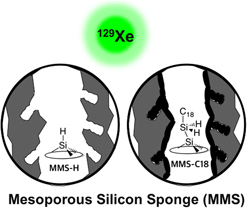
Temperature-dependent (173–373 K) hyperpolarized 129Xe nuclear magnetic resonance (129Xe NMR) analyses along with transmission electron microscopy and N2 adsorption measurements have been applied to understand pore structure and interconnectivity of bare and grafted mesoporous silicon sponge (MSS) materials. The Xe NMR chemical shift data indicate the existence of micropores inside the larger mesopore channels and the effects of grafting on the pore surfaces. The grafted layer estimated at 2 nm in thickness blocks the micropores on the surfaces of mesoporous channels. Partitioning of Xe between the micropores and the mesopores in the MSS materials is temperature-dependent, with Xe principally occupying the micropores at lower temperatures. In addition, the temperature-dependent Xe peak shift of MSS materials verifies the increased uniformity and interconnectivity of mesopores after surface grafting. The results from this study provide useful information for design and development of novel materials.
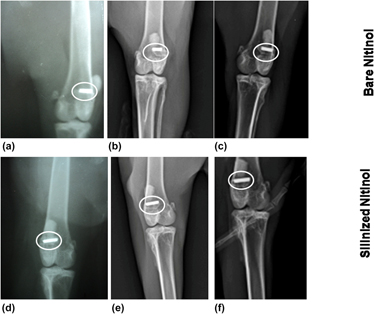
Nitinol, being a shape memory and super elastic alloy, is used in medical industry. Surface modification of nitinol helps to reduce the nickel ion leaching in physiological environment. The purpose of this study is to modify the nitinol surface by the silanization technique and to conduct a comparative investigation with the bare nitinol in the aspect of leaching of nickel ion, hemocompatibility, and in vivo animal response. X-ray photoelectron spectroscopy and energy dispersive X-ray spectroscopy studies confirmed the addition of organofunctional alkoxysilane molecules through the silanization process. The histological study showed the presence of adequate number of osteoblasts in silanized nitinol. The fluorochrome labeling study depicted more new bone formation (8 and 21% higher) in silanized nitinol specimens than bare one at one and three months postoperatively. Radiology and SEM study also proved the better performance of silanized samples. The cumulative in vivo results indicate its suitability as the potential bioimplant in various orthopedic surgical uses.
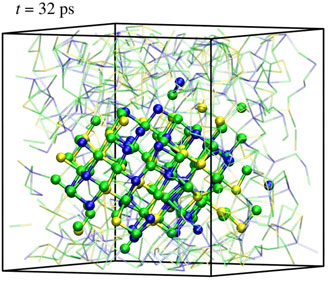
Phase-change materials (PCMs) have important applications in optical and electronic storage devices. Ge2Sb2Te5 (GST) is a prototypical phase-change material (PCM) employed in state-of-the-art storage-class memories. In this work, we investigate crystallization of GST at temperatures 600–800 K by ab initio molecular dynamics. We consider large models containing 900 atoms, which enable us to investigate finite-size effects by comparison with smaller models. We use the metadynamics method to accelerate the formation of a large nucleus and then study the growth of the nucleus by unbiased simulations. The calculated crystal growth speed and its temperature-dependent behavior are in line with recent experimental work.
Here we report a new type of n-type flexible film with a double-layer structure fabricated by hybridizing an n-type inorganic thermoelectric material, bismuth selenide (Bi2Se3), and an ordinary insulating polymer, poly(vinyl alcohol) (PVA). Flake-shaped Bi2Se3 nanoparticles (Bi2Se3 nanoflakes) modified with/without gold (Au) nanoparticles were distributed in the one side of PVA film with the particular arrangement, and the hybrid film showed a high Seebeck coefficient (−91 µV/K at room temperature) as an n-type flexible material. Our method is expected to be used for the design of flexible functional devices such as flexible thermoelectric modules.
Due to the lack of an effective and noninvasive screening tool, the early diagnosis of colorectal cancer (CRC) is currently difficult. For the early diagnosis of CRC, we have developed Fe3O4-Dye800-single chain fragment variable (ScFv)egfr/vegfr nanoprobes. ScFvegfr/vegfr (ScFv2) conjugated onto Fe3O4 nanoprobes efficiently recognized CRC tumors in vitro and in vivo. Near-infrared fluorescence imaging modalities such as Dye800 were utilized simultaneously with magnetic resonance to enhance detection efficiency. Fe3O4-Dye800-ScFv2 successfully detected tiny CRC tumors; the synergistic ScFv2 successfully enhanced CRC targeting. Thus, Fe3O4-Dye800-ScFv2 nanoprobes may represent a new molecular imaging strategy for the early detection of CRC.
Palladium (Pd) and gold (Au) nanoparticles (NPs) hybridized on two types of carbon supports, graphene and granular activated carbon (GAC), were shown to be promising catalysts for the sustainable hydrodehalogenation of aqueous trichloroethylene (TCE). These catalysts are capable of degrading TCE more rapidly than commercial Pd-on-GAC catalysts. The catalysts were synthesized at room temperature without the use of any environmentally unfriendly chemicals. Pd was chosen for its catalytic potency to break down TCE, while Au acts as a strong promoter of the catalytic activity of Pd. The results indicate that both graphene and GAC are favorable supports for the NPs due to high surface-to-volume ratios, unique surface properties, and the prevention of NP aggregation. The properties of NP catalysts were characterized using electron microscopy and spectroscopy techniques. The TCE degradation results indicate that the GAC-supported catalysts have a higher rate of TCE removal than the commercial Pd-on-GAC catalyst, and the degradation rate is greatly increased when using graphene-supported samples.
Seeking a latent-crosslinkable, mechanically flexible, fully thermoplastic shape memory polymer, we have developed a simple but effective macromolecular design that includes pendent crosslinking sites via the chain extender of a polyurethane architecture bearing semicrystalline poly(ε-caprolactone) (PCL) soft segments. This new composition was used to prepare fibrous mats by electrospinning and films by solvent casting, each containing thermal initiators for chemical crosslinking. The one-step synthesis strategy proved successful, and the crosslinking sites within PCL segments resulted in two-way (reversible) shape memory: repeatable elongation (cooling) and contraction (heating) under constant tensile stress. Being fully characterized, the crosslinked fiber mats revealed promising one-way and two-way (reversible) shape memory phenomena, with lower storage moduli though, compared to uncrosslinked films. We observed for both fibrous mats and films that increasing the applied tensile stress led to greater crystallization-induced elongation upon cooling as well as smaller strain hysteresis, particularly for covalently crosslinked samples. Relevant to medical applications, the materials were observed to feature unique, two-stage enzymatic degradation that was sensitive to differences in crystallinity and microstructure among samples.
High-entropy alloys (HEAs) with multiple principal elements open up a practically infinite space for designing novel materials. Probing this huge material universe requires the use of combinatorial and high-throughput synthesis and processing methods. Here, we present and discuss four different combinatorial experimental methods that have been used to accelerate the development of novel HEAs, namely, rapid alloy prototyping, diffusion-multiples, laser additive manufacturing, and combinatorial co-deposition of thin-film materials libraries. While the first three approaches are bulk methods which allow for downstream processing and microstructure adaptation, the latter technique is a thin-film method capable of efficiently synthesizing wider ranges of composition and using high-throughput measurement techniques to characterize their structure and properties. Additional coupling of these high-throughput experimental methodologies with theoretical guidance regarding specific target features such as phase (meta)stability allows for effective screening of novel HEAs with beneficial property profiles.
Refractory high-entropy alloys (RHEAs) have recently attracted much attention, primarily due to their mechanical properties at elevated temperatures. However, the equilibrium phase-stability of these alloy systems is not well established. The present investigation focuses on the phase stability of Al0.5NbTa0.8Ti1.5V0.2Zr RHEA at temperatures ranging from 600 to 1200 °C. The detailed phase characterization involves coupling of scanning electron microscopy, transmission electron microscopy, and atom probe tomography. The stable phases present at these temperatures are (i) 1200 °C—body-centered cubic (BCC) matrix with nano-B2 precipitates; (ii) 1000 °C and 800 °C—a BCC matrix phase with Al–Zr rich hexagonal closed packed intermetallic precipitates and, (iii) 600 °C—a BCC + B2 microstructure, comprising a continuous BCC matrix with discrete B2 precipitates. These results highlight the substantial changes in phase stability as a function of temperature in RHEAs, and high-entropy alloys in general, and also the importance of accounting for these changes especially while designing alloys for high temperature applications.
The objective of the study was to modify the external surface of commercially produced polyethylene (PE) tubes made by Balton, Poland, to improve their hydrophilic properties. The process was conducted in a new dielectric barrier discharge reactor. The carrier gases were argon and air, whereas carbon dioxide and hydrogen were the doping gases. The influence of the gas composition in the plasma chamber on the surface free energy (SFE) of PE tubes was investigated. For the gas composition 50 vol% of Ar + 50 vol% of CO2, the highest value of the SFE (53.4 mJ/m2) was obtained. It means an increase in SFE approx. 17% as compared to the unmodified sample (46.0 mJ/m2). Fourier-transform infrared spectroscopy with attenuated total reflectance (FTIR-ATR) results indicates that on the surface of the tubes, carboxyl, carbonyl, and hydroxyl groups were formed. Those oxygen-containing groups could be responsible for the increase of the hydrophilic effect. The O/C ratio on the surface, measured by the X-ray photoelectron spectroscopy method, was three times higher in the case of the modified samples than in those which were not subjected to plasma treatment.
High-entropy alloys (HEAs) are receiving considerable attention since last decade because of their ability to give excellent strength with reasonably good elongation during fracture. The mechanical alloying followed by sintering is one of the routes for fabrication; however, there are limited reports on sintering mechanisms of HEA powders. The present investigation studies sintering mechanisms of CoCrFeNi alloy powders in as-milled and annealed conditions using dilatometer experiments. The annealed powder shows slower densification behavior and higher activation energy of sintering, compared to the as-milled powder. Diffusion coefficients were analyzed through sintering models and compared with literature data. The as-milled powder was found to exhibit mixed response, i.e., the grain boundary diffusion seems to be dominating initially due to a large grain boundary fraction but volume diffusion (VD) also contributes significantly, due to high defect concentration and metastable phases. VD was found to be the dominating mechanism during sintering of single phase, stable annealed powder.