To save content items to your account,
please confirm that you agree to abide by our usage policies.
If this is the first time you use this feature, you will be asked to authorise Cambridge Core to connect with your account.
Find out more about saving content to .
To save content items to your Kindle, first ensure no-reply@cambridge.org
is added to your Approved Personal Document E-mail List under your Personal Document Settings
on the Manage Your Content and Devices page of your Amazon account. Then enter the ‘name’ part
of your Kindle email address below.
Find out more about saving to your Kindle.
Note you can select to save to either the @free.kindle.com or @kindle.com variations.
‘@free.kindle.com’ emails are free but can only be saved to your device when it is connected to wi-fi.
‘@kindle.com’ emails can be delivered even when you are not connected to wi-fi, but note that service fees apply.
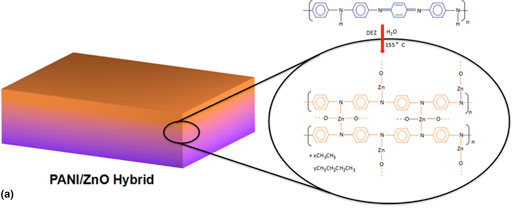
Biomineralization is a natural concept to alter the mechanical properties of soft matter. Mimicking this concept became desirable with a resulting great variety of approaches toward realizing functional hybrid materials. Vapor-phase infiltration (VPI), a solvent-free approach, is complementary to solution-based processes and often provides hybrid materials with a different chemical nature. This article overviews the evolution of VPI from a curiosity-driven alternative way to mimic biomineralization toward its application in functional materials design. Even though still in infancy, the rapidly growing interest shows promise for upcoming innovative applications of VPI in a great variety of research and development directions.
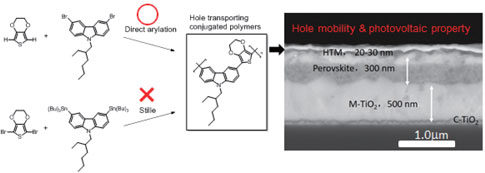
Direct arylation polycondensation (DArP) is an emerging synthetic method of producing conjugated polymers in an environmentally benign and cost-effective manner. We now report the synthesis of hole-transporting conjugated polymers, namely, DPP-OMe (Mn = 7.9 kg/mol) and DPP-F (Mn = 12.6 kg/mol), under microwave-assisted DArP conditions. These two polymers and the previously synthesized 3,6-Cbz-EDOT were evaluated as hole-transporting materials in mesoscopic perovskite solar cells. 3,6-Cbz-EDOT synthesized by DArP exhibited higher hole mobility and better photovoltaic properties than that synthesized by the Stille polycondensation. Moreover, chemical dopants improved the short-circuit current density (Jsc) and fill factor.
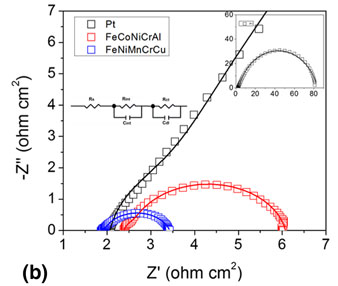
Due to the special crystal structures and electron configurations, high-entropy alloys (HEAs) are expected to have favorable activities for electrocatalytic reactions. In this paper, a set of oxygen evolution reaction (OER) criteria are applied for the HEA-based electrocatalyst design. Specifically, FeNiMnCrCu HEA is predicted to have a better OER performance than the baseline FeCoNiCrAl HEA. To demonstrate this design approach, both FeNiMnCrCu and FeCoNiCrAl samples are prepared and tested. Their crystal structures and electrocatalytic performance are examined. This paper demonstrates the potential of using finely tuned HEAs for OER applications.
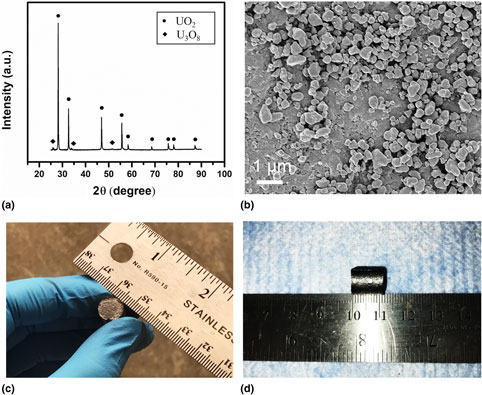
The development of advanced fuel fabrication technologies is important for developing accident-tolerant fuels and engineering fuels for safer and more effective nuclear energy systems. In this work, commercial-size uranium dioxide (UO2) fuel pellets with a theoretical density of 95% were consolidated by spark plasma sintering (SPS) at 1600°C for 5 min. Systematic investigations suggest uniform densification and stoichiometric UO2 with an ideal fluorite structure across the commercial-size fuel pellet, but with a distributed grain structure because of non-uniform distribution of temperature during sintering. This work demonstrates a great potential of using SPS for fabricating nuclear fuels at a cost-effective manner.
A series of Ba-modified MnCeOx/TiO2 catalysts were prepared by a wet impregnation method and tested for selective catalytic reduction (SCR) of NO with NH3 at low temperature. The results showed that Ba additives obviously improved the catalytic performance of the MnCeOx/TiO2 catalyst for NH3-SCR, and the BaMnCeOx/TiO2 catalyst with 3 wt% BaO exhibited the optimal catalytic performance. Moreover, the introduction of Ba also improved the resistances toward water vapor and SO2 of catalysts. The N2 adsorption, H2-TPR, and X-ray photoelectron spectroscopy results showed that the addition of Ba increased the specific surface area, redox properties, and concentrations of surface Mn4+ and chemisorbed oxygen of catalysts. Furthermore, NH3-TPD and NO-TPD were used to investigate the absorption of NH3 and NO on the catalyst. The results revealed that although the introduction of Ba significantly promoted the adsorption of NO, it also inhibited the adsorption of NH3. Consequently, the catalytic performance of MnCeOx/TiO2 was greatly improved with the Ba additives.
Solar photovoltaics (SPV) forms an integral part of renewable energy systems that are crucial for combating global warming. Written to serve as an ideal text for students, researchers and industrial personnel, it discusses the principles of operation of photovoltaic devices, their limitations, choice of materials, and maximum efficiencies. It covers in depth discussion of new materials and devices based on organics and perovskites, and a flow-chart of the manufacture of Si, GaAs and CdTe cells, their characterization and testing. It highlights characterization, testing and reliability of solar PV modules, comparison of fixed and tracking SPV systems using concentrator cells. Economical aspects of grid-connected and stand-alone systems and a wide range of applications, from solar pumps, and street lighting to large power plants is covered in the text. Several aspects such as cell and module manufacture, characterization, testing, reliability, and system design are described considering commercial SPV manufacturing plants.
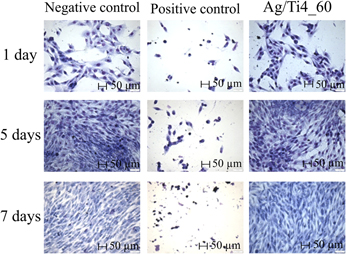
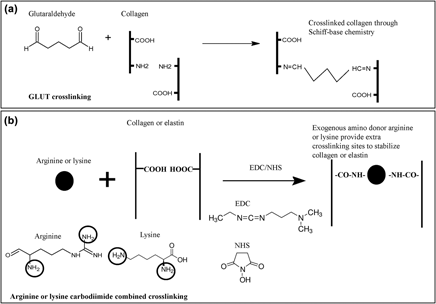
Valvular heart diseases lead to over 300,000 heart valve replacements worldwide each year. Bioprosthetic heart valves (BHVs), derived from glutaraldehyde (GLUT) crosslinked porcine or bovine pericardium, are often used. However, valve failure can occur within 12–15 years due to progressive degradation and/or calcification. Being innovated by previous amino reagent studies used for GLUT detoxification and carbodiimide [1-ethyl-3-(3-dimethylaminopropyl)carbodiimide, EDC] chemistry, in this study, we developed a new fabrication method that utilizes exogenous amino donor arginine or lysine carbodiimide combined treatments to better stabilize the extracellular matrix of porcine pericardium. The carboxyl group density, amine content, differential scanning calorimetry, collagenase and elastase degradation, calcification by rat subdermal implantation, cytotoxicity, and platelet adhesion were characterized. We demonstrated that exogenous amino donor carbodiimide combined treatment for pericardiums had better resistance to elastase degradation (1.63 ± 0.11% and 1.44 ± 0.24% in arginine or lysine versus 3.68 ± 0.16% and 3.04 ± 0.11% in GLUT and GLUT/EDC control) and calcification (0.624 ± 0.193 and 0.637 ± 0.213 Ca µg/mg tissue in arginine or lysine versus 1.610 ± 0.124 and 1.512 ± 0.075 Ca µg/mg tissue in GLUT and GLUT/EDC control). This new strategy combined arginine or lysine and carbodiimide crosslinking would be a promising method to produce more robust BHVs with better structural stability and anticalcification property.
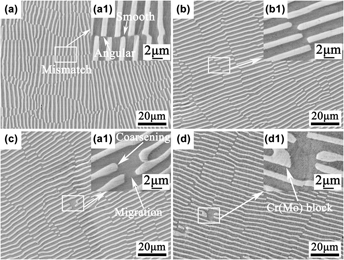
The microstructure evolution of the directionally solidified NiAl–Cr(Mo) planar eutectic lamellar structure was studied at 1150 °C and times of up to 400 h. The planar eutectic lamellar structure is obtained at the withdrawal rate range of 2.5–7.5 μm/s. The interlamellar spacing decreases gradually with increasing the withdrawal rate. The lamellar termination (like angular or smooth) commonly exists in the as-DS alloy. After high temperature treatment, the lamellar structure at 2.5 μm/s (interlamellar spacing, 3.7 μm) is almost stable, only a little migration of termination occurs at 400 h. When the withdrawal rate increases to 4.5 μm/s, the coarsening and migration of termination occur at 200 h. The adjacently coarsened terminations assemble when the coarsening processes to a certain degree, thus resulting in the formation of the blocky Cr(Mo) phase. Similarly, the above instable phenomenon occurs at 7.5 μm/s. The relevant instability mechanisms are discussed.
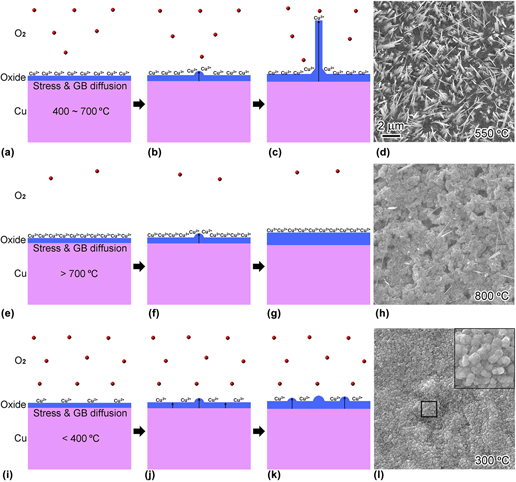
For one-dimensional nanomaterials, the performances are strongly related to the diameters, lengths, morphologies, and structures, implying that it is of great significance to understand the related growth mechanisms and thus to achieve the desired nanostructures. Thermal oxidation of copper has been widely used to fabricate CuO nanowires (NWs), whereas the growth mechanism still remains controversial in spite of the extensive investigations. Therefore, this review aims to offer a critical discussion about the growth mechanisms. First, the effects of different growth conditions on the growth of CuO NWs are introduced for basic understanding. Subsequently, the proposed mechanisms in different literature studies, i.e., the vapor–solid, self-catalyzed growth, stress-induced growth, stress grain boundary (GB) diffusion, and oxygen concentration gradient, are discussed and summarized. It seems that the combination of “stress GB diffusion” and “oxygen concentration gradient” mechanisms could be relevant for the growth of CuO NWs via thermal oxidation of copper.
Here, we report thiol-free thermal-injection synthesis of chalcopyrite (CuFeS2) nanocrystals (NCs) using iron (II) bromide (FeBr2), copper (II) acetaylacetonate (Cu(acac)2), and elemental sulfur (S). Controlled reaction temperature and growth time yield stable and phase-pure ternary CuFeS2 NCs exhibiting tetragonal crystal structure. With increasing growth time from 1 to 30 min, absorption peak slightly red shifts from 465 to 490 nm. Based on spectroscopic ellipsometry analysis, three electronic transitions at 0.652, 1.54, and 2.29 eV were found for CuFeS2 NC film. Also, CuFeS2 NC thin films are incorporated as hole transport layers in cadmium telluride solar cells reaching an efficiency of ~12%.
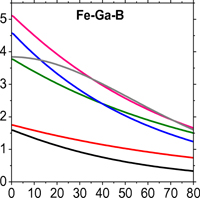
The phase stability, equilibrium lattice parameters, mechanical properties, and chemical bonding of M2B and M2B0.75C0.25 (M = Fe, Cr, W, Mo, Mn) were studied using first-principles calculations within density functional theory. These compounds are thermodynamic stability structures, and the M2B0.75C0.25 stability is worse than that of M2B. The equilibrium lattice parameters are consistent with other available experimental and theoretical data. Stress–strain and Voigt–Reuss–Hill approximations were used to estimate the elastic constants (Cij) and moduli (B, G, E), respectively. The bulk modulus and the ductility increased by adding an appropriate amount of C to the M2B. The compound hardness was studied using a theoretical method based on the work of Tian. The chemical bonding of these compounds was estimated using the Mulliken population analysis and density of states, and the results indicate that the bonding behaviors of these compounds are combinations of metallic and covalent bonds.
In this paper, we will discuss stability and reliability requirements of organic electronic devices and evaluate different encapsulation approaches enabling stable organic ultra-thin and stretchable devices. We highlight the differences in requirements and encapsulation approaches for applications, including organic light emitting diode (OLED) displays, OLED lighting, photovoltaics, and sensors. Stability and reliability requirements addressed in this paper cover light management, mechanical characteristics, chemical compatibility, form factors, and durability. While flexible organic electronic devices have already been demonstrated and commercialized, so far only prototypes of ultra-thin and stretchable devices have been demonstrated. The technological progress is promising and by identifying the gaps between prototyping and product realization, we intend to stimulate further research and development in this area.
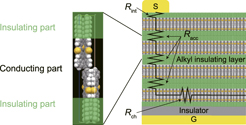
Ultrafast electron diffraction has been employed for the study of structural dynamics at surfaces in the time domain. Experiments were performed in a pump-probe setup with femtosecond-laser excitation and subsequent probing through diffraction of a femtosecond electron pulse at a temporal resolution of 350 fs. The system of interest is one atomic layer of indium atoms on a Si(111) surface. Through self-assembly, indium atomic wires form and exhibit a Peierls-like, insulator-to-metal phase transition that can be driven nonthermally through a femtosecond laser pulse. The transient intensity of the diffraction spots indicates the lifting of the Peierls transition and melting of a charge-density wave in only 700 fs, heating of the surface in 6 ps, and formation of a metastable and supercooled phase, which exists for nanoseconds.
Since the first report in 2012 of a solid-state perovskite solar cell (PSC) with a power-conversion efficiency (PCE) of 9.7% and 500 h stability, research on perovskite photovoltaics has unprecedentedly and exponentially increased. Currently, certified PCE for perovskite solar cells tops 22.7%, which surpasses the PCEs of conventional thin-film solar cells. Perovskite solar cells are thus a disruptive technology in photovoltaics due to their low cost and superb performance. In this article, the emergence of PSCs is introduced, and an overview of progress in our laboratory is presented. In addition, future research directions that could lead to higher efficiencies are described. Beyond photovoltaic applications of halide perovskites, results for light-emitting diodes, resistive memories, and x-ray imaging are described.