Refine search
Actions for selected content:
106117 results in Materials Science
Calendar of Forthcoming Meetings
-
- Journal:
- Powder Diffraction / Volume 32 / Issue 3 / September 2017
- Published online by Cambridge University Press:
- 16 August 2017, p. 219
-
- Article
-
- You have access
- HTML
- Export citation
Calendar of Short Courses & Workshops
-
- Journal:
- Powder Diffraction / Volume 32 / Issue 3 / September 2017
- Published online by Cambridge University Press:
- 16 August 2017, p. 220
-
- Article
-
- You have access
- HTML
- Export citation
Special Editions of PDJ & Deposition of Supplemental Materials
-
- Journal:
- Powder Diffraction / Volume 32 / Issue 3 / September 2017
- Published online by Cambridge University Press:
- 16 August 2017, p. 167
-
- Article
-
- You have access
- HTML
- Export citation
Crystal structure of a new polymorph of iodic acid, δ-HIO3, from powder diffraction
-
- Journal:
- Powder Diffraction / Volume 32 / Issue 4 / December 2017
- Published online by Cambridge University Press:
- 15 August 2017, pp. 261-264
-
- Article
- Export citation
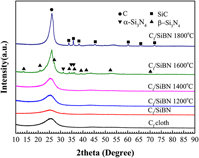
Thermodynamic study and preparation of Si–B–N ceramic coating by LPCVD from SiCl4–NH3–BCl3–H2–Ar system
-
- Journal:
- Journal of Materials Research / Volume 32 / Issue 20 / 27 October 2017
- Published online by Cambridge University Press:
- 15 August 2017, pp. 3801-3810
- Print publication:
- 27 October 2017
-
- Article
- Export citation
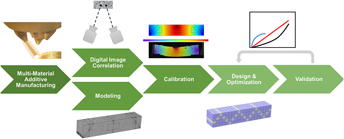
Mesoscale design of heterogeneous material systems in multi-material additive manufacturing
-
- Journal:
- Journal of Materials Research / Volume 33 / Issue 1 / 15 January 2018
- Published online by Cambridge University Press:
- 15 August 2017, pp. 58-67
- Print publication:
- 15 January 2018
-
- Article
-
- You have access
- Open access
- HTML
- Export citation

Waterborne acrylic hybrid adhesives based on a methacrylate-functionalized porous clay heterostructure for potential lamination application
-
- Journal:
- Journal of Materials Research / Volume 32 / Issue 19 / 16 October 2017
- Published online by Cambridge University Press:
- 15 August 2017, pp. 3689-3698
- Print publication:
- 16 October 2017
-
- Article
- Export citation
Introduction
-
- Journal:
- Journal of Materials Research / Volume 32 / Issue 15 / 14 August 2017
- Published online by Cambridge University Press:
- 14 August 2017, pp. 2837-2838
- Print publication:
- 14 August 2017
-
- Article
- Export citation
JMR volume 32 issue 15 Cover and Back matter
-
- Journal:
- Journal of Materials Research / Volume 32 / Issue 15 / 14 August 2017
- Published online by Cambridge University Press:
- 14 August 2017, pp. b1-b2
- Print publication:
- 14 August 2017
-
- Article
-
- You have access
- Export citation

Nanoenabling electrochemical sensors for life sciences applications
-
- Journal:
- Journal of Materials Research / Volume 32 / Issue 15 / 14 August 2017
- Published online by Cambridge University Press:
- 14 August 2017, pp. 2883-2904
- Print publication:
- 14 August 2017
-
- Article
- Export citation

Microstructure and mechanical properties of Mg–3.0Y–2.5Nd–1.0Gd–xZn–0.5Zr alloys produced by metallic and sand mold casting
-
- Journal:
- Journal of Materials Research / Volume 32 / Issue 16 / 28 August 2017
- Published online by Cambridge University Press:
- 14 August 2017, pp. 3191-3201
- Print publication:
- 28 August 2017
-
- Article
- Export citation
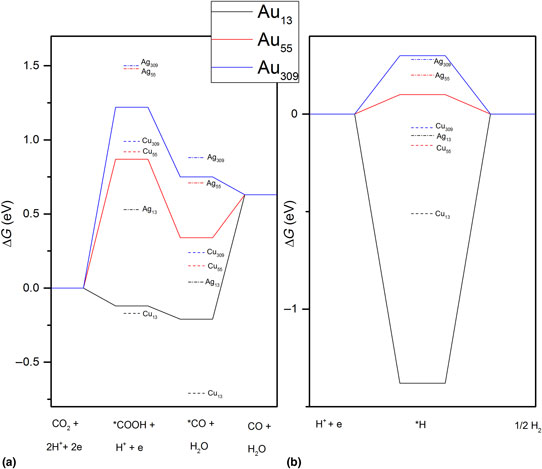
Assessment of trends in the electrochemical CO2 reduction and H2 evolution reactions on metal nanoparticles
-
- Journal:
- MRS Communications / Volume 7 / Issue 3 / September 2017
- Published online by Cambridge University Press:
- 14 August 2017, pp. 601-606
- Print publication:
- September 2017
-
- Article
- Export citation
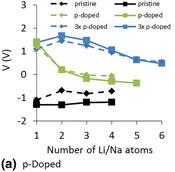
Doping of active electrode materials for electrochemical batteries: an electronic structure perspective
-
- Journal:
- MRS Communications / Volume 7 / Issue 3 / September 2017
- Published online by Cambridge University Press:
- 14 August 2017, pp. 523-540
- Print publication:
- September 2017
-
- Article
- Export citation

Memristive response of a new class of hydrated vanadium oxide intercalation compounds
-
- Journal:
- MRS Communications / Volume 7 / Issue 3 / September 2017
- Published online by Cambridge University Press:
- 14 August 2017, pp. 634-641
- Print publication:
- September 2017
-
- Article
- Export citation
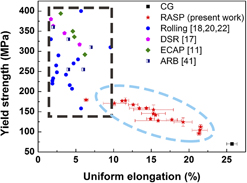
Microstructural evolution and mechanical properties of a 5052 Al alloy with gradient structures
-
- Journal:
- Journal of Materials Research / Volume 32 / Issue 23 / 14 December 2017
- Published online by Cambridge University Press:
- 14 August 2017, pp. 4443-4451
- Print publication:
- 14 December 2017
-
- Article
- Export citation

A new Ag/Bi7Ta3O18 plasmonic photocatalyst with a visible-light-driven photocatalytic activity
-
- Journal:
- Journal of Materials Research / Volume 32 / Issue 19 / 16 October 2017
- Published online by Cambridge University Press:
- 14 August 2017, pp. 3650-3659
- Print publication:
- 16 October 2017
-
- Article
- Export citation
JMR volume 32 issue 15 Cover and Front matter
-
- Journal:
- Journal of Materials Research / Volume 32 / Issue 15 / 14 August 2017
- Published online by Cambridge University Press:
- 14 August 2017, pp. f1-f4
- Print publication:
- 14 August 2017
-
- Article
-
- You have access
- Export citation
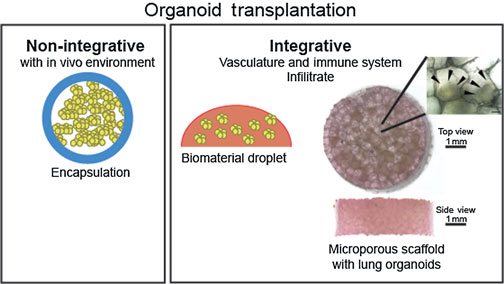
Take a deep breath and digest the material: organoids and biomaterials of the respiratory and digestive systems
-
- Journal:
- MRS Communications / Volume 7 / Issue 3 / September 2017
- Published online by Cambridge University Press:
- 14 August 2017, pp. 502-514
- Print publication:
- September 2017
-
- Article
- Export citation

Uranyl peroxide nanoclusters at high-pressure
-
- Journal:
- Journal of Materials Research / Volume 32 / Issue 19 / 16 October 2017
- Published online by Cambridge University Press:
- 14 August 2017, pp. 3679-3688
- Print publication:
- 16 October 2017
-
- Article
- Export citation
-
U60 ([UO2(O2)(OH)]60 60− in water) is a uranyl peroxide nanocluster with a fullerene topology and O h symmetry. U60 clusters can exist in crystalline solids or in liquids; however, little is known of their behavior at high pressures. We compressed the U60-bearing material: Li68K12(OH)20[UO2(O2)(OH)]60(H2O)310 ( $Fm\bar 3$ ; a = 37.884 Å) in a diamond anvil cell to determine its response to increasing pressure. Three length scales and corresponding structural features contribute to the compression response: uranyl peroxide bonds (<0.5 nm), isolated single nanoclusters (2.5 nm), and the long-range periodicity of nanoclusters within the solid (>3.7 nm). Li68K12(OH)20[UO2(O2)(OH)]60(H2O)310 transformed to a tetragonal structure below 2 GPa and irreversibly amorphized between 9.6 and 13 GPa. The bulk modulus of the tetragonal U60-bearing material was 25 ± 2 GPa. The pressure-induced amorphous phase contained intact U60 clusters, which were preserved beyond the loss of long-range periodicity. The persistence of U60 clusters at high pressure may have been enhanced by the interaction between U60 nanoclusters and the alcohol pressure medium. Once formed, U60 nanoclusters persist regardless of their associated long-range ordering—in crystals, amorphous solids, or solutions.

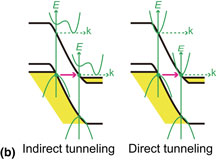
Material engineering for silicon tunnel field-effect transistors: isoelectronic trap technology
-
- Journal:
- MRS Communications / Volume 7 / Issue 3 / September 2017
- Published online by Cambridge University Press:
- 14 August 2017, pp. 541-550
- Print publication:
- September 2017
-
- Article
-
- You have access
- Open access
- HTML
- Export citation
