To save content items to your account,
please confirm that you agree to abide by our usage policies.
If this is the first time you use this feature, you will be asked to authorise Cambridge Core to connect with your account.
Find out more about saving content to .
To save content items to your Kindle, first ensure no-reply@cambridge.org
is added to your Approved Personal Document E-mail List under your Personal Document Settings
on the Manage Your Content and Devices page of your Amazon account. Then enter the ‘name’ part
of your Kindle email address below.
Find out more about saving to your Kindle.
Note you can select to save to either the @free.kindle.com or @kindle.com variations.
‘@free.kindle.com’ emails are free but can only be saved to your device when it is connected to wi-fi.
‘@kindle.com’ emails can be delivered even when you are not connected to wi-fi, but note that service fees apply.
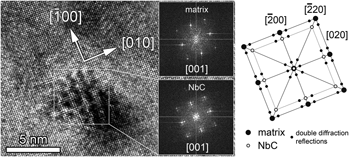
The origin of the extraordinary strengthening of the highly alloyed austenitic stainless steel Sanicro 25 during cyclic loading at 700 °C was investigated by the use of advanced scanning transmission electron microscopy (STEM). Along with substantial change of the dislocation structure, nucleation of two distinct populations of nanoparticles was revealed. Fully coherent Cu-rich nanoparticles were observed to be homogeneously dispersed with high number density along with nanometer-sized incoherent NbC carbides precipitating on dislocations during cyclic loading. Probe-corrected high-angle annular dark-field STEM imaging was used to characterize the atomic structure of nanoparticles. Compositional analysis was conducted using both electron energy loss spectroscopy and high spatial resolution energy dispersive X-ray spectroscopy. High-temperature exposure-induced precipitation of spatially dense coherent Cu-rich nanoparticles and strain-induced nucleation of incoherent NbC nanoparticles leads to retardation of dislocation movement. The pinning effects and associated obstacles to the dislocation motion prevent recovery and formation of the localized low-energy cellular structures. As a consequence, the alloy exhibits remarkable cyclic hardening at elevated temperatures.
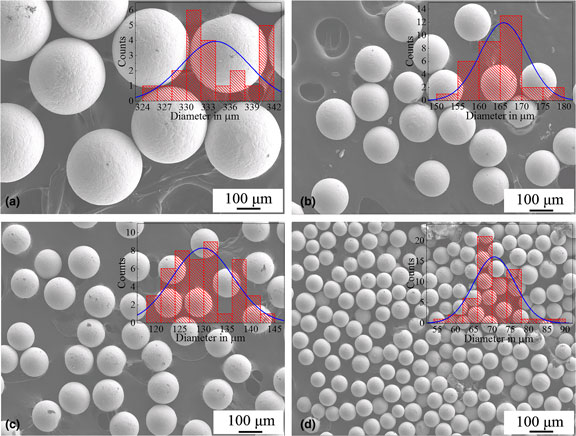
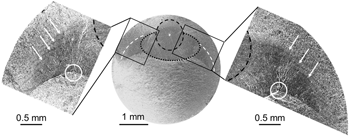
Spherical Sn0.3Ag0.7Cu (wt.%) solder droplets with diameter ranging from 70.6 to 334.0 µm were prepared using pulsated orifice ejection method. Compared with conventional atomization, these droplets are almost completely spherical with a much narrower size distribution. The surface of these droplets is smooth without detectable satellite particles. Furthermore, both the composition and microstructure are homogenous throughout any single droplet regardless of their size. Detailed microstructural analysis shows that nano-sized Ag3Sn particles are distributed homogenously in the β-Sn matrix. The results suggest that the droplets have advantage as electronic packaging material and be a promising candidate material for three-dimensional printing.
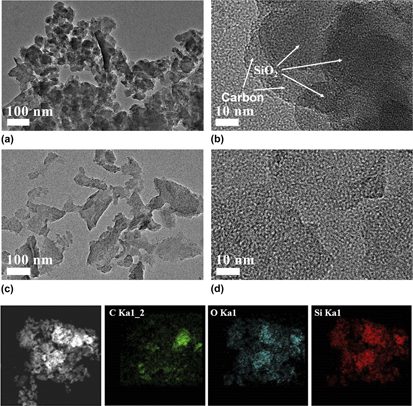
This work designed a facile preparation for an SiO2/C composite as the anode material for lithium ion battery. Both SiO2 and carbon are amorphous. SiO2 and carbon are mixed uniformly. The SiO2/C composite shows high specific capacity, cycle stability, and rate capability in lithium ion battery charge–discharge test. A stable reversible capacity of 1024 mA h/g at the current density of 100 mA/g is reached. The capacity retains 83% after 100 cycles. The uniform mixture of SiO2 and carbon leads to reduced volume change during the lithiation and delithiation of SiO2, together with the amorphous nature of SiO2 explains the high cycling stability. The carbon coating is a key factor for the high capacity and stability due to the increased electrical conductivity and reduced volume change. The resistance of the solid electrolyte interface film and charge transfer resistance of the SiO2/C composite are much smaller than those of pure carbon, which is a direct proof of the improved conductivity of the material by the carbon coating.
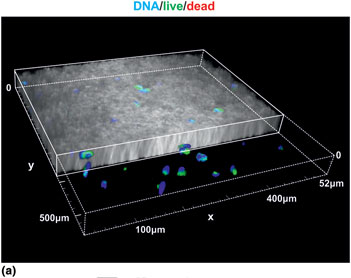
Human mesenchymal stem cells (MSCs) are the most intensely studied and clinically used adult stem cell type. Conventional long-term cultivation of MSCs as a monolayer is known to result in a reduction of their functionality and viability. In addition, large volumes of cell culture medium are required to obtain cell quantities needed for their clinical use. In this proof of concept study, we cultivated human MSCs within a three-dimensional nanofibrillar cellulose (NFC) hydrogel. We show that NFC is biocompatible with human MSCs, and represents a feasible approach to upscaling of their culture.
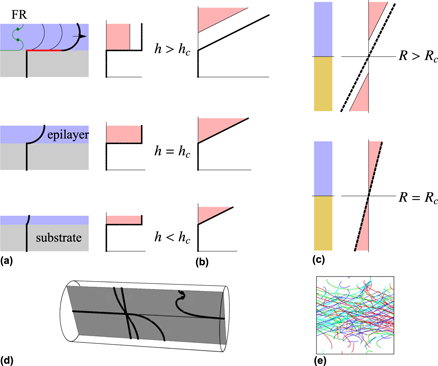
The Ph.D. work of Jan H. van der Merwe in 1949 established a new paradigm for the understanding of dislocation dynamics in restricted volumes. This led to a comprehensive understanding of plasticity, or strain relaxation, in the context of strained-layer semiconductor structures. However, this understanding was largely overlooked in the context of traditional metallurgy and micromechanics. We identify four reasons for this, the apparent need for an unstrained substrate in van der Merwe’s theory, the supposed inapplicability to strain gradients, the supposed inapplicability to the Hall–Petch effect (dependence of strength on the inverse square root of grain size), and an emphasis on understanding strain hardening rather than the yield point. Addressing these four points in particular, here it is shown how the insights of van der Merwe and of the earlier work by Lawrence Bragg lead to a coherent and unified view of the size-effect phenomena ranging from the Hall–Petch effect to the strain-gradient plasticity theory.
MoS2(1−x)Te2x thin films were fabricated by high-temperature co-sputtering deposition and post-deposition tellurization annealing using novel Te precursor (i-C3H7)2Te for the first time. As a result, high crystal quality MoS2(1−x)Te2x (6.5 nm) were successfully fabricated with the Te concentration x ranging from 0.48 to 0.61 and band gap value from 0.80 to 0.87 eV. From the obtained band gap values of MoS2(1−x)Te2x, the bowing parameter b was determined to be 1.06 eV. When exploited in device use, if the required band gap value is known, the required composition can be calculated with the bowing parameter. We have also shown the compatibility of co-sputtering to alloy fabrication since the composition ratio can be easily controlled just by adjusting the radio frequency (RF) sputter power on different targets. The fabrication method can be applied to different transition metal dichalcogenide materials as well.
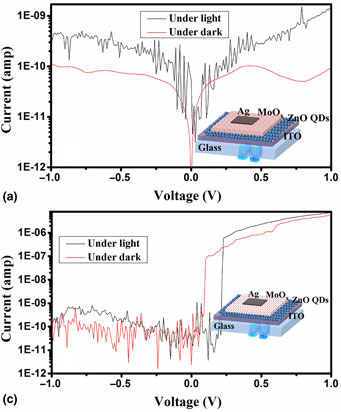
In this work, effects of heat treatment on the heterojunction between MoOx and ZnO quantum dots (QDs) are analyzed possibly for the first time. Solution-processed and thermal deposition technique is used for the growth of MoOx over the ZnO QDs and compared for the electrical analysis. The absorption and photoluminescence properties of ZnO QDs and MoOx have been analyzed for the optical behavior. Further, the heat-treated heterojunctions are analyzed for built-in potential (0.25 V), carrier density (~2.9 × 1018 cm−3), and responsivity (3.93 mAW−1). The heterojunction of solution-processed MoOx and ZnO QDs shows better stability after heat treatment compared with other devices.
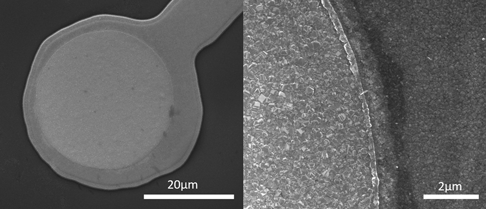
A novel microfabrication technique for microelectrode arrays (MEAs) with a full diamond–cell interface is demonstrated. Boron-doped nano-crystalline diamond (BNCD) is used as a conductive electrode material on metal tracks insulated by intrinsic NCD. MEAs successfully recorded spontaneous electrical activity in rat primary cortical neuronal cultures. Patch-clamp measurements show no alterations to cell membrane passive properties or active firing response, for cell developing ex vivo on diamond. Impedance analysis revealed low impedance magnitude of BNCD electrodes, suitable for multi-unit neuronal recordings. Additionally, the impedance phase of the fabricated electrodes shows a high degree of capacitive coupling, ideal for neuron stimulation.
The solidification microstructure, types of eutectic borocarbides, heat treatment properties and wear resistance of steel with x wt% B–0.4 wt% C–6.0 wt% Cr–4.0 wt% Mo–1.0 wt% Al–1.0 wt% Si–1.0 wt% V–0.5 wt% Mn (x = 1.0, 2.0, 3.0) have been investigated in this present study. The results indicate that the as-cast Fe–B–C alloy steel consists of pearlite, ferrite, and borocarbides M2(B,C) (M = Fe, Cr, Mo, V, Mn). After quenching or quenching and tempering treatment, ferrite and pearlite transform into martensite. With the increase of boron content, the macrohardness of alloys increases obviously while wear loss decreases. Borocarbides with chromium addition have good toughness and no cracks are observed on worn surfaces. The wear mechanism changes from micro-cutting accompanied with the spalling of borocarbides to single micro-cutting with the boron content rising.
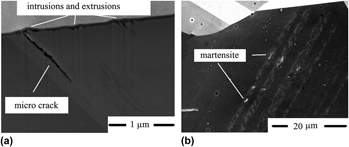
Two austenitic stainless steels of strongly different stacking fault energies (SFEs) and correspondingly different stabilities of the austenite phase were studied with respect to their very high cycle fatigue (VHCF) behavior. The metastable austenitic stainless steel 304L shows a very pronounced transient behavior and a fatigue limit in the VHCF regime. The higher SFE of the 316L steel results in a less pronounced transient cyclic deformation behavior. The plastic shear is more localized, and the formation of deep intrusions leads to microcrack initiation. However, the propagation of such microcracks is impeded by α′-martensite formed very localized within the shear bands. A comprehensive description of the microstructural changes governing the cyclic deformation including the transient resonant behavior was developed and transferred into a mechanism-based model. Simulation results were correlated with the observed deformation evolution and the change of the resonant behavior of specimens during VHCF loading providing a profound understanding of the VHCF-specific deformation behavior.
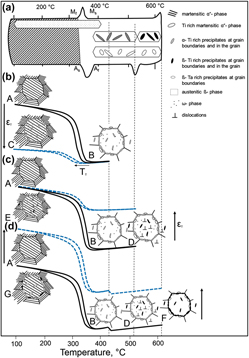
Titanium–tantalum based alloys can demonstrate a martensitic transformation well above 100 °C, which makes them attractive for shape memory applications at elevated temperatures. In addition, they provide for good workability and contain only reasonably priced constituents. The current study presents results from functional fatigue experiments on a binary Ti–25Ta high-temperature shape memory alloy. This material shows a martensitic transformation at about 350 °C along with a transformation strain of 2 pct at a bias stress of 100 MPa. The success of most of the envisaged applications will, however, hinge on the microstructural stability under thermomechanical loading. Thus, light and electron optical microscopy as well X-ray diffraction were used to uncover the mechanisms that dominate functional degradation in different temperature regimes. It is demonstrated the maximum test temperature is the key parameter that governs functional degradation in the thermomechanical fatigue tests. Specifically, ω-phase formation and local decomposition in Ti-rich and Ta-rich areas dominate when Tmax does not exceed ≈430 °C. As Tmax is increased, the detrimental phases start to dissolve and functional fatigue can be suppressed. However, when Tmax reaches ≈620 °C, structural fatigue sets in, and fatigue life is again deteriorated by oxygen-induced crack formation.
Activated carbon (AC) has been widely used as catalyst for oxygen reduction reaction (ORR) in air-cathode microbial fuel cells (MFCs). Here we demonstrate a new method to improve the AC air-cathode by blending it with reduced graphene oxide (rGO). rGO sheets are first deposited on Ni foam and AC is then brushed onto it with controlled mass loading. rGO sheets not only improve the electrical conductivity of AC, but also provide a large number of ORR areas. Rotating ring disk electrode measurements reveal that the number of transferred electrons at rGO-AC cathode is 3.5, indicating the four-electron pathway is the dominant process. Significantly, the MFC with rGO-AC cathode delivers a maximum power density of 2.25 ± 0.05 W/m2, which is substantially higher than that of plain AC cathode (1.35 ± 0.07 W/m2) and those for other air-cathode MFCs using AC as ORR catalyst under the same mass loading.
We report the structure and synthesis approach for obtaining a ceramic nanocomposite pellet comprising ∼50 nm-sized TaC nanoparticles. A mixture of Ta metal powder and the carbon precursor 1,2,4,5-tetraphenylethynyl benzene, pelletized by vacuum pressing at 131 MPa, on further thermal treatment with Ar at 1400 °C yields such a ceramic composite. On air oxidation, the TaC nanoparticles are converted to Ta2O5 nanoparticles at 760 °C. Hardness measurements revealed that the composite exhibited a global hardness in the range of 1.23–1.57 GPa. However, nanoindentation studies showed that, locally, hardness of the TaC nanoparticles (∼15 GPa) approached that of the densified TaC ceramic. Superconducting studies of the pellet consistently exhibited two transitions with Tc values of 10 K and 8.5 K, respectively, that corresponded to bulk TaC and to a component of unknown origin. The results discuss the morphological and constitutional characterizations of the TaC nanoparticle-containing composite.
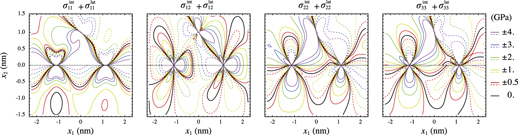
The interaction between interface dislocation networks and a single lattice Volterra-type dislocation is analyzed by superposition using anisotropic elastic theory in dissimilar materials. The general and nontrivial field solutions for the displacements and stresses are derived by applying the Stroh sextic formalism and Fourier transform in heterogeneous bimaterials. The present approach therefore enables the calculation of the elastic interaction forces for the glide and climb components with different elastic constants and unequal partitioning of elastic fields between adjacent crystals neighboring a semicoherent heterophase interface. Two-dimensional application examples to the pure misfit Au/Cu interface are evaluated, where the infinitely long straight lattice dislocation, parallel to the interface dislocations, is embedded in Au. The repulsive and attractive interaction forces between these two types of (intrinsic and extrinsic) defects are investigated and discussed, for which the results provide a novel basis for examining multiple large-scale dislocation interactions in anisotropic interface-dominated materials with accurate mechanical boundary conditions.
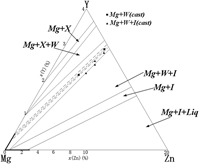
Effects of Zn content on microstructures and mechanical properties of as-cast Mg–4Y–xZn alloys (x = 1, 2, 3, 4) have been studied in the article. The results indicate that the X phase is formed firstly, and the X phase, X + W phases, and W phase precipitated in order when the Zn contents increased from 1 to 4 wt%. The secondary dendritic arm spacing of the tested alloys first decrease as the Zn content increases within the range of 1–2% and then it increases. The ultimate tensile strength (UTS) and elongation of the four experimental alloys increase until the addition of Zn reaches to 3%, with the maximum values of 213.6 MPa and 11.82%, respectively. Besides, the fracture behaviors of Mg–4Y–1Zn, Mg–4Y–2Zn, and Mg–4Y–3Zn were a quasi-cleavage fracture, while Mg–4Y–4Zn belonged to cleavage.
Surface treatments such as shot peening, deep rolling, or nitriding are known to be very effective for the protection of a surface against fatigue crack initiation, due to surface hardening and residual compressive stresses introduced below the surface. Thus, crack initiation of cyclically loaded materials occurs predominantly at internal nonmetallic inclusions (NMIs). Two different plasma-nitriding treatments were performed on a quenched and tempered 42CrMo4 cast steel. Ultrasonic fatigue tests were performed up to 109 cycles. Resonant frequency and the nonlinearity parameter were recorded in situ during the fatigue tests. Fractographic analyses were performed by means of scanning electron microscopy in combination with energy-dispersive X-ray spectroscopy. The results showed that nitriding, as expected, led to improvements in both fatigue life and rates of internal crack initiation at NMIs. However, the analysis of in situ parameters revealed that internal crack initiation occurred at stress amplitude levels well below the failure stress amplitude even for repeated loading until the run-out limit of 109 cycles.
The ground state properties of the α′ and α″ martensitic phases and energetic pathways of the β → α′/α″ martensitic transformations in Ti–(0–30 at.%)V alloys were investigated by first-principles method in combination with virtual crystal approximation. The results show that lattice parameters with c/a of the α′ phase and lattice parameters with b/a, c/a of the α″ phase are significantly sensitive to composition, and the atomic shuffle y of the α″ phase decreases from that of the α′ phase toward that of the β phase with increasing V content in Ti–V alloys. The compositional α′/α″ phase boundary is about 10 at.% V, from the viewpoints of energetics and mechanical stability of these phases. The principal lattice strains of the β → α′ transformation are insensitive to the V content, while those of the β → α″ transformation change significantly with increasing V content. The volume variation for β → α′ increases, whereas that for β → α″ decreases with increasing V content in Ti–V alloys. The energetic pathway results show that the relative stability of the α′ and α″ phases decrease with increasing V content and temperature and that there is no energy barriers during the β → α′/α″ martensitic transformations at temperatures from 0 to 400 K.
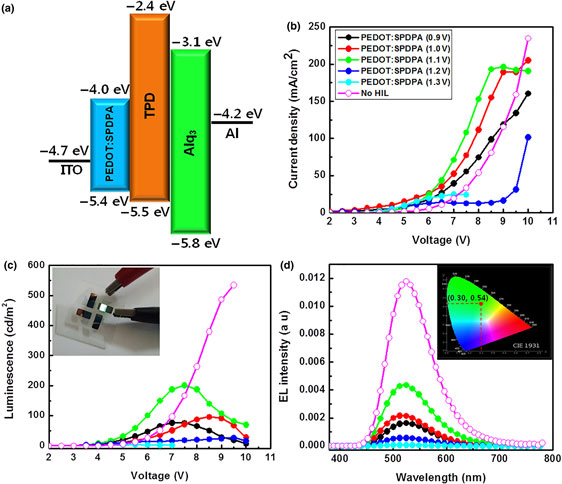
New ionic conjugated polyelectrolyte complex films based on poly(3,4-ethylenedioxythiophene):sulfonated poly(diphenylacetylene) (PEDOT:SPDPA) are electrochemically formed on indium thin oxide substrates using a potentiostatic method, and their physical properties are evaluated using various analytical tools. Depending on a constant applied voltage, the surface morphological features and electrochemically doped states are different due to the conformational structure related to the oxidation state in the PEDOT growth process and concomitant SPDPA doping state in the films. For the purpose of use as a hole injection layer in organic light-emitting diodes, a well-known configuration (ITP/PEDOT:SPDPA/TPD/Alq3/LiF/Al) is adopted to investigate the optoelectronic properties.
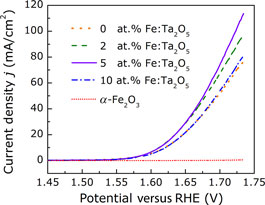
A non-precious metal catalytic system of Fe-doped Ta2O5 is developed by pulsed laser deposition toward efficient oxygen evolution reaction (OER). The optimal Fe concentration is determined to be 5 at.% for optimized OER activity via a series of electrochemical characterizations. The 5 at.% Fe-doped Ta2O5 nanolayer possesses a low onset overpotential of 0.22 V, an overpotential of 0.38 V at 10 mA/cm2 and a Tafel slope of 54 mV/dec. Comprehensive first-principles calculations attribute the enhanced OER activity to the substitutional FeTa dopants, which generate a new active OER site on surface and simultaneously accelerate electron transfer over oxygens.
Analysis of in situ neutron powder diffraction data collected for the porous framework material Zn(hba) during gas adsorption reveals a two-stage response of the host lattice to increasing CO2 guest concentration, suggesting progressive occupation of multiple CO2 adsorption sites with different binding strengths. The response of the lattice to moderate CH4 guest concentrations is virtually indistinguishable from the response to CO2, demonstrating that the influence of host–guest interactions on the Zn(hba) framework is defined more strongly by the concentration than by the identity of the guests.