To save content items to your account,
please confirm that you agree to abide by our usage policies.
If this is the first time you use this feature, you will be asked to authorise Cambridge Core to connect with your account.
Find out more about saving content to .
To save content items to your Kindle, first ensure no-reply@cambridge.org
is added to your Approved Personal Document E-mail List under your Personal Document Settings
on the Manage Your Content and Devices page of your Amazon account. Then enter the ‘name’ part
of your Kindle email address below.
Find out more about saving to your Kindle.
Note you can select to save to either the @free.kindle.com or @kindle.com variations.
‘@free.kindle.com’ emails are free but can only be saved to your device when it is connected to wi-fi.
‘@kindle.com’ emails can be delivered even when you are not connected to wi-fi, but note that service fees apply.
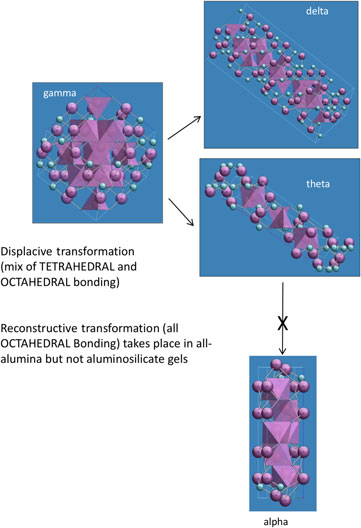
A variety of applications from insulation to catalytic supports can benefit from lightweight, high surface area, mesoporous materials, which maintain their mesoporous structure to temperatures of 900–1200 °C. Silica aerogels begin to densify by 700 °C. Alumina aerogels are capable of higher temperature exposure than their silica counterparts, but undergo successive phase transformations to form transitional aluminas prior densifying to α-alumina. The present study characterizes the phase transitions of aluminosilicate aerogels derived from Boehmite powders to elucidate the role of time and temperature on phase transitions, surface area, and morphology. Aerogel compositions stable to 1200 °C for periods of 24 h have been demonstrated.
The ICDD has implemented an option in Powder Diffraction File (PDF)-4 products to calculate time-of-flight (TOF) neutron powder diffraction patterns using atomic coordinates and structure information (the PDF-4+ 2016 has 271 499 entries that contain atomic coordinates and structure data). The calculated pattern data are used to populate PDF data cells and entries that contain d-spaces and neutron intensities, and are also available for calculated on-the-fly fully digitized patterns. To extend this on-the-fly capability, we include size and strain effects that affect the profile shapes. For specific application to TOF neutron diffraction full pattern analyses, a method was developed for calculating a background function. This method treats incoherent scattering and a zeroth order approximation to thermal diffuse scattering. The results are compared with experimental data from SRM 640C (Si), SRM 676 (Al2O3 corundum), SRM 660C (LaB6), and NAC (Na2La3Al2F14) instrument standards. Finally, a comparison of the calculated total patterns (Bragg scattering plus background) scattering contrast between Nd2Ni2InD7.52 and Nd2Ni2InH7.52 shows the value of neutron scattering simulation for planning experiments.
Copper(II) oxide (CuO) nanoparticles (NPs) in two different morphologies, spiky and spherical, were synthesized on zeolite-Y by a modified impregnation method, and their CO2 adsorbing capabilities were investigated under standard conditions (1 atm and 298 K). The properties and CO2 adsorption performances of the hybrid systems were characterized by transmission electron microscopy, scanning electron microscopy, energy dispersive X-ray, X-ray diffraction, X-ray photoelectron spectroscopy, atomic absorption spectroscopy, and Brunauer–Emmett–Teller analyses. The microscopy analyses showed that spiky nanostructures have a length of approximately 450 nm, and the spherical ones are approximately 18 nm in diameter. Quantitative analyses demonstrated that CuO NPs in both morphologies on the zeolite surface led to an improvement in their CO2 adsorption capacities. This enhancement is mainly due to the higher CO2 chemisorption capability of CuO NP–zeolite systems compared to that of bare zeolite. The presence of spiky and spherical CuO NPs on the zeolite surface resulted in increases of 112% and 86% in the amount of chemisorbed CO2 on the zeolite-Y surfaces, respectively.
MgO/Cu composites containing a 1.0% volume fraction of MgO particles were prepared by internal oxidation and powder metallurgy, respectively. The interfacial bonding state between the MgO particles and Cu matrix was characterized by scanning electron microscopy and transmission electron microscopy. The effect of the MgOp/Cu interfacial bonding state on the arc erosion resistance of the MgO/Cu composites was investigated, and the arc erosion resistance was examined using a JF04C electrical composite testing system. The results indicate that the 1.0 vol% MgO/Cu composite with a semicoherent MgOp/Cu interface experiences a lower arc erosion rate and smaller fluctuations of arcing energy than those of the 1.0 vol% MgO/Cu composite with an incoherent MgOp/Cu interface. Erosion morphology observations further indicate that a solid to liquid phase transformation occurs under arcing and MgO particles dispersed in the molten copper both prevent the copper matrix from splashing and enhance the arc erosion resistance of the MgO/Cu composites. While the shallow electric erosion pits are distributed uniformly on the arc surface of the MgO/Cu composites with a semicoherent interface, the MgO/Cu composite with an incoherent interface has deep and uneven pits on its arc surface, characterized by large electric erosion molten droplets.
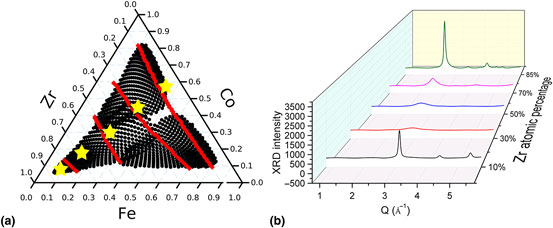
Investment in brighter sources and larger detectors has resulted in an explosive rise in the data collected at synchrotron facilities. Currently, human experts extract scientific information from these data, but they cannot keep pace with the rate of data collection. Here, we present three on-the-fly approaches—attribute extraction, nearest-neighbor distance, and cluster analysis—to quickly segment x-ray diffraction (XRD) data into groups with similar XRD profiles. An expert can then analyze representative spectra from each group in detail with much reduced time, but without loss of scientific insights. On-the-fly segmentation would, therefore, result in accelerated scientific productivity.
The great properties of the paramagnetic nitrogen-vacancy (NV) color center in diamond predestine it for nanoscale sensor applications; however, these properties are often compromised when NV centers reside near diamond surface for sensing. Here we show in a mini review that first-principles calculations can characterize diamond surfaces and predict the ideal surface terminators to host NV sensors. We discuss technical issues on the modeling of NV centers close to diamond surfaces, and results on the most employed diamond (100) and the most promising (111) surfaces with various terminators involving hydrogen, oxygen, fluorine, and nitrogen are presented.
Ni/Sn–xZn/Ni (x = 1, 5, 9 wt%) joints were used to investigate the effect of Zn content on interfacial reactions during reflow under a temperature gradient. Asymmetrical growth and transformation of intermetallic compounds (IMCs) occurred between the cold and hot end interfaces. Faster IMC growth at the cold end and a more prompt IMC transformation at the hot end in a lower Zn content solder joint were identified due to the more thermomigration-induced Zn and Ni atomic fluxes toward the cold end. The main diffusion species into IMC layers changed from Zn atoms at the early stage to Sn and Ni atoms at the later stage. As a result, the IMC evolution followed (Ni,Zn)3Sn4 → Ni3Sn4 in the Ni/Sn–1Zn/Ni joint, Ni5Zn21 → τ phase → Ni3Sn4 in the Ni/Sn–5Zn/Ni joint, and Ni5Zn21 → τ phase in the Ni/Sn–9Zn/Ni joint along with the reflow time. A higher Zn content could effectively inhibit the dissolution of the hot-end Ni substrate and restrain the growth rate of the cold-end interfacial IMCs.
The crystal structure of paliperidone palmitate has been solved and refined using synchrotron X-ray powder diffraction data, and optimized using density functional techniques. Paliperidone palmitate crystallizes in space group P21/c (#14) with a = 34.415 40(35), b = 10.093 49(7), c = 10.904 92(9) Å, β = 94.3917(9)°, V = 3776.94(6) Å3, and Z = 4. The conformation of the paliperidone fragment differs from that of the parent compound. The palmitate chain exhibits a slight twist close to the ester group. Several C–H⋅⋅⋅O hydrogen bonds contribute to the crystal packing, which is dominated by van der Waals interactions. The powder pattern is included in the Powder Diffraction File™ as entry 00-066-1614.
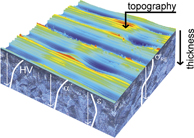
In the present work, specimens of the metastable austenitic stainless steel AISI 347 with different surface morphologies were investigated in stress-controlled fatigue tests in the high cycle fatigue (HCF) regime at ambient temperature. Specific surface morphologies were generated by cryogenic turning with CO2 snow cooling. As a result of the metastable austenite microstructure, phase changes from paramagnetic austenite to ferromagnetic martensite take place in the near-surface regime during cryogenic turning as well as in the whole specimen volume during monotonic and/or cyclic elastic–plastic deformation. The metastability of AISI 347 was characterized according to the MS-temperature determined from the chemical composition and by X-ray diffraction measurements with in situ cooling. Microhardness and strength of both phases were measured. Near-surface microstructure was analyzed by optical and scanning electron microscopy after focused ion beam preparation. Besides a partially martensitic surface layer, a thin nanocrystalline layer, both induced by cryogenic turning, was observed. In case of cyclic loading, the martensitic surface layer leads to a reduction of plastic strain amplitude as well as a retardation of crack initiation and consequently to an increase in fatigue life.
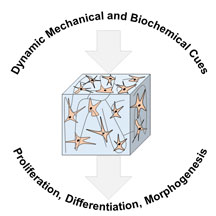
Bioengineered hydrogels enable systematic variation of mechanical and biochemical properties, resulting in the identification of optimal in vitro three-dimensional culture conditions for individual cell types. As the scientific community attempts to mimic and study more complex biologic processes, hydrogel design has become multi-faceted. To mimic organ and tissue heterogeneity in terms of spatial arrangement and temporal changes, hydrogels with spatiotemporal control over mechanical and biochemical properties are needed. In this prospective article, we present studies that focus on the development of hydrogels with dynamic mechanical and biochemical properties, highlighting the discoveries made using these scaffolds.
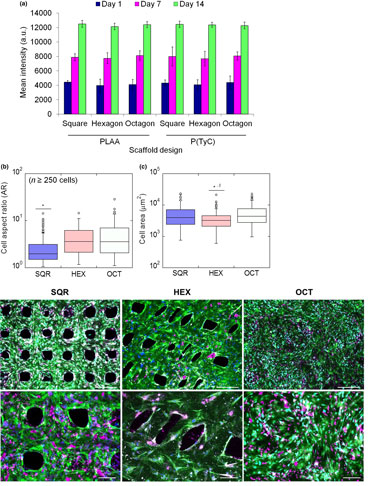
In this work, we investigated the interactions of human mesenchymal stem cells (hMSCs) with three-dimensional (3D) printed scaffolds displaying different scaffold architectures. Pressure-assisted microsyringe system was used to fabricate scaffolds with square (SQR), hexagonal (HEX), and octagonal (OCT) architectures defined by various degrees of curvatures. OCT represents the highest degree of curvature followed by HEX, and SQR is composed of linear struts without curvature. Scaffolds were fabricated from poly(L-lactic acid) and poly(tyrosol carbonate). We found that hMSCs attached and spread by taking the shape of the individual struts, exhibiting high aspect ratios (ARs) and mean cell area when cultured on OCT scaffolds as compared with those cultured on HEX and SQR scaffolds. In contrast, cells appeared bulkier with low AR on SQR scaffolds. These significant changes in cell morphology directly correlate with the stem cell lineage commitment, such that 80 ± 1% of the hMSCs grown on OCT scaffolds differentiated into osteogenic lineage, compared with 70 ± 4% and 62 ± 2% of those grown on HEX and SQR scaffolds, respectively. Cells on OCT scaffolds also showed 2.5 times more alkaline phosphatase activity compared with cells on SQR scaffolds. This study demonstrates the importance of scaffold design to direct stem cell differentiation, and aids in the development of novel 3D scaffolds for bone regeneration.
Boron nitride nanotube (BNNT) reinforced titanium (Ti) matrix composites were prepared using the cold press-and-sinter method. In the composite sintered at 800 °C for 1 h, BNNTs were homogeneously distributed in the Ti matrix and restricted the growth of Ti grains. The compressive strength of the as-sintered Ti–4 vol% BNNT composite achieved 985 MPa at room temperature versus 678 MPa without the BNNT reinforcements. The highest compressive strength of 277 MPa at 500 °C was obtained from the Ti–5 vol% BNNT composite. When sintered at 1000 °C, chemical reactions occurred between Ti and BNNTs leading to the formation of the interfacial TiB phase, which serves as a strong binding between BNNTs and the Ti matrix. The reinforcements were attributed by a mixture of BNNTs and TiB after sintering at 1000 °C for 3 h. However, no BNNT was observed in the microstructure after sintering at 1100 °C for 3 h due to complete transformation into TiB whiskers.
Knowledge of the surface composition of planetary bodies comes from a number of sources; such as landers, remote sensing and meteorites. However, the bulk mapping of the composition of planetary surfaces has been undertaken by analysis of reflected sunlight and these data—principally collected in the near-infra-red (IR) region—are notoriously broad and ambiguous. Hence, if laboratory spectra could be tied to physical properties measurements, such as diffraction, this would substantially aid our understanding of processes occurring in these extra-terrestrial environments. This contribution presents the capability of collecting near-IR data at the same time as neutron and synchrotron X-ray diffraction in a range of conditions (low temperature, vacuum, and humidity variations) and highlights two examples where this capability could enhance our understanding of planetary surfaces.
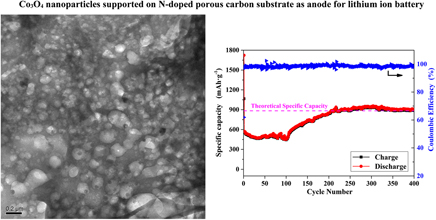
A facile synthesis procedure of nitrogen-self-doped porous carbon (NPC) derived from abundant natural biological materials has been presented. The pyrolysis temperature and the weight ratio of Co3O4 to carbon play a key role in determining microscopic structure and electrochemical performances of the final materials. The ordered mesostructures with nanopores in the channel walls provided support for immobilization of well-dispersed Co3O4 nanoparticles. They also served as a highly conductive substrate for effectively alleviating severe particle aggregation during the charge/discharge processes, which prevented capacity fading from deteriorated electric contact between the components. Taking advantage of the interconnected porous structures and high specific surface area (1799 m2/g) of carbon substrate, the Co3O4/NPC composite as anode in lithium-ion battery delivers a stable reversible capacity of 903 mA h/g after 400 cycles. It is expected that by loading other electrode active materials on such carbon material, the manufacture of the promising anode materials with excellent cycle stability is highly possible.
The electrochemical behaviour of a number of Pb-based anode alloys, under simulated electrowinning conditions, in a 1.6 M H2SO4 electrolyte at 45 °C was studied. Namely, the evolution of PbO2 and PbSO4 surface layers was investigated by quantitative in situ synchrotron X-ray diffraction (S-XRD) and subsequent Rietveld-based quantitative phase analysis (QPA). In the context of seeking new anode alloys, this research shows that the industry standard Pb-0.08Ca-1.52Sn (wt%) anode, when exposed to a galvanostatic current and intermittent power interruptions, exhibited poor electrochemical performance relative to select custom Pb-based binary alloys; Pb–0.73Mg, Pb–5.05Ag, Pb–0.07Rh, and Pb–1.4Zn (wt%). The in situ S-XRD measurements and subsequent QPA indicated that this was linked to a lower proportion of β-PbO2, relative to PbSO4, on the Pb-0.08Ca-1.52Sn alloy at all stages of the electrochemical cycling. The best performing alloy, in terms of minimisation of overpotential during normal electrowinning operation and minimising the deleterious effects of repeated power interruptions – both of which are significant factors in energy consumption – was determined to be Pb–0.07Rh.
X-ray powder diffraction data, unit-cell parameters and space group for 2-(ethylamino)-2-(3-methoxyphenyl)cyclohexan-1-one hydrochloride, C15H22ClNO2, are reported [a = 8.574(2) Å, b = 9.943(2) Å, c = 8.774(1) Å, β = 100.294(3)°, unit-cell volume V = 736(1) Å3, Z = 2, and space-group P21]. All measured lines were indexed and are consistent with the P21 space group. No detectable impurities were observed.
In this work, the hybrid carbon nanofibers (Cu2O/CNFs) containing cuprous oxide (Cu2O) nanoparticles were prepared by a convenient electrospinning method and following a carbonization treatment. The morphology, composition, and microstructure of the Cu2O/CNFs were characterized by scanning electron microscopy, transmission electron microscopy, X-ray photoelectron spectroscopy, and X-ray diffractometer. The as-prepared Cu2O/CNFs exhibited a stronger absorption in the range of 250–700 nm. The band gap energy of the Cu2O/CNFs was estimated to be 2.0 eV. Due to the synergistic effect between photocatalytic activity of Cu2O and excellent adsorption capacity of CNFs, the obtained Cu2O/CNFs exhibited excellent photocatalytic activity for degradation of rhodamine B (RhB) and phenol. The possible mechanism for degradation of RhB and phenol degradation were also discussed. The resultant hybrid carbon composites offer the significant advantages, such as low dosage, high catalytic activity, easy recycling, and excellent stability. We hope that the resultant hybrid composite Cu2O/CNFs could be applied as catalytic materials for further application in the future.
Persistent evolution and scaling down of integrating circuits have created a need to identify new thermoelectric materials that can be exploited to convert dissipated heat into electrical energy. We demonstrate that thermoelectric performance of silicene nanoribbons (SiNRs) can be enhanced by introducing nanopores We observe that with the incorporation of pores, thermal conductance of SiNRs is reduced which in turn leads to enhancement of thermoelectric performance (high ZT). Although the Seebeck coefficient degrades in the presence of pore, the conductivity exhibits an improved pattern, in effect contributing to better performance. In this paper, our aim is to tune the pore to its optimal dimension so as to enhance the overall thermoelectric efficiency and to study the effect of passivation at the pore edges on the thermoelectric parameters. It is further analyzed that with the pore passivation, the thermal conductance exhibits a width-dependent oscillating behavior. Ballistic transport regime and semi-empirical method using Huckel basis set are used to obtain the electrical properties, while the Tersoff potential is used for the phononic system.