To save content items to your account,
please confirm that you agree to abide by our usage policies.
If this is the first time you use this feature, you will be asked to authorise Cambridge Core to connect with your account.
Find out more about saving content to .
To save content items to your Kindle, first ensure no-reply@cambridge.org
is added to your Approved Personal Document E-mail List under your Personal Document Settings
on the Manage Your Content and Devices page of your Amazon account. Then enter the ‘name’ part
of your Kindle email address below.
Find out more about saving to your Kindle.
Note you can select to save to either the @free.kindle.com or @kindle.com variations.
‘@free.kindle.com’ emails are free but can only be saved to your device when it is connected to wi-fi.
‘@kindle.com’ emails can be delivered even when you are not connected to wi-fi, but note that service fees apply.
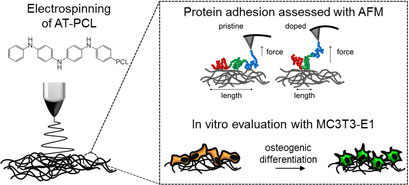
Conjugated polymers have been proposed as promising materials for scaffolds in tissue engineering applications. However, the restricted processability and biodegradability of conjugated polymers limit their use for biomedical applications. Here we synthesized a block-co-polymer of aniline tetramer and PCL (AT–PCL), and processed it into fibrous non-woven scaffolds by electrospinning. We showed that fibronectin (Fn) adhesion was dependent on the AT–PCL oxidative state, with a reduced Fn unfolding length on doped membranes. Furthermore, we demonstrated the cytocompatibility and potential of these membranes to support the growth and osteogenic differentiation of MC3T3-E1 cells over 21 days.
Nano-structured yttria stabilized zirconia (YSZ)/Al2O3 nano-composite coatings were prepared by electrophoretic deposition (EPD) in acetyl-acetone/ethanol solvents under the constant voltage of 40 V. High sintering temperature may damage the metal parts and also lead to high production costs. To overcome the disadvantages of high sintering temperatures, reaction bonding of Al was taken as the approach. It was found that a powder mixture of Al and YSZ can lower the sintering temperature. YSZ/Al green composites were deposited on the MCrAlY layer applied on Inconel alloy cathode. Iodine was added to the solutions as the stabilizing agent. According to differential thermal analysis (DTA) results, embedded Al particles oxidation started at 660 °C. Sintering process for YSZ/Al2O3 nano-composite coating occurred at 1150 °C for 4 h. A lower pinholes coating with the highest density due to the constraint of the substrate was obtained.
Room-temperature fracture along the (111) plane of silicon is probed at the micron-scale using chevron notched cantilever beams that enable stable crack growth before unstable fracture in successful tests. The main experimental observation is that a growing crack can extend and arrest at different stress intensity factor values within the same specimen. The present data thus provide evidence of variations in the effective Si fracture toughness along the path of a growing crack. This effect could be explained by variations in the extent of limited cracktip plasticity along the crack path. The present work also shows that the microscopic chevron notch test is, from an experimental point of view, an inconvenient method to probe the fracture toughness of silicon because it is difficult with silicon to nucleate a crack at the chevron tip at loads low enough to allow for subsequent stable crack growth.
Here we report on the material chemistry following crystallization in the presence of water vapor of chlorinated formamidinium lead-triiodide (NH2CH = NH2PbI3−xClx) perovskite films. We found in-situ exposure to water vapor reduces, or possibly eliminates, the retention of chlorine (Cl) inside NH2CH = NH2PbI3−xClx crystals. There is a strong tendency toward Cl volatility, which indicates the sensitivity of these materials for their integration into solar cells. The requisite for additional efforts focused on the mitigation of water vapor is reported. Based on the in situ results, hot casting (<100 °C) in dry conditions demonstrates improved film coverage and Cl retention with efficiencies reaching 12.07%.
In a new design approach, C/C–SiC sandwich structures have been realized via liquid silicon infiltration and in situ joining methods. In the first process step, the carbon fiber reinforced polymer preforms for the planar skin plates as well as for the core structures were manufactured via warm pressing and autoclave technique, using C fiber fabrics preimpregnated with phenolic resin. Thereby, two types of C/C–SiC core structures were used: foldcore and grid core. In the second process step, the sandwich components were pyrolyzed separately, leading to porous C/C preforms and subsequently joined to a C/C sandwich structure, using an adhesive. In the last process step, the C/C structure was infiltrated with molten Si, and the SiC matrix was built up by a chemical reaction of Si and C, leading to a permanently joined C/C–SiC sandwich structure. For mechanical characterization, sandwich specimens were manufactured and tested in 4 point bending.
The advent of containerless processing techniques has opened the possibility of high quality measurements of equilibrium and metastable liquids. This review focuses on the structure and dynamics of metallic liquids at high temperature. A clear connection between structure, viscosity, and fragility has emerged from recent containerless experiments and molecular dynamics simulation studies. The temperature-dependent changes of liquid structures are smaller for the stronger liquids. The onset of cooperativity usually occurs above the liquidus temperature at a characteristic temperature TA, where the dynamics change from Arrhenius to non-Arrhenius behavior; this is accompanied by the onset of development of more spatially extended structural order in the liquids. Several metrics for fragility, consistent with the traditional fragility parameter, can be developed from the structural and dynamical properties at high temperature. It is becoming increasingly evident from theory and experiments that the fundamental properties that determine fragility are the repulsive part of the interatomic potential and the anharmonicity.
Porous silicon nitride ceramics are attracting extensive attention due to its high strength and low dielectric loss. However, further strength enhancement at elevated temperatures is hindered by its intergranular phase, forming from sintering additives. This paper describes the fabrication of porous silicon nitride ceramic materials, by using a replacement method of carbothermal nitridation. The initial samples which were obtained from the sintering of mixed powder consisted of 95 wt% Si3N4 and 5 wt% Y2O3. After the removal of the oxide intergranular phase and the infiltration of mixtures of phenolic resins and silica sols, carbothermal nitridation process was carried out at 1550 °C for 2 h under nitrogen. X-ray diffraction and microstructural analysis revealed a complete replacement of oxide intergranular phases by the newly formed Si3N4 intergranular phase. The unmodified ceramic exhibited lower flexural strength at 1400 °C, which was only 50% of the room-temperature strength. Although the modified ceramic attained a slightly lower flexural strength at room temperature after the replacement of intergranular phase, its strength measured at 1400 °C could attain 90% of room-temperature strength.
The crystal structure of the purpureo salt, [Co(NH3)5Cl]Cl2, first reported in 1963 and later revised in 1968 (in both cases from single-crystal diffraction) in the space group Pnma (No. 62), has been recently re-examined from synchrotron X-ray powder diffraction using direct methods and the software EXPO2013. The comparison of the Rietveld analysis results using the two published models and the atomic coordinates obtained from powders leads to an improved crystal structure description in the lower symmetry space group Pn21a (No. 33). As a result, the overall atom connectivity and crystal packing remain similar; however, the symmetry and internal geometry of the coordination complex are changed. The distortions from an idealized geometry in Pnma (No. 62) are likely because of energetically favorable hydrogen-bonding motifs in the crystal. The three models are compared, and their validity and limitations are discussed.
Using very long molecular dynamics simulations of duration up to a microsecond of physical time, temperature protocols spanning up to five orders of magnitude in time are performed to investigate thermally activated structural relaxation in a model binary amorphous solid. The simulations demonstrate significant local structural excitations (LSE) as a function of increasing temperature and show that enthalpy rather than internal potential energy is primarily responsible for relaxation. At low temperatures these LSE involve atoms whose displacements are smaller than a typical bond length, whereas at higher temperatures approaching that of the glass transition regime, bond-length displacements occur in the form of string-like motion where one atom replaces the position of another. Such thermally activated excitations are observed to mainly involve the smaller atom type. The observed enthalpy changes can be correlated with the level of internal hydrostatic stress homogenization and icosahedral content within the glassy solid.
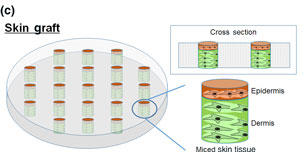
Three-dimensional (3D) scaffolds composed of poly(ε-caprolactone) and gelatin nanofibers were fabricated by a combination of electrospinning and modified gas-foaming. Arrayed holes throughout the scaffold were created using a punch under cryo conditions. The crosslinking with glutaraldehyde vapor improved the water stability of the scaffolds. Cell spheroids of green fluorescent protein-labeled human dermal fibroblasts were prepared and seeded into the holes. It was found that the fibroblasts adhered well on the surface of nanofibers and migrated into the scaffolds due to the porous structures. The 3D nanofiber scaffolds may hold great potential for engineering tissue constructs for various applications.
A resistive switching (RS) phenomenon, namely reversible transitions between the low and high resistance states after forming process, is caused by the formation and rupture of a conductive filament. We confirmed that conductive filaments including a quantum point contact (QPC) in Pt/NiO/Pt RS cells were formed by semiforming, the first step of the forming process. In this study, we examine correlation between microscopic structures in NiO layers and forming characteristics in the Pt/NiO/Pt cells. The appearance condition of the quantized conductance is considered to be associated with the composition ratio of O to Ni of either equivalent to or larger than a critical value. Furthermore, we proposed a RS model based on the forming characteristics especially obtained from the RS cells with different size. Defects which act as the source of a conductive filament including a QPC by semiforming may be randomly distributed in a NiO layer according to Poisson statistics.
The predictability of modified constitutive model, based on Arrhenius type equation, for illustrating the flow behavior of Fe–36%Ni Invar alloy was investigated via isothermal hot compression tests. The hot deformation tests were carried out in a temperature range of 850–1100 °C and strain rates from 0.01 to 10 s−1. True stress-true strain curves exhibited the dependence of the flow stress on deformation temperatures and strain rates, which then described in Arrhenius-type equation by Zener–Holloman parameter. Moreover, the related material constants and hot deformation activation energy (Q) in the constitutive model were calculated by considering the effect of strain as independent function on them and employing sixth polynomial fitting. Subsequently, the performance of the modified constitutive equation was verified by correlation coefficient and average absolute relative error which were estimated in accordance with experimental and predicted data. The results showed that the modified constitutive equation possess reliable and stable ability to predict the hot flow behavior of studied material under different deformation conditions. Meanwhile, Zener–Holloman parameter map was established according to the modified constitutive equation and used to estimate the extent of dynamic recrystallization.
Recently, solution combustion synthetic approach has emerged as a potential route to synthesize a wide range of catalytic oxides. Nano TiO2 was synthesized by solution combustion methods using glycine, urea, and oxalyldihydrazide as fuels. X-ray diffraction and field emission scanning electron microscopy analyses revealed the structural and morphological differences of TiO2 synthesized with different fuels. The oxidizer to fuel ratio from lean to rich conditions also played a crucial role in determining the polymorphic percentage concentration in the synthesized TiO2 powders. However, diffuse reflectance spectroscopy and photoluminescence spectroscopy studies did not show any significant differences in the electronic properties of the synthesized TiO2. As the polymorphic composite phases synergistically influence the catalytic performances, photodegradation of methylene blue (MB) and photo hydrogen production were studied with the synthesized catalysts. The synergistic role crucially depended on the specific reaction. The presence of different TiO2 polymorphs due to difference in fuels during combustion controlled the photocatalytic efficiency of the catalysts toward MB degradation and hydrogen production.
In this work, the reduction mechanism of potassium chromate (K2CrO4) was investigated via in situ high-temperature X-ray diffraction coupled with Fourier transform infrared spectroscopy. During the hydrogen reduction of K2CrO4, the formation of K3CrO4, KCrO2, and KxCrO2 were detected for the first time. The study discovered that K2CrO4 was firstly reduced to K3CrO4 and an amorphous Cr(III) intermediate product at low temperature (400–500 °C). Moreover, the K3CrO4 was the only crystalline material at this stage. As the temperature increased, a stabilized amorphous CrOOH was formed. At a high temperature (550–700 °C), KCrO2 was generated. Interestingly, a portion of KCrO2 was spontaneously decomposed during the hydrogen reduction, accompanying by the formation of K0.7CrO2. Finally, the results clearly illustrated the reduction mechanism of K2CrO4: K2CrO4 → K3CrO4 → amorphous intermediate → KCrO2.
Thermoelectronic energy conversion can potentially provide an exceptionally efficient way to convert heat into electric power. Key components of such converters are materials with designed, small work functions. We present the principles of thermoelectronic energy conversion and discuss the advantages and challenges of the conversion process, as well the state of the art of the respective research.