To save content items to your account,
please confirm that you agree to abide by our usage policies.
If this is the first time you use this feature, you will be asked to authorise Cambridge Core to connect with your account.
Find out more about saving content to .
To save content items to your Kindle, first ensure no-reply@cambridge.org
is added to your Approved Personal Document E-mail List under your Personal Document Settings
on the Manage Your Content and Devices page of your Amazon account. Then enter the ‘name’ part
of your Kindle email address below.
Find out more about saving to your Kindle.
Note you can select to save to either the @free.kindle.com or @kindle.com variations.
‘@free.kindle.com’ emails are free but can only be saved to your device when it is connected to wi-fi.
‘@kindle.com’ emails can be delivered even when you are not connected to wi-fi, but note that service fees apply.
Among the advantages of graphene as medium for spin currents is the weak spinorbit coupling in this material, in accordance with the low atomic number of carbon. This feature is beneficial wherever long spin lifetimes are relevant, as in spintronics networks. Assessing and optimizing the efficiency of graphene and other carbon nanostructures as elements of spintronic circuits requires a detailed understanding of spin-orbit coupling mechanisms. Beyond practical considerations, examination of spin-orbit interactions also provides insight into the basic architecture of graphene and nanosystems derived from it. As outlined in Chapter 4, the two Dirac points are each characterized by an electronic state of fourfold degeneracy, corresponding to two spin and two sublattice degrees of freedom. Addition of the spin-orbit effect to the description of graphene lifts the spin degeneracy and thus opens a gap at the points K and, separating two states with twofold degeneracy. Spin-orbit interaction thus modifies the fundamental electronic structure of graphene.
As specified in Section 8.1, the intrinsic spin-orbit gap in graphene is extremely small. Use of the Rashba effect, on the other hand, makes it possible to tune the gap by applying an external electric field to the graphene sheet. This device allows us to close the gap, or to widen it by several orders of magnitude. Further, a physical sheet of carbon atoms is never ideally flat, and curved segments of the graphene layer turn out to be associated with effective electric fields. This feature implies a critical dependence of the spin-orbit effect on the nanostructure geometry. It acquires major importance as one goes from graphene to carbon nanotubes. Section 8.3 is dedicated to spin-orbit coupling in SWCNTs and emphasizes the geometric origin of this effect. In contrast to graphene, this interaction is very pronounced in SWCNTs, inducing a marked energy splitting between two Kramers doublets at the Dirac point. As it is masked by competing effects, its definite experimental characterization was a relatively recent event [288].
Section 8.2 deals with orbital magnetic moments in SWCNTs and an orbital shift undergone by the Dirac cones as a consequence of magnetic interactions involving these moments. This mechanism turns out to be essential for a proper appreciation of spin-orbit processes in nanotubes, as will be outlined in Section 8.3.
Any hollow, cage-like molecule consisting entirely of carbon atoms in a state of sp2 hybridization and composed of five- and six-membered rings is referred to as a fullerene [124]. This class of carbon nanostructures thus comprises the quasi-spherical species that are popularly known as buckyballs as well as axially confined carbon nanotubes, among other systems. As every carbon atom on the fullerene surface is threefold coordinated, a fullerene may be understood as a rolled-up graphene sheet, as illustrated in Figure 6.1 by the example of a buckyball. Euler's theorem, applied to polyhedra that consist exclusively of hexagons and pentagons, confines the number of pentagons to twelve [125], while there may be an arbitary number of hexagons, excepting a single one [126]. This implies that the smallest fullerene of this type is a combination of twelve pentagons, C20. Quasi-fullerenes contain rings beyond pentagons and hexagons, such as heptagons [127] or octagons [128]. The effect of these structural irregularities is a major enhancement of fullerene reactivity.
C60
The most readily available fullerene species, and the prototypical molecular allotrope of carbon, is C60, also known as Buckminster fullerene, making fully explicit the name patron of the fullerenes, the American architect, author and visionary Richard Buckminster Fuller (1895–1983), whose name is famously associated with designs based on geodesic dome structures. The C atoms of C60 are positioned at the vertices of a regular truncated icosahedron. The point group of C60 is Ih, the number of symmetry operations of the molecule, i.e. operations that map C60 into itself, is 120.
Fullerenes satisfy the Isolated Pentagon rule, stating that structures with pentagons entirely surrounded by hexagons are more stable than those that admit pentagon adjacency. The geometry of C60, where all pentagons are isolated is unique among the fullerenes Cn with n ≤ 70. For topological reasons, all other species of this class involve adjacent pentagons. While pure cages containing these substructures are deemed too unstable to be fabricated in the laboratory [129], they can be stabilized by external or internal impurities (e.g. [130, 131]).
The average bond length between the atoms of C60 is 1.44 Å [132]. Each atom forms two single bonds and one double bond with adjacent atoms.
Perovskite solar cells are promising for realizing high power conversion efficiency (PCE) with low manufacturing costs, but efficient coating methods are needed for commercialization. Here, a gas blowing method was used to fabricate perovskite solar cells and was found to create a smooth perovskite layer and to prevent voids in large-area cells, when organic materials were used as scaffolds for forming the perovskite. A PCE of 13% in a 1 cm2 active area is achieved by tuning the band-gap energy of MAPbX3 via substitution of Br for I ions in X sites. Incorporation of a poly(3,4-ethylenedioxythiophene) hole transport layer with a higher work function increased the open circuit voltage of the solar cells. All layers of the cells were fabricated at low temperatures (<140 °C), which makes it possible to incorporate a polymer substrate for producing flexible solar cells and high-throughput fabrication.
The label carbon nanostructure magnetism joins two notions that do not seem to go together easily, carbon and magnetism. The main carbon allotropes, after all, are known to be non-magnetic. This appears to be true not only about the wellknown solid phases diamond and graphite, but also with respect to the nanoscopic phases manufactured first in the eighties of the last century, and later: fullerenes and carbon nanotubes, single- and few-layer graphene. While intrinsic magnetism is the rule in the d- and f-blocks of the periodic table, it is extremely unusual in the second period, containing light elements with p electrons in their valence shells. Magnetic derivatives from carbon-based nanostructures, such as metallofullerenes with finite magnetic moments in their ground state have been known for decades, but the magnetism of these composites is inherited from elements different from carbon, such as lanthanide atoms with high spins localized in their 4f shells.
By the beginning of this century, however, sightings of intrinsic magnetism in carbon complexes became increasingly frequent and made headlines, not rarely heralded with adjectives like surprising [1], unexpected [2] or exotic [3]. While in the meantime, the initial surprise about carbon magnetism has somewhat worn off, astonishing discoveries continue to be made in this field, such as the first experimental demonstration of spin transport in graphene at the micrometer scale [4] or the first detection of strong spin-orbit coupling in carbon nanotubes [5].
On the other hand, magnetism in carbon nanostructures also continues to be a topic in tension. Foremost, the proposal of intrinsic carbon magnetism due to net magnetic moments at edges or vacant sites in carbon networks is charged with controvery. Proponents point not only at a large body of theoretical and computational work, predicting these effects (for an overview, see [6]), but also at numerous experiments that appear to confirm these predictions. Detractors call attention to the great difficulty of reliably separating signatures of intrinsic magnetism from artifacts due to small admixtures of magnetic impurities [3] and refer to the rather marginal, if not vanishing, net effects yielded by some recent experimental examinations of carbon magnetism [7].
In view of the ongoing debate, it would be premature to state that magnetism in carbon nanostructures is a firmly established discipline within condensed-matter physics or nanoscience.
In this chapter, as well as the following two, we present the structural protoypes of carbon nanosystems, namely graphene, carbon nanotubes and fullerenes. These represent nanoscopic allotropes of carbon in two, one and zero dimensions. With respect to the dimensionality and also to the chronology of carbon nanostructure research, Chapters 4 to 6 of this text go in reverse order. The reason for this choice is the fundamental significance of graphene for intrinsic magnetism in carbon-based materials. Besides providing general information about graphene, this chapter introduces the dimensionally reduced graphene nanoribbons. The zigzag types of these species have been shown to display magnetism in their ground state and may be understood as the basic units of carbon nanostructure magnetism.
In elemental carbon, four valence electrons occupy the 2s and 2px/py orbitals, yielding the occupation scheme 1s2, 2s2, 2p2 for the electronic shell of the carbon atom. The ground state of the carbon atom is, in spectroscopic notation, 3P0, involving a spin triplet in conjunction with a total orbital angular momentum L = 1, and a total angular momentum J = 0. This configuration confines carbon to two chemical bonds only, as exemplified by the carbene CH2. Carbon compounds, however, usually involve three or four bonds. This is achieved by promoting a 2s electron into a 2p orbital, which leads to the formation of hybridized molecular orbitals. We distinguish between sp, sp2 and sp3 hybridization. In these cases, the 2s and two 2p orbitals combine, giving rise to two (sp), three (sp2) or four (sp3) mixed s-p orbitals, as represented by linear combinations of atomic orbitals of s and p character. In the regime of carbon-based molecules and polymers, examples for these hybridization schemes are provided by acetylene (the sp case), polyacetylene (sp2), and methane (sp3). Among carbon allotropes, the sp2 and sp3 pattern are prototypically realized by the graphite and diamond phases of carbon, respectively.
Graphene realizes a perfectly planar form of carbon, which may be understood as a single layer of graphite. Thus, carbon atoms are arranged in a two-dimensional lattice of monatomic thickness, and with hexagonal symmetry. While several layers of graphite display largely graphitic behavior, new features emerge in a perfectly two-dimensional array of carbon atoms.
Alumina gel-cast foams were manufactured in a broad total porosity range (43–86%) by using agarose or ovalbumin as gelling agents. The foams were examined in terms of microstructural, permeability, and mechanical properties. For the achieved open porosity level (19–85%), the mean cell size (19–375 µm), and mean window size (8–77 µm) of the alumina foams manufactured using ovalbumin were slightly wider than those obtained using agarose (34–262 µm and 18–33 µm, respectively). By using different contents of agarose (0.3–1 wt%) or albumin (5 wt%) and solids (30–45.9 wt%), it was possible to vary the foaming yield from 1.6 to 4.4 and produce bodies with a very wide permeability level that included several classes of porous ceramics. Darcian (k1) and non-Darcian (k2) permeability coefficients displayed values in the range 3.2 × 10⁻¹⁸ to 4.3 × 10⁻⁹ m2 and 1.8 × 10⁻¹⁸ to 6.5 × 10⁻⁵ m respectively. Compressive strength of bodies was dependent upon the porosity level, with a variation of 8.5–149.7 MPa.
This chapter deals with magnetic composites consisting of carbon nanostructures and impurity species. The host systems included here are the prototypes fullerene, graphene and carbon nanotubes. In each case discussed, emphasis will be placed on the mechanisms by which the electronic ground state of the aggregate adopts magnetic properties. In many cases, the considered carbon allotrope provides a framework that preserves the magnetism of the guest species, as paradigmatically realized by some metallofullerenes with enclosed lanthanide atoms or clusters. In some systems, however, magnetism is not imported by the guest species but evolves as the carbon allotrope interacts with the externally added moieties. This situation is well exemplified by the much-studied compound tetrakis-dimethylamino-ethylene-C60 (TDAE-C60).
In sections 12.1 and 12.2, we refer first to magnetic metallofullerenes, arguably the most traditional among the structures included here. After all, research interest in fullerenes with enclosed metal components emerged soon after the discovery of C60 [139]. From metal atoms or metal atom clusters as guest species inside fullerene cages, we turn to single group V atoms as encapsulated components. Systems of the form A@C60, with A = N, P, have proven to be efficient in preserving the spin of the enclosed atom, which makes them interesting as physical realizations of qubits in quantum computing. The following Section (12.3) discusses a variety of magnetic phases that originate from electron transfer to fullerenes. This mechanism is operative in very diverse composites, ranging from fullerides to hybrids of fullerenes and organic molecules.
The remainder of this chapter deals with compounds involving graphene and nanotubes. Specifically, graphene is considered as substrate of two adatom types, hydrogen and fluorine, and computational as well as experimental findings on the magnetic phases of hydrogenated and fluorinated graphene are surveyed. The final section of this chapter summarizes various results on carbon nanotubes in combination with magnetic metal components, ranging from atoms to nanoparticles.
Magnetic Metallofullerenes
The magnetism of endohedral metallofullerenes with enclosed paramagnetic guest species arises from the interplay of various effects. Thus, the intrinsic magnetic moment of the enclosed metal component may affect the magnetic moment of the unit as a whole. Further, this component may be in a cationic state, as a consequence of electron transfer from the encapsulated atom or cluster to the fullerene enclosure.
The addition of Co to CuZr-based shape memory bulk metallic glass composites stabilizes the high temperature B2-CuZr and decreases its stacking faulty energy, which promotes an increase in ductility caused by an easier twinning formation. A similar effect is expected for TiCu-based alloys. The present work aims to investigate the effect of Co additions on the phase formation, mechanical properties, and thermal stability of rapidly solidified Ti–Cu-based alloys. Rods of six Ti–Cu-based compositions with different amounts of Co were prepared by Cu-mold suction casting and investigated by X-ray diffraction, differential scanning calorimetry, scanning electron microscopy, dilatometry, and compression tests. The results show that the addition of Co decreases the glass-forming ability of Ti–Cu-based alloys and stabilizes B2 Ti(Cu,Ni,Co) at room temperature. The Co-added alloys exhibit an almost identical phase formation and microstructure, but their mechanical behavior is completely different nonetheless, which is mainly connected with the different composition of the B2 phase. The addition of Co makes the stress-induced martensitic transformation of this phase more difficult, which is one of the main reasons for the increase of the yield strength when a higher amount of Co is added.
The shear-band propagation in bulk metallic glasses (BMGs) during deformation plays a key role in determining their macroscopic ductility. In this work, the shear band propagation during plastic deformation was investigated in the Cu46Zr46Al8 BMG and its in situ or ex situ prepared BMG composites. Compared with the brittle BMG, both types of ductile BMG composites show a more stable shear banding behavior as revealed by a larger power-law scaling exponent obtained from statistical analysis of serrations recorded in compressive curves. A higher cut-off elastic energy density (δc) linked with the multiplication of shear bands is observed for the in situ prepared BMG composites. However, the ex situ fabricated BMG composites show an almost equivalent or slightly larger δc since the dominant shear band but not multiple shear bands mainly governs their deformation. Such observations imply that the shear banding stability of BMGs during deformation is enhanced not only by inducing multiple shear bands but also by obstructing the movement of the dominant shear band at its driven path.
We describe the main experimental challenges toward the metrological calibration of photodetectors based on single semiconductor nanowires, and we propose a method for the quantification of their photoresponse, focusing in particular on GaAs nanowires. Spatially resolved measurements of the device’s photocurrent were performed with a far-field scanning optical setup and a laser excitation at λ = 656 nm. The photoresponse was quantitatively described by fitting the two-dimensional mapping of the photocurrent at different positions along the main nanowire axis. Our results indicate that the device’s photoresponse strongly depends on the position along the nanowire, which is attributed to the inhomogeneous properties of the device’s contacts. Furthermore, we show that its spatial profile across the nanowire can be directly compared with the profile of the laser beam by taking into account the angle between the scanning direction and the main nanowire axis as a geometrical factor. Finally, we discuss the impacts of laser-induced heating effects on the calibration of such nanoscale devices.
The element Re is known to be a very potent strengthener concerning the creep properties of Ni-base superalloys. In this paper the influence of Re on the properties of new γ′-strengthened Co-base superalloys is addressed. Atom probe tomography reveals that Re partitions preferentially to the γ phase, but not as pronounced as in ni-base superalloys. Nanoindentation and micro-pillar compression tests of the γ′ phase indicate an increase of the hardness and the critical resolved shear stress caused by a considerable concentration of Re in the γ′ phase. Creep investigations show that the positive effect of Re is by far not as pronounced as in Ni-base superalloys. Several effects, which can contribute to this behavior, such as the lower Re concentration in γ and hence a slightly reduced effective diffusion coefficient, a smaller diffusion barrier of Re in Co compared to Ni, a slightly lower lattice misfit and γ′ volume fraction of the Re-containing alloy, are discussed.
Biological hydrogel is important in drug delivery system and tissue engineering. In this paper, we prepared a series of biological hydrogels with N,O-carboxymethyl chitosan (CS) and oxidized safflower and ligusticum wallichii polysaccharide-II (oxidized SLWP-II). Morphological analysis indicated the N,O-carboxymethyl CS/oxidized SLWP-II hydrogels (CSLHs) had porous interior structures, pore diameter ranged from tens to hundreds of micrometers. In vitro release test showed, with proportion of N,O-carboxymethyl CS to oxidized SLWP increasing from 1:1 to 1:3, cumulative release of bovine serum albumin decreased from 99 to 82%. In vitro cytotoxicity study showed that the developed hydrogels were not cytotoxic during one week of culturing with WI-38 cells, and they have a role in promoting cell proliferation. So the N,O-carboxymethyl CS/oxidized safflower and ligusticum wallichii polysaccharide-II hydrogels might have potential application in the drug delivery system and tissue engineering.
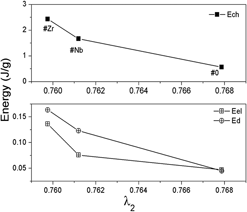
A systematic analysis of the correlation between the valence electrons and the transformation temperatures of Ti–Ni-based shape memory alloys has been carried out by Zarinjad and Liu. They have shown that the valence electron theory can be successfully applied to estimate these temperatures, although the mechanisms of the temperature shift during alloying remains not completely understood. Other important shape memory alloy systems with technological importance are the Cu–Al based, which deserve a thorough analysis concerning the composition influence on the transformation temperatures and the valence electron theory. In this paper, the valence electron concentration, valence electron density (VED), enthalpy of reaction, and crystallographic compatibility were analyzed to understand the mechanisms, which control the transformation temperatures of Cu–Al-based alloys. It was observed that the larger the VED, the more energy is used in the transformation. The same tendency is present when the crystallographic compatibility is smaller. These results show that the valence electron theory based on the VED plays an important role in the prediction of the temperature transformation and the energies involved in the reaction.
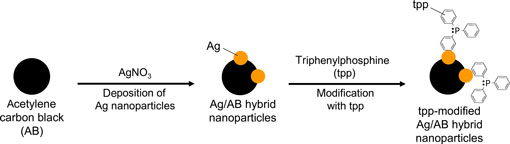
Here we report a doping method based on charge transfer interaction for an easily obtainable carbon material, carbon black (acetylene carbon black and Ketjenblack), as a main raw material. The n-type doping of those carbon blacks, generally p-type material, was conducted with a molecular dopant, triphenylphosphine (tpp). The key was to modify the surface of carbon blacks with silver (Ag) nanoparticles to attach tpp molecules on the surface of Ag. Our method is expected to be used for the fabrication of functional devices (such as thermoelectric devices) from p- and n-type materials.
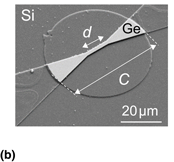
Applying sufficient tensile strain to Ge leads to a direct bandgap group IV semiconductor, which emits in the mid-infrared (MIR) wavelength range. However, highly strained-Ge cannot be directly grown on Si because of its large lattice mismatch. In this work, we have developed a process based on Ge micro-bridge strain redistribution intentionally landed to the Si substrate. Traction arms were then partially etched to keep locally strained-Ge micro-blocks. Large tunable uniaxial stresses up to 4.2% strain were demonstrated in Ge, which was bonded on Si. Our approach allows envisioning integrated strained-Ge on Si platform for MIR-integrated optics. Silicon photonics merge optical and electronic components that can be integrated together onto a single microchip.
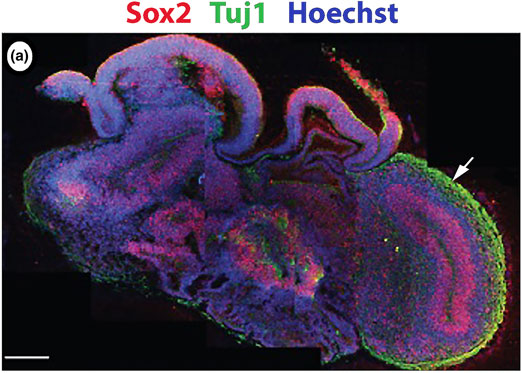
Neurological and psychiatric disorders account for an increasing proportion of the global disease burden. Correspondingly the neuropharmaceutical industry has experienced a significant contraction in recent years resulting in a poor variety of therapies available to treat an expanding range of conditions. Perhaps the greatest contributor to this failure in drug-discovery is the lack of understanding of the underlying biology of the nervous system and how molecular scale events translate into macroscale pathologies. Due to the unique nature of the human nervous system commonly used model organisms are often poorly representative of human pathologies resulting in a need for the development of advanced in vitro models that are capable of faithfully modeling complex structures within the brain. In this prospective, strategies for the generation of neuronal circuits and cultivation of complex three-dimensional (3D) cultures are explored. Frequently these constructs provide valuable insights into systems and processes that are difficult to explore in vivo due to the isolated and delicate nature of neuronal tissues. New developments are required to assess the physiological functions of 3D tissues in vitro.