Refine search
Actions for selected content:
26078 results in Abstract analysis
The Fokker–Planck equation for the time-changed fractional Ornstein–Uhlenbeck stochastic process
- Part of
-
- Journal:
- Proceedings of the Royal Society of Edinburgh. Section A: Mathematics / Volume 152 / Issue 4 / August 2022
- Published online by Cambridge University Press:
- 21 September 2021, pp. 1032-1057
- Print publication:
- August 2022
-
- Article
- Export citation
BNS INVARIANTS AND ALGEBRAIC FIBRATIONS OF GROUP EXTENSIONS
- Part of
-
- Journal:
- Journal of the Institute of Mathematics of Jussieu / Volume 22 / Issue 2 / March 2023
- Published online by Cambridge University Press:
- 21 September 2021, pp. 985-999
- Print publication:
- March 2023
-
- Article
- Export citation
-
Let G be a finitely generated group that can be written as an extension
where K is a finitely generated group. By a study of the Bieri–Neumann–Strebel (BNS) invariants we prove that if $$ \begin{align*} 1 \longrightarrow K \stackrel{i}{\longrightarrow} G \stackrel{f}{\longrightarrow} \Gamma \longrightarrow 1 \end{align*} $$ $b_1(G)> b_1(\Gamma ) > 0$, then G algebraically fibres; that is, admits an epimorphism to $\Bbb {Z}$ with finitely generated kernel. An interesting case of this occurrence is when G is the fundamental group of a surface bundle over a surface $F \hookrightarrow X \rightarrow B$ with Albanese dimension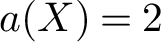 $a(X) = 2$. As an application, we show that if X has virtual Albanese dimension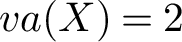 $va(X) = 2$ and base and fibre have genus greater that $1$, G is noncoherent. This answers for a broad class of bundles a question of J. Hillman ([9, Question 11(4)]). Finally, we show that there exist surface bundles over a surface whose BNS invariants have a structure that differs from that of Kodaira fibrations, determined by T. Delzant.


Well-posedness of the free surface problem on a Newtonian fluid between cylinders rotating at different speeds
- Part of
-
- Journal:
- Proceedings of the Royal Society of Edinburgh. Section A: Mathematics / Volume 152 / Issue 5 / October 2022
- Published online by Cambridge University Press:
- 21 September 2021, pp. 1251-1276
- Print publication:
- October 2022
-
- Article
- Export citation
Global regularity criterion for the dissipative systems modelling electrohydrodynamics involving the middle eigenvalue of the strain tensor
- Part of
-
- Journal:
- Proceedings of the Royal Society of Edinburgh. Section A: Mathematics / Volume 152 / Issue 5 / October 2022
- Published online by Cambridge University Press:
- 21 September 2021, pp. 1277-1290
- Print publication:
- October 2022
-
- Article
- Export citation
Invariance of KMS states on graph C*-algebras under classical and quantum symmetry
- Part of
-
- Journal:
- Proceedings of the Edinburgh Mathematical Society / Volume 64 / Issue 4 / November 2021
- Published online by Cambridge University Press:
- 20 September 2021, pp. 762-778
-
- Article
- Export citation
-
We study the invariance of KMS states on graph $C^{\ast }$
 -algebras coming from strongly connected and circulant graphs under the classical and quantum symmetry of the graphs. We show that the unique KMS state for strongly connected graphs is invariant under the quantum automorphism group of the graph. For circulant graphs, it is shown that the action of classical and quantum automorphism groups preserves only one of the KMS states occurring at the critical inverse temperature. We also give an example of a graph $C^{\ast }$
 -algebra having more than one KMS state such that all of them are invariant under the action of classical automorphism group of the graph, but there is a unique KMS state which is invariant under the action of quantum automorphism group of the graph.


CORRIGENDUM TO: A FAST ALGORITHM FOR CALCULATING S-INVARIANTS
-
- Journal:
- Glasgow Mathematical Journal / Volume 64 / Issue 2 / May 2022
- Published online by Cambridge University Press:
- 20 September 2021, p. 526
-
- Article
-
- You have access
- Export citation
PRM volume 151 issue 5 Cover and Back matter
-
- Journal:
- Proceedings of the Royal Society of Edinburgh. Section A: Mathematics / Volume 151 / Issue 5 / October 2021
- Published online by Cambridge University Press:
- 17 September 2021, pp. b1-b2
- Print publication:
- October 2021
-
- Article
-
- You have access
- Export citation
PRM volume 151 issue 5 Cover and Front matter
-
- Journal:
- Proceedings of the Royal Society of Edinburgh. Section A: Mathematics / Volume 151 / Issue 5 / October 2021
- Published online by Cambridge University Press:
- 17 September 2021, pp. f1-f2
- Print publication:
- October 2021
-
- Article
-
- You have access
- Export citation
K-MODULI OF CURVES ON A QUADRIC SURFACE AND K3 SURFACES
- Part of
-
- Journal:
- Journal of the Institute of Mathematics of Jussieu / Volume 22 / Issue 3 / May 2023
- Published online by Cambridge University Press:
- 16 September 2021, pp. 1251-1291
- Print publication:
- May 2023
-
- Article
- Export citation
-
We show that the K-moduli spaces of log Fano pairs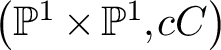 $\left(\mathbb {P}^1\times \mathbb {P}^1, cC\right)$, where C is a $(4,4)$ curve and their wall crossings coincide with the VGIT quotients of $(2,4)$, complete intersection curves in $\mathbb {P}^3$. This, together with recent results by Laza and O’Grady, implies that these K-moduli spaces form a natural interpolation between the GIT moduli space of $(4,4)$ curves on $\mathbb {P}^1\times \mathbb {P}^1$ and the Baily–Borel compactification of moduli of quartic hyperelliptic K3 surfaces.


Qualitative properties of singular solutions to fractional elliptic equations
- Part of
-
- Journal:
- Proceedings of the Royal Society of Edinburgh. Section A: Mathematics / Volume 152 / Issue 5 / October 2022
- Published online by Cambridge University Press:
- 14 September 2021, pp. 1155-1190
- Print publication:
- October 2022
-
- Article
- Export citation
-
In this paper, by the moving spheres method, Caffarelli-Silvestre extension formula and blow-up analysis, we study the local behaviour of nonnegative solutions to fractional elliptic equations
where \begin{align*} (-\Delta)^{\alpha} u =f(u),~~ x\in \Omega\backslash \Gamma, \end{align*} $0<\alpha <1$, $\Omega = \mathbb {R}^{N}$ or $\Omega$ is a smooth bounded domain, $\Gamma$ is a singular subset of $\Omega$ with fractional capacity zero, $f(t)$ is locally bounded and positive for $t\in [0,\,\infty )$, and $f(t)/t^{({N+2\alpha })/({N-2\alpha })}$ is nonincreasing in $t$ for large $t$, rather than for every $t>0$. Our main result is that the solutions satisfy the estimateThis estimate is new even for
 \begin{align*} f(u(x))/ u(x)\leq C d(x,\Gamma)^{{-}2\alpha}. \end{align*} $\Gamma =\{0\}$. As applications, we derive the spherical Harnack inequality, asymptotic symmetry, cylindrical symmetry of the solutions.


On the number of Hadamard matrices via anti-concentration
- Part of
-
- Journal:
- Combinatorics, Probability and Computing / Volume 31 / Issue 3 / May 2022
- Published online by Cambridge University Press:
- 10 September 2021, pp. 455-477
-
- Article
-
- You have access
- Open access
- HTML
- Export citation
-
Many problems in combinatorial linear algebra require upper bounds on the number of solutions to an underdetermined system of linear equations $Ax = b$, where the coordinates of the vector x are restricted to take values in some small subset (e.g. $\{\pm 1\}$) of the underlying field. The classical ways of bounding this quantity are to use either a rank bound observation due to Odlyzko or a vector anti-concentration inequality due to Halász. The former gives a stronger conclusion except when the number of equations is significantly smaller than the number of variables; even in such situations, the hypotheses of Halász’s inequality are quite hard to verify in practice. In this paper, using a novel approach to the anti-concentration problem for vector sums, we obtain new Halász-type inequalities that beat the Odlyzko bound even in settings where the number of equations is comparable to the number of variables. In addition to being stronger, our inequalities have hypotheses that are considerably easier to verify. We present two applications of our inequalities to combinatorial (random) matrix theory: (i) we obtain the first non-trivial upper bound on the number of $n\times n$ Hadamard matrices and (ii) we improve a recent bound of Deneanu and Vu on the probability of normality of a random $\{\pm 1\}$ matrix.


Rigid centres on the center manifold of tridimensional differential systems
- Part of
-
- Journal:
- Proceedings of the Royal Society of Edinburgh. Section A: Mathematics / Volume 152 / Issue 4 / August 2022
- Published online by Cambridge University Press:
- 07 September 2021, pp. 1058-1080
- Print publication:
- August 2022
-
- Article
- Export citation
-
Motivated by the definition of rigid centres for planar differential systems, we introduce the study of rigid centres on the center manifolds of differential systems on $\mathbb {R}^{3}$. On the plane, these centres have been extensively studied and several interesting results have been obtained. We present results that characterize the rigid systems on $\mathbb {R}^{3}$ and solve the centre-focus problem for several families of rigid systems.


On the Cauchy problem associated with the Brinkman flow in $\mathbb {R}_{+}^{3}$
- Part of
-
- Journal:
- Proceedings of the Royal Society of Edinburgh. Section A: Mathematics / Volume 152 / Issue 5 / October 2022
- Published online by Cambridge University Press:
- 07 September 2021, pp. 1089-1108
- Print publication:
- October 2022
-
- Article
- Export citation
-
In this study, we continue our study of the Cauchy problem associated with the Brinkman equations [see (1.1) and (1.2) below] which model fluid flow in certain types of porous media. Here, we will consider the flow in the upper half-space
under the assumption that the plane \[ \mathbb{R}_{+}^{3}=\left\{\left(x,y,z\right) \in\mathbb{R}^{3}\left\vert z\geqslant 0\right.\right\}, \] $z=0$ is impenetrable to the fluid. This means that we will have to introduce boundary conditions that must be attached to the Brinkman equations. We study local and global well-posedness in appropriate Sobolev spaces introduced below, using Kato's theory for quasilinear equations, parabolic regularization and a comparison principle for the solutions of the problem.


EJAM Editorial: 30th Anniversary Special Issue
- Part of
-
- Journal:
- European Journal of Applied Mathematics / Volume 32 / Issue 5 / October 2021
- Published online by Cambridge University Press:
- 06 September 2021, pp. 747-748
-
- Article
-
- You have access
- Export citation
Riemannian approximation in Carnot groups
- Part of
-
- Journal:
- Proceedings of the Royal Society of Edinburgh. Section A: Mathematics / Volume 152 / Issue 5 / October 2022
- Published online by Cambridge University Press:
- 06 September 2021, pp. 1139-1154
- Print publication:
- October 2022
-
- Article
- Export citation
Discs area-minimizing in mean convex Riemannian n-manifolds
- Part of
-
- Journal:
- Proceedings of the Royal Society of Edinburgh. Section A: Mathematics / Volume 152 / Issue 6 / December 2022
- Published online by Cambridge University Press:
- 06 September 2021, pp. 1361-1382
- Print publication:
- December 2022
-
- Article
- Export citation
-
In this work, we consider oriented compact manifolds which possess convex mean curvature boundary, positive scalar curvature and admit a map to $\mathbb {D}^{2}\times T^{n}$ with non-zero degree, where $\mathbb {D}^{2}$ is a disc and $T^{n}$ is an $n$-dimensional torus. We prove the validity of an inequality involving a mean of the area and the length of the boundary of immersed discs whose boundaries are homotopically non-trivial curves. We also prove a rigidity result for the equality case when the boundary is strongly totally geodesic. This can be viewed as a partial generalization of a result due to Lucas Ambrózio in (2015, J. Geom. Anal., 25, 1001–1017) to higher dimensions.


On regular algebraic hypersurfaces with non-zero constant mean curvature in Euclidean spaces
- Part of
-
- Journal:
- Proceedings of the Royal Society of Edinburgh. Section A: Mathematics / Volume 152 / Issue 4 / August 2022
- Published online by Cambridge University Press:
- 06 September 2021, pp. 1081-1088
- Print publication:
- August 2022
-
- Article
- Export citation
-
We prove that there are no regular algebraic hypersurfaces with non-zero constant mean curvature in the Euclidean space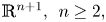 $\mathbb {R}^{n+1},\,\;n\geq 2,$ defined by polynomials of odd degree. Also we prove that the hyperspheres and the round cylinders are the only regular algebraic hypersurfaces with non-zero constant mean curvature in $\mathbb {R}^{n+1}, n\geq 2,$ defined by polynomials of degree less than or equal to three. These results give partial answers to a question raised by Barbosa and do Carmo.

GEOMETRIC LOCAL $\varepsilon $-FACTORS IN HIGHER DIMENSIONS
- Part of
-
- Journal:
- Journal of the Institute of Mathematics of Jussieu / Volume 21 / Issue 6 / November 2022
- Published online by Cambridge University Press:
- 02 September 2021, pp. 1887-1913
- Print publication:
- November 2022
-
- Article
-
- You have access
- Open access
- Export citation
-
We prove a product formula for the determinant of the cohomology of an étale sheaf with $\ell $-adic coefficients over an arbitrary proper scheme over a perfect field of positive characteristic p distinct from $\ell $. The local contributions are constructed by iterating vanishing cycle functors as well as certain exact additive functors that can be considered as linearised versions of Artin conductors and local $\varepsilon $-factors. We provide several applications of our higher dimensional product formula, such as twist formulas for global $\varepsilon $-factors.


On the edit distance function of the random graph
- Part of
-
- Journal:
- Combinatorics, Probability and Computing / Volume 31 / Issue 2 / March 2022
- Published online by Cambridge University Press:
- 02 September 2021, pp. 345-367
-
- Article
- Export citation
-
Given a hereditary property of graphs $\mathcal{H}$ and a $p\in [0,1]$, the edit distance function $\textrm{ed}_{\mathcal{H}}(p)$ is asymptotically the maximum proportion of edge additions plus edge deletions applied to a graph of edge density p sufficient to ensure that the resulting graph satisfies $\mathcal{H}$. The edit distance function is directly related to other well-studied quantities such as the speed function for $\mathcal{H}$ and the $\mathcal{H}$-chromatic number of a random graph.
Let $\mathcal{H}$ be the property of forbidding an Erdős–Rényi random graph $F\sim \mathbb{G}(n_0,p_0)$, and let $\varphi$ represent the golden ratio. In this paper, we show that if $p_0\in [1-1/\varphi,1/\varphi]$, then a.a.s. as $n_0\to\infty$, Moreover, this holds for
 \begin{align*}{\textrm{ed}}_{\mathcal{H}}(p) = (1+o(1))\,\frac{2\log n_0}{n_0}\cdot\min\left\{\frac{p}{-\log(1-p_0)},\frac{1-p}{-\log p_0}\right\}.\end{align*} $p\in [1/3,2/3]$ for any $p_0\in (0,1)$.
A primary tool in the proof is the categorization of p-core coloured regularity graphs in the range $p\in[1-1/\varphi,1/\varphi]$. Such coloured regularity graphs must have the property that the non-grey edges form vertex-disjoint cliques.


JMJ volume 20 Issue 5 Cover and Front matter
-
- Journal:
- Journal of the Institute of Mathematics of Jussieu / Volume 20 / Issue 5 / September 2021
- Published online by Cambridge University Press:
- 13 September 2021, pp. f1-f2
- Print publication:
- September 2021
-
- Article
-
- You have access
- Export citation
