Refine search
Actions for selected content:
26078 results in Abstract analysis
Part III - Queueing Networks
-
- Book:
- Scheduling and Control of Queueing Networks
- Published online:
- 01 October 2021
- Print publication:
- 14 October 2021, pp 123-124
-
- Chapter
- Export citation
17 - MCQN with Discretionary Routing
- from Part V - Diffusion Scaled Balanced Heavy Traffic
-
- Book:
- Scheduling and Control of Queueing Networks
- Published online:
- 01 October 2021
- Print publication:
- 14 October 2021, pp 305-320
-
- Chapter
- Export citation
Part I - The Single Queue
-
- Book:
- Scheduling and Control of Queueing Networks
- Published online:
- 01 October 2021
- Print publication:
- 14 October 2021, pp 1-2
-
- Chapter
- Export citation
10 - Multi-Class QueueingNetworks, Instability, and MarkovRepresentations
- from Part IV - Fluid Models of Multi-Class Queueing
-
- Book:
- Scheduling and Control of Queueing Networks
- Published online:
- 01 October 2021
- Print publication:
- 14 October 2021, pp 159-174
-
- Chapter
- Export citation
Part IV - Fluid Models of Multi-Class Queueing
-
- Book:
- Scheduling and Control of Queueing Networks
- Published online:
- 01 October 2021
- Print publication:
- 14 October 2021, pp 157-158
-
- Chapter
- Export citation
21 - Load Balancing in the Supermarket Model
- from Part VI - Many-Server Systems
-
- Book:
- Scheduling and Control of Queueing Networks
- Published online:
- 01 October 2021
- Print publication:
- 14 October 2021, pp 360-384
-
- Chapter
- Export citation
Notation
-
- Book:
- Scheduling and Control of Queueing Networks
- Published online:
- 01 October 2021
- Print publication:
- 14 October 2021, pp xi-xii
-
- Chapter
- Export citation
14 - Optimal Control of Transient Networks
- from Part IV - Fluid Models of Multi-Class Queueing
-
- Book:
- Scheduling and Control of Queueing Networks
- Published online:
- 01 October 2021
- Print publication:
- 14 October 2021, pp 236-256
-
- Chapter
- Export citation
6 - Scaling of G/G/1 and G/G/∞
- from Part II - Approximations of the Single Queue
-
- Book:
- Scheduling and Control of Queueing Networks
- Published online:
- 01 October 2021
- Print publication:
- 14 October 2021, pp 83-101
-
- Chapter
- Export citation
Part V - Diffusion Scaled Balanced Heavy Traffic
-
- Book:
- Scheduling and Control of Queueing Networks
- Published online:
- 01 October 2021
- Print publication:
- 14 October 2021, pp 257-258
-
- Chapter
- Export citation
Frontmatter
-
- Book:
- Scheduling and Control of Queueing Networks
- Published online:
- 01 October 2021
- Print publication:
- 14 October 2021, pp i-iv
-
- Chapter
- Export citation
On bucket increasing trees, clustered increasing trees and increasing diamonds
- Part of
-
- Journal:
- Combinatorics, Probability and Computing / Volume 31 / Issue 4 / July 2022
- Published online by Cambridge University Press:
- 13 October 2021, pp. 629-661
-
- Article
- Export citation
-
In this work we analyse bucket increasing tree families. We introduce two simple stochastic growth processes, generating random bucket increasing trees of size n, complementing the earlier result of Mahmoud and Smythe (1995, Theoret. Comput. Sci. 144 221–249.) for bucket recursive trees. On the combinatorial side, we define multilabelled generalisations of the tree families d-ary increasing trees and generalised plane-oriented recursive trees. Additionally, we introduce a clustering process for ordinary increasing trees and relate it to bucket increasing trees. We discuss in detail the bucket size two and present a bijection between such bucket increasing tree families and certain families of graphs called increasing diamonds, providing an explanation for phenomena observed by Bodini et al. (2016, Lect. Notes Comput. Sci. 9644 207–219.). Concerning structural properties of bucket increasing trees, we analyse the tree parameter $K_n$. It counts the initial bucket size of the node containing label n in a tree of size n and is closely related to the distribution of node types. Additionally, we analyse the parameters descendants of label j and degree of the bucket containing label j, providing distributional decompositions, complementing and extending earlier results (Kuba and Panholzer (2010), Theoret. Comput. Sci. 411(34–36) 3255–3273.).

Existence results for a nonlinear nonautonomous transmission problem via domain perturbation
- Part of
-
- Journal:
- Proceedings of the Royal Society of Edinburgh. Section A: Mathematics / Volume 152 / Issue 6 / December 2022
- Published online by Cambridge University Press:
- 11 October 2021, pp. 1451-1476
- Print publication:
- December 2022
-
- Article
-
- You have access
- Open access
- HTML
- Export citation
-
In this paper we study the existence and the analytic dependence upon domain perturbation of the solutions of a nonlinear nonautonomous transmission problem for the Laplace equation. The problem is defined in a pair of sets consisting of a perforated domain and an inclusion whose shape is determined by a suitable diffeomorphism $\phi$. First we analyse the case in which the inclusion is a fixed domain. Then we will perturb the inclusion and study the arising boundary value problem and the dependence of a specific family of solutions upon the perturbation parameter $\phi$.


Topological volumes of fibrations: a note on open covers
- Part of
-
- Journal:
- Proceedings of the Royal Society of Edinburgh. Section A: Mathematics / Volume 152 / Issue 5 / October 2022
- Published online by Cambridge University Press:
- 11 October 2021, pp. 1340-1360
- Print publication:
- October 2022
-
- Article
- Export citation
Lp-trace-free generalized Korn inequalities for incompatible tensor fields in three space dimensions
- Part of
-
- Journal:
- Proceedings of the Royal Society of Edinburgh. Section A: Mathematics / Volume 152 / Issue 6 / December 2022
- Published online by Cambridge University Press:
- 11 October 2021, pp. 1477-1508
- Print publication:
- December 2022
-
- Article
-
- You have access
- Open access
- HTML
- Export citation
-
For $1< p<\infty$ we prove an $L^{p}$-version of the generalized trace-free Korn inequality for incompatible tensor fields $P$ in $W^{1,p}_0(\operatorname {Curl}; \Omega ,\mathbb {R}^{3\times 3})$. More precisely, let $\Omega \subset \mathbb {R}^{3}$ be a bounded Lipschitz domain. Then there exists a constant $c>0$ such thatholds for all tensor fields
 \[ \lVert{ P }\rVert_{L^{p}(\Omega,\mathbb{R}^{3\times 3})}\leq c\,\left(\lVert{\operatorname{dev} \operatorname{sym} P }\rVert_{L^{p}(\Omega,\mathbb{R}^{3\times 3})} + \lVert{ \operatorname{dev} \operatorname{Curl} P }\rVert_{L^{p}(\Omega,\mathbb{R}^{3\times 3})}\right) \] $P\in W^{1,p}_0(\operatorname {Curl}; \Omega ,\mathbb {R}^{3\times 3})$, i.e., for all $P\in W^{1,p} (\operatorname {Curl}; \Omega ,\mathbb {R}^{3\times 3})$ with vanishing tangential trace $P\times \nu =0$ on $\partial \Omega$ where $\nu$ denotes the outward unit normal vector field to $\partial \Omega$ and $\operatorname {dev} P : = P -\frac 13 \operatorname {tr}(P) {\cdot } {\mathbb {1}}$ denotes the deviatoric (trace-free) part of $P$. We also show the norm equivalencefor tensor fields
 \begin{align*} &\lVert{ P }\rVert_{L^{p}(\Omega,\mathbb{R}^{3\times 3})}+\lVert{ \operatorname{Curl} P }\rVert_{L^{p}(\Omega,\mathbb{R}^{3\times 3})}\\ &\quad\leq c\,\left(\lVert{P}\rVert_{L^{p}(\Omega,\mathbb{R}^{3\times 3})} + \lVert{ \operatorname{dev} \operatorname{Curl} P }\rVert_{L^{p}(\Omega,\mathbb{R}^{3\times 3})}\right) \end{align*} $P\in W^{1,p}(\operatorname {Curl}; \Omega ,\mathbb {R}^{3\times 3})$. These estimates also hold true for tensor fields with vanishing tangential trace only on a relatively open (non-empty) subset $\Gamma \subseteq \partial \Omega$ of the boundary.


Global well-posedness and decay estimates for three-dimensional compressible Navier–Stokes–Allen–Cahn systems
- Part of
-
- Journal:
- Proceedings of the Royal Society of Edinburgh. Section A: Mathematics / Volume 152 / Issue 5 / October 2022
- Published online by Cambridge University Press:
- 11 October 2021, pp. 1291-1322
- Print publication:
- October 2022
-
- Article
- Export citation
-
We study the small data global well-posedness and time-decay rates of solutions to the Cauchy problem for three-dimensional compressible Navier–Stokes–Allen–Cahn equations via a refined pure energy method. In particular, the optimal decay rates of the higher-order spatial derivatives of the solution are obtained, the $\dot {H}^{-s}$( $0\leq s<\frac {3}{2}$) negative Sobolev norms is shown to be preserved along time evolution and enhance the decay rates.


Decay properties for the incompressible Navier-Stokes flows in a half space
- Part of
-
- Journal:
- Proceedings of the Royal Society of Edinburgh. Section A: Mathematics / Volume 152 / Issue 6 / December 2022
- Published online by Cambridge University Press:
- 11 October 2021, pp. 1509-1532
- Print publication:
- December 2022
-
- Article
- Export citation
-
In this article, we give a comprehensive characterization of $L^1$-summability for the Navier-Stokes flows in the half space, which is a long-standing problem. The main difficulties are that $L^q-L^r$ estimates for the Stokes flow don't work in this end-point case: $q=r=1$; the projection operator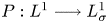 $P: L^1\longrightarrow L^1_\sigma$ is not bounded any more; useful information on the pressure function is missing, which arises in the net force exerted by the fluid on the noncompact boundary. In order to achieve our aims, by making full use of the special structure of the half space, we decompose the pressure function into two parts. Then the knotty problem of handling the pressure term can be transformed into establishing a crucial and new weighted $L^1$-estimate, which plays a fundamental role. In addition, we overcome the unboundedness of the projection $P$ by solving an elliptic problem with homogeneous Neumann boundary condition.



Orthogonal Polynomials in the Spectral Analysis of Markov Processes
- Birth-Death Models and Diffusion
-
- Published online:
- 08 October 2021
- Print publication:
- 21 October 2021
The critical window in random digraphs
- Part of
-
- Journal:
- Combinatorics, Probability and Computing / Volume 31 / Issue 3 / May 2022
- Published online by Cambridge University Press:
- 08 October 2021, pp. 411-429
-
- Article
- Export citation
-
We consider the component structure of the random digraph D(n,p) inside the critical window $p = n^{-1} + \lambda n^{-4/3}$. We show that the largest component $\mathcal{C}_1$ has size of order $n^{1/3}$ in this range. In particular we give explicit bounds on the tail probabilities of $|\mathcal{C}_1|n^{-1/3}$.


INTERSECTION COHOMOLOGY OF RANK 2 CHARACTER VARIETIES OF SURFACE GROUPS
- Part of
-
- Journal:
- Journal of the Institute of Mathematics of Jussieu / Volume 22 / Issue 4 / July 2023
- Published online by Cambridge University Press:
- 08 October 2021, pp. 1615-1654
- Print publication:
- July 2023
-
- Article
-
- You have access
- Open access
- HTML
- Export citation
-
For $G = \mathrm {GL}_2, \mathrm {SL}_2, \mathrm {PGL}_2$ we compute the intersection E-polynomials and the intersection Poincaré polynomials of the G-character variety of a compact Riemann surface C and of the moduli space of G-Higgs bundles on C of degree zero. We derive several results concerning the P=W conjectures for these singular moduli spaces.
