Refine search
Actions for selected content:
26078 results in Abstract analysis
New dualities from old: generating geometric, Petrie, and Wilson dualities and trialities of ribbon graphs
- Part of
-
- Journal:
- Combinatorics, Probability and Computing / Volume 31 / Issue 4 / July 2022
- Published online by Cambridge University Press:
- 07 October 2021, pp. 574-597
-
- Article
- Export citation
FUNCTIONAL CALCULI FOR SECTORIAL OPERATORS AND RELATED FUNCTION THEORY
- Part of
-
- Journal:
- Journal of the Institute of Mathematics of Jussieu / Volume 22 / Issue 3 / May 2023
- Published online by Cambridge University Press:
- 04 October 2021, pp. 1383-1463
- Print publication:
- May 2023
-
- Article
-
- You have access
- Open access
- HTML
- Export citation
Algebraic cycles and Lehn–Lehn–Sorger–van Straten eightfolds
- Part of
-
- Journal:
- Proceedings of the Edinburgh Mathematical Society / Volume 64 / Issue 4 / November 2021
- Published online by Cambridge University Press:
- 04 October 2021, pp. 884-907
-
- Article
- Export citation
-
This article is about Lehn–Lehn–Sorger–van Straten eightfolds $Z$
 and their anti-symplectic involution $\iota$
 . When $Z$
 is birational to the Hilbert scheme of points on a K3 surface, we give an explicit formula for the action of $\iota$
 on the Chow group of $0$
 -cycles of $Z$
 . The formula is in agreement with the Bloch–Beilinson conjectures and has some non-trivial consequences for the Chow ring of the quotient.


Structure theory and stable rank for C*-algebras of finite higher-rank graphs
- Part of
-
- Journal:
- Proceedings of the Edinburgh Mathematical Society / Volume 64 / Issue 4 / November 2021
- Published online by Cambridge University Press:
- 04 October 2021, pp. 822-847
-
- Article
- Export citation
-
We study the structure and compute the stable rank of $C^{*}$
 -algebras of finite higher-rank graphs. We completely determine the stable rank of the $C^{*}$
 -algebra when the $k$
 -graph either contains no cycle with an entrance or is cofinal. We also determine exactly which finite, locally convex $k$
 -graphs yield unital stably finite $C^{*}$
 -algebras. We give several examples to illustrate our results.


Scheduling and Control of Queueing Networks
-
- Published online:
- 01 October 2021
- Print publication:
- 14 October 2021
Semigroups whose right ideals are finitely generated
- Part of
-
- Journal:
- Proceedings of the Edinburgh Mathematical Society / Volume 64 / Issue 4 / November 2021
- Published online by Cambridge University Press:
- 01 October 2021, pp. 848-883
-
- Article
-
- You have access
- Open access
- HTML
- Export citation
-
We call a semigroup $S$
 weakly right noetherian if every right ideal of $S$
 is finitely generated; equivalently, $S$
 satisfies the ascending chain condition on right ideals. We provide an equivalent formulation of the property of being weakly right noetherian in terms of principal right ideals, and we also characterize weakly right noetherian monoids in terms of their acts. We investigate the behaviour of the property of being weakly right noetherian under quotients, subsemigroups and various semigroup-theoretic constructions. In particular, we find necessary and sufficient conditions for the direct product of two semigroups to be weakly right noetherian. We characterize weakly right noetherian regular semigroups in terms of their idempotents. We also find necessary and sufficient conditions for a strong semilattice of completely simple semigroups to be weakly right noetherian. Finally, we prove that a commutative semigroup $S$
 with finitely many archimedean components is weakly (right) noetherian if and only if $S/\mathcal {H}$
 is finitely generated.


Concentrating standing waves for Davey–Stewartson systems
- Part of
-
- Journal:
- Proceedings of the Royal Society of Edinburgh. Section A: Mathematics / Volume 152 / Issue 6 / December 2022
- Published online by Cambridge University Press:
- 01 October 2021, pp. 1411-1450
- Print publication:
- December 2022
-
- Article
- Export citation
On holomorphic reflexivity conditions for complex Lie groups
- Part of
-
- Journal:
- Proceedings of the Edinburgh Mathematical Society / Volume 64 / Issue 4 / November 2021
- Published online by Cambridge University Press:
- 30 September 2021, pp. 800-821
-
- Article
- Export citation
-
We consider Akbarov's holomorphic version of the non-commutative Pontryagin duality for a complex Lie group. We prove, under the assumption that $G$
 is a Stein group with finitely many components, that (1) the topological Hopf algebra of holomorphic functions on $G$
 is holomorphically reflexive if and only if $G$
 is linear; (2) the dual cocommutative topological Hopf algebra of exponential analytic functional on $G$
 is holomorphically reflexive. We give a counterexample, which shows that the first criterion cannot be extended to the case of infinitely many components. Nevertheless, we conjecture that, in general, the question can be solved in terms of the Banach-algebra linearity of $G$
 .
.


Massey products in the homology of the loop space of a p-completed classifying space: finite groups with cyclic Sylow p-subgroups
- Part of
-
- Journal:
- Proceedings of the Edinburgh Mathematical Society / Volume 64 / Issue 4 / November 2021
- Published online by Cambridge University Press:
- 30 September 2021, pp. 908-915
-
- Article
-
- You have access
- Open access
- HTML
- Export citation
-
Let $G$
 be a finite group with cyclic Sylow $p$
 -subgroups, and let $k$
 be a field of characteristic $p$
 . Then $H^{*}(BG;k)$
 and $H_*(\Omega BG{{}^{{}^{\wedge }}_p};k)$
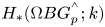 are $A_\infty$
 algebras whose structure we determine up to quasi-isomorphism.


NATURAL MAPS FOR MEASURABLE COCYCLES OF COMPACT HYPERBOLIC MANIFOLDS
- Part of
-
- Journal:
- Journal of the Institute of Mathematics of Jussieu / Volume 22 / Issue 1 / January 2023
- Published online by Cambridge University Press:
- 29 September 2021, pp. 421-448
- Print publication:
- January 2023
-
- Article
-
- You have access
- Open access
- HTML
- Export citation
-
Let $\operatorname {\mathrm {{\rm G}}}(n)$ be equal to either $\operatorname {\mathrm {{\rm PO}}}(n,1),\operatorname {\mathrm {{\rm PU}}}(n,1)$ or $\operatorname {\mathrm {\textrm {PSp}}}(n,1)$ and let $\Gamma \leq \operatorname {\mathrm {{\rm G}}}(n)$ be a uniform lattice. Denote by $\operatorname {\mathrm {\mathbb {H}^n_{{\rm K}}}}$ the hyperbolic space associated to $\operatorname {\mathrm {{\rm G}}}(n)$, where $\operatorname {\mathrm {{\rm K}}}$ is a division algebra over the reals of dimension d. Assume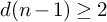 $d(n-1) \geq 2$.
In this article we generalise natural maps to measurable cocycles. Given a standard Borel probability $\Gamma $-space $(X,\mu _X)$, we assume that a measurable cocycle $\sigma :\Gamma \times X \rightarrow \operatorname {\mathrm {{\rm G}}}(m)$ admits an essentially unique boundary map $\phi :\partial _\infty \operatorname {\mathrm {\mathbb {H}^n_{{\rm K}}}} \times X \rightarrow \partial _\infty \operatorname {\mathrm {\mathbb {H}^m_{{\rm K}}}}$ whose slices $\phi _x:\operatorname {\mathrm {\mathbb {H}^n_{{\rm K}}}} \rightarrow \operatorname {\mathrm {\mathbb {H}^m_{{\rm K}}}}$ are atomless for almost every $x \in X$. Then there exists a $\sigma $-equivariant measurable map $F: \operatorname {\mathrm {\mathbb {H}^n_{{\rm K}}}} \times X \rightarrow \operatorname {\mathrm {\mathbb {H}^m_{{\rm K}}}}$ whose slices $F_x:\operatorname {\mathrm {\mathbb {H}^n_{{\rm K}}}} \rightarrow \operatorname {\mathrm {\mathbb {H}^m_{{\rm K}}}}$ are differentiable for almost every $x \in X$ and such that $\operatorname {\mathrm {\textrm {Jac}}}_a F_x \leq 1$ for every $a \in \operatorname {\mathrm {\mathbb {H}^n_{{\rm K}}}}$ and almost every $x \in X$. This allows us to define the natural volume $\operatorname {\mathrm {\textrm {NV}}}(\sigma )$ of the cocycle $\sigma $. This number satisfies the inequality $\operatorname {\mathrm {\textrm {NV}}}(\sigma ) \leq \operatorname {\mathrm {\textrm {Vol}}}(\Gamma \backslash \operatorname {\mathrm {\mathbb {H}^n_{{\rm K}}}})$. Additionally, the equality holds if and only if $\sigma $ is cohomologous to the cocycle induced by the standard lattice embedding $i:\Gamma \rightarrow \operatorname {\mathrm {{\rm G}}}(n) \leq \operatorname {\mathrm {{\rm G}}}(m)$, modulo possibly a compact subgroup of $\operatorname {\mathrm {{\rm G}}}(m)$ when $m>n$.
Given a continuous map $f:M \rightarrow N$ between compact hyperbolic manifolds, we also obtain an adaptation of the mapping degree theorem to this context.


THE p-ZASSENHAUS FILTRATION OF A FREE PROFINITE GROUP AND SHUFFLE RELATIONS
- Part of
-
- Journal:
- Journal of the Institute of Mathematics of Jussieu / Volume 22 / Issue 2 / March 2023
- Published online by Cambridge University Press:
- 29 September 2021, pp. 961-983
- Print publication:
- March 2023
-
- Article
-
- You have access
- Open access
- HTML
- Export citation
-
For a prime number p and a free profinite group S on the basis X, let $S_{\left (n,p\right )}$, $n=1,2,\dotsc ,$ be the p-Zassenhaus filtration of S. For $p>n$, we give a word-combinatorial description of the cohomology group $H^2\left (S/S_{\left (n,p\right )},\mathbb {Z}/p\right )$ in terms of the shuffle algebra on X. We give a natural linear basis for this cohomology group, which is constructed by means of unitriangular representations arising from Lyndon words.


Asymptotic behaviour of positive solutions of semilinear elliptic problems with increasing powers
- Part of
-
- Journal:
- Proceedings of the Royal Society of Edinburgh. Section A: Mathematics / Volume 152 / Issue 5 / October 2022
- Published online by Cambridge University Press:
- 28 September 2021, pp. 1233-1250
- Print publication:
- October 2022
-
- Article
- Export citation
-
We prove existence results of two solutions of the problem
where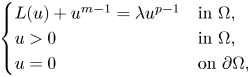 \[ \begin{cases} L(u)+u^{m-1}=\lambda u^{p-1} & \text{in}\ \Omega,\\ u>0 & \text{in}\ \Omega,\\ u=0 & \text{on}\ \partial \Omega, \end{cases} \] $L(v)=-\textrm {div}(M(x)\nabla v)$ is a linear operator, $p\in (2,2^{*}]$ and $\lambda$ and $m$ sufficiently large. Then their asymptotical limit as $m\to +\infty$ is investigated showing different behaviours.


KHOVANOV SPECTRA FOR TANGLES
- Part of
-
- Journal:
- Journal of the Institute of Mathematics of Jussieu / Volume 22 / Issue 4 / July 2023
- Published online by Cambridge University Press:
- 28 September 2021, pp. 1509-1580
- Print publication:
- July 2023
-
- Article
- Export citation
Expansion for the critical point of site percolation: the first three terms
- Part of
-
- Journal:
- Combinatorics, Probability and Computing / Volume 31 / Issue 3 / May 2022
- Published online by Cambridge University Press:
- 28 September 2021, pp. 430-454
-
- Article
-
- You have access
- Open access
- HTML
- Export citation
Existence and nonexistence results for a class of Hamiltonian Choquard-type elliptic systems with lower critical growth on ℝ2
- Part of
-
- Journal:
- Proceedings of the Royal Society of Edinburgh. Section A: Mathematics / Volume 152 / Issue 6 / December 2022
- Published online by Cambridge University Press:
- 28 September 2021, pp. 1383-1410
- Print publication:
- December 2022
-
- Article
- Export citation
-
In this paper, we investigate the existence and nonexistence of results for a class of Hamiltonian-Choquard-type elliptic systems. We show the nonexistence of classical nontrivial solutions for the problem
when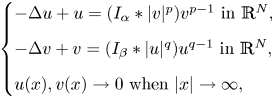 \[ \begin{cases} -\Delta u + u= ( I_{\alpha} \ast |v|^{p} )v^{p-1} \text{ in } \mathbb{R}^{N},\\ -\Delta v + v= ( I_{\beta} \ast |u|^{q} )u^{q-1} \text{ in } \mathbb{R}^{N}, \\ u(x),v(x) \rightarrow 0 \text{ when } |x|\rightarrow \infty, \end{cases} \] $(N+\alpha )/p + (N+\beta )/q \leq 2(N-2)$ (if $N\geq 3$) and $(N+\alpha )/p + (N+\beta )/q \geq 2N$ (if $N=2$), where $I_{\alpha }$ and $I_{\beta }$ denote the Riesz potential. Second, via variational methods and the generalized Nehari manifold, we show the existence of a nontrivial non-negative solution or a Nehari-type ground state solution for the problemwhere
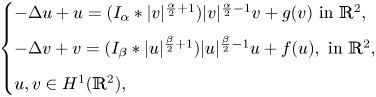 \[ \begin{cases} -\Delta u + u= (I_{\alpha} \ast |v|^{\frac{\alpha}{2}+1})|v|^{\frac{\alpha}{2}-1}v + g(v) \hbox{ in } \mathbb{R}^{2},\\ - \Delta v + v= (I_{\beta} \ast |u|^{\frac{\beta}{2}+1})|u|^{\frac{\beta}{2}-1}u + f(u), \hbox{ in } \mathbb{R}^{2},\\ u,v \in H^{1}(\mathbb{R}^{2}), \end{cases} \] $\alpha ,\,\beta \in (0,\,2)$ and $f,\,g$ have exponential critical growth in the Trudinger–Moser sense.


ORDERS OF GROWTH AND GENERALIZED ENTROPY
- Part of
-
- Journal:
- Journal of the Institute of Mathematics of Jussieu / Volume 22 / Issue 4 / July 2023
- Published online by Cambridge University Press:
- 28 September 2021, pp. 1581-1613
- Print publication:
- July 2023
-
- Article
- Export citation
On deficiency problems for graphs
- Part of
-
- Journal:
- Combinatorics, Probability and Computing / Volume 31 / Issue 3 / May 2022
- Published online by Cambridge University Press:
- 27 September 2021, pp. 478-488
-
- Article
- Export citation
-
Motivated by analogous questions in the setting of Steiner triple systems and Latin squares, Nenadov, Sudakov and Wagner [Completion and deficiency problems, Journal of Combinatorial Theory Series B, 2020] recently introduced the notion of graph deficiency. Given a global spanning property $\mathcal P$ and a graph $G$, the deficiency $\text{def}(G)$ of the graph $G$ with respect to the property $\mathcal P$ is the smallest non-negative integer t such that the join $G*K_t$ has property $\mathcal P$. In particular, Nenadov, Sudakov and Wagner raised the question of determining how many edges an n-vertex graph $G$ needs to ensure $G*K_t$ contains a $K_r$-factor (for any fixed $r\geq 3$). In this paper, we resolve their problem fully. We also give an analogous result that forces $G*K_t$ to contain any fixed bipartite $(n+t)$-vertex graph of bounded degree and small bandwidth.


ON SOME CONSEQUENCES OF A THEOREM OF J. LUDWIG
- Part of
-
- Journal:
- Journal of the Institute of Mathematics of Jussieu / Volume 21 / Issue 3 / May 2022
- Published online by Cambridge University Press:
- 27 September 2021, pp. 1067-1106
- Print publication:
- May 2022
-
- Article
-
- You have access
- Open access
- Export citation
-
We prove some qualitative results about the p-adic Jacquet–Langlands correspondence defined by Scholze, in the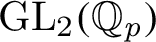 $\operatorname {\mathrm {GL}}_2(\mathbb{Q}_p )$ residually reducible case, using a vanishing theorem proved by Judith Ludwig. In particular, we show that in the cases under consideration, the global p-adic Jacquet–Langlands correspondence can also deal with automorphic forms with principal series representations at p in a nontrivial way, unlike its classical counterpart.
Strong complete minors in digraphs
- Part of
-
- Journal:
- Combinatorics, Probability and Computing / Volume 31 / Issue 3 / May 2022
- Published online by Cambridge University Press:
- 24 September 2021, pp. 489-506
-
- Article
- Export citation
-
Kostochka and Thomason independently showed that any graph with average degree $\Omega(r\sqrt{\log r})$ contains a $K_r$ minor. In particular, any graph with chromatic number $\Omega(r\sqrt{\log r})$ contains a $K_r$ minor, a partial result towards Hadwiger’s famous conjecture. In this paper, we investigate analogues of these results in the directed setting. There are several ways to define a minor in a digraph. One natural way is as follows. A strong $\overrightarrow{K}_{\!\!r}$ minor is a digraph whose vertex set is partitioned into r parts such that each part induces a strongly connected subdigraph, and there is at least one edge in each direction between any two distinct parts. We investigate bounds on the dichromatic number and minimum out-degree of a digraph that force the existence of strong $\overrightarrow{K}_{\!\!r}$ minors as subdigraphs. In particular, we show that any tournament with dichromatic number at least 2r contains a strong $\overrightarrow{K}_{\!\!r}$ minor, and any tournament with minimum out-degree $\Omega(r\sqrt{\log r})$ also contains a strong $\overrightarrow{K}_{\!\!r}$ minor. The latter result is tight up to the implied constant and may be viewed as a strong-minor analogue to the classical result of Kostochka and Thomason. Lastly, we show that there is no function $f\;:\;\mathbb{N} \rightarrow \mathbb{N}$ such that any digraph with minimum out-degree at least f(r) contains a strong $\overrightarrow{K}_{\!\!r}$ minor, but such a function exists when considering dichromatic number.


Benson's cofibrants, Gorenstein projectives and a related conjecture
- Part of
-
- Journal:
- Proceedings of the Edinburgh Mathematical Society / Volume 64 / Issue 4 / November 2021
- Published online by Cambridge University Press:
- 23 September 2021, pp. 779-799
-
- Article
- Export citation
