Refine search
Actions for selected content:
26078 results in Abstract analysis
Preface
-
- Book:
- Orthogonal Polynomials in the Spectral Analysis of Markov Processes
- Published online:
- 08 October 2021
- Print publication:
- 21 October 2021, pp ix-xii
-
- Chapter
- Export citation
References
-
- Book:
- Orthogonal Polynomials in the Spectral Analysis of Markov Processes
- Published online:
- 08 October 2021
- Print publication:
- 21 October 2021, pp 322-330
-
- Chapter
- Export citation
1 - Spectral Representation of Discrete-Time Birth–Death Chains
-
- Book:
- Orthogonal Polynomials in the Spectral Analysis of Markov Processes
- Published online:
- 08 October 2021
- Print publication:
- 21 October 2021, pp 1-56
-
- Chapter
- Export citation
2 - Small Phenomena, Big Implications
-
- Book:
- Orthogonal Polynomials in the Spectral Analysis of Markov Processes
- Published online:
- 08 October 2021
- Print publication:
- 21 October 2021, pp 57-145
-
- Chapter
- Export citation
Frontmatter
-
- Book:
- Orthogonal Polynomials in the Spectral Analysis of Markov Processes
- Published online:
- 08 October 2021
- Print publication:
- 21 October 2021, pp i-iv
-
- Chapter
- Export citation
Contents
-
- Book:
- Orthogonal Polynomials in the Spectral Analysis of Markov Processes
- Published online:
- 08 October 2021
- Print publication:
- 21 October 2021, pp vii-viii
-
- Chapter
- Export citation
4 - Spectral Representation of Diffusion Processes
-
- Book:
- Orthogonal Polynomials in the Spectral Analysis of Markov Processes
- Published online:
- 08 October 2021
- Print publication:
- 21 October 2021, pp 254-321
-
- Chapter
- Export citation
3 - Spectral Representation of Birth–Death Processes
-
- Book:
- Orthogonal Polynomials in the Spectral Analysis of Markov Processes
- Published online:
- 08 October 2021
- Print publication:
- 21 October 2021, pp 146-253
-
- Chapter
- Export citation
Dedication
-
- Book:
- Orthogonal Polynomials in the Spectral Analysis of Markov Processes
- Published online:
- 08 October 2021
- Print publication:
- 21 October 2021, pp v-vi
-
- Chapter
- Export citation
Index
-
- Book:
- Orthogonal Polynomials in the Spectral Analysis of Markov Processes
- Published online:
- 08 October 2021
- Print publication:
- 21 October 2021, pp 331-334
-
- Chapter
- Export citation
Charge transport modelling of Lithium-ion batteries
- Part of
-
- Journal:
- European Journal of Applied Mathematics / Volume 33 / Issue 6 / December 2022
- Published online by Cambridge University Press:
- 21 October 2021, pp. 983-1031
-
- Article
-
- You have access
- Open access
- HTML
- Export citation
Expansions for the linear-elastic contribution to the self-interaction force of dislocation curves
- Part of
-
- Journal:
- European Journal of Applied Mathematics / Volume 33 / Issue 6 / December 2022
- Published online by Cambridge University Press:
- 20 October 2021, pp. 1032-1061
-
- Article
- Export citation
-
The self-interaction force of dislocation curves in metals depends on the local arrangement of the atoms and on the non-local interaction between dislocation curve segments. While these non-local segment–segment interactions can be accurately described by linear elasticity when the segments are further apart than the atomic scale of size $\varepsilon$, this model breaks down and blows up when the segments are $O(\varepsilon)$ apart. To separate the non-local interactions from the local contribution, various models depending on $\varepsilon$ have been constructed to account for the non-local term. However, there are no quantitative comparisons available between these models. This paper makes such comparisons possible by expanding the self-interaction force in these models in $\varepsilon$ beyond the O(1)-term. Our derivation of these expansions relies on asymptotic analysis. The practical use of these expansions is demonstrated by developing numerical schemes for them, and by – for the first time – bounding the corresponding discretisation error.


Asymptotics for the number of standard tableaux of skew shape and for weighted lozenge tilings
- Part of
-
- Journal:
- Combinatorics, Probability and Computing / Volume 31 / Issue 4 / July 2022
- Published online by Cambridge University Press:
- 18 October 2021, pp. 550-573
-
- Article
- Export citation
-
We prove and generalise a conjecture in [MPP4] about the asymptotics of $\frac{1}{\sqrt{n!}} f^{\lambda/\mu}$, where $f^{\lambda/\mu}$ is the number of standard Young tableaux of skew shape $\lambda/\mu$ which have stable limit shape under the $1/\sqrt{n}$ scaling. The proof is based on the variational principle on the partition function of certain weighted lozenge tilings.


ABELIAN CYCLES IN THE HOMOLOGY OF THE TORELLI GROUP
- Part of
-
- Journal:
- Journal of the Institute of Mathematics of Jussieu / Volume 22 / Issue 4 / July 2023
- Published online by Cambridge University Press:
- 18 October 2021, pp. 1703-1726
- Print publication:
- July 2023
-
- Article
- Export citation
-
In the early 1980s, Johnson defined a homomorphism $\mathcal {I}_{g}^1\to \bigwedge ^3 H_1\left (S_{g},\mathbb {Z}\right )$, where $\mathcal {I}_{g}^1$ is the Torelli group of a closed, connected, and oriented surface of genus g with a boundary component and $S_g$ is the corresponding surface without a boundary component. This is known as the Johnson homomorphism.
We study the map induced by the Johnson homomorphism on rational homology groups and apply it to abelian cycles determined by disjoint bounding-pair maps, in order to compute a large quotient of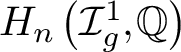 $H_n\left (\mathcal {I}_{g}^1,\mathbb {Q}\right )$ in the stable range. This also implies an analogous result for the stable rational homology of the Torelli group $\mathcal {I}_{g,1}$ of a surface with a marked point instead of a boundary component. Further, we investigate how much of the image of this map is generated by images of such cycles and use this to prove that in the pointed case, they generate a proper subrepresentation of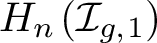 $H_n\left (\mathcal {I}_{g,1}\right )$ for $n\ge 2$ and g large enough.


AUTOMORPHIC LEFSCHETZ PROPERTIES FOR NONCOMPACT ARITHMETIC MANIFOLDS
- Part of
-
- Journal:
- Journal of the Institute of Mathematics of Jussieu / Volume 22 / Issue 4 / July 2023
- Published online by Cambridge University Press:
- 18 October 2021, pp. 1655-1702
- Print publication:
- July 2023
-
- Article
- Export citation
AN APERIODIC TILE WITH EDGE-TO-EDGE ORIENTATIONAL MATCHING RULES
- Part of
-
- Journal:
- Journal of the Institute of Mathematics of Jussieu / Volume 22 / Issue 4 / July 2023
- Published online by Cambridge University Press:
- 18 October 2021, pp. 1727-1755
- Print publication:
- July 2023
-
- Article
-
- You have access
- Open access
- HTML
- Export citation
20 - Many Servers with Abandonment
- from Part VI - Many-Server Systems
-
- Book:
- Scheduling and Control of Queueing Networks
- Published online:
- 01 October 2021
- Print publication:
- 14 October 2021, pp 346-359
-
- Chapter
- Export citation
12 - Processing Networks and Maximum Pressure Policies
- from Part IV - Fluid Models of Multi-Class Queueing
-
- Book:
- Scheduling and Control of Queueing Networks
- Published online:
- 01 October 2021
- Print publication:
- 14 October 2021, pp 197-218
-
- Chapter
- Export citation
4 - The G/G/1 Queue
- from Part II - Approximations of the Single Queue
-
- Book:
- Scheduling and Control of Queueing Networks
- Published online:
- 01 October 2021
- Print publication:
- 14 October 2021, pp 61-70
-
- Chapter
- Export citation
8 - Product-Form Queueing Networks
- from Part III - Queueing Networks
-
- Book:
- Scheduling and Control of Queueing Networks
- Published online:
- 01 October 2021
- Print publication:
- 14 October 2021, pp 125-142
-
- Chapter
- Export citation
